ElPais
Remaking ‘The Legend Of Zelda: Ocarina Of Time’: The Challenge Of Improving A Masterpiece

“Wake up, Link!” High in his treehouse, a pointy-eared boy named Link is roused by the call of a fairy. He is the only resident of the Kokiri Forest without a winged companion, until Navi bursts into his dreams to tell him that his destiny lies far beyond that sheltered corner of the woods. Thus begins a journey that will lead him to a princess, pit him against a threat determined to plunge the kingdom of Hyrule into darkness and, seven years later, task him with saving a world that has fallen into the clutches of evil.
This is The Legend of Zelda: Ocarina of Time, the game that revolutionized the medium in 1998 and remains, according to Metacritic, the highest-rated video game ever made. On November 14, Nintendo will release a remake that has become, since its surprise unveiling in June, the year’s most anticipated title, with the possible exception of Grand Theft Auto (GTA) VI.
EL PAÍS has had the chance to play it: beyond the game itself, the new Ocarina serves as a perfect example of an industry that must periodically revisit and update its masterpieces in order to preserve its legacy and introduce them to new audiences.
Salva Fernández, a video game journalist and the author of Zelda, detrás de la leyenda (Zelda: Behind the Legend), believes Ocarina of Time remains a landmark work in video game history. “Yes, I think it’s the greatest game ever made, because no other game has had that impact,” he says.
Comparing it with today’s titles, he cautions, is difficult given how much the technology has evolved. “But at the time it marked a before and after: it’s the first great 3D adventure and it revolutionized interaction with a 3D environment. It also introduced mechanics that would become industry standards for the medium, such as the use of music [through the ocarina] and lock-on targeting.” “It’s the bible of 3D games,” he concludes.
The remake, which EL PAÍS was able to play at Nintendo’s European headquarters in Frankfurt a few weeks ago, is, quite simply, the fulfillment of every dream held by players who completed the game back in that now-distant year of 1998. The world, the gameplay mechanics and the visuals have all been overhauled, yet it still preserves the unique essence of the original.

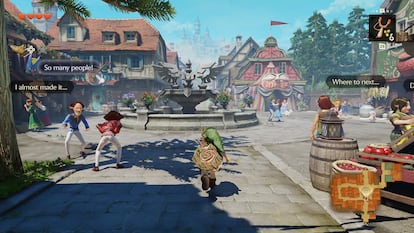
Ocarina of Time’s return comes at a particularly auspicious moment for the franchise, which is enjoying one of the most popular periods in its history. As The Legend of Zelda celebrates its 40th anniversary and prepares for a feature-film adaptation, its latest installments have posted extraordinary sales figures. Breath of the Wild (2017) has sold around 40 million copies, while Tears of the Kingdom (2023) has reached roughly 30 million. The renewed interest in the series has created an opportunity to introduce the classic to a new generation of players.
“It’s the best time to bring in new players,” Fernández says, calling it a smart move by Nintendo: “It’s like The Godfather or Citizen Kane — everyone has heard of it, even those who never played it.” He also notes that Shigeru Miyamoto, the creator of Mario and Zelda, has long defended remakes as a way of introducing classic games to new audiences.
No shame in remakes
Unlike in film, where remakes are often associated with creative bankruptcy or commercial opportunism, in the video game industry, they tend to serve a different purpose: introducing new generations to landmark titles whose technology, controls or design have become dated.
In recent years, a long list of classics has reached younger players through remakes. Among the most successful are Resident Evil 2 (2019), Final Fantasy VII Remake (2020), Mafia: Definitive Edition (2020), Dead Space (2023), Resident Evil 4 (2023), System Shock (2023), Super Mario RPG (2023), Silent Hill 2 (2024), Until Dawn (2024) and Dragon Quest I & II HD-2D Remake (2025).

Jaume Esteve, a communications scholar and video game expert, distinguishes between two ways of approaching remakes: those that merely reproduce the original, like a photocopy, and those that use it as a starting point for introducing changes. Esteve understands the argument that remakes can help bring classic games to new audiences, though he admits he is saddened by the idea “that new generations might not be capable of enjoying works from 30 years ago.”
He acknowledges that some titles have aged in technical and visual terms, but maintains that they remain perfectly enjoyable. “When you’re a pioneer, you blaze a trail, but you also pay a price, and many gameplay mechanics or visual elements become outdated,” he says.
Esteve also points to the significance of the industry’s transition from 2D to 3D, a technological and aesthetic frontier that conditions how new generations perceive older video games. Three-dimensional graphics are particularly important because they “allow a work’s visual presentation to be updated and brought into the present without necessarily abandoning its legacy.”
The challenge, he argues, is to find “the balance between modernizing a game and preserving what made it a benchmark.”
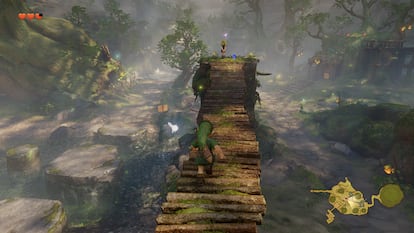
With remakes, he argues, there is always a risk that “too much tinkering with the original can end up distorting its nature.” He supports updating classic games, but “only as long as their essence is preserved.”
He is not the only one to sound a note of caution. “Remakes are a double-edged sword,” warns Salva Fernández. “There are two main approaches: either you stay very faithful to the original, or you completely reimagine it, as happened with Final Fantasy VII Remake. If you take the conservative route, the result may feel underwhelming; if you reimagine it, you can alter its magic.”
In the shadow of ‘Grand Theft Auto VI’
The release calendar is working in Nintendo’s favor, too. The arrival of Grand Theft Auto VI on November 19 has pushed a number of other major releases out of the month, leaving an unusual gap in the market. Fernández believes the Japanese company has no need to alter its strategy to compete with GTA.
“Nintendo does its own thing, and it’s doing very well,” he says. “It won’t change its strategy because of other games.”
What’s more, GTA VI will not be released on the console that hosts Zelda, the Switch 2, meaning the two titles will not be competing on the same platform.
“No one with a Switch 2 will skip buying the Zelda for GTA,” Fernández says. “Everyone else has cleared out of November, and there is a black hole. If anyone can take advantage of that month, it’s Zelda.”
In the popular imagination, Zelda and GTA may seem like polar opposites, but in reality they have more in common than it might appear. Fernández points to a remark by Dan Houser, the legendary co-creator of the Grand Theft Auto series, about the influence of Nintendo’s classics: “Anyone making 3D games who claims they haven’t borrowed something from Mario or Zelda is lying.”
Thirty years on, the question is no longer whether Ocarina of Time can once again be considered a masterpiece, but whether a new generation is ready to discover why it became one in the first place.
Sign up for our weekly newsletter to get more English-language news coverage from EL PAÍS USA Edition