Connect with us

Latest

Spain Outraged By 87-Year-Old’s Eviction After Vulture Fund Quintuples Rent

Published

on

Alex Dunham

Alex Dunham – alex.dunham@thelocal.com

Published: 23 Sep, 2026 CET. Updated: Wed 23 Sep 2026 15:39 CET

Spain outraged by 87-year-old's eviction after vulture fund quintuples rent
Maricarmen’s eviction at the hands of a vulture fund exposes how vulnerable many tenants are in current housing market. (Photo by Josep LAGO / AFP)

Add The Local as a preferred source

The eviction of an elderly disabled woman from her lifelong apartment after an investment firm bought the property and raised her rent more than fivefold has sparked nationwide outrage and protests in the Spanish capital.

Looking to move? Find your next rental apartment here.

Become a member or log in to continue reading

More

Comments

Join the conversation in our comments section below. Share your own views and experience and if you have a question or suggestion for our journalists then email us at news@thelocal.es.
Please keep comments civil, constructive and on topic – and make sure to read our terms of use before getting involved.

Please log in here to leave a comment.

See Also

Continue Reading
Click to comment

Leave a Reply

Your email address will not be published.

Colima

Category 5 Hurricane ‘Polo’ Moving Parallel To Mexico’s Pacific Coast

Published

on

category-5-hurricane-‘polo’-moving-parallel-to-mexico’s-pacific-coast

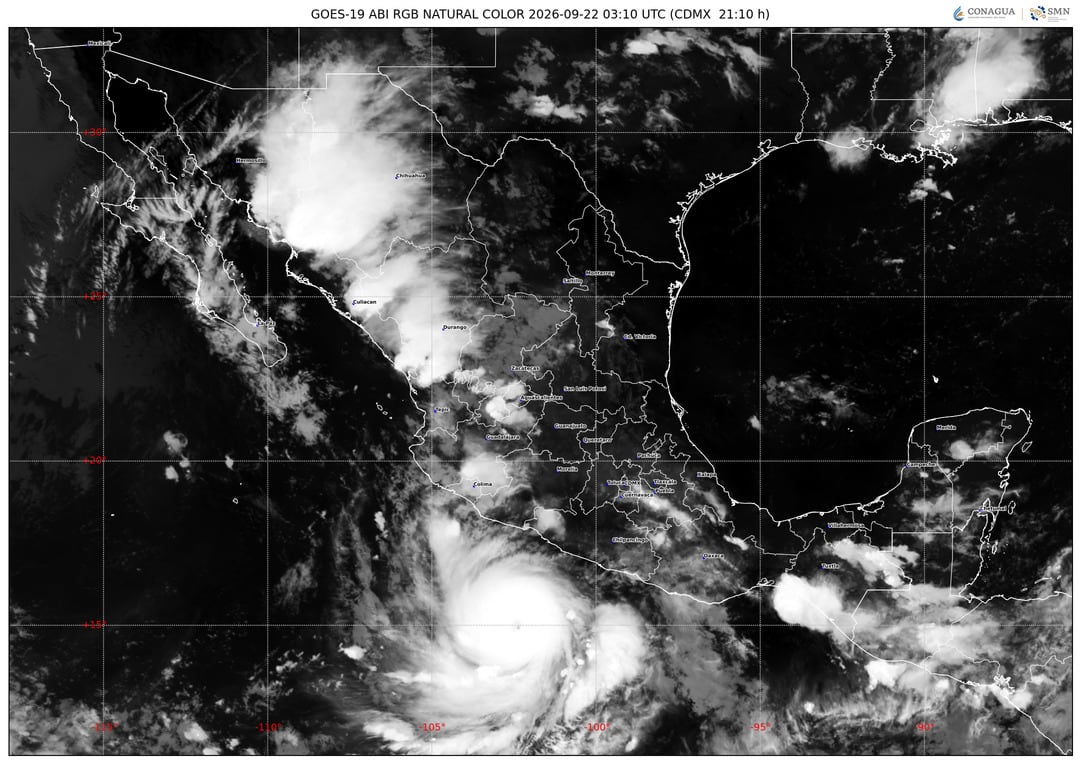
Hurricane Polo has become a Category 5 storm—the highest level on the Saffir–Simpson scale—in less than two days. At 6 a.m. on Tuesday, the U.S. National Hurricane Center (NHC) placed the center of the system about 210 miles (355 km) south of Zihuatanejo, in the Mexican state of Guerrero, with maximum sustained winds reaching 165 mph (265 km/h).

The rapid intensification of Polo, its projected track off Mexico’s southwest coast and the vulnerability of coastal and highland communities have prompted authorities to sharply increase monitoring in the states of Colima, Michoacán, Guerrero, Oaxaca and Jalisco. Mexican authorities have warned about the potential for heavy rain, landslides, overflowing rivers, flooding and adverse sea conditions in Michoacán and Guerrero.

Although the cyclone is not expected to make landfall, authorities are on high alert in a country that is still feeling the effects of Hurricane Otis, a devastating Category 5 storm that caused 70 deaths and left a trail of destruction in 2023.

A Category 5 hurricane

Polo has reached Category 5, reserved for hurricanes with sustained winds of 157 mph (252 km/h) or higher. Accumulated rainfall, flash floods, landslides and high surf can cause severe damage in places that are far from the hurricane’s center. In the case of Polo, Mexico’s main risk is not a direct hit but the effects on the coast and the Pacific highlands. In the early hours of Wednesday, the NHC reported that “outer rainbands of Polo are beginning to reach the coast of southwestern Mexico.”

The progression has been very quick. In the early hours of Tuesday the system intensified very rapidly: Mexico’s National Meteorological Service reported it had become Category 4 after having been Category 2 just hours earlier. A subsequent advisory from the NHC confirmed the escalation to Category 5.

Rain and landslide risk

The NHC has forecast 100 to 200 millimeters of rainfall for coastal areas of Guerrero and Michoacán through Thursday, with isolated maximums up to 300 millimeters. Oaxaca, Colima and Jalisco are expected to receive between 75 and 150 millimeters along their coastal sectors during the same period. These amounts could trigger urban flooding and overflow of streams and rivers, especially where soils are already saturated from previous rain. The risk rises in the Sierra Madre del Sur and other steep terrain, where water can rush down ravines and temporary channels.

The U.S. advisory explicitly warns of “potentially life-threatening” flash floods and landslides in steep terrain areas of Guerrero and Michoacán. The threat includes mountainous municipalities and rural communities that are not necessarily on the front line of the coast but could suffer impacts from road closures, rockfalls, sudden water flows and service outages.

Wind, surf and active monitoring

The sea is one of the main risk zones. Surf generated by Polo will affect sectors of Mexico’s southwest coast over the coming days, with dangerous conditions for navigation, swimming and exposed communities. The NHC warns that the surf can produce rip currents—fast flows of water moving away from the shore that can pull people out to sea. Even if the center of the storm remains offshore, wind gusts can topple branches, traffic signs and light structures. In coastal towns, surf can erode beaches, damage palapas and harm infrastructure near the shore.

Preventive measures

Authorities in Guerrero and Michoacán have suspended classes as a preventive measure. On Tuesday the suspension applied to Acapulco, Costa Grande and Costa Chica in Guerrero; in Michoacán, the measure will be in force Wednesday in seven municipalities of the Sierra-Costa region. Additionally, port authorities have restricted navigation at points such as Acapulco, Puerto Marqués, Zihuatanejo and Lázaro Cárdenas due to high seas and adverse maritime conditions.

People are advised to avoid crossing water currents, stay away from beaches and breakwaters, secure objects that could be blown away by wind, and prepare documents, medicines and an evacuation route if living in an area at risk.

Sign up for our weekly newsletter to get more English-language news coverage from EL PAÍS USA Edition

Continue Reading

Caracas

Trump And Delcy Rodríguez Seal Thaw With Meeting In New York

Published

on

trump-and-delcy-rodriguez-seal-thaw-with-meeting-in-new-york

It was the most anticipated meeting of the day. The embrace between the leaders of two countries considered bitter enemies for nearly three decades. Donald Trump and Delcy Rodríguez, leaders of the United States and Venezuela, met late on Tuesday, the White House confirmed, on the margins of the United Nations General Assembly in New York. The encounter thus seals a thaw between their countries. But it was not born of equality; rather it reflected Caracas’s absolute subordination to Washington. It was the first meeting between a U.S. president and a Chavista leader since Bill Clinton met then president-elect Hugo Chávez in 1999, apart from a brief exchange at a summit between Barack Obama and Nicolás Maduro in 2015 in Panama City.

The meeting took place at the Lotte New York Palace Hotel as part of a reception offered by Trump to foreign leaders. There were also high-ranking Cabinet members present, including State Secretary Marco Rubio, Treasury Secretary Scott Bessent, Chief of Staff Susie Wiles and Deputy Chief of Staff Stephen Miller.

Rodríguez arrived at the UN on Tuesday saying she was coming to the United States “with her head held high.” Shortly afterward she watched, unmoved, as Trump boasted of the “massive military operation” that detained “a criminal, a dictator: Nicolás Maduro.” The former Venezuelan president was physically very close to the spot where he was being discussed—about a 20-minute drive away, in the Brooklyn jail where he has slept since his forced removal from power on January 3.

But what the Republican president seemed most proud of was the deal announced in September that would grant privileged access to more than 20% of the South American country’s oil reserves. “When you add the United States and Venezuela together, we have more than 60 percent of the oil in the world. So it’s, perhaps, the biggest deal. It was a war, but it is, maybe, the greatest deal ever made. To the victor belong the spoils,” he said.

The setting could not have been more symbolic. It was at UN headquarters that Chávez, the leader of the Bolivarian revolution who came to power in 1998, famously declared, “There’s a smell of sulfur here.” He said it at the 2006 General Assembly after President George W. Bush spoke. “Yesterday the devil was here, in this very place; there is still a smell of sulfur at this roster where I have had to speak,” Chávez said—words repeated and caricatured countless times.

Maduro, Chávez’s successor after his death in 2013, returned to a bellicose rhetoric. The last time was in 2018, during Trump’s first term. Even Rodríguez herself, who now insists on the need to build bridges with the American leader, launched harsh attacks on the United States and on Trump from the UN podium.

In 2019 she called U.S. sanctions a form of “state terrorism” that no longer uses bombs but banks and insurers; she accused the Republican leader of having “extended his imperial claws” against Cuba; she said peoples like Venezuela’s lacked access to a media machine serving the global “hegemon” and its satellites; and she urged Washington to show less arrogance and more tolerance toward free nations. Today, those words seem distant.

Upon landing in New York last Sunday, the Chavista leader expressed her willingness not to cause any trouble. “We arrived in New York with the firmness and hope of a people who believe in encounter and unity among nations,” the former vice president and now acting president wrote. “At the 81st United Nations General Assembly, Venezuela will be present to carry its voice and defend its principles, with a work agenda based on respect, cooperation and understanding. […] We are a country committed to peace, dialogue and building common paths,” she added. Those words are far removed from those she and her former bosses, Maduro and Chávez, once uttered.

Sign up for our weekly newsletter to get more English-language news coverage from EL PAÍS USA Edition

Continue Reading

Comunidad de Madrid

La Cuenta Atrás Para Echar A Maricarmen Ha Comenzado En La Calle Y Los Despachos

Published

on

la-cuenta-atras-para-echar-a-maricarmen-ha-comenzado-en-la-calle-y-los-despachos

Acampada por el desahucio de Maricarmen en Madrid.

La cuenta atrás para el desahucio de Maricarmen, de 87 años, ha comenzado este martes a las ocho de la tarde con una concentración de cientos de personas frente a su casa en la calle Alcalde Sainz de Baranda. “Maricarmen se queda” y “El ático de Ayuso para Maricarmen”, gritaron cientos de personas convocadas para tratar de impedir su desahucio y que han prometido quedarse hasta las ocho de la mañana del miércoles, cuando está prevista la llegada de un secretario judicial acompañado de la policía.

Seguir leyendo

Acampada por el desahucio de Maricarmen en Madrid.

Continue Reading

Trending

Copyright © 2017 Spanish Property & News