Connect with us

Latest

Spain’s BBVA Bank And Former Chairman To Stand Trial Over Spying

Published

on

A court on Thursday ordered Spain’s second biggest bank BBVA and its former chairman to stand trial for alleged corporate spying involving a disgraced former police chief.

BBVA was placed under investigation in July 2019 for allegedly hiring a private investigation agency run by former police commissioner Jose Manuel Villarejo to spy on politicians, journalists and business figures.

Francisco Gonzalez, 81, was chairman of BBVA from 2000 to 2018, when the bank is said to have engaged the agency.

Spain’s National Court, which handles major financial cases, ruled there was sufficient evidence for BBVA and 15 other defendants, including Gonzalez, to stand trial.

The bank will stand trial for bribery and unlawful discovery and disclosure of secrets.

Gonzalez will be tried for alleged offences of bribery, disclosure of secrets, membership of a  criminal organisation, mismanagement and falsification of documents.

Several former BBVA executives will stand trial alongside him for the same crimes, the court said.

BBVA has said it used the services in the past of a business intelligence group linked to Villarejo called Cenyt.

Cenyt is suspected of having done dirty work, such as blackmail or threats, on behalf of companies or rich individuals for decades.

Villarejo was sentenced to 19 years in prison in 2023 after a court found him guilty in a separate case of secretly recording hundreds of public figures and orchestrating campaigns to discredit them on behalf of prominent clients.

His recordings have embarrassed former King Juan Carlos I, as well as several politicians and former ministers.

Continue Reading
Click to comment

Leave a Reply

Your email address will not be published.

Balearic Islands

Booze-Loving Thieves Steal Two Beer Lorries From Depot In Mallorca

Published

on

booze-loving-thieves-steal-two-beer-lorries-from-depot-in-mallorca

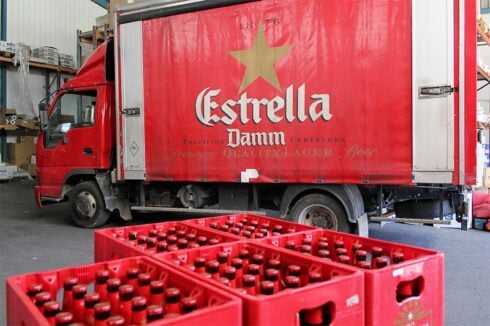
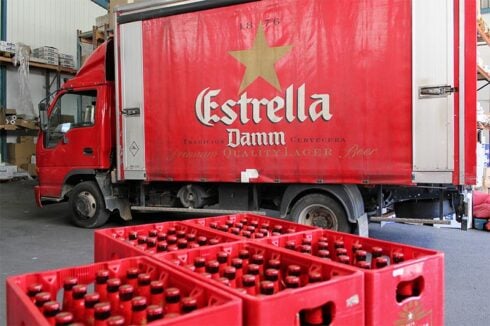
Booze-loving thieves steal two beer lorries from depot in MallorcaTWO beer lorries have been stolen from an Estrella Damm depot in Mallorca. The thefts were discovered early on Friday morning with the Policia Nacional in Palma in charge of

Continue Reading

China

The European ‘catenaccio’

Published

on

the-european-‘catenaccio’

The footballing catenaccio was a strategy, originally developed in Switzerland and popularized in Italy, that prioritized airtight defense and strict man-marking. The idea was that there was no need to have the ball and build the play; it was enough to protect your own goal, counterattack, and hope to catch the opponent by surprise. It is a passive strategy, now largely obsolete, used only by teams that see themselves as inferior. Teams that see themselves as superior want to be aggressive and keep possession so they can dictate the pace of the game. Catenaccio is a strategy for not losing, not a strategy for winning.

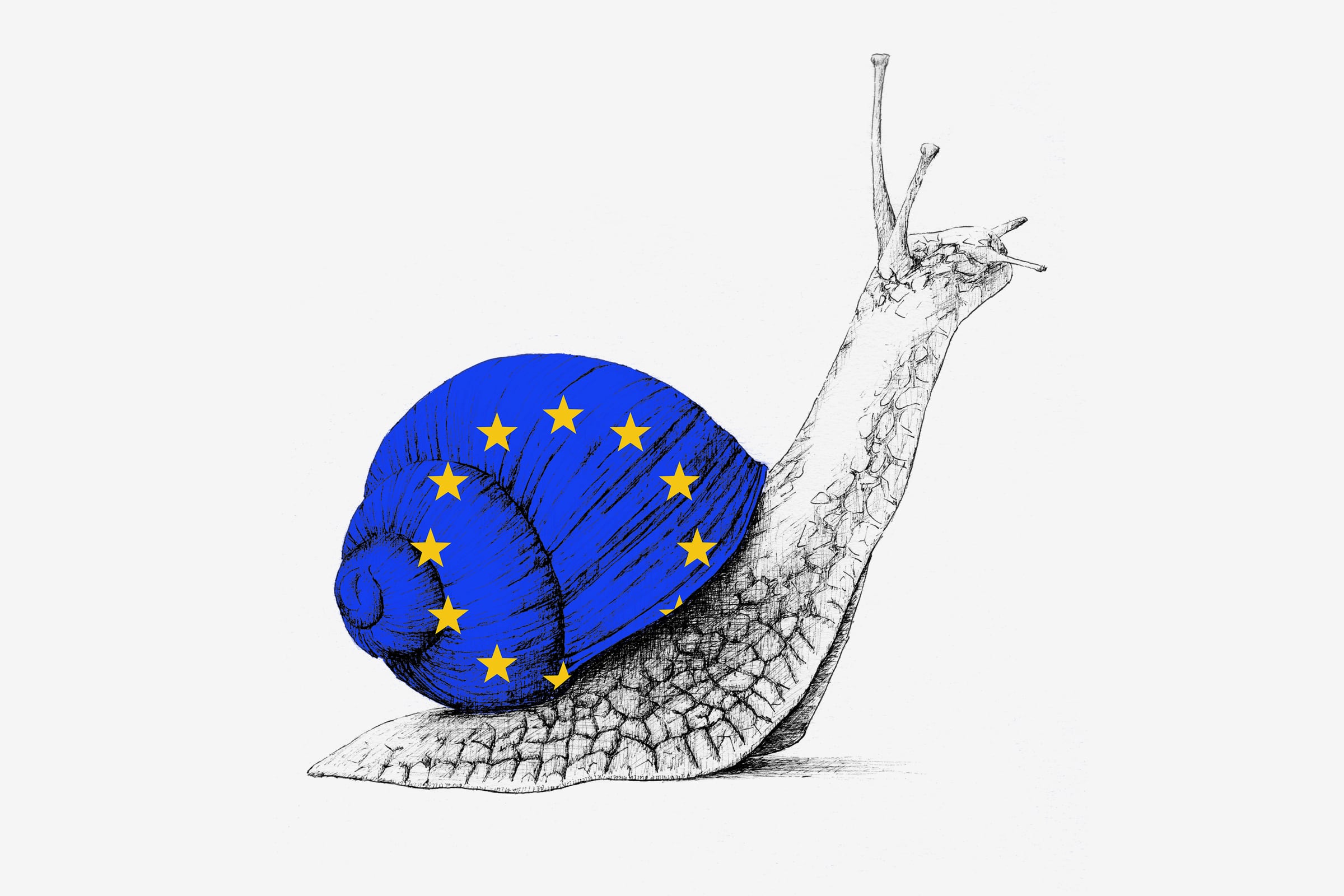
European economic policy is a version of catenaccio, revealing either a sense of inferiority — or, even worse, a political preference for being inferior — relative to the United States and China. Playing constantly on the defensive makes progress very difficult.

China’s economic strategy, which the United States has largely begun to emulate in recent years, has been clear over the past decade: invest whatever public and private resources are necessary to become a global leader in strategic sectors. Of course, this has been accompanied by a strategy of protecting the domestic industry — but without massive investment, protection alone would have achieved nothing. This investment has benefited from a huge internal market, where companies can grow and develop until they reach the scale required to become world leaders, as well as fierce competition that encourages innovation. All of this has been supported by subsidies and public infrastructure aimed at strategic industries.

The Made in China 2025 plan, designed in 2015, established the guidelines, which have since been updated and expanded through successive five-year plans. The result has been a total public-sector deficit estimated, depending on how the public sector is defined, at between 8% and 15% of GDP, and public debt around 100% of GDP.

The outcome is well-known: China has become a leader in cutting-edge industries and increasingly dominates high-value-added sectors, where it competes directly with European exports.

About a decade ago, the United States realized that China would become a formidable competitor and tried to counter this strategy through containment measures, including import restrictions, sanctions, and more recently tariffs. But it did not work. Chinese imports, measured in value-added terms and including indirect imports, fell by only about 2%, while the containment measures actually encouraged even more Chinese investment.

For example, after restrictions were imposed on the technology sector in 2018, China designated technology as a national-security sector, and today it competes head-to-head with Silicon Valley in artificial intelligence and semiconductors. The more restrictions that were imposed, the more determined China became to achieve self-sufficiency in strategic sectors.

When the United States launched a tariff war with China in 2025, it took only a few weeks to discover China’s superiority in negotiation. China threatened to cut off supplies of rare earths, the 17 chemical elements essential to modern technology and the energy transition. The United States quickly realized that within weeks it could be left without essential components for computers, batteries, and medical and military equipment.

At that point, the United States changed strategy, deciding to imitate China and invest whatever resources were necessary to become independent in the supply of strategic materials. The Project Vault for rare-earth investment, subsidies to the production of semiconductors, public investment in technology firms, and the Defense Department’s private-equity group are all manifestations of the U.S. desire to strengthen its economy through investment so as to become less dependent on China.

The United States concluded that catenaccio did not work and that it had to strengthen itself before engaging in another trade war with China. Since then, the tone of relations has changed. Negotiations are underway to facilitate mutual investment, and Trump and Xi are scheduled to meet three times this year.

Europe, however, remained complacent in the face of China’s rise — particularly Germany’s automobile industry — and European countries remain more concerned with monitoring their neighbors’ fiscal policies than with investing to close the technological gap with the United States and China.

In 2024, the Draghi Report recommended increasing European investment by 5% of GDP annually for a decade, financed in part through eurobonds, in order to close the productivity gap with the United States. Two years have passed; only about 20% of the recommendations have been implemented, and the increase in investment has been minimal.

The same has happened with the recommendations of the Letta Report on removing barriers within the single market. Barely 10% have been implemented, and Europe still has a nationally fragmented internal market that severely limits business growth and productivity.

Even worse, negotiations over the next European budget are moving in the opposite direction. The debate is not about how much to increase the budget to provide Europe with the public goods needed to advance in cutting-edge technologies, but rather about how much to reduce it. The European budget is a clear political statement that Europe does not want to compete with China or the United States.

Most European countries, especially the so-called “frugal” ones, still prefer to be small countries in a world dominated by large powers. Politically, that is more comfortable and avoids the need for ambitious decisions. But it condemns European citizens to remain behind the United States in productivity, behind China in industrial capacity, and behind both in military and technological capabilities.

Of course, Europe must defend itself when the United States or China adopt commercial measures that harm it. But if we do not invest in strengthening ourselves, and if we do not have a genuine European single market to offer as leverage, our negotiating power is limited. A trade war with China could deprive us overnight of essential materials. A trade war with the United States could cut us off from defense supplies or access to advanced artificial-intelligence models by executive decree.

Let’s not forget: trade wars are never won, consumers ultimately pay the tariffs.

European policy remains anchored in the past and still believes that savings, trade surpluses, and adherence to fiscal rules are sufficient. Complaints that the Chinese currency is undervalued are merely a way of avoiding the reforms and investments that are actually needed.

The reality is that four years have passed since Russia’s invasion of Ukraine and there is still no European defense project. We have made no meaningful progress on banking union, capital-markets integration, eurobonds, or the European public goods required to deal with this new geoeconomic reality. It is certainly not for lack of ideas or recommendations.

The political rhetoric speaks of strategic autonomy in response to the breakdown of the international order, but the reality is that European leaders do not seem to believe that the current situation requires greater effort or policies different from those of the past.

It is the catenaccio of a small team whose ambition is simply not to lose.

Sign up for our weekly newsletter to get more English-language news coverage from EL PAÍS USA Edition

Continue Reading

ElPais

Jeanette Serritzlev, Military Analyst: ‘Crises Are Already Here; It’s Not About Being Afraid, But About Being Prepared’

Published

on

Jeanette Serritzlev, 47, has spent years studying how wars are no longer fought only on the battlefield but also in the information space. A military analyst at the Royal Danish Defence Academy and an expert on disinformation, hybrid warfare and Russian influence, she took part as an expert panellist in the latest European Citizens’ Panel on crisis and emergency preparedness. She spoke to EL PAÍS in Brussels at the final session and reflected on the risks faced by Europe, the role of citizens in building more resilient societies and the need to prepare for any scenario.

Question. How has the perception of risk in Europe changed since Russia’s invasion of Ukraine?

Answer. There has been a strategic shift both at the political level and among the population, because now war is a risk and hybrid attacks are a reality.

Q. What does that shift mean for the concept of preparedness?

A. Citizens are more aware that we need to be prepared for crises. There are differences between countries; I know northern Europe best, but since Russia’s full-scale invasion in 2022, there has been a change in the assessment of the threat, and that has also served as a wake-up call on preparedness. All the Nordic countries now have official recommendations for people to be self-sufficient for 72 hours and, in Sweden’s case, even for a week, because of geographical factors.

Q. It seems it took a war on Europe’s doorstep for authorities to get serious about it.

A. In most European countries, governments did not prioritize either defense or crisis preparedness as much as they should have, because they trusted that the risk was not imminent. Is that a good thing? No. Is it a fairly human way of thinking? I suppose so.

Q. Do you notice differences between north and south, or east and west, among the panel participants, who come from all 27 EU countries?

A. Not as many as I expected. I thought we would have Spaniards talking about natural hazards and Baltics talking about a war with Russia, and I doubted whether the debate could be focused. It turns out that, after sharing their experiences, they reached very similar approaches when looking for solutions, which I find very interesting and very positive for European resilience as a whole. There are no countries that are more focused on preparedness and saying, “We want to do more, we should do more,” while others reply, “Well, we’ll see what happens, I’m sure we’ll come up with something when the crisis arrives.”

Q. Have governments also changed their perspective?

A. Both my colleagues and I had the impression that authorities were somewhat reluctant to talk about preparedness because they didn’t want to alarm the public. And of course it’s not about causing alarm but about being transparent about the situation: the military threat from Russia, Russian hybrid threats, but also any other risk, whether a migration crisis, natural disasters, the climate crisis…

Q. There will always be people who accuse a government of being alarmist for informing the public…

A. I often say that, hopefully, we will never have to face a war. But crises are already here, and more will come. That is why it’s not about being afraid but about being prepared, because if we are prepared, we will be stronger and more resilient when something happens.

Q. How prepared is the population in your country?

A. Two years ago, all Danish citizens received recommendations on how to be self-sufficient for 72 hours. That includes, of course, water, food, batteries, some cash, a wind-up radio and similar essentials. Overall, the initiative was very well received. But, if I remember correctly, fewer than half the population have actually bought or assembled what they need for those 72 hours. In Denmark, because we are such a well-functioning society, there is a sense that no matter what happens, everything will keep working. The positive thing is that every time there is a crisis, even a relatively minor one, we see an increase in the number of people following these recommendations. The trend is growing.

Q. One of the challenges for preparedness is distrust of authorities. How do you combat that?

A. That is the million-dollar question. Taking part in this citizens’ panel and in these three sessions has made me refine my view on trust. I come from a country where people do not have to agree with the government or with institutions in order to trust them in a general sense. People do not believe that those who work in them are trying to harm the population.

Q. That is not the case everywhere.

A. No, we have to acknowledge that in some countries you cannot always trust, for example, that the police are there to help you. There are issues of corruption and other challenges, including within the EU. It is a very complex issue. Trust has to be earned. That may sound like such a basic answer that it is almost obvious, but it means actually doing what you say you are going to do, being as transparent as possible and acknowledging mistakes when they are made.

Q. Populist rhetoric exploits crises to fuel distrust in institutions. How can that phenomenon be countered?

A. In Denmark, I think we have been relatively effective when decisions were backed by broad parliamentary consensus. For example, that happened with participation in the mission in Afghanistan and also with support for Ukraine. Often political consensus ends up being reflected in public consensus. Building those agreements may take more time, but on important matters, having broad political support is a key element to secure citizen acceptance.

Q. Do you think Europe still does not take the threat of Russian disinformation seriously enough?

A. At the EU level, a great deal is already being done. At the national level, there are enormous differences from one country to another. Even so, in general terms I would say that there has been a significant shift in recent years in recognizing this threat.

Sign up for our weekly newsletter to get more English-language news coverage from EL PAÍS USA Edition

Continue Reading

Trending

Copyright © 2017 Spanish Property & News