Connect with us

%

Bullfighting Protection Law Faces Repeal

Published

on

bullfighting-protection-law-faces-repeal

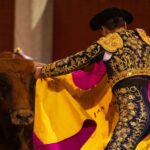
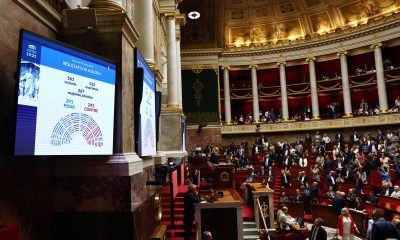
Spain’s long-running debate over bullfighting is set to return to the national spotlight as Congress prepares to discuss a proposal that could remove the legal protections currently granted as part of the country’s cultural heritage.

The parliamentary initiative seeks to repeal Law 18/2013, the legislation that officially recognises bullfighting as part of Spain’s cultural heritage. If successful, it would remove the national legal framework that has protected the tradition for more than a decade and could hand greater decision-making powers to Spain’s autonomous communities and local authorities.

The proposal has reignited one of Spain’s most divisive cultural debates, with supporters arguing that bullfighting represents an important historical tradition, while opponents say it no longer reflects modern attitudes towards animal welfare.

What would change?

The proposed repeal does not automatically ban bullfighting across Spain. Instead, removing the national protection would make it easier for regional governments and municipalities to introduce their own restrictions or prohibitions without the existing cultural heritage legislation acting as a safeguard.

Campaigners behind the initiative argue that culture should evolve alongside society and that legal protection should not be afforded to spectacles involving animals. The proposal follows a citizen-backed legislative initiative that gathered well over the minimum number of signatures required to reach Parliament.

Political battle lines drawn

The issue is expected to expose divisions within Spain’s political landscape.

Left-wing parties, including Sumar, have supported opening the debate, while the Partido Popular and Vox remain firmly opposed to removing the law. The position of the governing Socialist Party (PSOE) is again expected to prove crucial, with its stance potentially determining whether the proposal progresses through Parliament.

Previous attempts to challenge the legal status of bullfighting have generated heated exchanges both inside and outside Congress, highlighting how deeply the issue divides public opinion.

A centuries-old tradition under scrutiny

Bullfighting continues to attract thousands of spectators to major fairs in cities such as Madrid, Seville and Pamplona, while also facing sustained criticism from animal welfare organisations and campaign groups.

For supporters, the debate centres on preserving a tradition they consider part of Spain’s cultural identity. Opponents argue that legal protection is no longer justified and that individual regions should be free to determine whether bullfighting has a place in their communities.

As Congress prepares for another high-profile discussion, the outcome could shape the future legal status of one of Spain’s oldest and most controversial traditions, even if any eventual legislative changes remain some distance away.

Sign up for personalised news

Subscribe to our Euro Weekly News alerts to get the latest stories into your inbox!

By signing up, you will create a Euro Weekly News account if you don’t already have one. Review our Privacy Policy for more information about our privacy practices.

%

Spain’s Heatwave Doesn’t Affect Everyone Equally And Your Postcode Could Be The Reason

Published

on

spain’s-heatwave-doesn’t-affect-everyone-equally-and-your-postcode-could-be-the-reason

For many households, escaping the heat is easier said than done. Photo credit: RukiMedia/Shutterstock

When temperatures soar above 40°C, it is easy to assume everyone is enduring the same relentless heat, they’re not. In today’s Spain, your postcode can determine whether your street is shaded by mature trees or surrounded by concrete that radiates heat long after sunset. It can decide whether your home stays bearable through the night or turns into an oven. 

And for a growing number of households, it can mean the difference between switching on the air conditioning without a second thought or leaving it off because the electricity bill is simply too high. As another intense summer grips the country, staying cool is becoming more than a matter of comfort. For millions of people, it is becoming another form of inequality.

The postcode lottery of summer

Take a walk through two neighbourhoods in the same city on a hot afternoon and the contrast can be remarkable. One may have tree-lined streets, shaded parks and green spaces that naturally lower temperatures. A few kilometres away, another may be dominated by concrete buildings, asphalt roads and very little shade, absorbing the day’s heat before slowly releasing it throughout the evening.

It is a phenomenon known as the urban heat island effect, and it means some neighbourhoods can remain several degrees warmer than others, particularly after dark. That difference matters, night-time is when the body is supposed to recover from the day’s heat. But for thousands of families living in heavily built-up areas, the temperature inside their homes barely falls, making sleep difficult and increasing the risk of heat-related illness.

When staying cool becomes a luxury

For many households, escaping the heat is easier said than done. Spain has one of the highest rates of home ownership in Europe, but many properties were built long before modern insulation standards became the norm. Top-floor apartments, older buildings and homes with poor ventilation can trap heat well into the early hours of the morning. Air conditioning may seem like the obvious answer, but not everyone can afford to install it or keep it running during prolonged heatwaves.

Research in Spain has revealed a shocking divide. Households on higher incomes are far more likely to have access to air conditioning than those on lower incomes, leaving many families relying on fans, open windows or public buildings to find relief. As energy prices and the cost of living continue to put pressure on household budgets, staying cool is becoming a luxury that not everyone can afford.

More than an uncomfortable night

Extreme heat is often dismissed as an inconvenience, but its effects can be far more serious, high overnight temperatures prevent the body from recovering, increasing the risk of dehydration, exhaustion and heatstroke. They can also worsen existing heart and respiratory conditions, particularly among older people and those with underlying health problems.

Lack of sleep caused by persistently hot nights has been linked to increased stress, reduced concentration and poorer mental wellbeing, while families with young children often face days of exhaustion after another restless night. The danger is not always the blistering afternoon sun, sometimes it is the heat that lingers long after darkness falls.

Spain’s summers are changing

There is little doubt that Spain is becoming hotter, heatwaves are arriving earlier, lasting longer and pushing temperatures to levels that were once considered exceptional. Public health alerts have become routine, while local authorities increasingly open climate shelters, libraries and community centres to give residents somewhere to cool down.

But hotter weather is also exposing another reality, the people most affected are often those living in neighbourhoods with the fewest trees, the least green space and the oldest housing, where escaping the heat is far more difficult than simply stepping indoors.

A challenge that goes beyond the weather

Spain has always adapted to summer. Shutters are closed during the hottest hours, daily routines shift and life slows down until the evening breeze arrives, yet those traditions are proving less effective as temperatures continue to climb. The challenge is no longer simply preparing for another heatwave. It is ensuring that the ability to stay safe does not depend on your income or your address.

Because while the weather forecast may be the same for everyone, the reality on the ground is very different. For some, a heatwave means turning on the air conditioning and waiting for cooler days to arrive. For others, it means another sleepless night in an overheated home, another day searching for shade and another reminder that, in modern Spain, your postcode can have just as much influence on how you experience summer as the temperature itself.

Continue Reading

%

Spain’s Forests Have Become A Tinderbox: Decades Of Neglect Are Fuelling The Next Wildfire

Published

on

spain’s-forests-have-become-a-tinderbox:-decades-of-neglect-are-fuelling-the-next-wildfire

Wildfires do not become catastrophic simply because temperatures rise. Photo credit: GrantSmithCamera/Shutterstock

Another summer, another wave of wildfires sweeping across Spain, as flames continue to tear through parts of the country, firefighters are once again battling extreme conditions, residents are being forced to leave their homes and communities are watching helplessly as landscapes they know and love are transformed into ash. Heatwaves, drought and strong winds are often blamed when Spain burns, and they are undoubtedly major factors. But there is another part of the story that is receiving increasing attention.

Spain’s forests have changed, years of rural abandonment, reduced forest management and the disappearance of traditional grazing have left large areas of countryside carrying far more vegetation than in the past. And when that vegetation dries out under the summer sun, it becomes fuel waiting for a spark.

A hidden problem beneath the flames

Wildfires do not become catastrophic simply because temperatures rise, they become catastrophic when there is enough material available to burn. For generations, Spain’s rural landscapes were constantly managed. Farmers cleared land, woodland was maintained and livestock moved through forests and hillsides, naturally reducing the amount of dry vegetation.

That balance has changed, as rural populations have declined and traditional farming has become harder to sustain, many areas of countryside have been left unmanaged. Fields have become overgrown, paths have disappeared and forests have become increasingly dense. The result is a landscape where fires can spread faster and burn with greater intensity than they once did.

The countryside Spain once knew is disappearing

The transformation has been gradual, making it easy to overlook, across rural Spain, villages that were once full of agricultural activity have lost residents as younger generations moved away. Traditional jobs linked to the land have declined, and with them many of the practices that helped keep vegetation under control.

What was once a carefully managed relationship between people and nature has become a challenge. Forests are essential for biodiversity, wildlife and the environment, but unmanaged growth can create dangerous conditions during extreme weather. The problem is particularly serious in areas where woodland sits close to homes and communities, creating the risk that a wildfire can quickly move from rural areas towards populated zones.

The return of Spain’s natural fire prevention team

One of the most surprising solutions comes from an old tradition, farm animals such as sheep and goats once played an important role in maintaining Spain’s landscapes. By grazing on shrubs and dry vegetation, they helped reduce the amount of material available to fuel fires. Today, as extensive livestock farming declines, many of those natural “firefighters” have disappeared.

In some parts of Spain, grazing animals are being brought back as part of wildfire prevention programmes. The idea is simple: reducing vegetation before summer arrives can help slow down fires when they eventually occur, tt is not a replacement for firefighters or emergency services, but it is another tool in preventing small fires from becoming uncontrollable disasters.

Why Spain’s firefighters face an increasingly difficult battle

Spain has some of Europe’s most experienced wildfire teams, supported by aircraft, helicopters and specialist emergency units, but even the most advanced equipment has limits. When fires enter landscapes filled with dry scrub and dense vegetation, they can become unpredictable and extremely difficult to contain.

Strong winds can push flames across huge areas in a matter of hours, leaving little time for communities to react, the challenge is not only putting out fires once they begin, it is reducing the conditions that allow them to become so destructive in the first place.

A warning Spain cannot ignore

The country’s wildfire crisis is not caused by one single factor, climate change is increasing the pressure on Mediterranean landscapes, bringing hotter and drier conditions. But the way land is managed also plays a crucial role in determining how severe the consequences will be.

Every abandoned field, every unmanaged forest and every loss of traditional rural activity adds to the challenge facing Spain during the summer months. Preventing future disasters will require investment in woodland management, support for rural communities and a rethink of how the countryside is maintained.

Because once flames are visible on the horizon, much of the damage has already been set in motion. Spain cannot stop every heatwave or prevent every spark. But reducing the amount of fuel waiting beneath its forests could determine whether the next fire becomes a contained emergency or another devastating wildfire. The battle against Spain’s wildfires may be fought with water and aircraft when the flames arrive, but it begins much earlier, among the trees.

Continue Reading

%

A Charitable Summer In Marbella

Published

on

a-charitable-summer-in-marbella

Finca la Concepción. Credit: Nicole King.

In case you haven’t heard, the Spanish Association Against Cancer in Marbella has two major fundraising events lined up this summer.

Firstly, a charity golf tournament takes place on 31st July at Las Brisas Golf Club, followed by the Association’s annual Summer Gala on 1st August at Finca La Concepción. The funds raised, particularly at the gala, are vital in helping the charity continue providing its free support services to cancer patients and their families.

Last year’s Summer Gala raised an impressive 200,000 euros and this year the charity hopes to exceed both that figure and last year’s attendance of 600 guests.

The funds are essential in allowing the Association to continue offering its services free of charge. Over the past year, the Marbella branch has supported 462 patients and 135 family members, providing emotional support, physiotherapy, psychological counselling, nutritional advice and companion services.

The charity also uses the evening to recognise people who have helped raise awareness of cancer through their own experiences, presenting its annual ‘The Fighter’ award.

The gala will once again feature live entertainment, with Málaga bands Efecto Mariposa and The Vintage Experience is already confirmed.

Guests can also take part in the traditional charity auction and the annual jewellery raffle, with the prize once again generously donated by Gómez y Molina Jewellers.

Marbella Town Hall has once again pledged its full support and this year marks the beginning of a three-year principal sponsorship by Marbella businessman Francisco Gómez, inspired by personal family experience.

If you’d like to participate, here are the contact details: AECC Charity Golf Tournament & Summer Gala – Reservations: 952 776 800.  Email: marbella@contraelcancer.es #bettertogether

English Edition every Saturday at 1pm on RTV Marbella for local news updates.

Continue Reading
Advertisement
Advertisement

Spanish Real Estate Agents

Tags

Trending

Copyright © 2017 Spanish Property & News