Connect with us

%

Spain’s Coast Faces A Warning From Africa As Study Reveals 20 Sinking Cities

Published

on

spain’s-coast-faces-a-warning-from-africa-as-study-reveals-20-sinking-cities

Land in Alexandria is sinking at a median rate of around six millimetres a year. Photo credit: BSTOCKVIDEO/Shutterstock

People living in some of Africa’s biggest coastal cities may face a greater flood threat than previously recognised. The ground beneath their homes, roads and businesses is sinking, adding to rising sea levels and putting millions more people at risk of coastal flooding.

A study published in Science Advances on November 27 used radar observations from the European Space Agency’s Sentinel-1 satellites to measure land movement beneath 20 African coastal cities. It found widespread subsidence, although rates varied between cities and neighbourhoods. 

The ground is sinking beneath major cities

Alexandria in Egypt and Lagos in Nigeria emerged as particular hotspots. Land in Alexandria is sinking at a median rate of around six millimetres a year, while Lagos is dropping by approximately five millimetres annually. Those figures may sound small, but the effect builds over time. As land drops, the sea sits higher in relation to streets, homes and infrastructure. Combined with rising sea levels and extreme weather, this can allow coastal flooding to reach further inland.

Across the 20 cities, more than seven million people, one million buildings and assets worth around $180 billion could be exposed to flooding by 2050 during an extreme sea-level event, the researchers estimate.

Why is the land sinking?

Subsidence has several causes. Some movement is natural, but human activity can make it worse. The study identifies groundwater extraction, sediment compaction and urban development as important influences.When groundwater is pumped out to supply homes, businesses and industry, underground sediments can compact and the surface above them can sink. Building on soft or reclaimed land can add further pressure.

In Alexandria, including measured land subsidence increased projected relative sea-level rise by around 36 per cent by 2050 under the study’s intermediate emissions scenario. The area exposed to coastal flooding was estimated to grow by about 15 per cent.

Spain’s coastline is not immune

The African study does not assess Spain, and its figures should not be applied to Spanish cities. However, land subsidence is already a recognised problem in parts of the Spanish coastline, particularly the Ebro Delta in Catalonia. Research published in 2020 measured sinking across the delta at rates ranging from less than one millimetre to around 2.3 millimetres a year. Most was attributed to natural sediment compaction. The area is also affected by reduced sediment reaching it from the Ebro River, coastal erosion and rising sea levels.

Dams along the river have trapped much of the sediment that would otherwise replenish the delta. NASA has documented how this has left the coastline more exposed to erosion and the effects of rising seas. Spain is not facing the same measured rates as Lagos or Alexandria, but sinking land can make existing coastal risks worse. Low-lying areas such as the Ebro Delta have little room to absorb further losses of land or repeated flooding.

Satellites reveal a risk that is easy to miss

The researchers say identifying where land is moving can help governments plan more accurately. Satellite monitoring detects changes that are difficult to spot from street level and can help direct flood defences, water management and development controls towards the areas most at risk.

Some causes, particularly excessive groundwater extraction and building on vulnerable ground, can be managed. But coastal communities must prepare for the combined effects of sinking land, rising seas and extreme flooding. A few millimetres of sinking each year may seem insignificant, but over time those changes can leave homes, roads and neighbourhoods increasingly exposed.

%

Electric Scooter Beats Stadium Security In Bizarre Football Pitch Invasion

Published

on

electric-scooter-beats-stadium-security-in-bizarre-football-pitch-invasion

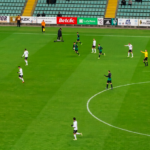
Their attempts to catch him quickly turned into an uneven race. Photo credit:@5G_VIDEO on X

Football stewards are used to dealing with pitch invaders, but chasing an especially motivated one who has brought his own transport is probably not part of the job description. That was the unusual problem facing security staff at a football match in Poland when a spectator rode an electric scooter straight onto the pitch, leaving them struggling to catch up.

The bizarre interruption took place on Friday, November 27, during the match between Stal Stalowa Wola and Legia Warsaw II in Poland’s third-tier Betclic II Liga. Rather than sprinting across the grass and trying to evade security, the intruder had a rather more convenient way of making his entrance and his escape.

A getaway vehicle on the pitch

Footage of the incident shows the man riding across the playing surface as stewards set off after him. The problem for the pursuing security staff was fairly obvious: while they were running, he was riding. Their attempts to catch him quickly turned into an uneven race, with the electric scooter giving the pitch invader a considerable advantage. He was able to outrun security simply because he did not have to run at all, proof that he had definitely thought this through.

It was not quite the traditional football pitch invasion, where someone sprints around trying to avoid being grabbed by a steward. This time, the man had effectively brought his own getaway vehicle, leaving security chasing behind him on foot. The unusual yet amusing scenes attracted attention online, with viewers entertained by the sight of stadium staff trying to keep pace with an electric scooter. It also raised the rather obvious question of how someone managed to get one onto the pitch in the first place.

Czegoś takiego chyba jeszcze nie było 😬😂

Mecz Stali Stalowa Wola z rezerwami Legii Warszawa przerwany przez…

No właśnie – kukiriniarza? Czy po prostu dzbana? 🙈🤦‍♂️ https://t.co/chXywy8SnW

— Adam Delimat (@a_delimat) November 27, 2026

A comeback before the chaos

The interruption was not the only drama at the Subcarpathian Football Centre that evening. Stal Stalowa Wola had already given its supporters plenty to talk about after coming from two goals behind to beat Legia Warsaw II 3-2. The visitors had taken a 2-0 lead, putting the home side under pressure. However, Stal fought its way back into the match before Maksymilian Hebel converted a penalty in the 85th minute to complete the comeback.

The late goal put the home side ahead, but the final moments brought an entirely different kind of spectacle when the scooter rider appeared on the pitch. For the players, it meant an unexpected interruption to a match that was already proving eventful. For the stewards, it meant an impromptu pursuit in which their target had a clear advantage.

How did he get the scooter onto the pitch?

That is, I think, what everyone wants to know. The available footage shows the man riding across the grass while security staff attempt to catch him, but it does not establish how on earth he gained access to the pitch or whether he was stopped afterwards. There has also been no confirmed information about his identity or whether he will face any punishment.

The match eventually finished with Stal Stalowa Wola holding on to its 3-2 victory. Its supporters had witnessed a comeback, a late penalty and a pitch invasion, although probably not quite the sort anyone had expected when they bought their tickets. For the stewards, however, there may be one lesson from the evening: next time someone enters the pitch, it might be worth checking whether they have brought a scooter hidden in their coat.

Continue Reading

%

Could Your Car Survive Crossing French Bumps?

Published

on

could-your-car-survive-crossing-french-bumps?

Arrêt! Dukes of Hazzard-style jump ahead. Credit: PUMSD FB

Hundreds of thousands of road humps in France are reportedly illegal, leaving drivers to watch their bumpers as they creep across sleeping policemen heading to the UK from Spain.

British drivers heading through France could find that the biggest obstacle on their journey is not a motorway toll or an A63 motorways traffic jam, but a speed bump.

Around 400,000 of France’s estimated 450,000 road humps are said to fail to meet legal standards, according to motoring campaigners. Despite a court ruling confirming the problem, many are still in place, and new ones are reportedly being built.

For drivers travelling between Spain and the UK, the warning is worth noting. That innocent-looking hump in the road could prove rather less innocent when it meets the underside of your car.

France’s speed bumps under scrutiny

French regulations dating back to 1994 set strict conditions for speed bumps, including a maximum height of 10 centimetres. They must also be installed on roads with a speed limit of 30km/h, in built-up areas and on roads carrying fewer than 3,000 vehicles a day. Campaigners say many installations fail to meet these requirements, whether because they are too high, badly designed or in the wrong location.

The problem is not confined to conventional concrete humps. Rubber speed cushions can become slippery in wet weather, creating a particular hazard for motorcyclists and cyclists. Loose fixing bolts have also been blamed for vehicle damage.

Why are they still there?

France’s highest administrative court confirmed in 2025 that many speed bumps did not comply with the rules. However, it did not order their wholesale removal. Local authorities often face pressure from local residents to slow traffic down, while speed bumps are a relatively cheap and visible way of doing so.

There is also no systematic inspection of every installation, allowing some questionable examples to escape scrutiny. In other words, the hump may be illegal, but getting rid of it is not as simple as taking a sledgehammer to the road.

Can drivers claim for damage?

Drivers whose vehicles are damaged by a non-compliant speed bump may be able to seek compensation from the relevant local authority. A court in Toulon ruled in 2020 that a driver whose car was damaged by an unmarked 13cm-high speed bump should receive the full cost of repairs. The council was also ordered to bring the installation into compliance with regulations.

Drivers should keep photographs of the bump, evidence of any damage and repair bills if they believe an unlawful installation has damaged their vehicle. The advice for anyone driving through France is simple: slow right down for the bumps, keep an eye on the road and hope your suspension is feeling resilient. And make sure you keep your seatbelt well fastened and in the correct position, and kitchen implements put away, if you’re travelling bt motorhome.

After all, a French road trip should not require a second mortgage for the garage.

Continue Reading

%

Christmas Giant Arrives In Marbella’s Don Carlos

Published

on

christmas-giant-arrives-in-marbella’s-don-carlos

Christmas at Don Carlos. Credit: EWN

Don Carlos lights up Costa del Sol’s tallest Christmas tree after week-long journey from Poland.

Marbella’s newly reopened Don Carlos hotel has welcomed a spectacular Christmas tree after a week-long road journey from Poland, with general manager Jorge Manzur personally overseeing its transportation. The tree, described as the tallest Christmas tree on the Costa del Sol, was the centrepiece of a festive ceremony and party on Friday, November 27, attended by local press, hotel staff, suppliers and guests.

Manzur has brought his distinctive style of Christmas celebrations to the Don Carlos following his time at the prestigious Villa Padierna hotel, where he became known for creating memorable festive occasions. Read more about Jorge Manzur’s appointment as general manager of Don Carlos Marbella.

The tree’s arrival was a particularly special moment for the hotel, which has recently reopened its doors following a major renovation. The reopening of Don Carlos Marbella attracted more than 600 guests in May.

Christmas celebrations at Don Carlos

The lighting ceremony was followed by a party featuring an exceptional selection of festive food, including traditional Spanish turron, Christmas cakes and some of the finest jamon. Guests enjoyed an evening of seasonal hospitality as the hotel officially began its Christmas celebrations.

ham and turron

The tree forms the centrepiece of an elaborate Christmas display, with decorations extending throughout the hotel. Manzur’s involvement in bringing the tree from Poland reflects the attention to detail behind the hotel’s festive preparations.

The celebrations also brought together people from across the Costa del Sol’s hospitality industry, including suppliers and members of the local press, together with hotel staff and guests.

Festive season in Marbella

party people

The Don Carlos is one of Marbella’s best-known hotels, and its Christmas celebrations add to the festive atmosphere across the resort as the Christmas season gets under way. With its impressive centrepiece now in place, the hotel is ready to welcome guests for the festive period.

For Manzur, the event marks the continuation of a Christmas tradition that he has helped establish at leading hotels on the Costa del Sol. The celebration at Don Carlos offered a first glimpse of the hotel’s festive season, with the towering tree providing a striking backdrop for the evening’s festivities.

Readers can find details of the hotel’s Christmas and New Year’s Eve programme, including its festive dinners and family activities.

Christmas tree

Continue Reading
Advertisement
Advertisement

Spanish Real Estate Agents

Tags

Trending

Copyright © 2017 Spanish Property & News