ElPais
Spain’s Purebred Horse Business Leaps Past The $8.6 Billion Mark
Published
1 day agoon
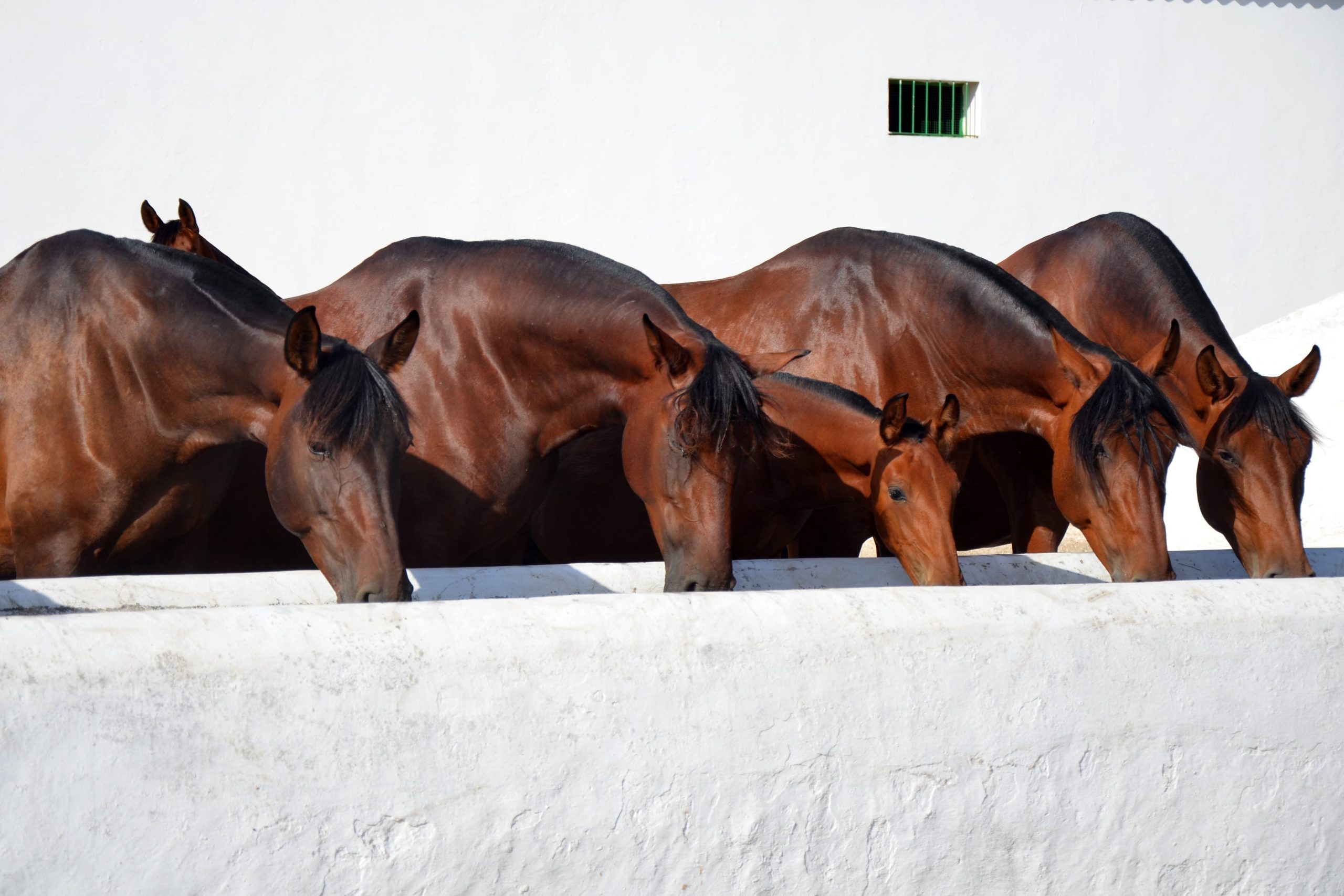
In the 16th century, Lorenzo de Medici admired both Leonardo Da Vinci and his Spanish stable groom — who, on foot, could stop a galloping horse with a single hand. The link between these animals and Spain is historical and it goes beyond mere numbers. The consulting firms Green Oak and Deloitte published an industry report in 2022 that remains the most recent study to date. Back then, the sector was worth €7.4 billion ($8.6 billion), but that figure has undoubtedly fallen behind. Seventy percent of the stock in Spain is purebred Andalusian horse (also known as Pure Spanish Horse or Pura Raza Española, PRE). There is no crossbreeding. The bloodlines are clean.
Carlos Bohórquez Domecq, president of the Royal National Association of PRE Breeders (ANCCE), recounts the horse’s heyday. Its purity goes back to King Philip II, who ruled during the 1500s. Back then, these horses were prized for their bravery in battle. Since then, centuries and changing uses have mellowed the animal’s noble, docile and loyal character.
Seville, he explains, is the city from which the association manages the studbook that certifies — it is the only one recognized by the Ministry of Agriculture, Fisheries and Food — that a horse meets all the conditions to be a Spanish purebred. At the end of 2025, they had 291,138 animals on record, belonging to 51,344 active studs in 71 countries. This is truly the empire where the sun never sets. Last year horses were sold to buyers in New Zealand and Greece. ANCCE works with 18 international partner associations, but only ANCCE can issue the passport. Horses must have the approval of veterinarians who travel to take blood samples that are analyzed in ANCCE’s own laboratory in Seville, which then grants or withholds the documents.
Purebred Andalusian horses are part of the Spain brand, and as a high-value asset it is taxed at 21%. “The price tag is impossible to determine, it depends on the animal,” says Bohórquez Domecq. But association sources cite a range from €10,000 ($11,600) to more than €500,000 ($580,000). And if the stallion is top quality, covering a mare costs over €1,000 ($1,160).
In Ventosa del Río Almar, a village of just 97 residents in Salamanca province, the dressage rider Alberto García-Briñón runs his own stud farm. “This is a calling, you don’t do it for the money,” he says. At nearly 44 years old, he has been in the saddle since the age of 13. He competes, but not for large purses. “It’s publicity, a way to make your stud known.” His place was founded by his father in 1979 and now houses around 100 horses. The cost to keep them is around €350 ($400) per animal per month, as certain expenses such as forage and vets are required whether the horses compete or not.
Over at Finca Epona in Valdemorillo, in the Madrid region, the heat is coming down hard at nearly 40ºC (104ºF), making all the animals seek the shade. A mare’s mane soaks up sweat like willow branches in summer. This is the realm of Mateo Esser, rider and owner of the estate. A horse named Paco changed his life. With him, he won the Spanish eventing championship in 2020 and 2021. Paco cost about €20,000 ($23,200) and Mateo later sold him to an American client for five times that amount. “But this is something that happens once in a lifetime,” he admits. “For me it’s vocational; I’m addicted to horses.” If someone sponsors him, he keeps competing. Maintaining a horse of this status ranges between €1,000 and €1,300 ($1,500) a month. “And every detail matters. Professionally it’s expensive and dangerous, and the purses don’t cover the risk.”
On August 18, while this article was still in the making, two female riders died in separate races in England, in cross-country races. The animals were found uninjured. The riders were 34 and 42 years old. That kind of outcome is not typical. But just imagine half a ton of living muscle galloping at 70 kilometers per hour (43 mph). “A horse can have all kinds of unexpected reactions,” Esser warns.
Yet there are far more dangerous sports. One sign of the horse’s docility is the increase in children taking part in horse-related activities. Sporting licenses are not expensive, and practices such as equine-assisted therapy are gaining value for treating mental disorders. “Each year, between 11,000 and 12,000 new PRE horses are registered. For Spain it is the most important and most widespread breed, and the one that represents us,” says Eduardo Rodríguez, technical veterinary director of the Cartuja Hierro del Bocado Stud, a 189-hectare estate founded in 1484 located in Jerez de la Frontera in the province of Cádiz, an epicenter of horses, flamenco and sherry wine. He champions the “humble” people who keep a horse to go to the county fair or enjoy a weekend ride. “Many people make sacrifices, caring for the animal themselves, feeding it every day, on Sundays, on holidays. It becomes a way of life,” he says.
The Spanish purebreds mainly travel to the United States, Mexico and Germany. Their presence is increasing in competition, not just dressage but also in other disciplines such as working equitation. They sell up to 45 Cartujanos (a sub-breed of the Andalusian horse considered the purest strain of all) a year.
It is immensely valuable, in these AI-saturated times, to hear the passionate voice of Samuel López Candel, head of Dressage at the Royal School of Equestrian Art Foundation in Jerez de la Frontera). There are about 22 students per classroom with a shared passion to protect crafts from distant times. The school functions like a small university of the horse. It offers five degrees in four-year programs: Professional rider, stable hand, saddler — these craftspeople make saddles and work with leather — coachman and veterinary assistant. Think of it as the MIT of the horse world.
Investor return
The beauty, calm and intelligence of a Pura Raza Española make it an easy horse to ride, and a very versatile one. José María Fernández-Daza runs a stud that bears his name and dates back to the 17th century. It is one of the oldest studs in the western region of Extremadura. Twenty-four mares and 13 stallions graze there. His clients are “mainly central Europeans with a female predominance.” He has riders and also supports those of other studs. “They are also a factor of family cohesion; different generations enjoy them as something that belongs to everyone,” he explains.
The economics of the horse world are complex. “Many horses get injured and never reach a point where the investment pays off.” That is why a “prepurchase study” is important. “A morphological and health report of the animal,” advises Fernando Caballos, the official veterinarian of the International Horse Fair (SICAB), held in November in Seville and which leaves €76 million ($88 million) in the city.
From Spain to New York
José Daniel Martín Dockx is one of Spain’s leading references in the discipline of dressage. He is an Olympian and selector of young PRE horses, and is in New York on a training project at one of the most powerful studs in the United States. “Of course you can make a living from this profession. I started at 18 and now I’m 52,” he says, speaking by phone. “The problem is that we started competing late, and Germany, Denmark and England are ahead of us. The system is simple: “almost all riders have their own high level horse, although we can also ride those of private owners or other studs.” It’s the same as any sector — “you represent different clients.”
Sign up for our weekly newsletter to get more English-language news coverage from EL PAÍS USA Edition
You may like
ElPais
What Happens To People Who Start Wildfires? From Two Years In Prison For A Barbecue That Caused 11 Deaths To 10 Years For An Arsonist
Published
1 day agoon
September 12, 2026
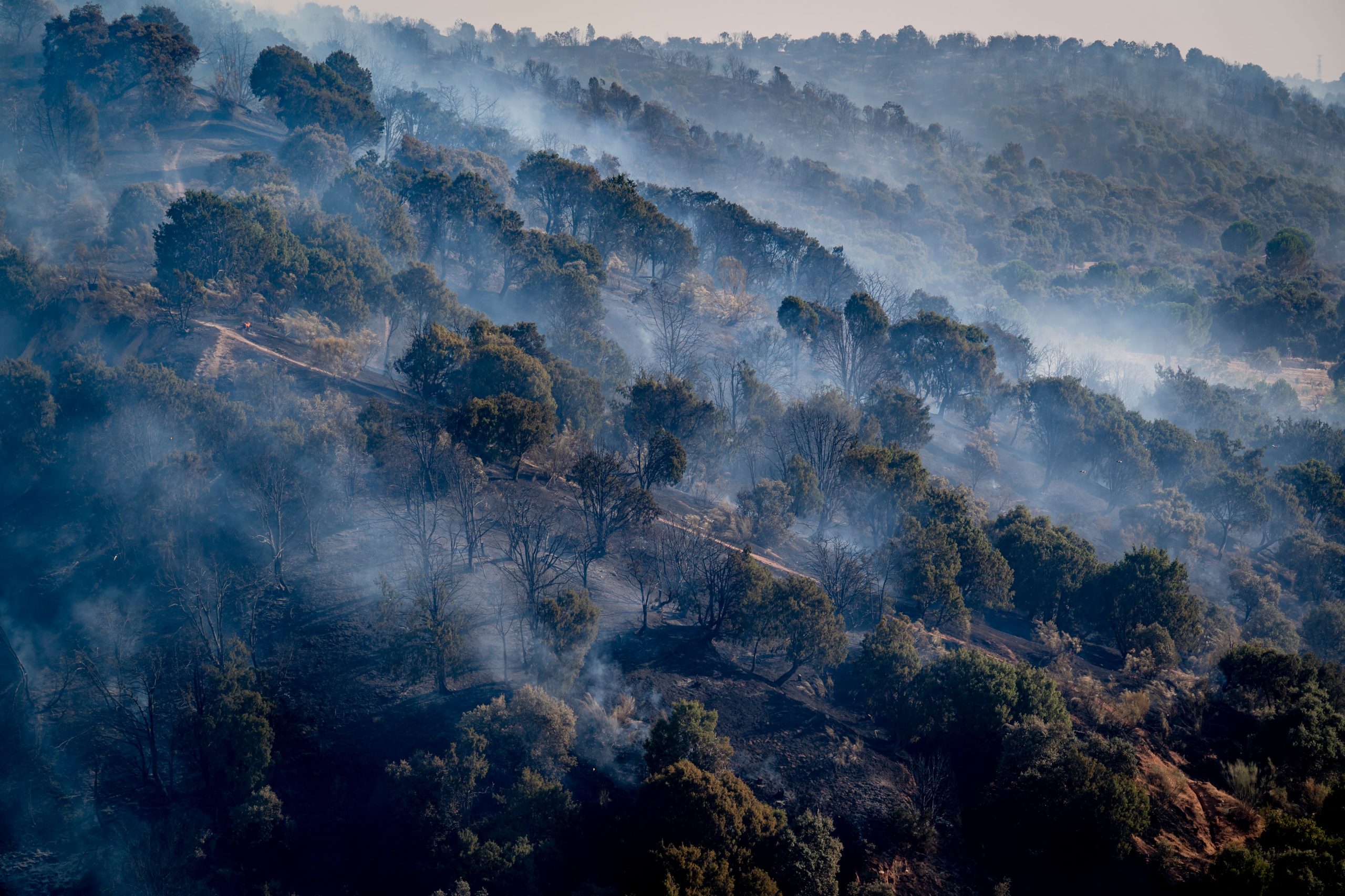
Penalties for those who start wildfires are severe. The Spanish Criminal Code provides for sentences of between 10 and 20 years in prison when a fire endangers people’s lives or physical safety. But only a small number of fires — whether set deliberately or caused by recklessness or accidents — reach trial, because they are difficult cases to prove. They usually occur across extensive forested areas, and even when a suspected perpetrator is identified, prosecutors must gather enough evidence to sustain the charges in court.
The crime scene is not straightforward, and even less so when a fire has been started deliberately. With temperatures that can easily exceed 500 degrees Celsius, any traces of DNA, epithelial cells or fingerprints on objects used to start the fire are destroyed, the Civil Guard says. Catching an arsonist in fraganti is also not easy. They may use candles, wicks, chemical agents and delayed-ignition systems that allow them to flee before smoke appears. Added to that is the fact that witnesses are hard to find in the forest and that firefighting efforts, which take priority, can destroy evidence.
That is why “there aren’t as many indictments” as for other environmental crimes, says Javier Rufino, coordinating environmental prosecutor. In 2025, 117 indictments were filed for fires and 86 convictions were handed down, with 39 acquittals. Those figures are in line with the average in recent years.
Where an increase is noticeable is in the number of people under investigation: 272 so far this year, almost 40% more than in the same period of 2025, according to data from the Prosecutor’s Office for the Environment. Of those, 51 people have been arrested ― only one more than last year ― and 11 were placed in pretrial detention this summer.
That number may seem small, but Rufino says it is significant because “in cases of fires caused by negligence it is rare that this precautionary measure is ordered.” He believes this criterion should be reviewed given “the high level of public awareness about the very serious consequences that actions such as doing agricultural work, lighting a barbecue, or burning stubble near a forested area in periods of high fire-risk can have.”
Identifying the person responsible and proving their involvement is not the only factor that determines the sentence. The penalty also depends on whether the fire was intentional or a result of negligence, its severity, the environmental cost and, above all, the danger posed to people. Other circumstances also factor in, such as delays that can occur in the judicial process and that are not attributable to the defendants. Here are some examples.
Negligence that leads to prison
This summer’s Almorox blaze in Toledo illustrates the sort of reckless conduct that ends in catastrophe. The fire began on July 22 and went on to spread to the Sierra Oeste of Madrid. The Civil Guard detained two men who were carrying out welding work on a property located on forest land at a time when such activities were prohibited because of the extreme fire-risk. After testifying before a judge, both were released on bond with precautionary measures: their passports were seized, they are forbidden to leave Spain, and they must appear in court every Monday.
Another act of negligence put a 27-year-old German man behind bars after he burned toilet paper after relieving himself in a makeshift latrine next to an abandoned house where he had been living for several months in the municipality of El Paso (La Palma). The fire got out of control, destroyed nearly 5,000 hectares and killed a forest ranger. The defendant pleaded guilty and was sentenced to three years and six months in prison. The court found he had acted with gross negligence and that the fire endangered people’s lives and physical safety. The case was resolved in about nine months.
The barbecue that got out of control
Slow justice played a large role in how the terrible Riba de Saelices, in the province of Guadalajara, fire was resolved, in which 11 members of firefighting personnel were killed. The blaze started in July 2005 due to negligence while supervising a barbecue (in a permitted area) and destroyed about 13,000 hectares. The verdict arrived seven years later. One of the defendants was sentenced to two years in prison and ordered to pay €10.6 million ($12.3 million) in damages, while two others were acquitted. The court applied mitigating factors for confession ― the defendant tried to extinguish the flames and alerted the emergency services ― and for undue delays due to the court’s backlog, which were unrelated to the defendants.
A similar case occurred with another devastating fire that broke out in July 2009 in Horta de Sant Joan, in the province of Tarragona. The blaze, started deliberately, burned 1,140 hectares, killed five firefighters and seriously injured another. The sentence took more than 12 years to arrive. The Prosecutor’s Office had sought 19 years in prison, but undue delays and plea agreements with the defense lawyers for the two arsonists reduced the sentences to four years for one and three years and nine months for the other. In that case, authorship was indisputable: files found on their cellphones showed them photographing themselves in front of columns of smoke.
The highest penalties: 10 and eight years
One of the heaviest sentences handed down for a wildfire in Spain came in 1996. The person responsible was sentenced to 10 years in prison for starting a fire that in 1994 ravaged 5,300 hectares in Los Serranos in the province of Valencia. The extent of the blaze and the ecological importance of the destroyed area led the court to impose an exemplary sentence.
Almost 30 years later, in November 2025, another of the longest sentences for this crime was handed down: eight years in prison for the author of an arson attack in 2023 on Monte Naranco, in the province of Oviedo, which forced the evacuation of numerous residents and killed animals and damaged homes and facilities. In that case, it was proven that the fire endangered the lives and physical safety of residents. The Prosecutor’s Office had initially sought 13 years in prison, but the 47-year-old defendant admitted the facts and the court allowed the mitigating circumstance of drug addiction. The sentence arrived barely a year and a half after the fire.
Miguel Ángel Soto, Greenpeace’s forest campaign spokesman, has been involved throughout the intensification of prosecutions for these crimes. “It is clear that great progress has been made in preventive work with the amendment of the Criminal Code and from the environmental prosecutors’ offices, and the effect is evident,” he says. But at the same time he stresses that coercive measures alone are not enough. “We have two main problems: landscape change and rising temperatures due to climate change, which means that even if there are fewer fires they are more devastating.” The tools to fight this “are there,” he adds — now administrations and social actors must “get moving.”
Sign up for our weekly newsletter to get more English-language news coverage from EL PAÍS USA Edition
ElPais
The Red Bull Generation: How Energy Drinks Became The Fuel For A Fast-Paced Society
Published
1 day agoon
September 12, 2026
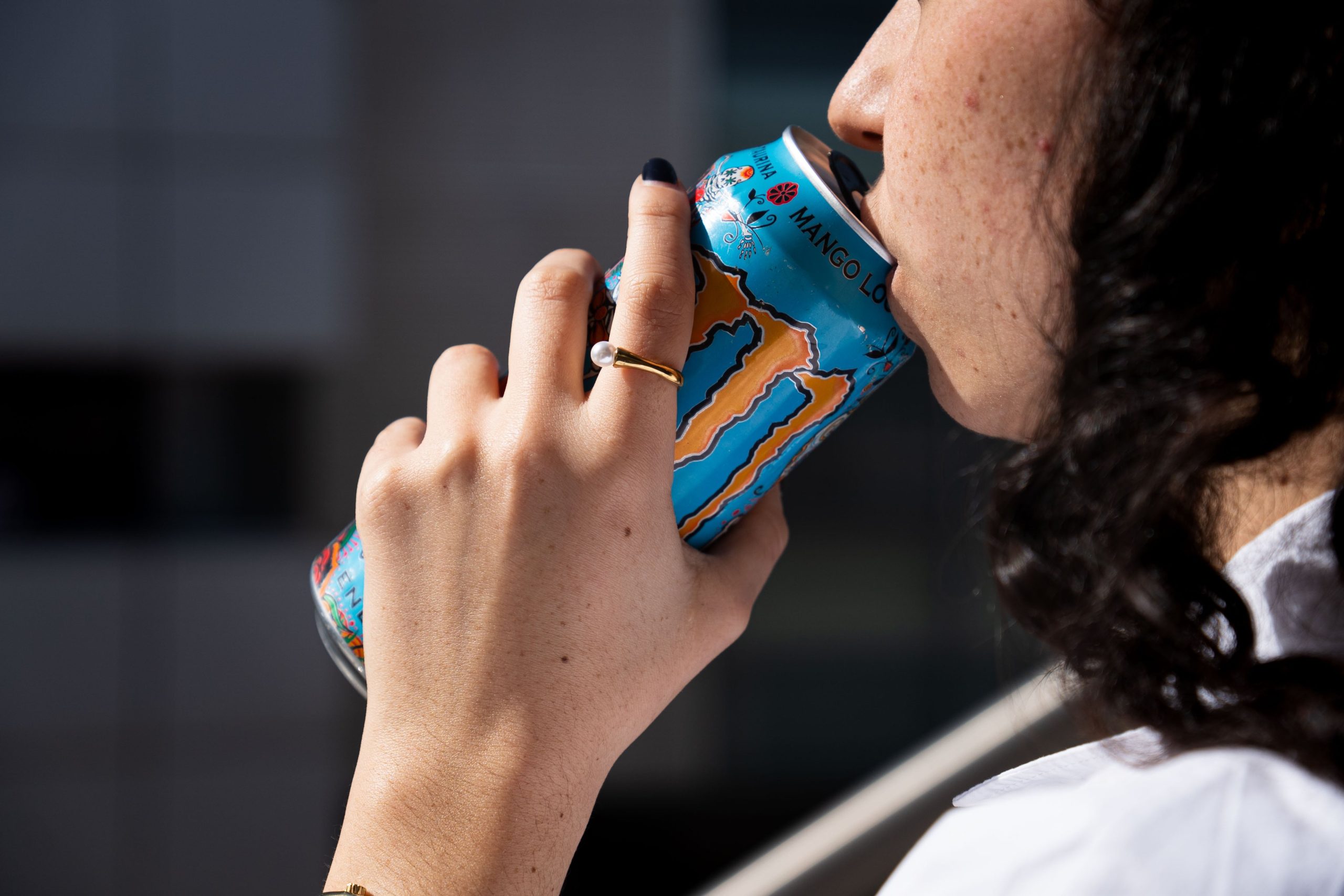
Energy drinks aren’t consumed for pleasure. They aren’t served in a glass with ice and a straw, nor are they sipped with blissful leisure. In the public imagination, they’re drunk straight from the can, in front of a computer, while doing something else.
More than just a beverage, an energy drink is a potion — a concoction promising to transform us into faster, more efficient versions of ourselves. They feature chemical flavors and absurd names like NOCCO Focus Passionate, Monster Energy Absolutely Zero, or the limited-edition Lando Norris Zero Sugar gold can. For years, they’ve been a massive hit among young men, and now, they’re beginning to break through to the rest of society.
“Energy drink” is a marketing term. The technical description would be “high-caffeine beverage.” But, naturally, that doesn’t sell nearly as well. This detail illustrates how our perception of these drinks is shaped by marketing. In part, this is because their origin story isn’t particularly appealing.
Energy drinks emerged from the exploitation of workers. In the late-1970s, in Bangkok, the owner of a local pharmaceutical company created a concoction designed to keep laborers awake and working through the night. He named it “Krating Daeng,” or “Red Bull” in English. “[The brand] arrived in Europe in 1987, when Red Bull production began in Austria,” Ana Teijeira, a specialist in preventive medicine and public health, who has studied the product’s expansion and effects. “However, the popularity [of energy drinks] among teenagers didn’t take off in the United States until 1997… 10 years later.”
The initial target audience consisted of athletes. But when the company noticed that the drinks were gaining more traction among teenage males, it recalibrated its strategy. Red Bull succeeded by positioning its products as fuel for major male pastimes: playing video games, hitting the gym, and getting drunk. And the firm went all out. Energy drinks became the most-advertised food product on streaming platforms. Red Bull began sponsoring sporting events, associating their products with values such as energy, performance, adventure and adrenaline.
A 2015 study published in the journal Health Psychology analyzed why these drinks were so popular among men. Researchers found that the more a man embraced ideals of masculinity, the more he believed that consuming these drinks made him manly. And, the more he consumed them, the less he slept.
Just as this demographic has kept growing, energy drinks have continued to adapt. In recent years, the companies read the signs of the times and began marketing their products as as tools for efficiency. They expanded their niche to include women, partnering with celebrities such as Paris Hilton and Kim Kardashian. They swapped packaging that featured dark colors with neon accents for cute pastel shades. And the drinks were marketed — with little scientific evidence — as tonics to improve the appearance of skin and hair. In doing so, the drink manufacturers began preparing to make the leap to all population groups.
“Energy drinks are to the 21st century what Coca-Cola was to the 20th,” explains Carles Feixa Pàmpols, an anthropologist specializing in youth culture. “If the brand behind the famous secret formula was the symbol of industrial capitalism, energy drink brands (whose formula we also know nothing about, even though it is pure chemistry) are the symbol of postindustrial capitalism.”
Energy drinks don’t just speak to young people. Feixa Pàmpols understands the leap that these companies are making and, he observes, it’s not the first time this has happened. “In [the cases of both Coca-Cola and energy drinks], new generations served as guinea pigs to lend prestige to its consumption and spread it among the general population.”
In his book, Aceleración. Una crítica social de los tiempos (Social Acceleration: A New Theory of Modernity), sociologist Hartmut Rosa explains that we live in a state of “dynamic stabilization” that compels us to run faster and produce more (even at the cost of social alienation), in order to prevent the system from collapsing. In this context, energy drinks become a magic potion (like the Super Star in Mario Bros.) promising to accelerate us, so that we can keep up, perform at a high level and synchronize with a frenetic world.
But all of this comes at a cost. Energy drinks are unhealthy products. They can cause arrhythmias, high blood pressure, insomnia and nervousness. They also increase the risk of developing diabetes, due to their extremely high concentrations of caffeine (a single serving may contain as much as two strong coffees) and sugar (which can account for 10% of daily caloric intake in just one can).
“To date, 60% of countries worldwide have implemented some form of regulation of energy drinks,” explains Teijeira, who analyzed this in a study conducted at the University of Santiago de Compostela. “The most common measures include advertising restrictions, bans on the sale of these drinks to minors, as well as limits on caffeine content.” In Spain, the region of Galicia banned energy drinks for those under the age of 18 some time ago. However, while the federal government in Madrid has announced its intention to do the same, the move doesn’t appear to have much support.
Yet, even with bans or restrictions, it seems unlikely that anything will dislodge energy drinks from the position that they’ve secured in the collective imagination of young people, let alone from supermarket shelves. “Drugs, whether legal or illegal, have always been a rite of passage into adulthood,” Feixa Pàmpols reflects. “In the information age, traditional drugs — such as tobacco and wine — are becoming unfashionable, due to health-related or generational arguments (as they’re often consumed by parents and grandparents). And they’re being replaced by more modern, trendy and seemingly harmless products, like vapes and energy drinks. These products offer higher profit margins for the multinational corporations that market them, while the companies downplay or ignore their side effects.”
The data seem to support this. Alcohol consumption among young people has dropped by three to five percentage points over the last decade, while energy drink consumption has surged by 13%. The products represent almost-opposing cultural values. Alcohol seeks disengagement, letting go and a loss of control, while energy drinks belong to a culture of self-optimization and efficiency. It wouldn’t be entirely accurate to say that a substitution is occurring (since many people mix energy drinks with alcohol), yet a paradigm shift is clearly taking place.
Energy drinks perfectly capture the spirit of the times. As Feixa Pàmpols puts it, “they reflect the schizophrenia projected onto today’s youth: healthy living, hygiene and puritanism on the one hand, versus the cult of excess, competition and productivity on the other.”
Sign up for our weekly newsletter to get more English-language news coverage from EL PAÍS USA Edition
Aitana Bonmati
Alexia Putellas: ‘I Would Have Loved For Previous Generations, The Real Pioneers, To Have Experienced What I’ve Experienced’
Published
1 day agoon
September 12, 2026
Alexia Putellas, 32, is left-footed, though not entirely. Alexia has what is known as cross-dominance: she’s left-footed but right-handed. She plays with her dominant left foot but signs contracts and autographs with her right, like Diego Maradona, Lionel Messi, and Lamine Yamal.
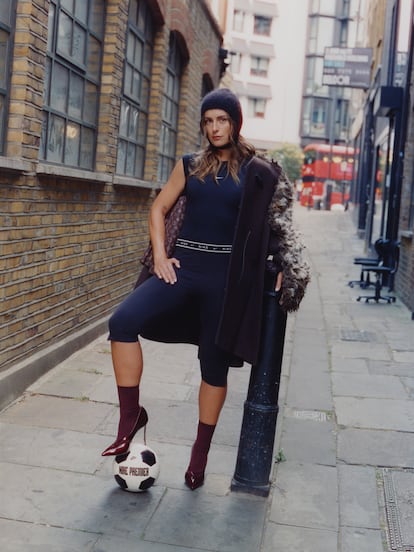
Alexia repeatedly strikes the ball with her left foot against a brick wall in an alley in east London. Perched on 10-centimeter patent stiletto heels in burgundy, wearing a wool hat and an oversized coat on a hot July morning amid a heat wave, she poses for the photographer. The first time she hits the ball, there is a collective sigh. Stilettos, cobblestones, coat, and ball? “She is such a star,” says the production manager in a thick English accent. No wonder they call her La Reina. The Queen.
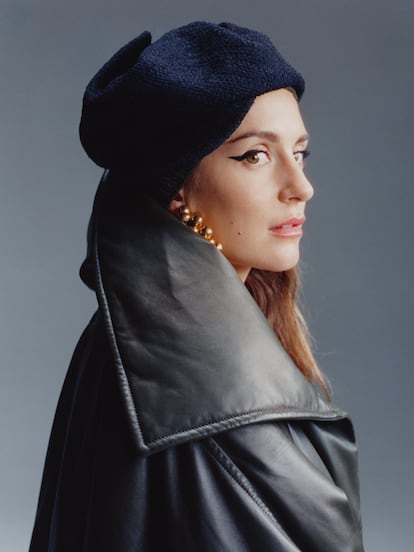
She strikes the ball with just the right force and retrieves it as if it weighed the same as a balloon. When she began playing at Sabadell at seven years old, she could barely lift the ball off the ground. She was on a team with 12-year-old girls who “made spectacular passes and shots,” and she got frustrated because she couldn’t imitate them. But she kept at it, and there, on the left wing, through sheer persistence, the development of one of the best players in the world — and a two-time Ballon d’Or winner — began.
Back then, children under eight were not officially registered, so they lied about her age, a “small loophole” so she could play on the team. Her aunt took her to training at Sabadell from their village after school, after snacks. Her father picked her up after work and if they couldn’t, her grandfather did. “The poor man, we’d go into Barcelona and, well, we’d get lost,” Alexia says during a break in the photo shoot.
She has just moved to London, where she has signed for London City Lionesses, an all-female club owned by entrepreneur Michele Kang, who since 2022 has invested in women’s teams (in addition to London City, she owns the Washington Spirit in the U.S. league and OL Lyonnais in France, the most decorated team in Europe), as well as transfers, equipment, and research into women’s injuries.
Alexia’s introduction in New York as London City’s new signing generated huge interest: she was leaving Barça after 14 years and after winning four Champions Leagues, 10 league titles, 11 Copa de la Reina trophies (one of them with Espanyol, in 2010) and six Spanish Super Cups, to move to a club that is barely seven years old that has spent only two seasons in the WSL, the Women’s Super League, England’s top division.
Journalists assembled there saw the move as a potentially longer-lasting alliance between the Spaniard and Kang than the three years specified in her contract. Two women with a shared objective: a strategic and developmental partnership to boost women’s soccer globally. At that presentation, Alexia recalled what Kang had told her: “Women’s soccer is not charity.”
Kang, who made her fortune in a medical technology company, knows there is a market niche in this sport that is yet to blossom. Her multimillion signings are not yet common in women’s soccer. Besides Alexia — who specialist website Transfermarkt lists with a market value of €1.5 million ($1.8 million) — Kang this summer signed Mapi León, also from Barça, Mary Earps, Kadidiatou Diani, Nicole Anyomi, Janni Thomsen and Daniela Arques, demonstrating her ambition and commitment to winning titles with her London club. Season tickets have already sold out and the club is selling individual match tickets at volumes and speeds far exceeding last year. Still, in a sport that has so far remained free of some of the excesses money brings in the men’s game, these signings and the multi-club ownership model spark controversy.
“In women’s football there are other groups and in the men’s game multi-club ownership has existed for years. If you analyze it from the outside, I think it’s all about timing. You can build a plan for the medium and long term and invest gradually, or you can do it all at once because you want to shorten timelines. I’ve experienced both sides: the gradual route at Barça and now the other approach. I think it’s all part of the industry; what matters is adding lots of perspectives,” Alexia explains.
For the player, there is no better or worse way to invest in the women’s game — what matters is adding. Money is the fuel of this sport and the excuse used by those unwilling to back it: if it doesn’t yield men’s-level profits, it shouldn’t demand equal treatment. Thus, those who call Kang opportunistic implicitly acknowledge there is an economic opportunity. That is the constant paradox. Or, as New York Times journalist Megan Feringa put it, the “corrosive limbo” in which women’s football finds itself — caught between preserving the essence and values that have distinguished it and embracing the changes needed to grow, attract investment, and pay players what they deserve.


The Alexia who signed for Barcelona in 2012 from Levante, where she spent a year, is described as shy and reserved. She played on the left wing but gradually moved into midfield. She felt comfortable making decisions, and by the time she was 24, she was already team captain. “In life and in sport I love having a goal and plotting the plan to achieve it. I enjoy that process.” She began playing in front of 200 people on an amateur team. Women’s football had no visibility and Barça relied on the image of its stars, including Alexia’s, to drive growth. Now Alexia and Aitana Bonmatí’s shirt numbers rank among the best sellers alongside those of their male teammates Raphinha and Pedri.
It’s time for another photo; this time Alexia crosses a zebra crossing trying to look the correct way down the street, though she ends up entering a Tesco with part of the team (what could be more British?). On her back, under a cropped top, peeks a tattoo of a silhouette of a photo of her father and her as a baby, in which she is holding a small Barça ball. From the cradle, she seemed destined to be a culé — the nickname for a supporter of FC Barcelona.
As a child, she watched every Barça match on TV with her family and belonged to the supporters club in Mollet del Vallès, traveling by bus with them to Camp Nou on Sundays. Her family has been culé since birth. I ask if that created added responsibility toward them. “No, gratitude. A way to give back everything, right? But I think it’s a bit like what all children feel when we are deeply grateful to our parents; I feel that way.” In her family, it was always normal for a girl to play soccer. She did it at all hours — in the village square, the schoolyard, and in the hallway of her house.
— Did you break a lot of things with the ball?
— No. I didn’t break much because we had a short hallway. We lived in a humble house, you know? And there were no windows or anything in the hallway.
— What did your family say when you told them you were thinking of leaving Barça?
— I talked it over with my mom, my sister, and my group of friends — who are like sisters to me — and they understood. They haven’t told me, but I know they were also relieved because they suffered when things weren’t going well at Barça. It’s been a learning process for them, too. Just like it was for me — I started out with 200 people in the stands, and there was no press, no critics, nothing — but the scale it has now, whether big or small, affects them too. After I made the decision, there were a few days when I broke down; I wouldn’t even go out on the street because the Champions League final was so emotional…

It must be hard to contemplate leaving one of the best teams in the world to start a project almost from scratch, so she split the decision into two parts: did she want to leave Barça? And if so, where would she go? She had played more than 500 matches for Barcelona, becoming the club’s second-highest all-time scorer behind Messi. “I would have played at Barça my whole life; it was the ideal setting, but the last year we expended a huge amount of mental and physical energy, and there came a moment when I thought: I don’t know if I’ll be able to go again and win everything. I had always wanted the last image fans had of me to be at the top. And I thought: I don’t know what the perfect ending is, but something like playing a Champions League final and lifting the trophy.”
She began studying playing styles and where she would like to move to. It is a World Cup year, which was a risk because she needed a competitive team. She weighed two highly competitive leagues: the English and the American. In Spain, the gap between Barcelona, with 87 points last season, and the next-nearest team, Real Madrid, with 72, was a consolidated gulf. Perhaps boredom also influenced Alexia’s decision.
“At Barça, we set the bar high for ourselves in practice because we were competing against each other — against the best.” She opted for the English WSL despite the U.S. offer being financially much more attractive. “Within England, there were two types of offers: those most similar to Barcelona — where they’ve already won, where everything is already established, where they know the way forward, and where there’s a fan base, which is something I’d already experienced — or something completely different, like London City. It really struck me that, if successful, it would all be much more epic,” and, as she says, there is one thing she still hasn’t won: the English league.

Her father died before he could see her play with the senior team. Alexia dedicated her first Ballon d’Or, in 2021, to him — 41 years after the only other Spaniard to win it until that point, Luis Suárez. The former Barcelona player wrote Alexia a congratulatory message telling her: “You may not realize the importance of this recognition until later, but it means a lot for you and for Spanish football […] if you’ll allow me a piece of advice, this trophy should be the basis for your departure, not your goal.”
She won it again the following year (after which Aitana Bonmatí won it three times, as well as Rodri in 2024), but she heeds Suárez’s advice and does not regard it as a final objective, although she could win a third this year: “Being [nominated] is a pleasure, especially after a serious injury. It’s an award given for everything you’ve done over the course of a season as part of a team with other teammates and for your personal growth. If I win it, I’ll be very happy for my family because of everything they’ve been through. And if someone else wins it, I hope it’s one of my teammates, and I’ll be absolutely thrilled.”
The injury she refers to is the anterior cruciate ligament rupture she suffered during a training session before traveling to Euro 2022. The injury was a blow. It always is, and she even thought her career was over; in the early days afterward, she considered quitting. But just as she had insisted on training her right leg when she played for Levante, she recovered quickly.
Alexia Putellas’s tenacity and perfectionism are well documented. Former Barça coach Lluís Cortés says the player always wanted him to tell her what she did wrong so she could improve. “We started working on my mistakes — which are necessary for improvement — and one day he pulled me aside and said, ‘Now I’m going to tell you everything you’re doing right because I want you to keep building on that. Don’t focus so much on your mistakes — which is great and says a lot about your mindset because you want to be as well-rounded as possible — but don’t forget what you’re doing right.’”
That extreme focus, effort, and perseverance don’t apply only on the pitch. Unlike a large majority of male players, female players not only look after their team, their own game or their transfers, but also fight for the future of their sport; they know they must also battle in the boardrooms. The women’s football league in Spain only professionalized in 2021 after tough negotiations. The first collective bargaining agreement was signed in 2019 after a players’ strike, and it wasn’t until the 2025 agreement that some rights were established, such as a base salary of €23,500 ($27,300), travel conditions, 30 calendar days of vacation and maternity protections, including wage guarantees and childcare support.
The issue of pregnancy and work-life balance in elite sport is complex. “I’m going to tell you about this because it’s official now. When you start training camps with the national team, there’s always a feedback session with the federation about how the group is doing. We, the group of captains, had a concern because it’s very important for a player to compete in World Cups, but that means that those of us who want to become mothers — I didn’t feel that way at first, but the desire developed in me a while ago — find it hard to balance that. And after the incredible work the federation has done, they’ve reached an agreement with a clinic to allow us to freeze our eggs while we’re still active, for as long as we want. For me, this is a huge step forward because the federation understands that you’re serving your country at the expense of your biological clock — that you can’t stop playing and you can’t become a mother because you need your body to perform at its best.” At 32 she has no idea when her career will end, but she believes it won’t last more than another five or six years.

— What have you learned on the field that helps you in everyday life?
— I have a really big issue with wasting time. And before, when I felt like I was wasting time, it would really get to me. I’d get frustrated and go into a kind of mental block, telling myself, “I have to get out of here” or “We have to change this now, now, now, now.” Now I’m much calmer. The injury, for example, has made me much more empathetic. It’s changed the way I relate to people — not just strangers, but even my own mother. Before, I was much more introverted when it came to my emotions and feelings, and now I’m not exactly the most extroverted person in the world [laughs], but I am evolving.
— And what do you do in your free time?
— I don’t have much free time, but I really enjoy spending time with my friends because it gives me a sense of what’s really going on with people my age. There are seven of us. I’ve known the only guy in the group since I was three — we went to school together — and then there’s another girl I’ve known since I was five, and the rest since I was 12.
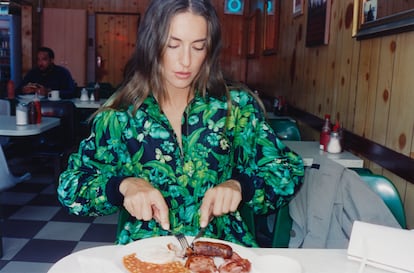
Her lifelong friends don’t play football, but in London she already has a large circle of teammates. Misa Rodríguez, the former Real Madrid goalkeeper who has just arrived in London to play for Arsenal, appears in the shoot. Between takes, the Canary Islander turns up the reggaeton that Alexia dances to shyly, in small movements, while her clothes are adjusted. Throughout the multiple outfit and location changes, she never tires and participates in good spirits. She changes in a café bathroom to be photographed with a full English breakfast, though she’s not convinced by the baked beans.

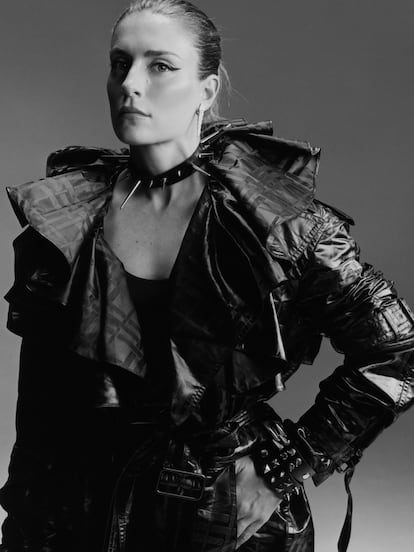
Footballers have long used fashion to build their personas. David Beckham is perhaps the best known, but Pep Guardiola modeled for Antonio Miró, Lionel Messi is known for the extravagant Dolce & Gabbana suits he wears at galas, Erling Haaland’s passion for Hermès Birkin bags made headlines during the 2026 World Cup and Jude Bellingham is a Louis Vuitton ambassador. “In the end, it’s a way to convey how you feel. I’ve become interested because I’m someone who learns one thing and wants to go deeper. It’s something I feel comfortable with. I like it and I have fun,” the footballer says.
Building an image is one thing; becoming an icon is another, though they are closely related. During this summer’s World Cup, Alexia’s presence on the sidelines supporting the men’s national team put her on a pedestal few reach. The photo with Penélope Cruz and Rosalía is another step in that construction, though it happened naturally. “I didn’t know Penélope and she impressed me a lot.”
Rosalía, however, she has known for years. “I started following her when she released the album Los Ángeles; I really liked what she did because it was disruptive and it began to inspire me. I use music a lot — to motivate me, to switch off — and she has been present during many points of my career. And then I was lucky enough to meet her and spend time with her, and she’s an incredible person who does extraordinary things with her art and her talent. I admire her so much because she’s able to reinvent genres and break with convention — and only geniuses can do that — taking you to places you never even imagined existed.”
— Are you tired of being a pioneer?
— I would have loved for previous generations to have experienced what I’ve experienced because, in the end, I think it’s only fair to have a little bit of that history too — it’s not like our generation was the first to start playing, you know? I mean, the players from the 1970s, the 1980s… We’ve had contact with them — the real pioneers — through the national team or Barça, and they’ve told us stories that make you go, “When did that happen?” — things that were unthinkable not just in soccer, but in society as a whole. That’s why I don’t really feel like a pioneer.

I show her a map for visiting London through the history of its women. Her gaze is well trained. The first thing she spots is a photo of Emma Clarke, considered the first Black female footballer. Then she looks at Virginia Woolf: “I read A Room of One’s Own, I liked it a lot.” I point out where Mary Shelley lived, author of Frankenstein, and glance at the street where Mary Wollstonecraft’s house is, Shelley’s mother and author of A Vindication of the Rights of Woman, but I don’t press because I have heard Alexia say many times that true equality will arrive when we no longer talk about women’s and men’s football.
We’re talking about London, a city that has welcomed her with good weather and little traffic — or at least not enough to bother her yet. “I like how I feel. Laia Codina, who’s been here for four years now and has lived in other countries, told me, ‘Get ready, because in every city you develop a side of yourself that you have to embrace.’ You know? I’m looking forward to seeing which one emerges. I can’t wait.”
CREDITS
Photography: Antonio Mingot
Styling: Alba Melendo
Make-up: Faye Bluff (Agency of Substance)
Hair: Shunsuke Meguro (Future Rep)
Manicurist: Jasmine Eleazer
Production: Cristina Serrano
Local production: Rosie Cartwright and Sarah Nimmo (Rosie Cartwright Ltd)
Photography assistant: Karolina Burlikowska
Styling assistants: Hugo Latorre and Ariadna Mayal
Sign up for our weekly newsletter to get more English-language news coverage from EL PAÍS USA Edition
F1 on US TV: How to watch the Spanish Grand Prix this weekend live and FREE
While Prices Rise Across Spain, This Bar Still Charges Just €1.50 For A Coffee
Malaga Woman Locked Inside Clothes Shop After Staff Forget She’s There
Tags
Trending
-
bissan wealth management2 weeks ago
Wealth management for Americans in Spain
-
Costa Blanca North2 weeks ago
Everything you need to know about the final weekend of Benidorm Pride
-
Uncategorized1 week agoMax Verstappen works with new race engineer at Italian Grand Prix
-
Costa del Sol2 weeks ago
Marbella puts Ranchon Cubano back on the beach: Eco campaigners want it stopped
-

Asesinatos2 weeks agoPrisión Sin Fianza Para La Mujer Que Apuñaló Mortalmente A Un Hombre En Un Bar De Valencia
-
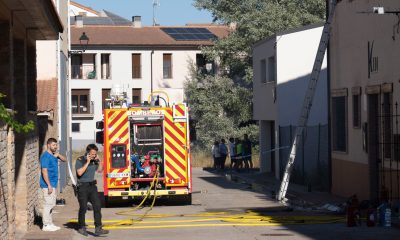
bomberos2 weeks agoUna Mujer Y Su Hija De Nueve Años Mueren En Un Incendio En Teruel
-
Latest2 weeks ago
Four Migrants Arrested In Ceuta For Throwing Stones At Spanish Soldiers
-
Costa del Sol2 weeks ago
Fuengirola starts €49m Los Boliches megapark as demolition begins