Connect with us

%

New Roadside Fuel Checks In Spain

Published

on

new-roadside-fuel-checks-in-spain

Roadside fuel inspections are being introduced as authorities step up checks on illegal diesel use. Credit : Jota Buyinch Photo, Shutterstock

Most drivers expect a roadside stop to be about speeding, paperwork or perhaps a breathalyser test. Very few expect an officer to take an interest in what is sitting inside their fuel tank.

Yet that is exactly what some motorists are now encountering in Spain.

The Guardia Civil has begun carrying out roadside fuel inspections aimed at identifying vehicles using subsidised diesel without authorisation. The checks have already been reported in Guadalajara, where officers have stopped vehicles and taken fuel samples as part of an operation targeting the misuse of discounted fuel intended for specific professional sectors.

For the vast majority of drivers, the inspections are unlikely to cause any problems.

But for those using fuel they should not have access to, the consequences can be expensive, with fines ranging from hundreds to thousands of euros.

The initiative comes as authorities increase efforts to tackle fuel related tax fraud, particularly following reports that some service stations were illegally supplying subsidised diesel to customers who did not qualify for it.

Why officers are suddenly interested in what is inside your fuel tank

The fuel at the centre of these inspections is known in Spain as Gasóleo B.

Many people have heard the term without really knowing what it means.

Despite the different name, it is not a special fuel designed for different engines. In practical terms, a vehicle runs perfectly normally on it.

The difference is financial. Gasóleo B benefits from a more favourable tax treatment than ordinary diesel. Because of that tax advantage, its use is restricted to specific categories established by Spanish law.

Authorities say some drivers have been tempted to take advantage of the lower price, especially during periods when fuel costs have risen sharply.

The problem, from the government’s perspective, is that the system was never intended to provide cheaper fuel for private motorists.

It was created to support specific sectors, particularly professional transport and agriculture.

As a result, using it without authorisation is treated as a form of tax fraud rather than a simple fuel violation.

That is why the Guardia Civil is now paying closer attention.

How the roadside inspections actually work

The checks are not carried out on every vehicle. Officers position themselves at selected locations and stop motorists as part of targeted operations.

A routine inspection can quickly become more detailed if something attracts attention.

According to reports from the inspections already carried out, officers may examine the fuel filler area and look for indications suggesting the vehicle could be using subsidised diesel.

If they believe further verification is necessary, they can legally collect a fuel sample from the tank.

That may sound surprising to many drivers, but the procedure is authorised under Spanish regulations.

The reason it works is relatively simple.Gasóleo B contains a coloured identifying marker that allows authorities to distinguish it from standard diesel during analysis.

To the average driver, the fuel may appear ordinary.To inspectors, however, the marker makes identification possible.

If testing confirms the presence of subsidised diesel in a vehicle not authorised to use it, authorities can begin sanction procedures.

The penalties are significant.Fines can range from €600 to €6,000 depending on the circumstances and severity of the offence.

Although no licence points are lost, the financial impact can be considerable.

The service stations involved may face even more serious consequences, including substantial economic sanctions and possible closure if illegal sales are proven.

Who is actually allowed to use subsidised diesel in Spain?

One reason these inspections attract attention is that many drivers remain uncertain about who can legally use Gasóleo B.

The answer is more limited than many people realise.Spanish regulations reserve the fuel for specific professional activities.

Eligible users include certain heavy goods vehicles involved in road freight transport, authorised passenger transport services and licensed taxis that meet the relevant conditions.

Agricultural machinery also benefits from a separate subsidised fuel system designed for the farming sector.

To access these schemes legally, users must comply with administrative requirements and operate through systems that allow the Tax Agency to monitor fuel consumption and apply the appropriate tax benefits.

Private motorists do not fall within those categories.That is why authorities consider the misuse of subsidised diesel a serious issue.

As fuel prices continue to affect households and businesses alike, the temptation to look for cheaper alternatives remains.

The Guardia Civil’s latest inspections suggest authorities are determined to ensure that discounted fuel reaches only the sectors it was intended to support.

For most drivers, the new checks may never become more than a passing headline.

But they do mean that a routine roadside stop in Spain could now involve a question many motorists never expected to hear.

What’s in your fuel tank?

%

22 New Boarding Bridges At Malaga Airport

Published

on

22-new-boarding-bridges-at-malaga-airport

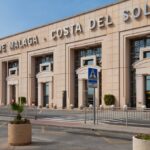
Malaga-Costa del Sol Airport has plans to double its number of jet bridges as part of the massive €1.5 billion expansion. Growing from 26 to 48 boarding bridges, changing the experience of how millions of passengers travel through one of Europe’s busiest holiday gateways.

Airport director Pedro Bendala announced the details this week at a CIT Marbella event,  one of his last public engagements before stepping down next month.

What will be changing at Malaga Airport

Aena, Spain’s national airport operator, has confirmed the huge infrastructure overhaul as part of its national DORA III plan.

Key changes and dates are –

An increase from 26 to 48 (22 new bridges), meaning far fewer bus transfers to planes.
The old Terminal 1 and piers B and C will be completely demolished.
A state-of-the-art non-Schengen (A European nation that does not belong to the open-border agreement, meaning you must show your passport and pass through formal immigration checks) pier with a centralised border control will replace the old structures.
Total terminal space will grow from 80,000 to 140,000 square metres.
Construction contracts are expected to be awarded later this year, with groundworks beginning in 2027 and completion by 2031.

For those living in or travelling to the Costa Del Sol

The practical improvements will be a game-changer

1. The End of post-brexit bottlenecks

The UK is Malaga’s largest market, bringing in 5.69 million passengers to Malaga last year alone. To directly tackle notorious post-Brexit passport queues, the new non-Schengen facilities will see an impressive 515% increase in passport control capacity and a 381% increase in non-Schengen boarding zones

2. Goodbye old dark space and hello lighter and more accessible zones

Currently, international travellers pass through passport control in what Bendala described as “a dark space because it does not have natural light.” The new design will introduce a bright, naturally lit terminal. Also ramps will replace escalators throughout, ensuring passengers with mobility needs, prams, or heavy luggage can follow the exact same routes as everyone else.

3. Global Connectivity

Malaga is already Spain’s third-busiest airport, handling 7.7 million passengers in the first four months of 2026 alone. Bendala predicted that once complete, Malaga could become one of the best-connected non-capital airports in the world, opening up the flexibility for direct routes to North America, the Middle East, and Asia-Pacific.

If you are using Malaga what you should keep in mind

While the airport will remain fully operational throughout the works, regular flyers should remember a few things.

Expect future disruption. From 2027 onwards, expect changing walking routes and minor disruptions around the old Terminal 1 and piers B and C as demolition begins.

Double-check gates. Especially important if you are a frequent flyer and go into autopilot. Ensure you check departure screens carefully when travelling during the construction window, as gate arrangements will shift.

No Immediate Impact. Flights today are completely unaffected. Construction will not begin until next year, and the airport is aiming for a smooth transition toward its final goal of handling 36 million passengers annually by 2031.

Continue Reading

%

Malaga Beach Closed Again After Fresh Sewage Spill Hits Guadalmar

Published

on

malaga-beach-closed-again-after-fresh-sewage-spill-hits-guadalmar

Beaches closed again. Credit: Bego Del Sol – FB

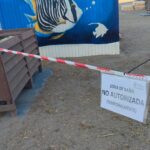
Residents in the Guadalmar area between Malaga and Torremolinos were furious on Saturday, May 30, as the local police were called in again to close the beach and bar swimming in the sea due to another sewage discharge. Signs warning of a temporary ban appeared overnight, just one week after reopening following earlier contamination.
The mayor was approached by locals during the visit.

Mayor Francisco de la Torre visited Guadalmar to open a garden dedicated to Fernando Prini Betés. Neighbours spoke to him afterwards asking for permanent fixes for repeated sanitation failures in the area. No public response from the mayor has been issued so far on this latest incident.

Torremolinos council has issued no specific statement regarding this event. Similar past spills have impacted beaches such as Los Alamos in Torremolinos, prompting joint monitoring with Malaga authorities.

Limited risk to nearby Torremolinos shores

The council expects minimal effects on Torremolinos beaches because discharge occurs through a 475-metre underwater outlet. Water tests will confirm safety levels before any reopening.

Multiple failures linked to winter damage and ongoing repairs

A broken fitting on a 70-centimetre concrete pipe caused the latest problem near the Ciudad Deportiva del Malaga. Emasa, the water company, halted pumping and diverted flow while crews worked overnight. This is the latest in a series of issues that began with the December 2025 floods bursting sections of pipes crossing the Guadalhorce River.

Yes, works continue on the sewage network. Emasa activated a provisional system on May 22 using reversed reclaimed water pipes. That temporary measure failed when pressure dropped on Friday evening, May 29.

Repairs expected soon but full solution still months away

Technicians are planning to complete immediate repairs during the weekend. Full permanent replacement of damaged infrastructure should finish in August. Until then, similar incidents may recur as crews complete broader upgrades.
Emasa notified regional authorities immediately and will analyse water samples. A councillor for environmental sustainability said that brief discharge through the sea outlet should keep contamination below legal limits. Even so, officials advise caution on a hot weekend when crowds hit the beaches.

Local people voiced anger over frequent closures that disrupt access to popular swimming spots. Malaga council stresses efforts to minimise environmental harm while completing the necessary infrastructure work.

Continue Reading

%

Munich Airport Drone Sighting Causes Major Shutdown

Published

on

munich-airport-drone-sighting-causes-major-shutdown

Lufthansa flight leaving Munich Airport. Credit: Oliver Hlavaty Photo – Shutterstock

Pilots reported a mysterious object hovering near Munich Airport on the morning of May 30, leading to urgent safety measures and a full-scale airport operational halt.

Drone alert throws major German airport into chaos

German authorities shut down Munich Airport after pilots spotted what appeared to be a drone of unknown origin. This sudden move led to immediate flight cancellations and widespread delays during the peak morning rush. Passengers faced uncertainty as normal travel patterns collapsed without warning.

Munich Airport is operational again after an earlier potential drone sighting halted flights. The airport is currently our most disrupted airport with 33 canceled flights and 114 delays so far averaging nearly an hour. pic.twitter.com/dcmSVZ4EIZ

— Flightradar24 (@flightradar24) May 30, 2026

Police received the alert from flight crews shortly after 9am local time. Stefan Bayer, spokesman for the Federal Police, confirmed the sighting raised enough concern to trigger a large-scale response. Teams fanned out across the site in search of any trace of the unidentified object.

Intensive hunt ends with no discovery

Police conducted thorough sweeps of airport grounds and nearby areas following the alert. Runways stayed closed while inspectors checked every possible location. Incoming aircraft circled in holding patterns as tension built on the ground, with departure lounges filling rapidly with frustrated passengers stuck awaiting updates. Authorities called off the operation by 10.05am after the search came up empty.

Such rapid responses have become routine in the current climate of heightened pre-summer travel risks, especially when unknown aircraft enter sensitive zones. Drone threats demand instant intervention to safeguard lives and aircraft. Munich Airport ranks among Europe’s busiest hubs, serving millions of international travellers from southern Germany each year.

Morning flights plunged into cancellations and major delays

Dozens of scheduled departures suffered direct consequences from the abrupt closure. Travellers described scenes of confusion at gates while scrambling to rearrange plans. Many services left late or vanished from the board entirely during that critical period.

Staff moved fast to communicate fresh information once operations restarted. Airport teams urged everyone to verify flight details before setting off for the terminals. This event fuels broader worries about European airspace safety in an era of increasing threats.

Russian drone attack on Romania deepens regional fears

This incident at Munich Airport arrives against a backdrop of acute anxiety over Russian military actions. A Russian drone recently slammed into a residential building in Romania, a NATO and EU member sharing a border with Ukraine. That strike left two people injured and has caused a dangerous new level of escalation.

Romanian records show earlier Russian drone violations of their airspace, yet this case stands out as the first confirmed strike on a civilian home. Talk now is of growing risks of the Ukraine conflict spreading into NATO borders.

Strong reactions from NATO and European Union

NATO voiced firm criticism of Russia’s conduct after the Romania event. Alliance officials emphasised plans to bolster protections against diverse dangers, particularly drone technology.

Leaders across Europe are keeping a close watch on fast-moving events. Airspace monitoring has stepped up noticeably in recent months amid persistent geopolitical strains. Events such as today’s Munich Airport alert illustrate the fragile nature of aviation security right now.

German officials and their continental counterparts stay alert to avoid repeats of this disruption. Travellers at large airports encounter extra screening as defences evolve to counter fresh challenges. Today’s events at Munich Airport go to show how rapidly calm skies can turn tense in the current international climate.

Operations now restored with lingering effects

Munich Airport has returned to normal functioning since the brief shutdown. Residual impacts include around 33 cancelled flights and over 100 delayed services averaging nearly an hour each.

Continue Reading

Trending

Copyright © 2017 Spanish Property & News