Connect with us

%

22 New Boarding Bridges At Malaga Airport

Published

on

22-new-boarding-bridges-at-malaga-airport

Malaga-Costa del Sol Airport has plans to double its number of jet bridges as part of the massive €1.5 billion expansion. Growing from 26 to 48 boarding bridges, changing the experience of how millions of passengers travel through one of Europe’s busiest holiday gateways.

Airport director Pedro Bendala announced the details this week at a CIT Marbella event,  one of his last public engagements before stepping down next month.

What will be changing at Malaga Airport

Aena, Spain’s national airport operator, has confirmed the huge infrastructure overhaul as part of its national DORA III plan.

Key changes and dates are –

An increase from 26 to 48 (22 new bridges), meaning far fewer bus transfers to planes.
The old Terminal 1 and piers B and C will be completely demolished.
A state-of-the-art non-Schengen (A European nation that does not belong to the open-border agreement, meaning you must show your passport and pass through formal immigration checks) pier with a centralised border control will replace the old structures.
Total terminal space will grow from 80,000 to 140,000 square metres.
Construction contracts are expected to be awarded later this year, with groundworks beginning in 2027 and completion by 2031.

For those living in or travelling to the Costa Del Sol

The practical improvements will be a game-changer

1. The End of post-brexit bottlenecks

The UK is Malaga’s largest market, bringing in 5.69 million passengers to Malaga last year alone. To directly tackle notorious post-Brexit passport queues, the new non-Schengen facilities will see an impressive 515% increase in passport control capacity and a 381% increase in non-Schengen boarding zones

2. Goodbye old dark space and hello lighter and more accessible zones

Currently, international travellers pass through passport control in what Bendala described as “a dark space because it does not have natural light.” The new design will introduce a bright, naturally lit terminal. Also ramps will replace escalators throughout, ensuring passengers with mobility needs, prams, or heavy luggage can follow the exact same routes as everyone else.

3. Global Connectivity

Malaga is already Spain’s third-busiest airport, handling 7.7 million passengers in the first four months of 2026 alone. Bendala predicted that once complete, Malaga could become one of the best-connected non-capital airports in the world, opening up the flexibility for direct routes to North America, the Middle East, and Asia-Pacific.

If you are using Malaga what you should keep in mind

While the airport will remain fully operational throughout the works, regular flyers should remember a few things.

Expect future disruption. From 2027 onwards, expect changing walking routes and minor disruptions around the old Terminal 1 and piers B and C as demolition begins.

Double-check gates. Especially important if you are a frequent flyer and go into autopilot. Ensure you check departure screens carefully when travelling during the construction window, as gate arrangements will shift.

No Immediate Impact. Flights today are completely unaffected. Construction will not begin until next year, and the airport is aiming for a smooth transition toward its final goal of handling 36 million passengers annually by 2031.

%

The Rising Cost Of Finding Love

Published

on

the-rising-cost-of-finding-love

Redmond, WA, USA – Jan 13, 2024: Assorted dating apps, including Tinder, Bumble, Hinge, HUD, Hickey, Wink, Coffee Meets Bagel (CMB), OkCupid, and Plenty of Fish (POF), are seen on an iPhone.

Around the world, millions of people have given up on the idea of finding love the old fashion way, instead turning to dating apps in search of a soulmate. While most platforms are free to download and use, many now offer premium subscription plans packed with additional features, transforming modern dating into a highly profitable global business.

The search for love is no longer happening in bars, workplaces or through mutual friends, but through algorithms, premium memberships and monthly direct debits.

Online dating is big business

Recently released statistics from Business of Apps reveals over 350 million people use dating apps, with 23 million paying for premium features. Since 2015, revenue generated by dating apps has risen consistently, with the industry now regularly producing more than €5 billion annually.

Although 2025 marked the first notable slowdown, with revenues falling by 1.78 per cent compared to 2024, long-term forecasts for the sector remain optimistic as companies continue to expand internationally and introduce new monetisation features.

The business model behind modern dating apps

The modern dating app economy increasingly relies on a “freemium” model, where basic access is free but the most desirable features sit behind a paywall. This strategy has proven extremely effective, particularly among younger users accustomed to subscription-based digital services.

Companies behind the world’s biggest dating apps continue investing heavily in artificial intelligence, personalised matchmaking and user engagement tools designed to keep people active on their platforms for longer periods. Critics argue that this model can sometimes prioritise profit over successful matchmaking, as apps benefit financially from retaining paying users rather than helping them leave the platform after finding a relationship.

Why men spend more on dating apps

On the apps themselves, there is a real imbalance within the user-base. According to Players Time’s recent analysis of dating apps, men outnumber women on every major platform. Tinder, Hinge and even Bumble – where the women make the first move – all report substantially higher percentages of male users, creating intense competition among men seeking matches and interactions.

Many dating services have capitalised on this imbalance by encouraging users to upgrade to premium memberships. Paid features often include unlimited swipes, profile boosts, advanced filters, read receipts and the ability to see who has already liked a profile. These tools are marketed as ways to improve visibility and increase the likelihood of securing dates.

As a result, men are considerably more likely to pay for premium subscriptions than women. Research from Players Time found that men spend between 145 per cent and 458 per cent more per date than women when using dating apps. In some cases, users may spend hundreds of euros annually on subscriptions, boosts and in-app purchases without any guarantee of finding a long-term partner.

Continue Reading

%

Tourist Begs Police Not To Fine Her After Swimming In The Trevi Fountain During Heatwave

Published

on

tourist-begs-police-not-to-fine-her-after-swimming-in-the-trevi-fountain-during-heatwave

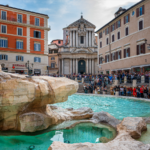
Officials in Rome have repeatedly stated that preserving monuments such as the Trevi Fountain remains a priority. Photo credit: Rudolf_Prchlik/Shutterstock

A tourist visiting the Trevi Fountain decided, seemingly out of the blue, to take a swim in it fully dressed, sunglasses included, to cool off during high temperatures in the Italian capital. Police were seen trying to remove the woman whilst a man that was accompanying her started to yell at them. The incident took place in front of large crowds gathered around the historic fountain, one of Rome’s busiest tourist attractions. Footage shared online showed the woman standing and walking through the water while visitors nearby watched and filmed the scene on their phones.

Security staff quickly intervened before officers from the local police force escorted the tourist away from the fountain area. According to reports, the woman later pleaded with officers not to issue her with a fine.

Extreme temperatures reported across Rome

Rome has experienced intense heat in recent days, with temperatures rising as large numbers of tourists continue to visit the city during the summer season. Witnesses said the tourist entered the fountain in an attempt to cool herself down amid the heatwave conditions affecting the Italian capital. Videos circulating online show her smiling while moving through the water moments before security personnel approached.

Authorities in Rome prohibit visitors from entering the Trevi Fountain under heritage protection regulations designed to preserve the historic monument. Bathing, climbing or sitting inside the fountain can result in financial penalties and removal from the site. The Trevi Fountain remains one of the most visited landmarks in Italy and attracts thousands of tourists each day, particularly during warmer months when visitor numbers increase significantly.

Police escort tourist away from the monument

Footage of the incident spread rapidly across social media platforms after bystanders recorded the exchange between the tourist and police officers. According to reports, the woman appeared visibly upset after being removed from the water and reportedly begged officers not to fine her for entering the fountain.

Italian authorities have not publicly confirmed whether the tourist ultimately received a financial penalty. However, local regulations allow police to fine individuals who enter protected fountains or engage in behaviour considered damaging to public monuments. The incident prompted widespread discussion online, with some users criticising the tourist for ignoring preservation rules while others pointed to the unusually high temperatures being experienced in Rome.

Authorities have tightened controls around the fountain

Rome’s authorities have increased security around the Trevi Fountain in recent years following repeated incidents involving tourists entering the water. The monument, designed by architect Nicola Salvi and completed during the 18th century, is considered one of Europe’s most important examples of Baroque architecture. City officials have repeatedly warned that entering the fountain risks damaging the structure and increasing maintenance costs.

Earlier this year, Italian media reported that another visitor was fined €500 and temporarily banned from the area after jumping into the fountain. In response to growing tourism pressures, Rome has introduced stricter crowd-control measures around several historic landmarks. Security officers and police patrols are regularly stationed near the Trevi Fountain to monitor visitor behaviour and enforce regulations.

Trevi Fountain remains one of Italy’s busiest attractions

The Trevi Fountain is recognised internationally as one of Rome’s best-known tourist sites and receives millions of visitors every year. The landmark became especially famous after appearing in La Dolce Vita, which featured actress Anita Ekberg entering the fountain in a scene that later became closely associated with the monument.

City authorities continue to remind tourists that recreating scenes from films or entering the water for photographs is prohibited. Visitors are permitted to walk around the fountain and throw coins into the water from designated public areas, but entering the basin itself remains against local regulations. The latest incident comes as several major European cities continue to deal with the effects of overcrowding during peak travel periods. Authorities in Rome have stated that preserving historic landmarks remains a priority as visitor numbers continue to rise during the summer months.

Continue Reading

%

Police Arrest Malaga Train Theft Gang Targeting Tourists

Published

on

police-arrest-malaga-train-theft-gang-targeting-tourists

Malaga’s Cercanias commuter train, popular with tourists. Credit: Marek Sluark-Wiki CC

Spanish police have dismantled a group allegedly responsible for stealing wallets and cash from passengers on Malaga’s Cercanias commuter trains.

Criminals followed victims from ticket machines onto crowded carriages before making off with their belongings.

Operation uncovers coordinated thefts across key routes

National Police officers detained seven individuals in two separate phases during this crackdown on commuter line crimes. The group focused on travellers arriving at Malaga airport and heading to popular destinations, including Torremolinos, Fuengirola and Malaga centre itself. Many victims were foreign tourists who reported the incidents in recent weeks.

Investigators uncovered a modus operandi in the complaints that led to rapid action from the specialised theft unit.

Criminals memorised PINs at ticket machines

Surveillance camera footage proved essential in mapping out the gang’s tactics. Suspects approached people at platform ticket vending machines, pretended to offer assistance or struck up conversations, then observed the PIN codes entered. They trailed the victims onto trains and exploited crowded platforms or carriages to snatch wallets or handbags.

After snatching the cards, the thieves quickly visited nearby bank branches to withdraw as much cash as they could. This methodical approach allowed them to empty accounts before victims could react or cancel their cards.

Two-phase arrests yield key evidence

In the first phase, officers apprehended five men from a criminal network that moved from town to town just as they gathered at a railway station. These individuals formed part of a mobile operation that travels across Spain, making full identification and capture challenging. Searches continue for the remaining associates.

One week later, police located two women aged 39 at Guadalhorce station. The pair had just arrived from Fuengirola and prepared to board another service in the same direction. Officers seized cash in euros and foreign currencies plus items linked to the thefts during the arrest.

Impact on tourist safety in the Malaga region

This case goes to show ongoing efforts to protect holidaymakers using public transport in southern Spain. Commuter lines connecting the airport to coastal towns see heavy seasonal traffic, creating opportunities for such opportunistic crimes.

Enhanced police presence on trains and at stations has increased following the rise in reports. Victims often realise the theft too late, after funds have already disappeared from their accounts.

The police urge passengers to shield PIN entry and to keep vigilant in busy areas. Malaga province is well known for its low level of crime; however, small-scale theft like this is one of the biggest problems it suffers year in year out.

Continue Reading

Trending

Copyright © 2017 Spanish Property & News