Costa del Sol
The July night on the Costa del Sol that belongs to its fishermen


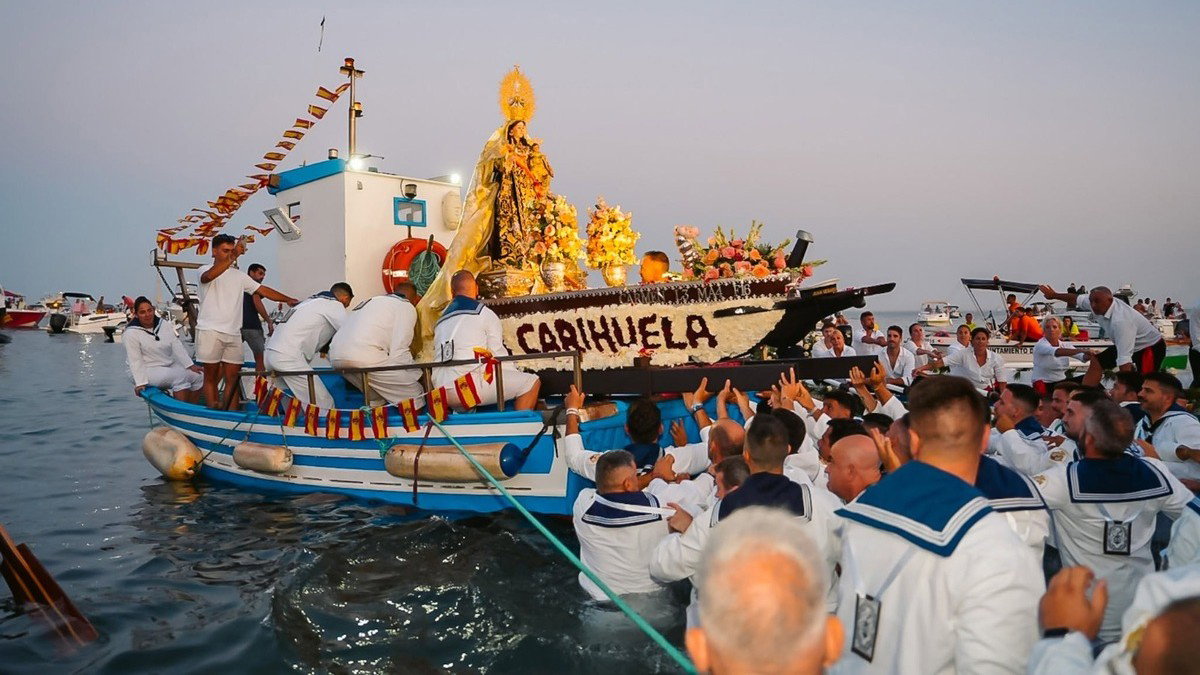
Villas and beach clubs that have transformed the coastline may come and go, but every July, fishermen still carry their patron saint into the sea, exactly as their grandfathers did in the one tradition that isn’t going anywhere.
Why the Virgen del Carmen still to this day stops people in their tracks
Every summer, something happens on the Costa del Sol that no beach club or luxury development can touch. Fishermen shoulder a statue of the Virgen del Carmen through packed streets and carry her into the sea, while residents line the front to watch. Held around July 16 each year, the festival honours Our Lady of Mount Carmel and ranks among the region’s most important religious celebrations, marking her as patron saint of fishermen and seafarers. Numerous processions take place stretching from Torremolinos and Benalmadena through to Fuengirola, Marbella, Estepona and Manilva.
A patron saint carried by the people
The Virgen del Carmen isn’t a spectacle dressed up for visitors, it is a fishermen’s festival, organised by the local fishermen’s guilds, or cofradias. Each town adds its own style. In Los Boliches, part of Fuengirola, a centuries-old tradition has fishermen carry the Virgin directly into the water on their shoulders, with no boat involved at all. Elsewhere, statues are carried through the streets before being taken out to sea aboard the fishing boats.
Why the sea procession is still important to fishing families
For communities whose ancestors depended entirely on the Mediterranean for their living, the maritime procession is an act of gratitude and protection. Known as “La Reina de los Mares” (Queen of the Seas), the Virgen del Carmen holds a place in their identity as a direct line to generations who trusted the Virgin to bring them home safely.
A tradition holding its own against mass tourism
The area has changed almost beyond recognition since fishing villages gave way to resorts, marinas and luxury developments, a movement that shows little sign of slowing. Over tourism can drive the erosion of local cultural identity, changing the meaning of a place rather than simply occupying its space. In Spain that tension is visible in daily life, with residents voicing growing frustration as historic neighbourhoods are hollowed out and converted for short-term lets aimed squarely at visitors rather than the people who grew up there.
Virgen del Carmen is one of those special nights of the year when local towns visibly celebrate the traditions special to them, a moment where the fishing families who built these places, not the developers who reshaped them, take the spotlight. There is no ticket, no marketing campaign and no fake curated Instagram moment behind it; it survives simply because residents choose, year after year, to keep showing up for it.
Cranes may keep rising and stylish new bars and restaurants opening, but for one week each July the Costa del Sol has at its core, a true traditional festival celebrating who it really is.