Connect with us

%

The Rabbit Found Nowhere Else On Earth Has Been Hiding In Plain Sight Across Spain

Published

on

the-rabbit-found-nowhere-else-on-earth-has-been-hiding-in-plain-sight-across-spain

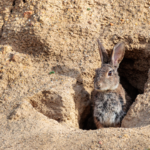
Once a unique evolutionary history is lost, it cannot simply be recreated. Photo credit: LFRabanedo/Shutterstock

It darts across country lanes, disappears into scrubland and is so common that most people barely give it a second glance. But scientists have now discovered that Spain’s humble wild rabbit has been quietly guarding a remarkable secret for around two million years. It’s one of the most familiar sights in the Spanish countryside. Whether you’re driving through Andalucía at dawn, walking in Castilla-La Mancha or exploring the forests of Extremadura, chances are you’ve spotted one.

Small, fast and seemingly ordinary, the Iberian rabbit has long been considered just another part of Spain’s wildlife. Now, however, researchers say that assumption couldn’t be further from the truth. A new scientific study has revealed that the rabbit living across Spain and Portugal is far more unique than previously believed. After spending around two million years isolated on the Iberian Peninsula, the species followed its own evolutionary path, making it unlike any rabbit found anywhere else on Earth. For an animal many people take for granted, it’s an extraordinary discovery that is reshaping what scientists know about one of Europe’s most recognisable mammals.

A two-million-year secret

The research, carried out by scientists from the University of Oviedo, the University of Porto and Spain’s National Research Council (CSIC), suggests the Iberian Peninsula acted as a natural refuge for rabbit populations over millions of years. Separated from other European populations by geological changes and shifting climates, the rabbits gradually evolved in isolation.

While humans have only been studying them for a relatively short time, nature had already been conducting its own experiment for roughly two million years. The findings, published in the journal Proceedings of the National Academy of Sciences (PNAS), show that what many people assumed was simply another European rabbit is, in evolutionary terms, something far more remarkable.

Hidden in plain sight

Perhaps the most surprising part of the discovery is that these rabbits haven’t been living in some remote mountain range or inaccessible national park. They’ve been everywhere, from farmland and forests to roadside verges and coastal dunes, generations of Spaniards have grown up seeing these animals almost every day.

Their familiarity may actually be why their extraordinary evolutionary history remained largely unnoticed for so long. Sometimes the greatest discoveries aren’t hidden deep underground or at the bottom of the ocean, sometimes they’re hopping across the road in front of your car.

More important than many people realise

The Iberian rabbit isn’t just another wild animal,  it’s considered one of the most important species in the peninsula’s ecosystem. More than 40 different predators rely on rabbits as a major food source, but none more so than the endangered Iberian lynx and the Spanish imperial eagle. Without healthy rabbit populations, conservationists have long warned that these iconic species struggle to survive. That means protecting rabbits isn’t simply about saving one animal.

It’s about protecting an entire food chain that has evolved alongside them for thousands of generations.The new research adds another compelling reason for conservation efforts, demonstrating that this isn’t simply a widespread rabbit population, it represents a unique evolutionary lineage found nowhere else in the world.

Why the discovery matters

At first glance, the findings might sound like little more than an interesting scientific curiosity. In reality, they could influence how wildlife is managed across Spain and Portugal for decades to come. 

Understanding that the Iberian rabbit evolved independently means conservation programmes may need to place even greater emphasis on protecting its genetic diversity rather than assuming populations elsewhere in Europe could ever replace it. Once a unique evolutionary history is lost, it cannot simply be recreated, for scientists, that’s one of the study’s most significant messages.

Spain still has secrets to reveal

The discovery also comes as a reminder that even in one of Europe’s best-studied countries, nature continues to surprise us. Every year, researchers uncover new species, unexpected behaviours and hidden evolutionary stories that change our understanding of the natural world. Few, however, are as surprising as discovering that one of Spain’s most familiar animals has been quietly carrying a two-million-year history almost unnoticed.

For millions of people, the rabbit is simply part of the landscape. For scientists, it has now become something much more extraordinary. The next time you spot one darting into the undergrowth on a Spanish country road, remember that you’re not just looking at another rabbit. You’re looking at a species that has survived ice ages, dramatic geological change and two million years of evolution, hidden in plain sight across Spain and Portugal all along.

%

Beach Panic In La Manga As Mysterious Package Sparks Major Police Response

Published

on

beach-panic-in-la-manga-as-mysterious-package-sparks-major-police-response

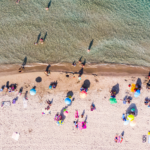
The discovery left many beachgoers surprised. Photo credit: underdog_cg/Shutterstock

Holidaymakers enjoying a day at one of Murcia’s busiest beaches watched as police and lifeguards rushed to cordon off a suspicious package that had washed ashore. Rumours spread quickly. Many feared it was drugs. The truth turned out to be something nobody expected. Sunbathers were relaxing under umbrellas, children were splashing in the sea and families were making the most of another hot summer’s day when the atmosphere suddenly changed.

A large, unidentified package had washed up on the shoreline at La Manga del Mar Menor, close to the boundary between the municipalities of Cartagena and San Javier. Within minutes, word spread along the packed beach that something suspicious had been found. As beachgoers looked on, Policía Local officers arrived to secure the area while lifeguards raced across the sand on a quad bike to recover the mysterious object. Hundreds of people watched the operation unfold, many convinced they were witnessing the discovery of another drug package washed in from the Mediterranean. 

Why everyone thought it was drugs

It wasn’t simply idle speculation, this stretch of Murcia’s coastline has previously seen waterproof packages containing cocaine and hashish wash ashore after allegedly falling from the high-powered speedboats used by drug traffickers.

Only days earlier, reports emerged of a suspicious vessel stopping at a Cartagena beach to refuel, with those on board reportedly covering their faces while transferring fuel cans. Against that backdrop, the appearance of a large wrapped package immediately raised alarm bells among those on the beach.  As officers secured the scene, many assumed the Guardia Civil would take over the investigation, with any suspected narcotics destined for laboratory testing.

The twist nobody saw coming

With police, lifeguards and curious onlookers gathered around, anticipation continued to build. But when the package was finally examined, the dramatic mystery came to an abrupt, and rather unexpected, end.

Instead of cocaine, hashish or any other illegal substance, the suspicious package turned out to be nothing more than a bale of straw. The discovery left many beachgoers surprised, transforming what had looked like the start of a major police operation into an unusual story that quickly spread across social media.

How does a bale of straw end up on a beach?

As strange as it sounds, officials say it’s not unheard of, bales of straw can accidentally fall from livestock transport vessels travelling along the Spanish coast. Carried by currents and waves, they may drift for miles before eventually washing up on beaches.

Although harmless compared with the sinister theories circulating among holidaymakers, they still need to be removed because they can become an environmental nuisance and pose a hazard in the marine environment. Lifeguards promptly removed the bale from the beach, allowing normality to return within a short time. 

A reminder of Murcia’s battle against drug trafficking

While this particular discovery proved entirely innocent, it’s understood why beachgoers were so quick to suspect something more serious. Spain’s Mediterranean coastline has become an increasingly important route for organised drug trafficking, with packages of narcotics occasionally washing ashore after being lost at sea or discarded during smuggling operations.

Incidents like these mean that whenever an unidentified package appears on a busy beach, authorities are obliged to treat it seriously until its contents can be confirmed. In this case, caution proved to be the right approach, even if the ending was far less dramatic than anyone imagined.

For the families enjoying a summer day in La Manga, it was certainly a beach trip they won’t forget in a hurry. One moment they were watching waves roll onto the shore. The next, they were witnessing a police response to a mystery package that had everyone fearing the worst. Thankfully, this time, the only thing washing up on the sand was straw, not a major drugs haul.

Continue Reading

%

Palma Prepares For Atlàntida Film Festival

Published

on

palma-prepares-for-atlantida-film-festival

Palma is getting ready to roll out the red carpet as one of Europe’s most celebrated film festivals returns later this week, bringing world-class cinema, international stars and a packed cultural programme to the heart of Mallorca.

The 16th edition of the Atlàntida Mallorca Film Fest will run from July 24 to August 2, turning some of Palma’s most iconic venues into a showcase for independent filmmaking, live music and thought-provoking discussions. Created by streaming platform Filmin, the festival has grown from Spain’s first online film festival into one of the world’s leading hybrid cinema events, combining screenings on the island with an extended digital programme.

For film lovers visiting Mallorca this summer, it promises to be one of the island’s biggest cultural highlights.

More than 165 films on the programme

This year’s edition features more than 165 films, including Spanish and international premieres fresh from some of the world’s biggest festivals, including Cannes, Berlin and Sundance. Alongside feature films, audiences can enjoy documentaries, emerging directors and award-winning independent productions that might otherwise never reach mainstream cinemas.

Screenings will be spread across multiple venues in Palma, giving visitors the chance to experience cinema in museums, historic locations and atmospheric outdoor settings.

One of the festival’s biggest draws is its open-air screenings beneath the Mallorcan night sky, offering a unique alternative to the traditional cinema experience.

Hollywood names and acclaimed filmmakers

As well as showcasing new films, Atlàntida has become known for attracting internationally recognised actors, directors and composers.

The 2026 guest list includes Oscar-winning actor Javier Bardem, acclaimed Mexican star Gael García Bernal, award-winning composer Alexandre Desplat, director Rodrigo Sorogoyen, actress Victoria Luengo and Danish actress Trine Dyrholm, among many others.

Visitors will have opportunities to attend talks, Q&A sessions and masterclasses where filmmakers discuss their work, creative process and the future of cinema.

These events have become one of the festival’s defining features, allowing audiences to engage directly with some of the industry’s biggest names.

Music, culture and summer atmosphere

Atlàntida is about much more than films. The programme also includes live concerts, cultural performances and special events that spill out across Palma throughout the ten-day festival. Evening screenings, music performances and conversations with artists create a lively atmosphere that extends well beyond the cinema itself.

Whether visitors spend the afternoon exploring Palma’s old town before watching a premiere or enjoy an outdoor screening after dinner, the festival offers a different way to experience the city’s summer cultural scene.

Continue Reading

%

Special Summer Evening In Palma

Published

on

special-summer-evening-in-palma

This special evening in Mallorca merges contemporary art with performance

By Lottie Verrier • Updated: 20 Jul 2026 • 22:46 • 1 minute read

Celebrating five years of Galería Baró

Celebrating five years of Galería Baró Credit: Instagram/GaleriaBaro

Google News

Follow Euro Weekly News on Google News

Get breaking news from Spain, travel updates, and expat stories directly on your Google News feed.

Follow on Google News

Sign up for personalised news

Subscribe to our Euro Weekly News alerts to get the latest stories into your inbox!

By signing up, you will create a Euro Weekly News account if you don’t already have one. Review our Privacy Policy for more information about our privacy practices.

Continue Reading

Trending

Copyright © 2017 Spanish Property & News