
America
The Silvas Of Brazil: Lula, His Wife, Neymar And 34 Million Fellow Citizens

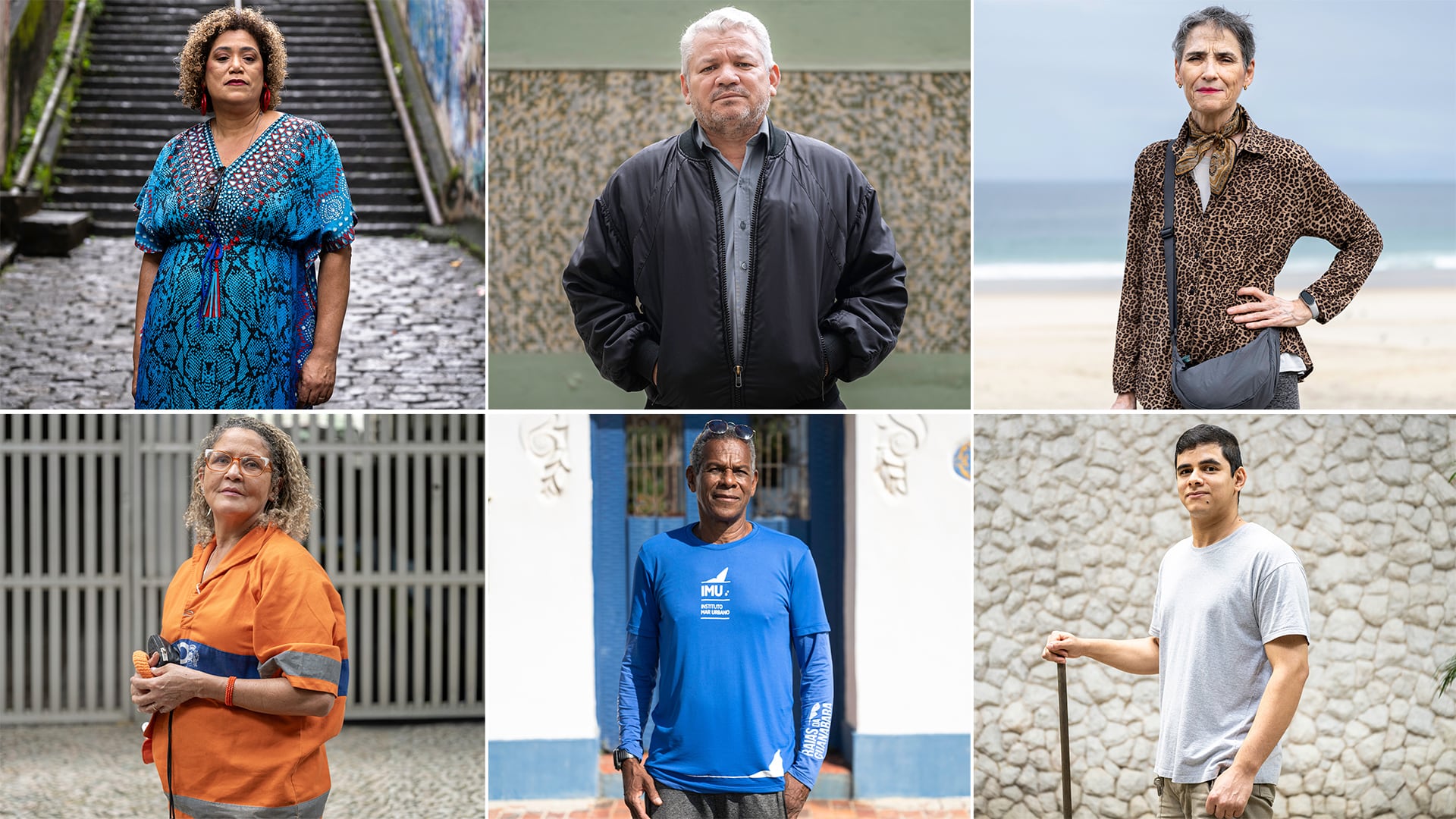
While waiting to complete paperwork at a notary’s office, Ms. Ivone Souza Silva, 64, who has deep-set circles under her eyes and shoulder-length hair, smiles as she recalls a childhood anecdote: “At school, the surname of half the class or almost half was Silva, like me… And like Ayrton Senna.” And so, unexpectedly, this housewife mentions a fact many of her fellow Brazilians do not know about the Formula 1 champion whose death behind the wheel at the peak of his career in 1994 shocked the sporting world. On Wednesday morning she learned that his full name was Ayrton Senna da Silva.
Although in Brazil the second surname, the paternal one, is the main one, the driver — like many other Brazilians — chose instead to use his first surname, the one with an Italian ring to in, instead of the surname shared by more Brazilians. No fewer than 34 million, according to the 2022 census. In other words, almost one in six citizens bears this surname, which means ‘forest’.

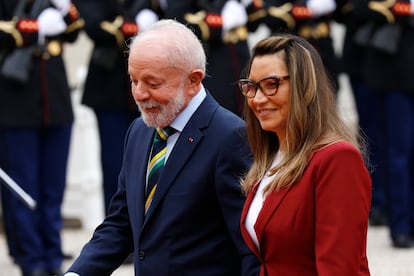
It’s rare to go a day without encountering several people with that surname on the street or on the news. The best known is undoubtedly Luiz Inácio Lula da Silva, the president of the republic. No surprise — just like one in three people in his home state of Pernambuco. Lula was still taking his first steps in politics in 1982 when, shrewdly, he went to the notary to add his lifelong nickname to his official name. That is how the seasoned trade-unionist and budding politician ensured he appeared on ballots simply as Lula. Those four letters, which mean ‘squid’ in Portuguese, and the little finger he lost to a lathe at 19 are his electoral brand. Six decades later, he hopes to crown his political career with a fourth presidential term.
His wife, now Janja Lula da Silva, also belongs to the large Silva family by birth and by marriage. And so does one of the most emblematic ministers: environmentalist Marina Silva, who was born on a rubber plantation in the Amazon, managed to succeed in politics — even to dream of the presidency — without ever giving up the name, although in this country she is known simply as Marina, with that typically Brazilian familiarity. Another member of this big club is the country’s most controversial and admired footballer on his way to the World Cup, Neymar da Silva Santos Júnior.
The surname Silva arrived in Brazil with the Portuguese colonizers starting in the 1500s. Many adopted it to bury their past. Among those who settled inland, Silvas proliferated. Coastal residents preferred Costa. Forced to take Catholic baptisms, enslaved people were given only first names. But after abolition, they needed surnames for life in freedom. Many received their owners’ names, often with a preposition — da Silva, de Souza — to make ownership clear.
While some exalted Silva as a surname of the people, many born with it tucked it away on identity cards in order to shine in life under a less common name. “He was just another Silva (…) a star that doesn’t shine,” goes the chorus of a rap by MC Bob Rum (or Moysés Osmar da Silva) that was a hit in the 1990s. It told the story of an ordinary poor man, a family father who goes to a funk dance in a neighborhood and is shot dead for no apparent reason.
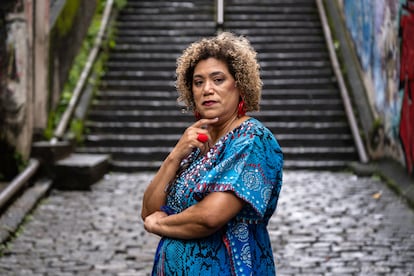
In recent years, just as pride in growing up in a favela has grown, more people have embraced surnames that were once considered ordinary. In that context, the television series Not just another Silva was launched a couple of years ago, featuring interviews with famous and anonymous people united by those five letters. “We want to reclaim the name, which many associate with poor people, but today belongs to powerful people,” said the show’s presenter, another Silva named René, at the premiere.
“When we were teenagers, we all wanted foreign surnames,” recalls the notary’s client in central São Paulo. Her attitude changed with age. Married to an Italian, she started a life in Palermo. And she decided to keep her very Brazilian surnames. “I did not give up my surnames; I remained Souza Silva, although that wasn’t the custom there. Unfortunately, when I lived in Italy there was no option for children to take the mother’s surname. I would have liked that,” she admits. “Now you can,” she adds with a triumphant smile just as her number appears on the screen. It’s her turn.
Sign up for our weekly newsletter to get more English-language news coverage from EL PAÍS USA Edition












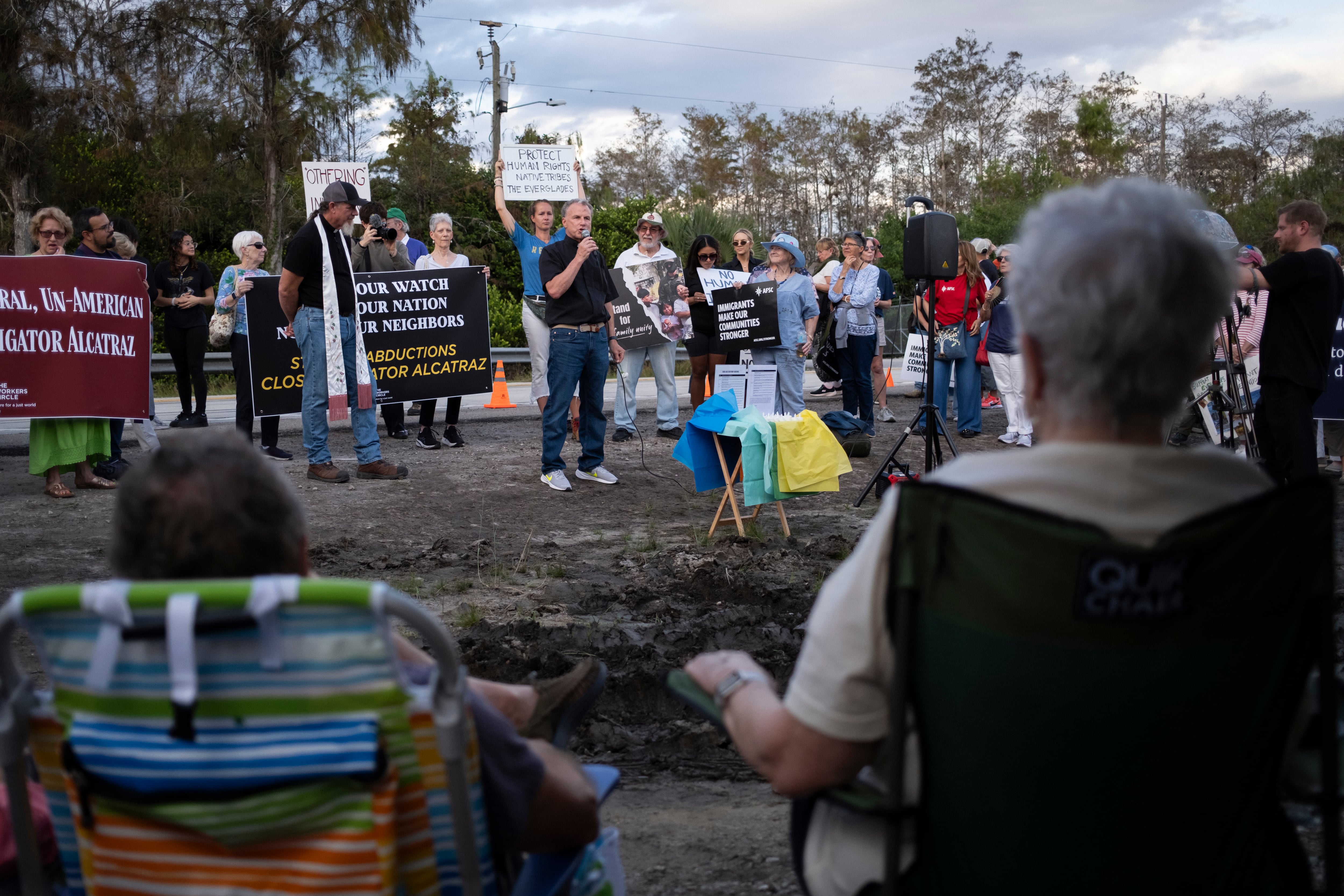
El mensaje apareció el domingo pasado en un grupo de WhatsApp de familiares de inmigrantes detenidos en Alligator Alcatraz, en los Everglades, al oeste de Miami. “¡No hay Bravo! Todos están en Alfa ya. ¡No hay Bravo!“, escribió una mujer cuyo esposo lleva cinco meses detenido en el remoto lugar y pidió no ser identificada por temor a represalias. Bravo y Alfa son los nombres internos de los dos sectores en que se dividían las celdas del centro.
America
Andrea Kottow, Essayist: ‘When We Care For Our Parents, We Are Confronted With Our Own Limitations’

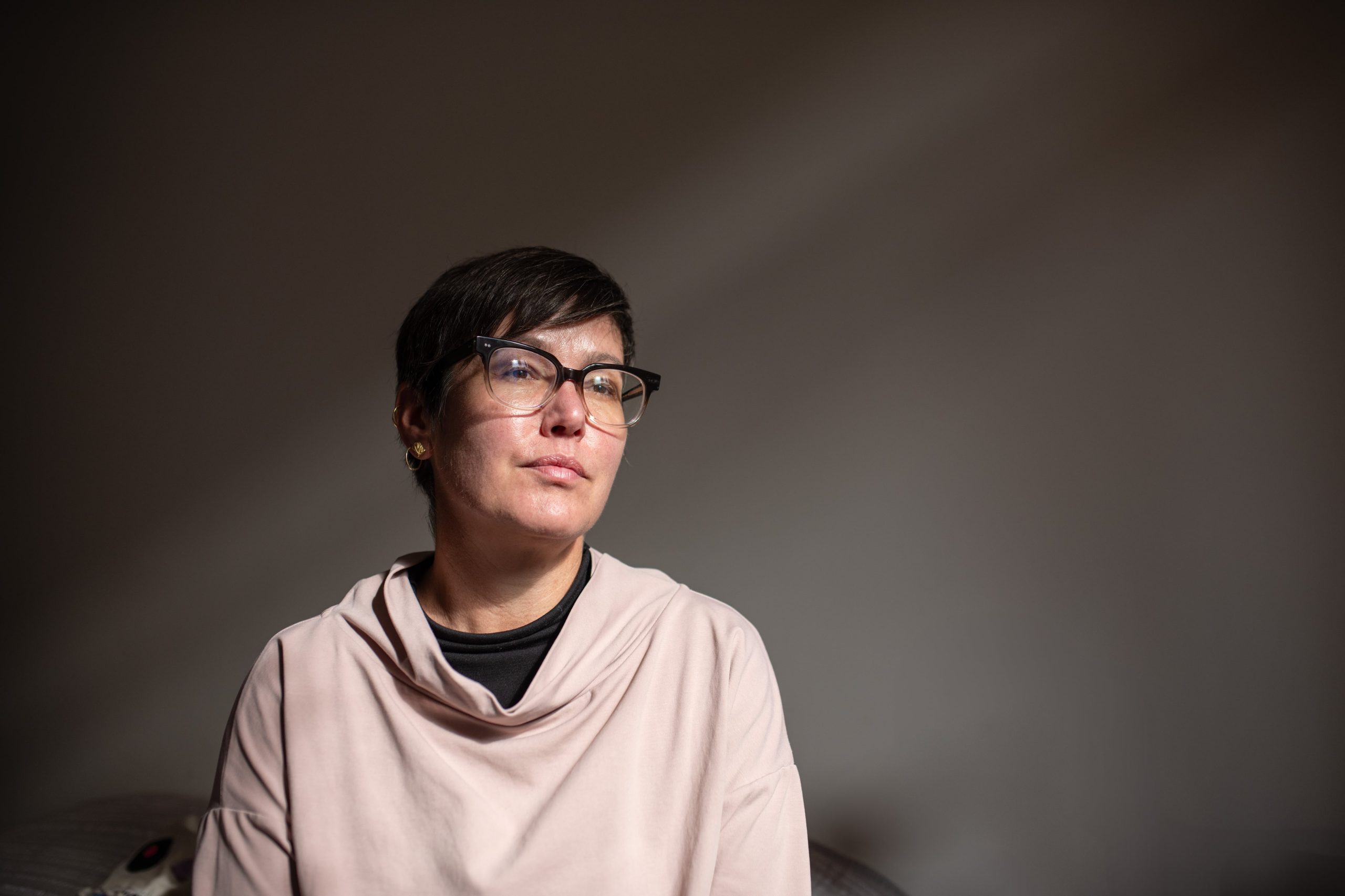
In the summer of 2013, Andrea Kottow, 51, learned of her father’s first fall. Miguel Kottow Lang — a renowned ophthalmologist, academic and bioethics specialist — had been perched on a chair, trying to repair a curtain in the house he shared with Andrea’s mother, when he lost his balance and fell. The fall changed many things, though not immediately. At first, it was just broken ribs, which Miguel silently managed with medication. However, after his mobility difficulties and other symptoms became apparent, the diagnosis came: he had Guillain-Barré syndrome, a rare autoimmune disease that causes the body to produce antibodies against its own tissues.
The illness “changed my father forever,” notes the Chilean academic, who teaches at Adolfo Ibáñez University in Santiago: she did her undergraduate studies in Hispanic Literature at the University of Chile and completed a doctorate in the History of Medicine at the Free University of Berlin. The self-reliant and protective figure she had always known suddenly transformed into a fragile and vulnerable being, who nevertheless managed to complete a book about his experience: El Pa(De)Ciente (2014). This memoir, in turn, inspired the 2021 Spanish-language film of the same name (released in English as (Im)Patient), in which Miguel and Andrea are played by Chilean actors Héctor Noguera and Emilia Noguera, also father and daughter.
The book portrays the predicament of a doctor who is suddenly on the opposite side of a medical system that he harshly criticizes. But it is also – as his daughter would reproach him – a work written by a man who appears to be “alone, without a family.” She “couldn’t believe that all the suffering felt and all the efforts made by those of us around him” were merely a peripheral matter. It was his version of events – he was well within his rights – but she still found the book to be “painful and incomprehensible.”
It was then that, upon seeing her reaction, Kottow Lang told her: “This is how I experienced it. If you want your [experience] to exist, you’ll have to write it yourself.”
And so, she ended up doing just that (although, she clarifies, she didn’t write her own story because she felt provoked by her father). This past April, the author of Spanish-language works translated as Frontiers of the Real (2022) and Diseases of Modernity (2022), among other titles, published Truth Also Moves: An Essay on Literature and Fatherhood (2026). This is an unusual work, where the essay genre allows for the merging of intimate chronicle, self-examination, family genealogy, as well as a look at literature and film, in order to understand father-child relationships. The book has moved both readers and critics: in EL PAÍS, Chilean literary scholar Joaquín Castillo declared it to be “brilliant,” containing “enormous reflective depth.”
In a conversation with this newspaper in the study-library of her home – located in the northeastern Santiago borough of Ñuñoa, Andrea Kottow comments on some aspects of her latest work.
Caring for those who cared for you
“The most dramatic thing – one that’s already become a cliché – is the reversal of roles,” the essayist comments. Her words flow effortlessly, occasionally revealing a hint of an accent from her time spent in Germany between the ages of four and 13: “With the aging of our parents – their illnesses, their decline, their need for care – we begin to become, in part, ‘the caregiver of the person who once cared for us.’ One could think of this as a kind of cosmic justice: it’s my turn to give back what I was given. And it’s also somewhat about the elderly becoming like children again.” And that’s how, in caring for the elderly, “a lot of our own contradictions and limitations come to the fore.”
Now that elder care is gaining prominence in public discourse, the decline of our own parents becomes an unavoidable issue: it can be the origin of moral, ethical, financial and mental issues that are experienced with varying degrees of intensity. In the case of Andrea Kottow — whose father, now 86, is still able to care for her 90-year-old mother — a critical turning point was the end of his autonomy in 2013, after his fall.
As she recounts in her book, after describing an incident in which she had to help him urinate because he was unable to do so himself, Miguel Kottow became “terrified at the thought of becoming someone who couldn’t take care of himself.” Meanwhile, his daughter recalls, Kottow’s close circle was dealing with the flip side of this predicament.
“There’s a lot of confusion among people who experience their parents aging,” she adds. She explains that there isn’t just a feeling of guilt: quarrels can also emerge among siblings. “Who takes on more responsibility? Who has what role? Why does the other [brother or sister] live so far away? Why can’t one of them make it to [their parents’ place]? How do we divide up shifts?”
Therein lies “an issue that we’ve barely resolved,” she reflects. “We live in an aging society, where life expectancy is increasing dramatically and where tertiary care is extremely expensive. And we don’t know if it’s our responsibility; we weren’t warned that it would be. In older societies, it was obvious that children would take care of their elderly relatives. But we don’t really live that way [today]: we live more with the idea that everyone is independent and has their own life. But suddenly, we’re faced with this problem: [when] should we intervene in someone else’s autonomy? Does the other person want this? To what extent do they allow it? To what extent can someone tell their parents, ‘Don’t do this [activity] anymore, but I have nothing to offer you in return’? What am I offering them in exchange for taking something away from them? What right do I have to take something away from them? I don’t want them to go to the beach by car anymore… but I can’t take them there myself either.”
Having elderly parents “is an experience that we’re all having… and it’s one that I was very interested in reflecting on,” she concludes. However, she understands that the book – written several years after the events it describes, reflects “the perspective of someone who is aging and is much more aware of their own mortality.”
When it came to writing, the themes multiplied: on top of the musings about old age, she needed to add some thoughts about death, or how we’re connected to our mother as the body that gave us life and nourished us, as well as to our father as “the person who gives us our surname, our sense of belonging to a family and the rule of law that either permits or prohibits.” That father whose authority – in Andrea Kottow’s case – suddenly faded away.
The author says that she feels suspicious about “this whole autobiographical [style], which has been so studied and celebrated, as if now everyone has to write about their own life.” That’s why, she continues, she needed “to find the tone of a self that I could empathize with; not so much [writing] from the affective empathy of, ‘oh, poor me,’ but rather [creating] a platform for thinking about the ‘I’ in the collective sense.”
So, what kind of “self” does she describe? It’s one where every reader can say, “‘I also have a father, I also have a mother – or I’ve had them – and I’m also part of a family system. I’ve also thought about what kind of inheritance comes from being part of a family.’ That writing of the self was, for me, the most delicate kind.”
Sign up for our weekly newsletter to get more English-language news coverage from EL PAÍS USA Edition

Última Hora De La Guerra De Estados Unidos E Israel Contra Irán, En Directo | Irán Confirma El Acuerdo De Paz Con Estados Unidos, Que Se Firmará El Viernes En Suiza

From Andalucía To Buckingham: The Surprising Orange Tradition Linking Sevilla To King Charles III

Así Le Hemos Contado El Empate Entre Países Bajos Y Japón En El Mundial 2026 (2-2)

Europe Enters The ‘era Of Deportations’

Peru’s Roberto Sánchez And Keiko Fujimori Urge Caution As Vote Count Continues In Very Tight Presidential Election

Spain, A Country Of 50 Million People With Infrastructure For 40 Million: ‘The Cracks Are Starting To Show’


-
 Africa2 weeks ago
Europe Enters The ‘era Of Deportations’
-
 Alberto Fujimori7 days ago
Peru’s Roberto Sánchez And Keiko Fujimori Urge Caution As Vote Count Continues In Very Tight Presidential Election
-
 Barcelona1 week ago
Spain, A Country Of 50 Million People With Infrastructure For 40 Million: ‘The Cracks Are Starting To Show’
-
 %2 weeks ago
Major Strike In Portugal To Cause Widespread Disruption To Air And Rail Travel
-

 Uncategorized2 weeks ago
Max Verstappen F1 future hangs in the balance as three teams block 2027 rule changes
-
David Beckham1 week ago
A Journey Through The Ages Of Soccer In The United States
-
 Brasil2 weeks ago
Caetano Veloso: ‘Right Now Concern Predominates Within Me; Brazil Seems Unable To Save Itself’
-
Latest1 week ago
Today In Spain: A Roundup Of The Latest News On Friday