Connect with us

%

The World’s First ‘space-Age’ Bone That Saved A Madrid Patient’s Leg From Amputation

Published

on

the-world’s-first-‘space-age’-bone-that-saved-a-madrid-patient’s-leg-from-amputation

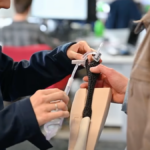
300 grams, 500 kilos: the 3D-printed bone that saved a Madrid patient’s leg from amputation. Credit: Comunidad de Madrid / Facebook.

Surgeons in Madrid seemed to be left with only one option: amputate. But instead, they built the patient a new bone from scratch, using a lattice structure borrowed from spacecraft engineering that the human body now can’t tell apart from its own.

A tibia riddled with cancer left no room for a normal implant

Pierre, a 38-year-old patient at Hospital Gregorio Marañón in Madrid, developed a high-grade sarcoma in his tibia, the shin bone. A previous infection and a severe loss of bone density meant it could no longer support any of the off-the-shelf implants doctors would normally use. Amputation looked like the only option left, one that would have cost him the use of his leg for good.

Instead of settling for that, surgeons at the hospital’s Advanced Planning and 3D Manufacturing Unit (UPAM3D) reached for a piece of engineering more familiar to the aerospace industry than an operating theatre, according to a statement from the hospital. 

Engineers borrowed rocket science to rebuild his leg

The technology at the centre of the implant is called a metamaterial, a lattice of millimetre-scale titanium rods engineered to behave like something entirely different from the metal it’s made of. It is the same principle used to keep satellites and aircraft light enough to fly while strong enough to survive extreme stress. Now, doctors used that space-grade engineering on a human bone for the first time anywhere in the world. They began with scans of Pierre’s healthy leg and built a digital twin of it, then simulated the real forces a tibia absorbs while walking, climbing stairs or stumbling. That data allowed the team to calculate, point by point, how the implant’s internal lattice needed to be shaped so weight travelled only through areas the bone could actually bear, and exactly where the fixing screws should go.

How the implant can weigh 300 grams and hold 500 kilos

Standard metal prostheses can weigh several kilograms and cost tens of thousands of euros. Built using the same lightweight logic engineers use to keep spacecraft airborne, Pierre’s implant weighs just 300 grams and can bear more than 500 kilos. The 3D printing itself cost around €3,000, according to the hospital.

Because the structure is hollow, surgeons packed it with spongy bone graft taken from the hospital’s own bone and tissue bank. The graft locked into the metal lattice, helping real bone grow into the implant rather than simply sitting beside it. Rubén Pérez, the oncological surgeon who led the case, said the design lets the human body “take it as its own” without registering it as a foreign object, avoiding the kind of mechanical rejection that heavier standard implants can cause. 

Nearly a year on, he is walking without crutches

Almost a year after the operation, Pierre has had no infection or complications. He has kept the alignment and movement in his knee, something a conventional implant could not have guaranteed, and can now walk in many situations without crutches, according to Redacción Médica. The implant has already been tested more severely than planned. EFE reported that Pierre later suffered a bad fall that fractured bones in his other leg, and the printed tibia held.

A wrist and a sternum are already in development

Surgeons at the Gregorio Marañón have since carried out a second, similar operation for another patient, and are developing two further personalised implants: one for a wrist and one for a sternum.

Pérez said the ambition is for implants like these, that use engineering once confined to spacecraft design, to become available to any patient in the future through Spain’s public health system, starting with sarcoma cases. The hospital treats around 600 sarcoma patients a year as one of Spain’s national reference centres for the disease.

%

Teba’s 20th Douglas’ Days Is The Must-See Event Of Summer

Published

on

teba’s-20th-douglas’-days-is-the-must-see-event-of-summer

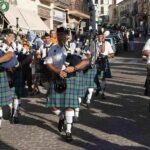
Douglas Days celebrations in Teba. Credit: Diputacion

Fancy a proper slice of Scottish history without leaving Andalucia? Head inland this week for Teba’s 20th Douglas’ Days, a cracking four-day party running from August 20 to 23 that turns a quiet Malaga province town into a full-on medieval Scottish stronghold.

Back in 1330, Sir James Douglas, the loyal knight known as the Black Douglas, was carrying the embalmed heart of Robert the Bruce towards the Holy Land when he stopped to help King Alfonso XI of Castile. He joined the fight to take the Castillo de la Estrella from Nasrid forces and fell in battle. Locals have kept that dramatic tale alive ever since, and this year’s milestone edition feels extra special. Declared a Fiesta de Singularidad Turística Provincial, it draws Scottish pipers, reenactors and visitors from Scotland and Gibraltar for a real Scottish atmosphere you simply will not find on the coast or anywhere else in Spain.

What to expect over the four days

Thursday kicks off with the official poster reveal and a book launch, followed by evening bagpipe performances of the Douglas’ March to Teba in Plaza de la Constitucion. Friday sees the medieval market open along San Francisco, Grande and Herradores streets, packed with craft stalls, traditional food and street theatre. Catch the moving itinerant play Lagrimas por Itaba as it winds through the town towards the castle ruins. Saturday brings a formal homage procession to the Douglas monument, themed neighbourhood walks recreating Christian, Sephardic and Andalusi quarters, plus live music into the night. Sunday is all about open doors at the town’s museums, church and hermitage before the closing ceremony.

Local residents throw themselves into the costumes and decorations, while visiting groups such as the Saint Andrew’s Society of Gibraltar and Scottish artisans keep the pipes and kilts coming. There is even a municipal bagpipe school now training the next generation of local players.

Plan your trip inland from the Costa del Sol

Teba sits in the Guadalteba area, an easy drive from the coast, about halfway between Malaga and Ronda, and a refreshing change from the bigger ferias. Full details and the latest timetable sit on the official site at douglasdaysteba.com. For background on the historical battle, the Andalucia tourism page offers a clear overview.

If you enjoyed last year’s twinning celebrations with Melrose, this 20th edition takes the whole experience up a notch. Readers who caught our earlier coverage of the 2025 Douglas’ Days or the current Malaga Feria will find this a completely different flavour of summer fun. Grab the chance while it lasts – bagpipes echoing around whitewashed streets under a Malaga sky is pure magic you will talk about for years.

🏴󠁧󠁢󠁳󠁣󠁴󠁿 pic.twitter.com/FALt1pYDQX

— Sovereign 🏴󠁧󠁢󠁳󠁣󠁴󠁿👑 (@SovereignBain) August 28, 2025

Continue Reading

%

Super El Niño Could Flip Spain’s Next Winter

Published

on

super-el-nino-could-flip-spain’s-next-winter

Wild winter on the cards. Credit: Marta Fernández – Shutterstock

Spain keeps baking under what seems like relentless heatwave after heatwave this summer, yet a massive climate driver is already firing up far across the Pacific that looks set to rewrite the rules for winter 2026-27.

Meteorologists put the chance that this Super El Niño will still be influencing European weather well into spring 2027 at an unusually high 95 per cent.

Extra heat building in the tropical Pacific acts like a giant atmospheric engine. It pushes powerful air currents, shifts high and low-pressure systems around the globe, and eventually reaches the jet stream and weather patterns sitting over Europe. Peak strength is expected between November and January, right in the middle of our coldest months.

By November–December, this El Niño will be the strongest any living person has ever experienced. It is expected to completely surpass any previous year by a massive margin.

Combined with ongoing climate change, global temperatures could briefly reach nearly 2°C above… pic.twitter.com/zO0pRntnGA

— Colin McCarthy (@US_Stormwatch) August 15, 2026

Two extremely different winter scenarios on the cards

One possible outcome sees the polar vortex, that huge whirl of cold air sitting high over the Arctic, become unstable. Arctic air then tends to spill south, bringing weeks of hard frosts, snow and bitterly cold nights across large parts of Europe, including Spain’s higher ground and inland areas.

The opposite scenario produces a milder, greyer, wetter winter of the sort many places have seen in recent years. Extra warmth locked into the wider atmosphere keeps temperatures higher than average and encourages more unsettled, rainy spells.

Which version wins out should become clearer over the next few weeks as more detailed model runs arrive. Either way, the basic ingredients for an unusual season are already in place.

Why Europe’s winter is never just about El Niño

Spain’s winters also respond to the polar vortex high above the Arctic Circle, sea temperatures across the North Atlantic, and the exact position of the polar jet stream. Super El Niño can tip the odds, yet those other players still decide the final score.

Readers on the Costa del Sol and inland Andalusia will remember the furnace-summer warnings earlier this year linked to the developing El Niño. July 2026 then delivered Spain’s joint-hottest and driest July on record, as covered in our full report on the extreme month. Recent short-term changes, including the weekend storms and cooler air now moving across the country, show how quickly patterns can change even before the main El Niño peak arrives.

What the official numbers say right now

NOAA’s Climate Prediction Center currently gives a greater than 90 per cent chance of a very strong event through the northern hemisphere’s autumn and winter, with the October-December period carrying a 95 per cent probability of reaching the “very strong” category. Around 69 per cent of the outlook points to a potentially historic episode stronger than any recorded since 1950.

The takeaway is simple: next winter is unlikely to feel routine. Whether that means icy spells or another stretch of mild, damp weather, the Pacific is already loading the dice. Keep an eye on the regular AEMET updates and the Euro Weekly News weather section as the picture becomes clearer over the coming weeks.

No human alive has seen an El Niño event this strong. In fact, it’s possible that no human in history has seen an event this strong.

Forecasts continue to project a 3.5-4.0°C ‘Super El Nino’.

Temperatures in the east Pacific are now widely 5°C above average, peaking at 6°C. pic.twitter.com/voKRoioBXT

— Met4Cast – UK Weather (@Met4CastUK) August 12, 2026

Continue Reading

%

More Quakes Likely In Granada For Days & Weeks

Published

on

more-quakes-likely-in-granada-for-days-&-weeks

More earthquakes to come warns president. Credit: Viral X video

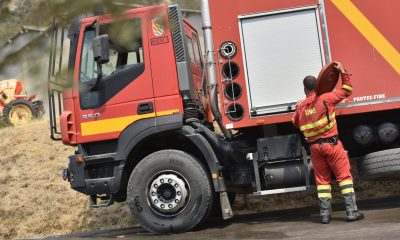
Juanma Moreno, president of the Junta de Andalucia, has warned residents that more seismic movements are very probable in Granada province over the coming days and even weeks. He spoke on Sunday, August 16, from the advanced command post dealing with the Niebla fire in Huelva, calling for calm while stressing the need for caution after the weekend’s activity.

A magnitude 5 quake struck near Alhendin in the early hours of Saturday, reverberating through most of Andalucia. Overnight into Sunday a further series of tremors followed, the strongest measuring 3.1 near Armilla. Around twenty events were recorded in the southern metropolitan area, roughly half of them felt by people in towns, including Ogijares, Gojar, La Zubia and Churriana de la Vega.

What officials are saying

Moreno described even more tremors as both very possible and foreseeable. “We ask citizens that if they feel any tremor, they already know the manual on how to behave,” he said. He added that it is important to stay careful while the sequence continues.

He confirmed the main event produced no major damage and no fatalities, despite its scale and comparisons sometimes drawn with stronger quakes elsewhere. Volunteer architects from the College of Architects are already working with the regional emergency agency. Teams are checking buildings that show cracks or other defects to decide whether any problems are structural or only superficial. That inspection work continues.

Advice for residents and holidaymakers in the area

Anyone who feels the floor shaking should follow the established safety steps: drop, cover and hold on under sturdy furniture or against a solid wall, keep clear of windows and heavy objects, and stay away from façades, cornices and balconies once outside. Avoid unnecessary movement in and out of buildings and never use lifts during or straight after a tremor. Keep up to date via official channels rather than unverified social media posts.

Spain’s National Geographic Institute (IGN) is continuing to monitor the sequence closely. Regional guidance on how to prepare and react is available from the Agencia de Emergencias de Andalucia.

Earlier coverage and context

Granada sits in a known active zone and has experienced seismic series before. Experts describe the current activity as a typical mainshock-aftershock sequence that should gradually release less energy. Authorities remain on alert and will keep the public informed as inspections and monitoring progress.

Residents are asked to stay calm, apply the safety advice they already know, and report any serious structural concerns to the emergency services on 112.

Continue Reading

Trending

Copyright © 2017 Spanish Property & News