Connect with us

%

They Trusted The Polite, Well-Dressed Salesman, Then He Allegedly Used Their Identities In A €350,000 Con


Published

on

they-trusted-the-polite,-well-dressed-salesman,-then-he-allegedly-used-their-identities-in-a-e350,000-con

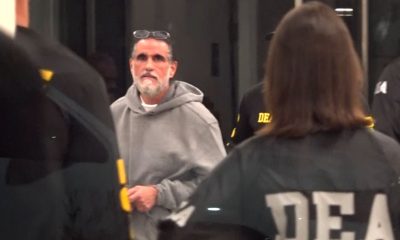
The suspect is led away by Guardia Civil officers following his arrest in Granada. Credit: Guardia Civil

A sharp suit and confident manners were enough to talk his way into dozens of homes across Andalucía, but behind the polished exterior was a fraud that has cost more than 40 elderly and disabled residents a combined €350,000. Guardia Civil have now arrested the 41-year-old accused of running it.

How a smart appearance opened dozens of front doors 

Guardia Civil said the man, now in provisional prison, spent months posing as a sales representative for various companies. His educated manner and formal dress were enough to convince strangers he was legitimate, letting him walk into homes across six Andalucian provinces without raising suspicion.

Once inside, he asked for personal documents that seemed routine for any sales visit: banking details, pension certificates and a signature or two. Investigators said his targets were carefully chosen, mostly elderly people and those with disabilities, many of whom lived alone.

Signatures turned into secret loans and phone contracts 

Those documents and signatures then became the raw material for a second crime. Officers said he used the stolen paperwork to take out credit agreements, buy mobile phones and even finance vehicles, all in his victims’ names and without their knowledge.

In some cases, investigators believe he forged signatures rather than relying on ones he’d already gotten from the victims, exploiting how little oversight there is once he had the right documents in his hands.

A second visit that doubled the damage 

The fraud didn’t always end with the first visit either. Guardia Civil said the man sometimes returned to homes claiming a financing error had occurred, telling victims they needed to pay cash, make a transfer or use a portable card machine to cancel an operation that never even existed. For anyone who paid up, it meant a second financial hit, one that could prove devastating for people living solely on a pension.

The Armilla traffic stop that unravelled the network

The case only came together after officers carrying out a routine citizen security operation in Armilla, near Granada, stopped the man’s car in May. In the boot, they found contract papers, invoice books and documents bearing other people’s data, including a rental agreement drawn up in the name of a person who had already died.

That discovery let Guardia Civil link complaints that had previously looked isolated, building a single case, Operación Larberik, out of reports scattered across Jaén, Granada, Sevilla, Málaga and Córdoba, including several victims in Almería.

More than 40 victims, and investigators expect more to come forward

The man has been formally charged with continued fraud, usurping another person’s identity and falsifying public and private documents, according to Guardia Civil. A second suspect, an acquaintance accused of handling some of the stolen money or goods, is also facing charges.

Officers seized two high-end phones, two motorcycles, a car, more than €1,000 in cash and a portable card machine when he was detained. Guardia Civil said the investigation remains open and is urging anyone who was visited by an unsolicited sales representative and later noticed unexplained contracts or charges to come forward.

Cases like this are becoming a familiar pattern across Spain. EWN has previously reported on a fraudster posing as a Guardia Civil officer who fooled three women out of €135,000, whilst a bar owner in Granada was also accused of scamming a pensioner out of €22,000 in a separate case. Elsewhere in Europe, scams towards elderly residents are also becoming more common-place, as a recent report found a fake accountant who convinced a Greek pensioner to hand over €400,000 by claiming ‘a satellite was watching him’.

%

Opposition In Spain Vows To Bolt Country Shut

Published

on

opposition-in-spain-vows-to-bolt-country-shut

Sunday’s political rally in Badalona. Credit: ANF FB

Alberto Núñez Feijoo, leader of Spain’s main opposition party, used a packed rally in Badalona on Sunday to set out a harder, tighter immigration line, tying work, law-abiding behaviour and the Spanish passport to one another. He said Spain should welcome people who come for hard graft and obey the country’s rules, then slam the door on anyone arriving to break them.

His remarks landed as Ceuta is still dealing with the fallout from mass crossings earlier in the summer, a crisis with of the city’s new port camp and pressure for a royal visit. Feijoo is due in Ceuta on Monday with European People’s Party president Manfred Weber.

What was said in Badalona

Feijoo argued that a country with self-respect should be demanding of people born here and of those who move here. Nationality, he said, brings rights and duties. Recovering “the prestige of the Spanish passport” means reviewing how citizenship is granted, how it is kept, and how it can be lost.

He put the message in plain language. Spain, if he governs, would stay open to “hispanos” and to anyone arriving to work and respect the law. Those who come to dodge the rules would find the country “cerrada a cal y canto”, or “bolted shut”. He also called it a “sinsentido” that irregular entry can look easier than arriving with a job contract, and said public services cannot hold if people arrive without control while nationality is handed out on a mass scale.

That line builds on earlier PP ideas already reported by Euro Weekly News, including tighter residency rules and a harder approach to arraigo.

Law-abiding Brits already living in Spain legally are not the target of these pledges. Feijoo’s speech was aimed at irregular arrivals and at naturalised citizens who later commit serious crimes, not at residents who work, pay their way and keep to the rules.

Immigration plans point by point

  • Run an ordered immigration policy rather than uncontrolled arrivals.

  • Keep Spain open to people who come to work and follow the law, including Latin American arrivals he described as “hispanos”.

  • Bolt the country shut to those who arrive irregularly or come to break the law.

  • Make work the normal route in, so a contract is not harder than an irregular crossing.

  • Strengthen border protection, with Ceuta used as the immediate example.

  • Review how Spanish nationality is granted, kept and withdrawn.

  • Strip nationality from naturalised citizens convicted of serious crimes, including gang membership, murder and repeat sexual assault.

  • Treat the passport as something earned, not gifted.

He challenged critics directly: if anyone objects to taking nationality from a convicted killer, gang member or repeat sex attacker, they should explain why.

Why this matters now

The next general election in Spain is expected in 2027. Feijoo, beginning his electioneering, also used the rally to attack Pedro Sanchez’s government over Ceuta, budgets and taxes, promising a “limpieza total”  if his party, PP, returns to office.

For readers already in Spain, the practical point is the passport and residency test he wants to rewrite. Current nationality law is set out in the Spanish Civil Code on the official BOE site, and any withdrawal of citizenship would need a huge legal change, not just a speech.

Whether that package ever becomes law depends on an election Feijoo is openly inviting. For now, Badalona was the pitch: work and obey the law, or Spain stays locked.

Continue Reading

%

Parking On Torrevieja’s Calle Ramon Gallud

Published

on

parking-on-torrevieja’s-calle-ramon-gallud

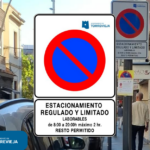
New parking restrictions on Calle Ramon Gallud in Torrevieja. Credit: Ayuntamiento de Torrevieja.

Drivers using Calle Ramon Gallud in central Torrevieja will need to take into account new parking restrictions limiting stays to a maximum of two hours during the working day.

The regulation came into effect on September 15 and applies on working days between 8:00 AM and 8:00 PM. Torrevieja Town Hall says the measure is designed to increase the turnover of parking spaces on the busy town centre street.

Two-hour limit applies during the working day

Under the new rules, vehicles parked on Calle Ramon Gallud can remain in the same space for a maximum of two hours between 8:00 AM and 8:00 PM on working days.

The restriction does not apply overnight. From 8:00 PM until 8:00 AM the following morning, vehicles can remain parked without being subject to the two-hour limit.

The restriction is also lifted on non-working days.

Torrevieja Town Hall has installed new signs along Calle Ramon Gallud explaining the times and conditions. Motorists are being encouraged to check the signs carefully when leaving their vehicles to make sure they comply with the new regulations.

Council aims to free up more parking spaces

Local Police councillor Federico Alarcon said the change is intended to improve the turnover of available parking spaces on one of Torrevieja town centre’s main commercial and service streets.

By preventing vehicles from occupying the same spaces throughout the entire working day, the council hopes more drivers will have an opportunity to find somewhere to park.

This could particularly benefit people making shorter visits to the centre to go shopping, attend appointments or use nearby businesses and services.

Calle Ramon Gallud experiences high levels of activity for much of the day, increasing demand for the limited parking spaces available.

Drivers urged to check new parking signs

The measure forms part of wider efforts to better manage parking in central Torrevieja and make existing spaces available to a greater number of motorists.

Drivers using Calle Ramon Gallud should therefore pay particular attention to the newly installed signs, especially if they are accustomed to leaving their vehicle in the street for longer periods.

The two-hour restriction is now in force between 8:00 AM and 8:00 PM on working days, while overnight parking and parking on non-working days remain exempt from the limit.

Continue Reading

%

Talk To Older People As Equals

Published

on

talk-to-older-people-as-equals

Long-time Costa del Sol volunteer Steve has sent Euro Weekly News another plain-speaking note, this time on his concern of how we speak to our older neighbours, relatives and the people we meet at coffee mornings.

After nearly 30 years here and years listening through Age Concern Marbella – San Pedro, he is fed up with seeing older folk treated as if they have “little or no value”. “They have a wealth of knowledge gleaned after a lifetime of experience, and if asked are keen to share,” he writes.

Listen properly, then speak

Steve’s first rule is blunt. “Listen carefully giving them your full attention. If you feel you need to interrupt – don’t!” Talk in a calm, clear voice and “NEVER talk down to older folk. It’s very disrespectful.”

Patience comes next. “Everyone needs time to process what is being said at their own speed. Don’t be too quick to judge a slower response.” Hold eye contact. “Very important because it shows respect and your genuine interest in what is being said.” That sits with his earlier plea to listen first, talk second rather than deliver a monologue.

Open questions beat yes or no

Keep language simple. “If you need to explain you have lost their interest.” Ask what, where, who, why and how. “Rather than questions that only require a Yes or No answer. Your goal is to establish a conversation.”

Show empathy, he says, “when trying to relate and understand their feelings and concerns.” Watch posture and face as well as words. “Their body, face and posture can often tell you much more than words.” Then check you both understood. “Never assume.”

Treat them as adults

Steve’s last point is the one he keeps coming back to, whether he is writing about retirement and purpose or looking in on neighbours.

“Respect older folks’ independence, knowledge and life experiences. Speak to them as equals, involve them in any decisions and never make assumptions based on age.”

Health bodies say the same: the US National Institute on Aging tells staff not to hurry older people or use baby talk, and WHO guidance on talking with older adults stresses extra time, no interruption and eye contact.

Steve’s list is not medical jargon. It is how you stop a chat becoming a lecture, and how you let someone feel they still have worth.

Continue Reading
Advertisement
Advertisement

Spanish Real Estate Agents

Tags

Trending

Copyright © 2017 Spanish Property & News