Connect with us

%

This Rural Village In Spain Is Betting On Low-Cost Land To Revive Its Community

Published

on

this-rural-village-in-spain-is-betting-on-low-cost-land-to-revive-its-community

The initiative is particularly aimed at individuals and families who can work remotely or who are willing to relocate for lifestyle reasons. Photo credit: Israel Hervas Bengochea/Shutterstock

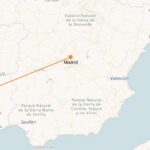
A small municipality in central Spain is offering low-cost building plots in an effort to attract new residents and reverse long-term population decline. Olmeda de la Cuesta, in the province of Cuenca, has introduced an initiative allowing buyers to acquire land at reduced prices as part of a wider strategy to encourage settlement in the area. The village forms part of Spain’s broader “España vaciada” movement, which refers to rural regions affected by decades of depopulation as younger generations move towards urban centres.

Local authorities have turned to land sales and settlement incentives in response to shrinking populations and limited economic activity. The initiative has drawn attention beyond Spain, with reports highlighting the unusually low price of available plots and the municipality’s attempt to reposition itself as a viable option for remote workers and families seeking a quieter lifestyle.

What the scheme involves

The scheme in Olmeda de la Cuesta involves the sale of municipal land at significantly reduced prices compared with urban property markets. The aim is to make homebuilding more accessible and to encourage long-term residency rather than short-term tourism. According to reports, the council has made building plots available through a structured allocation process, with conditions attached to ensure that land is used for residential development.

The measures are designed to prevent speculative purchasing and to prioritise individuals or families willing to relocate permanently. Local officials have framed the initiative as part of a long-term strategy to maintain essential services and avoid further population loss. As with many rural areas in Spain, the village faces challenges linked to ageing populations, limited employment opportunities and the gradual closure of local infrastructure.

What life is like in Olmeda de la Cuesta

Olmeda de la Cuesta is a small municipality in Castilla-La Mancha, located in a mountainous rural area. While population figures vary depending on classification, it is widely described in reporting as a sparsely populated village with a strong focus on agriculture and land management. The settlement has undergone previous efforts to modernise infrastructure and attract new residents, including improvements to housing stock and public spaces.

Despite this, population numbers remain low, highlighting a wider issue across inland Spain where rural communities continue to decline in size. The latest land offer is intended to address this directly by making relocation financially feasible for people who may otherwise be priced out of home ownership in cities or larger towns.

Targeting remote workers and new settlers

The initiative is particularly aimed at individuals and families who can work remotely or who are willing to relocate for lifestyle reasons. Spanish rural councils have increasingly looked towards remote workers as a potential solution to depopulation, especially following the rise in flexible working arrangements.

In addition to attracting private buyers, the scheme also seeks to encourage small-scale business activity in the area. Local authorities have suggested that new residents could contribute to maintaining services and supporting the local economy through everyday spending and community participation.

Part of a wider local efforts across rural Spain 

The situation in Olmeda de la Cuesta reflects a much wider national issue in Spain, where rural depopulation has affected large parts of the interior. Many villages face similar pressures, including reduced access to healthcare, fewer schools and limited transport links.

In response, various municipalities have introduced incentives ranging from cheap housing to tax reductions and job offers. These initiatives aim to stabilise or reverse population decline, although results have been mixed depending on location and economic conditions. Olmeda de la Cuesta’s land offer sits within this wider pattern of local-level interventions rather than a central government programme, with each municipality tailoring its approach based on available resources.

Outlook for rural repopulation efforts

While such schemes generate interest, long-term success depends on sustained migration and economic viability. Rural councils continue to face the challenge of balancing affordability with the need to create lasting employment opportunities and infrastructure improvements.

For Olmeda de la Cuesta, the land initiative represents a continuation of efforts to maintain community viability in an area where population density remains extremely low. Whether the offer results in permanent settlement will depend on demand from individuals willing to relocate and build homes in a remote rural setting.

%

Portuguese Vets Say They Cannot Treat People Who Identify As Animals

Published

on

portuguese-vets-say-they-cannot-treat-people-who-identify-as-animals

The guidance was issued following discussion of “therian” identity in online spaces. Photo credit Gill_figueroa/Shutterstock

The Portuguese Order of Veterinarians (Ordem dos Médicos Veterinários, OMV) has issued guidance stating that veterinary professionals cannot treat humans under any circumstances, including individuals who identify as animals. The clarification is part of internal professional guidance designed to support clinics when faced with unusual or unclear requests, rather than a change in legislation or regulatory expansion.

The OMV reaffirmed that veterinary medicine in Portugal is legally limited to the diagnosis, treatment and prevention of disease in non-human animals. Human healthcare remains exclusively within the remit of medical doctors and other licensed health professionals. The guidance was issued following discussion of “therian” identity in online spaces, although there are no reported incidents in Portugal involving veterinary clinics being approached by individuals identifying as therians.

What a “therian” is and how the term is used

A therian is a person who identifies, in a personal or psychological sense, as a non-human animal. The term originates from “therianthropy”, a concept used in online communities to describe individuals who experience a strong internal identification with an animal species or perceive aspects of their identity as animal-like in nature. It is generally understood as a self-described identity rather than a medical condition or psychiatric diagnosis.

The OMV referenced the term only to clarify the limits of veterinary practice. Veterinary professionals are trained and legally authorised to treat animals only, and cannot assess or treat human patients under any circumstances. Any health concerns involving humans must be directed to medical or psychological services.

Portuguese media reports indicate that the guidance was issued as a preventive measure, rather than in response to confirmed incidents in clinical practice.

No confirmed cases in Portugal or verified international clinical records

There are no verified reports in Portugal of veterinarians being asked to treat individuals identifying as therians. The OMV has not cited any specific incidents, and the guidance appears to have been issued to avoid misunderstanding in clinical environments.

There are also no confirmed cases recorded in official veterinary or medical documentation internationally of individuals identifying as therians presenting to veterinary clinics for treatment as animals. However, there are viral videos and social media posts circulating online that appear to show individuals attending veterinary clinics or attempting to be seen in that context.

In these recordings, veterinarians typically explain that their services are restricted to animals and that they cannot provide treatment to humans. These videos are shared widely across social media platforms, but they are not supported by regulatory findings, clinical case reports or verified institutional records. They are generally regarded as isolated anecdotal situations that gained visibility online rather than evidence of a documented trend in veterinary practice.

Online identity terminology entering professional guidance

The inclusion of “therian” terminology in veterinary guidance reflects the way online identity language has become more visible in public discourse. These identity labels are primarily used within online communities and forums, where individuals describe personal experiences or affiliations linked to non-human animals.

Professional bodies in healthcare and related fields sometimes address such terminology when it intersects with regulated services. In this case, the veterinary authority’s statement is focused on ensuring that practitioners clearly understand the boundaries of their professional responsibilities rather than responding to established clinical cases.

Legal separation between veterinary and human healthcare

The OMV reiterated that veterinary medicine is defined in law as the treatment of animals. Human healthcare is regulated separately and delivered only by qualified medical and mental health professionals.

The guidance stresses that personal identity does not alter this distinction. Even if an individual identifies as a non-human animal, veterinary professionals remain unable to provide treatment or clinical assessment.

Clarification of professional responsibilities

The purpose of the guidance is to ensure consistent responses across veterinary practice in Portugal when faced with unfamiliar or unusual requests. It is intended to remove ambiguity rather than introduce new rules or sanctions.

The OMV has not suggested that therian identity represents a medical issue within veterinary practice. Instead, it has focused on reaffirming established legal limits so that veterinary professionals can respond clearly and appropriately in all clinical settings.

Continue Reading

%

British Airways Demands £10 Million Compensation Over 20,000 Suitcases Left Behind

Published

on

british-airways-demands-10-million-compensation-over-20,000-suitcases-left-behind

Bags left behind at Heathrow. Credit: Graeme Bowd FB

British Airways has demanded up to £10 million in compensation from Heathrow Airport after a major baggage system failure disrupted travel for thousands of passengers last Friday, May 15.

According to the Times, Sean Doyle, chief executive at British Airways, apparently contacted Thomas Woldbye, group chief executive at the airport, in a direct letter to seek financial redress and better safeguards against future baggage problems. Doyle also requested firm assurances that similar breakdowns would not recur at Terminal 5 and called for detailed contingency plans to protect operations.

Passengers arriving at the terminal waited for hours or departed without their belongings, while those leaving on flights discovered their bags had stayed behind at the airport. An astonishing 20,000 bags went missing in total from the incident, creating massive disruption.

Hi there, Due to a technical fault on Friday, some baggage did not depart Terminal 5 as planned and we apologise for any disruption this may have caused. The issue has been fixed. We will continue to support British Airways to ensure any missed bags are resent as quickly as…

— Heathrow Airport (@HeathrowAirport) May 18, 2026

Baggage chaos as suitcases lay dumped at airport

This is the fifth baggage system collapse at the airport since January. Earlier problems during the February half-term holiday impacted 7,000 pieces of luggage, and another at Easter affected 4,000. British Airways estimates the latest failure has cost the airline £10 million plus considerable damage to its reputation.

Photographs circulating online captured piles of luggage and personal items scattered across areas in Terminal 5. British Airways now employs courier services and additional flights to clear the backlog, though some passengers may still be separated from their belongings until Thursday.

@British_Airways Absolute joke at Heathrow airport, flight landed at 10:35 was delayed from getting of the plane for 30 minutes. To then arrive at baggage reclaim waited 3 hours and two belt changes to be then told all the staff have gone home and you can’t get your baggage. pic.twitter.com/Ww2Ad5BAKL

— ki (@KieannaWhite) May 16, 2026

Heathrow Airport takes charge of outbound baggage processes, whereas individual airlines and their ground handlers manage inbound luggage. Inbound items travel straight from aircraft to reclaim halls without entering the main airport system. British Airways apologised to affected customers on Friday and stressed that the fault lay beyond its control. Extra staff from the airline continue to work through remaining cases to speed up resolutions.

Hi, we’re sorry your bags didn’t travel with you. Due to an issue with Heathrow Airport’s baggage system at Terminal 5 on Friday, a significant number of bags have been delayed. Our Baggage team is doing all they can to get them back to you as soon as possible. You can check 1/2

— British Airways (@British_Airways) May 18, 2026

Heathrow Airport issued a statement expressing regret for the inconvenience and frustration caused by the Friday incident. Officials confirmed the system has returned to full operation and confirmed close collaboration with British Airways to reunite owners with their bags. The airport maintains that its baggage processes achieve 99 per cent reliability even while operating at maximum capacity.

Heathrow management promise to do better

Management at Heathrow pledged ongoing cooperation with airlines and ground handlers to reduce future risks and explore ways to increase overall baggage performance. They expressed hope that the Civil Aviation Authority would recognise the benefits of these upgrades for passengers and back necessary investment.

Passengers voiced their anger on social media after the chaos. One passenger described disappointment upon landing at Terminal 5, noting families waited hours only to learn bags had been abandoned throughout the building. Another called the episode an absolute joke, explaining a flight that touched down at 10.35 faced a 30-minute delay off the aircraft, followed by three hours at baggage reclaim with two belt changes before staff left and retrieval became impossible.

Social media posts from passengers erupt

@_aggiemay on X said, “1000s of passengers have been flown to their destinations without their checked baggage due to computer failure in T5 Heathrow. My elderly mother on her own without essentials in Spain.” And later: “Over 100 hours and still no luggage for their holidays. 1000s of bags left in T5.”

@1Drubsy posted, “@British_Airways customer service is diabolical. Luggage lost since last Friday due to T5 crappy baggage system. Spent over 4 hours on hold over 6 occasions trying to contact BA – no one ever answers the phone numbers provided. Complete crap.”

British Airways continues to prioritise passenger support during the clear-up. The compensation request goes to show growing tensions between the carrier and the airport over operational standards. Travellers using Terminal 5 services may wish to keep essential items in hand luggage for the time being until full stability returns.

Heathrow management and British Airways both mean to prevent any repeat of this scale of disruption. Passengers affected can contact the airline directly for updates on delayed items and potential claims.

Continue Reading

%

Mijas Takes Action On Children’s Screen Time

Published

on

mijas-takes-action-on-children’s-screen-time

Mijas Town Hall has expanded its important “Little Ones Without Screens” campaign into municipal nurseries, hoping to raise even more awareness about the negative effects of screen exposure on babies and young children. Local officials introduced the initiative during a meeting with directors from nursery schools in Las Lagunas, La Cala and Mijas Pueblo.

Education councillor Juan Jose Torres says the programme as a practical guide for modern families navigating the tricky world of technology during early childhood. Health professionals involved in the campaign warned that prolonged use of phones, tablets and televisions may affect language development, emotional wellbeing, sleep quality and social interaction in children under six.

Nursery schools join awareness drive

Teachers and childcare staff warmly welcomed the initiative, stating that many parents are uncertain about recommended screen-time limits for very young children. Specialists working with the project plan to visit nurseries to speak directly with families and provide advice on healthy daily routines.

Ten educational videos created for the campaign are currently being broadcast by local public media and shared through municipal channels. Printed information leaflets are also being distributed in schools, health centres and council buildings across Mijas.

Medical experts connected to the project stressed that face-to-face interaction, outdoor play and reading are all essential during the first years of development. Guidance from the campaign also encourages parents to reduce device use during meals, bedtime and family activities.

Plans for screen-free public spaces

Council representatives are also considering new awareness measures in parks and playgrounds. Proposed signs would encourage adults to avoid mobile phone use while spending time with children outdoors.

Future events linked to the new initiative include a public discussion featuring paediatric and education specialists, who will examine how excessive digital exposure can influence childhood behaviour, communication skills and learning habits.

Concern over screen dependency among young children is a huge topic worldwide and has led many Spanish municipalities to introduce similar awareness campaigns in schools and community spaces, with some schools starting to put a ban on devices in their learning environments. 

For more information about the new plans for screen free time visit the Mijas town hall website.

Continue Reading

Trending

Copyright © 2017 Spanish Property & News