conversation lessons
UK school introduces ‘Conversation classes’ as kids lose ability to talk


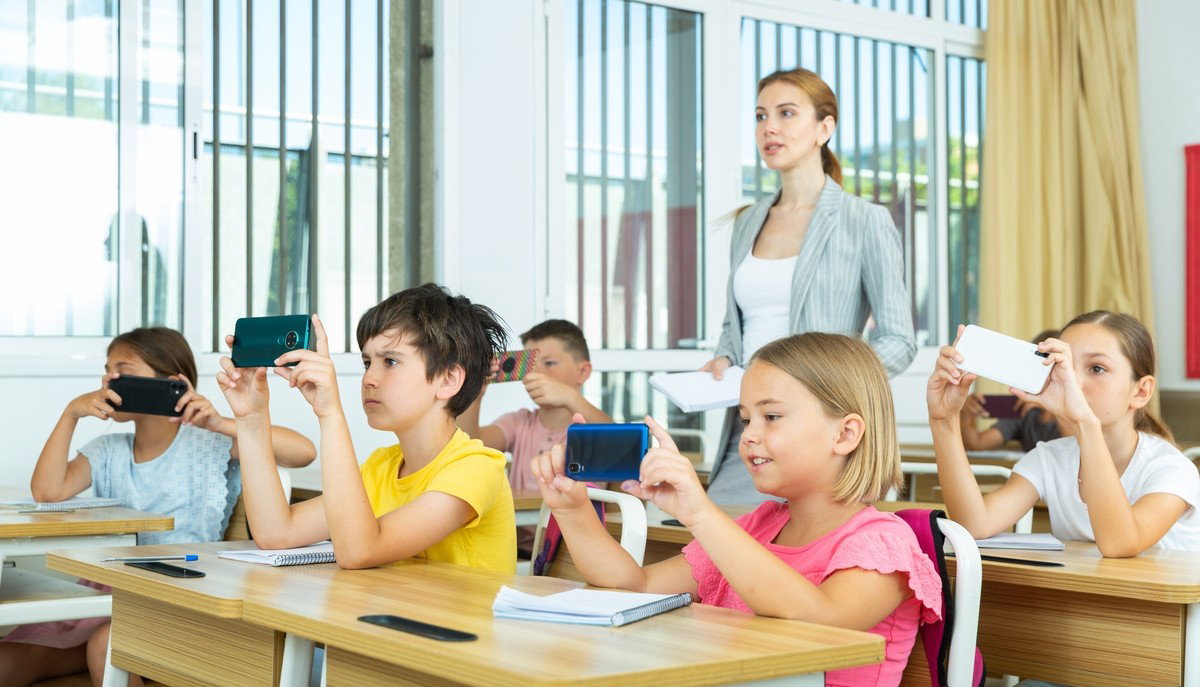
A primary school in Derby has introduced formal conversation lessons for young children, after teachers reported growing concerns about pupils struggling with basic face-to-face communication.
The announcement has got people talking outside of the classroom asking, are schools now being forced to teach skills that were once learned naturally at home? And has a generation raised on smartphones and social media lost the art of conversation?
To the thousands of parents living in Spain with children in primary and secondary schools, the worries are becoming an everyday occurrence around screens, social interactions and whether we are doing the right thing.
Why UK primary schools are holding the ‘conversation classes’
The Derby school has introduced structured lessons focused on conversation, listening, eye contact, turn-taking, and speaking confidently with others.
Teachers say some children are arriving at school unable to hold a basic conversation, maintain attention during discussions, or interact comfortably with classmates. Schools have always taught communication skills through standard classroom activities, however the difference now is that conversation itself is becoming a subject in its own right. Showing that educators believe that social interaction can no longer just be assumed, it needs to actively be taught
The debate lies in supporters believing these lessons are no different from teaching reading, writing, or math. With critics arguing they are another example of schools being asked to fill developmental gaps that should be addressed at home.
The shocking Ofcom stats behind the smartphone generation
Children cannot be blamed for what they are growing up in, they are being raised in a radically different world to their parents. The figures paint a stark picture.
According to Ofcom’s Children and Parents Media Use report, the use of technology begins at an incredibly young age.
5 to 7 years old – Almost 25% now own a smartphone, 75% regularly use a tablet.
11 Years Old – 90% of children own their own mobile phone.
12 to 15 years old – Smartphone ownership is a massive 96%.
Children are now being exposed to screens, shorts, reels, clips and games way before they have fully developed the communication skills that previous generations acquired through family conversations, playground interactions, and everyday social experiences.
Many argue that yes, today’s children can navigate technology with remarkable speed, but lots struggle with skills once considered second nature, making eye contact, listening without interruption, reading social cues, and holding a conversation for any amount of time.
Hence the warning published by The Times, stating that some primary school pupils “can swipe a screen but can’t speak.”
Screen time vs. talk time
A growing amount of research suggests excessive screen use can heavily disrupt several areas linked to conversation and social development.
Studies have associated heavy smartphone use with, reduced attention spans, poorer sleep quality and less and less opportunities for face-to-face interaction
The main concern isn’t always the technology itself, but what it replaces. A child spending an hour video-calling grandparents is engaging very differently from one spending an hour scrolling silently through short-form videos.
Speech and language specialists have raised alarms about increasing referrals involving delayed language development and weaker social communication skills. Yet many experts warn against treating smartphones as the sole villain. The issue may be less about screen time itself and more about lost, dedicated conversation time.
Parental responsibility vs. school curriculum
Teachers are increasingly being asked to address everything from mental health to financial literacy, adding conversation lessons to an already crowded curriculum begs the question, where does parental responsibility end and school begin?
Euro Weekly News spoke to a varied group of parents and educators with children of different ages across Spain and the UK.
The consensus? It is a complex, modern trap that requires a joint effort between home and classroom.
One British primary school teacher, who sees the daily impact first-hand, noted the shift in focus and stamina. She warned that more and more children are completely unable to tolerate being bored or managing mundane tasks. If a task isn’t providing instant digital stimulation, many kids simply cannot hold their attention for more than a few minutes.
Yet, as a parent herself, she admits that modern life makes it incredibly difficult to stay strict.
“Nobody is perfect,” she confessed. “I’ve been out for dinner with my husband and used a screen just to give us a hard-earned break. We are all guilty of it. Devices do have their place in survival mode, travelling, when we need to work or just have 5 mins peace, we have to make up for it by dedicating time to real table conversation in other areas. It cannot just be left to schools, it has to be a joint effort.”
Another mother shared similar anxieties about letting families off the hook. “I’d be happy for schools to teach conversation skills,” she said, “but I do worry it might let parents off the hook and that would be wrong. Parents have a huge responsibility here, and often don’t prioritise it.”
For her, the solution is making conscious, screen-free time at home using simple, low-pressure ideas to keep the art of communication alive such as, The Conversation Jar. A jar filled with topic prompts left on the dinner table for the family to dip into during meals.
Whether conversation lessons become standard practice in schools remains to be seen. But the fact they are being introduced at all tells us something important needs to change.