
News from Spain
Unexpected sales visits in Spain could now cost companies up to €1 million


Spain is warning companies over aggressive doorstep sales and repeated unwanted home visits.
Credit : New Africa, Shutterstock
There is a reason so many people in Spain have stopped opening the door unless they are expecting someone.
Too many residents have had the same experience.The bell rings unexpectedly. Somebody starts talking quickly about electricity prices, fibre internet or alarm systems before you even understand who they work for. You try to end the conversation politely but they keep insisting. Sometimes they come back again days later.
And for a growing number of consumers, it no longer feels like normal advertising.It feels intrusive.
Spanish authorities are now reminding companies that aggressive commercial visits to people’s homes can lead to very serious penalties under consumer protection laws, including fines that can reach €1 million in the most serious situations.
The warning comes as complaints continue growing around unwanted doorstep sales, especially involving sectors like telecoms, energy suppliers and security companies.
Because honestly, what frustrates many people is not even the sales pitch itself anymore.It is the persistence.
What Spanish law actually says about unwanted sales visits
Door to door sales are still legal in Spain. A company representative can knock on your door and offer services or products.
The problem starts when the situation turns into pressure.
Spanish consumer laws and unfair competition rules both state that aggressive commercial behaviour is illegal when it limits a person’s freedom to make decisions calmly.
That includes obvious situations like harassment or intimidation.
But the law also covers something broader.
Repeated visits after somebody has already said they are not interested.
Refusing to leave quickly.
Continuing to insist after rejection.
Trying to pressure vulnerable people into signing contracts they do not fully understand.
According to the legislation, companies can also face problems if they repeatedly contact consumers through phone calls, emails or other unwanted methods after being asked to stop.
And one detail people often miss is that the law does not require direct threats for behaviour to become illegal.
The pressure itself can be enough.Especially when somebody feels cornered inside their own home.
That is one reason these cases generate so many complaints among older residents in particular.
Some later realise they accepted contracts they never intended to sign simply because the conversation became uncomfortable and difficult to end.
Others say they felt embarrassed saying no repeatedly face to face.
Fines can become extremely expensive for companies
The penalties linked to aggressive sales practices in Spain increase depending on how serious authorities consider the infringement.
Smaller violations can already lead to fines worth several thousand euros.
More serious cases go much higher.
Under Spain’s consumer protection system, the most severe infractions can result in penalties reaching between €100,000 and €1 million.
And in certain situations, authorities may even increase the amount further depending on the profits generated from the practice.
That part is important because lawmakers wanted sanctions large enough to actually discourage abusive behaviour.
Otherwise some companies could simply treat fines as another business cost.
Consumer organisations in Spain have been warning for years that pressure selling has become especially common in highly competitive sectors.
Energy contracts are one example regularly mentioned.
Residents describe salespeople appearing unexpectedly, comparing invoices and creating urgency around supposed discounts or expiring offers.
Sometimes people only realise afterwards they changed provider completely.
Telecommunications services and home alarm systems also generate frequent complaints.
Not necessarily because every company behaves badly.
But because many consumers feel certain sales representatives deliberately push conversations further than they should.
People in Spain are becoming less tolerant of intrusive sales tactics
Attitudes towards these practices have changed noticeably.
Years ago, many people simply accepted door to door sales as part of daily life.
Annoying maybe, but normal. Now there is much less patience for it.
Partly because scams have made residents more cautious generally. Partly because many people already feel overwhelmed by constant advertising online, on phones and across social media. And partly because home increasingly feels like one of the few places where people expect to be left alone.
In some apartment buildings across Spain, neighbours have even placed signs near entrances warning commercial representatives not to enter. Local community groups regularly post alerts about persistent sales activity in certain areas.
Some residents admit they no longer answer the door at all unless they recognise the person outside.
Of course, legitimate businesses still argue that direct contact remains an important way of finding customers.
And not every salesperson behaves aggressively. But Spanish authorities are making it increasingly clear that there is a line between offering a service and pressuring somebody inside their own home. And according to the law, once somebody says no, companies are expected to respect it.







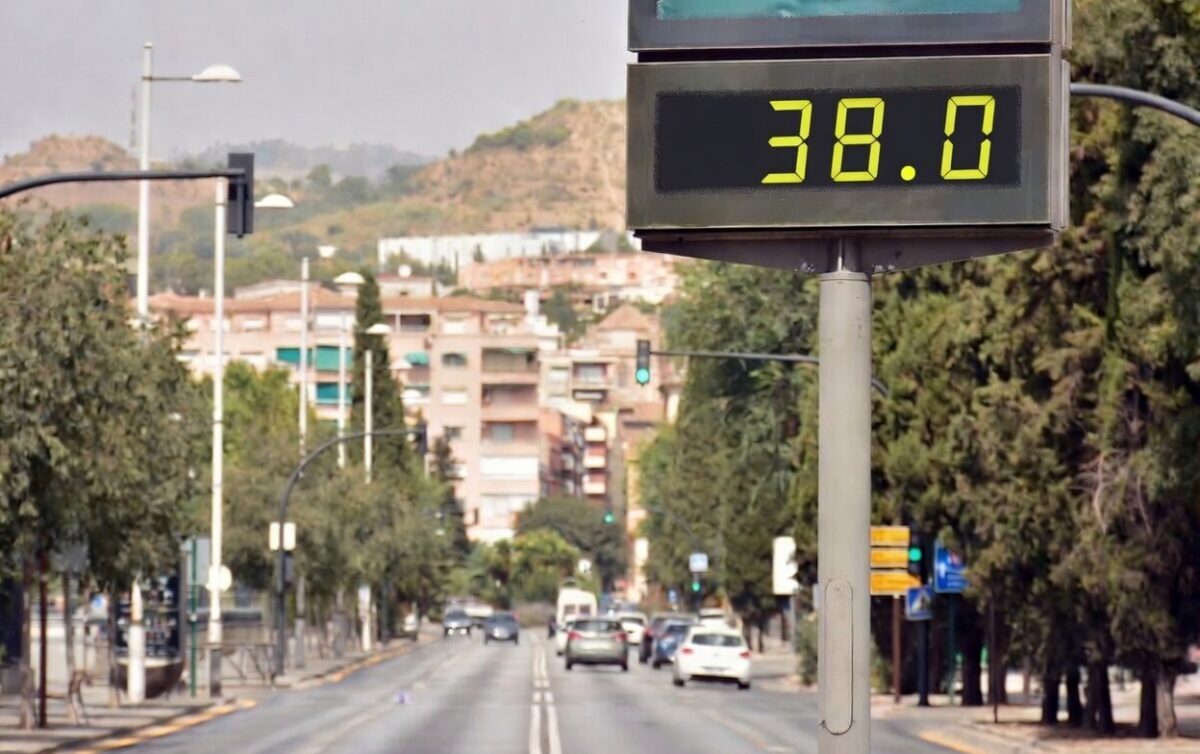
Muggy, summer-like temperatures this week in Spain.
Credit: Kuki Ladron de Guevara – Shutterstock
Experts forecast a strong dome of warm air over Spain in the coming days, keeping the temperature gradually rising after an unusually chilly start to May.
Warm air mass heats up late spring conditions
Temperatures across many parts of the country will now reach full-on summer levels. This shift follows a cold snap with readings 6 to 10 degrees below average and mountain snow in northern ranges. A persistent high-pressure ridge blowing up from northwest Africa now covers the Iberian Peninsula and is spreading northeast.
How this heat dome develops
High pressure acts like a lid trapping descending warm air and compressing it near the ground. This pattern pushes subtropical heat northward and builds over several days. Such domes occur more often in summer but bring more extreme conditions when stable.
Effects across key Spanish holiday destinations
Mallorca is experiencing notable rises, with daytime highs climbing steadily toward 30 degrees or more by late week. North Costa Blanca and South Costa Blanca see similar warming, with coastal areas feeling the build-up in humidity and heat, especially the Alicante area, which will see highs of 37ºC around Thursday.
Murcia records sharp increases as the warm air mass settles. Almeria faces potential peaks near 35º in inland spots while sea breezes moderate beach zones slightly. Costa del Sol prepares for intense warmth, especially inland from Malaga toward western stretches, where values may even approach 38ºC.
UK and Western Europe being brutalized by a “heat dome” fueled by dry African desert air, and “contorted” jet stream.
Climate change is the main culprit causing this nearly-unprecedented heat event, otherwise impossible without fossil fuels. pic.twitter.com/2LlFCoU2ER
— Ryan Maue (@RyanWeather) May 24, 2026
Week outlook for southern and eastern coasts
Maximum readings between 35ºC and 40ºC hit inland western Andalucia and Extremadura on Saturday and Sunday. Holiday regions in the east and south register 30ºC to 36ºC with some local patchy cloud.
Night-time temperatures stay warm and limit cooling in coastal zones. Vulnerable groups, including elderly residents and outdoor workers, face higher risks from prolonged heat.
Broader European spread
France is reporting 30 to 36 degrees in southwest areas today. Britain is looking forward to near 30ºC in parts over the weekend with tropical nights around 20ºC minimum. Central Europe and the Mediterranean basin warm markedly through early next week.
Spain maintains focus on this intense late-May heat as the high-pressure system matures. In short, we can look forward to a slightly muggier week ahead, with light breezes and some occasional cloud cover.
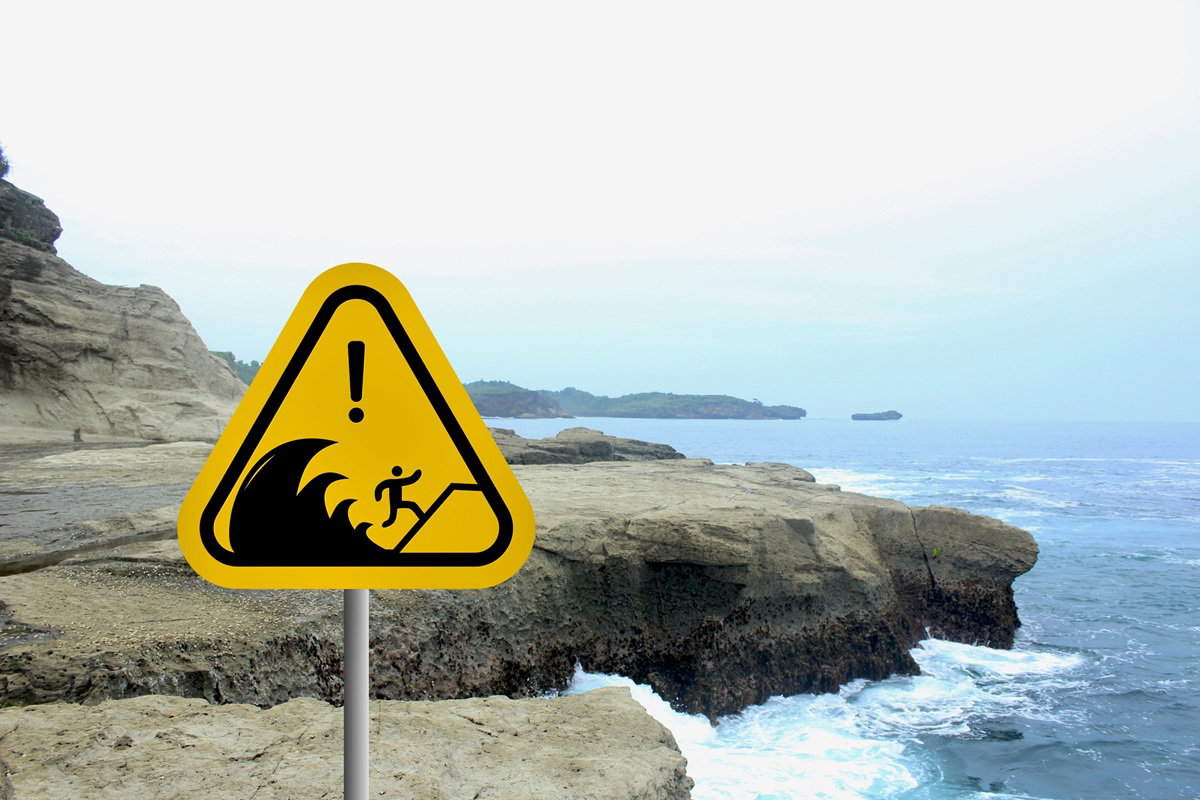
Scientists warn parts of France and Spain could face fast moving tsunami waves from the Mediterranean.
Credit : RaynDesign, Shutterstock
Most people sitting on a beach in the south of France probably never think about tsunamis.The Mediterranean simply does not feel dangerous in that way.
It feels calm and predictable, the kind of place people associate with holiday postcards, beach cafés and small boats drifting quietly near the shore.
That is partly why warnings from scientists keep catching attention whenever they resurface because the image most people have of the Mediterranean does not match the reality researchers are describing.
UNESCO has warned that there is effectively a 100 per cent probability of a tsunami of more than one metre hitting the Mediterranean within the next 30 years.
And while that does not mean a giant catastrophic wave is about to hit Europe tomorrow, scientists say many coastal communities still underestimate how exposed some parts of the region actually are.Especially along areas of southern France where certain tsunami scenarios could unfold frighteningly fast.
In some cases, researchers say waves could reach the coastline in under ten minutes.
That detail matters more than anything else because when reaction time becomes that short, traditional warning systems stop being enough on their own.
People often imagine tsunami alerts arriving hours in advance.
In the Mediterranean, it may not work like that.
The Mediterranean has already experienced destructive tsunamis before
Part of the problem is that many Europeans still associate tsunamis almost entirely with the Pacific.
Japan.
Indonesia.
Thailand.
Not Nice or Cannes.
But historically, the Mediterranean has experienced numerous tsunami events linked to underwater earthquakes, landslides and seismic activity.
Researchers studying the French Riviera coastline say historical records mention around twenty tsunami incidents affecting the area between the sixteenth century and the early 2000s.
Some produced waves exceeding two metres. One of the best known cases happened near Nice in 1979.
An underwater collapse linked to construction work near the airport triggered a tsunami that killed eight people and caused damage along parts of the Côte d’Azur including Nice, Cannes and Antibes.
Another event followed the 2003 earthquake in Boumerdès in Algeria.
Around an hour later, unusual sea movements and powerful currents were reported across parts of the French Mediterranean coast. Several marinas experienced sudden water level changes and damage linked to violent currents inside harbours.
There was also the earthquake in the Ligurian Sea in 1887, which historical accounts describe as causing the sea to suddenly retreat before waves flooded parts of the coast.
Scientists mention these examples constantly for one simple reason.
They want people to stop thinking of Mediterranean tsunamis as fantasy scenarios. Because they have already happened before.
Why scientists are especially worried about reaction times
One thing researchers repeat over and over is that Mediterranean tsunamis behave differently from the giant ocean crossing disasters people usually see in documentaries.
The Mediterranean is relatively enclosed. Distances are shorter. Which means waves can travel towards populated coastlines extremely quickly.
If the triggering event happens far enough away, emergency systems may still have time to send mobile alerts and warnings.
France already has a national tsunami warning system linked to UNESCO’s wider international monitoring network. But the real concern involves local tsunamis caused by underwater landslides or nearby earthquakes.
In those situations, waves may arrive before official alerts even reach people. That is why scientists increasingly focus on evacuation planning and public awareness rather than relying purely on warning technology. And many people still do not know the most basic natural warning signs.
For example, the sea suddenly pulling back unusually far from the shore.
Researchers say that abnormal retreat can happen shortly before a tsunami wave arrives, although not always. Strong unusual currents near ports and marinas can also signal danger.
The difficulty is that human beings naturally hesitate during unfamiliar situations.
People stop to film, watch and ask questions. They try to understand what they are seeing. And when timeframes are measured in minutes, hesitation becomes dangerous very quickly.
The French Riviera faces a particularly difficult challenge in summer
The situation becomes even more complicated on the Côte d’Azur during peak tourist season.
Researchers working on evacuation planning around Nice say tens of thousands of people can be present in vulnerable coastal areas depending on the time of year and time of day.
Beaches packed with tourists create obvious logistical problems if authorities suddenly need large numbers of people to move inland quickly.
That is why local researchers and emergency planners have spent years mapping evacuation routes, identifying refuge areas and studying how crowds might react in real conditions.
According to the studies, parts of the French Mediterranean coastline considered exposed include low lying coastal areas close to the sea and certain river mouth zones.
UNESCO has also been encouraging coastal territories, including Spain, to join its ‘Tsunami Ready‘ programme designed to improve preparedness through public information, evacuation planning and awareness campaigns.
Nice is among the areas working towards stronger preparation measures.
Scientists insist none of this is about creating panic.
The point is almost the opposite.
Preparation works best when people already know what to do before an emergency starts. Because when a coastline only has minutes to react, confusion becomes one of the biggest dangers of all, and that is exactly what researchers are trying to avoid.

“Someone’s in the Water” British tourist horror fall into Puerto Banus harbour
Clowning around in Nerja – Balcon de Europa’s Muestra de Teatro festival
Almería hosts Rubik’s Cube Speedcubing Championship


-

 Competiciones3 weeks ago
E
-
blackout April 20252 weeks ago
Insurance company Mapfre decides to pay out €14 million compensation for 2025 blackout
-
 Foreign demand3 weeks ago
Who Bought Where In The Second Half Of 2025?
-

 America3 weeks ago
E
-

 New Developments3 weeks ago
Luxury Villas For Sale, Estepona – ProjectL1
-

 New Developments3 weeks ago
Stylish 3-Bedroom Apartment With Panoramic Sea Views – Benalmádena
-

 Holiday rentals4 weeks ago
Why Removing Tourist Lets Isn’t Fixing Spain’s Rental Shortage
-

 New Developments2 weeks ago
Inside The Most LUXURIOUS Apartment Building In Spain!