ElPais
Vatican Investigation Into The Sodalitium Reveals Ovary Removals And The Use Of Psychiatric Drugs To ‘treat’ Homosexuality

EL PAÍS launched an investigation into clerical child sexual abuse in the Spanish Church in 2018 and maintains an updated database with all known cases. If you know of a case that has not come to light, you can write to us at: abusos@elpais.es. If it is a case in Latin America, the address is: abusosamerica@elpais.es.
───────────
Pope Leo XIV arrives in Peru on Wednesday, returning to the country where, as a bishop, he waged his most significant battle against clerical abuse within the Sodalitium Christianae Vitae, one of Latin America’s most powerful ultraconservative Catholic groups.
Founded in Peru in 1971 and inspired by Spain’s Falange fascist organization, the group became the focus of a campaign that earned him many enemies, some of whom sought to discredit him during the most recent conclave. After Pope Francis dissolved the group in January 2025, Leo XIV took up the task of securing redress for victims. In May, he dispatched a special commissioner, Spanish priest Jordi Bertomeu, who opened a listening office in Lima for a month to receive testimony from those affected.
The Vatican investigation has identified around 250 victims, far more than were previously known, revealing the full scale of abuses within an organization that displayed cult-like characteristics. The abuses extended beyond sexual misconduct, including the abuse of power, as well as psychological, physical and spiritual abuse.
The most serious cases involved the medical and gynecological monitoring of young female members. According to two sources from the listening office team and testimonies gathered by EL PAÍS, at least 20 women underwent procedures to remove their ovaries. In the case of male members, those who showed signs of homosexuality were treated with psychotropic drugs and later paired in arranged marriages with women from the organization’s female branches.

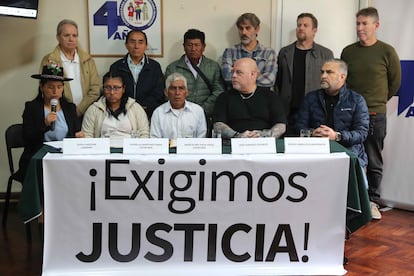
The flood of new testimonies, and the severity of the accounts, has overwhelmed the listening office. Until now, the Sodalitium Christianae Vitae had acknowledged only 83 victims, both minors and adults, and says it has paid $5.3 million in compensation.
“It has been very difficult work. We have encountered people who are utterly broken. I have experience speaking with victims of human rights violations, but this was different. Their spiritual identity had been destroyed,” says one of the experts who worked on the team assisting victims.
“They entered the Sodalitium at a very young age, at 13 or 14. One pattern was to erase their emotional personality, and another was to separate them from their families,” adds the expert. “Inside it was like living in the 16th century, with a military discipline designed to break their will and a pattern of psychological and sexual abuse.”
Within the Sodalitium Christianae Vitae, which was led by the charismatic layman Luis Fernando Figari, who has been accused of numerous acts of sexual abuse, there were two women’s branches: the Servants of the Plan of God and the Marian Community of Reconciliation.
In those communities, physical and psychological abuse caused menstrual problems, but superiors denied members medical treatment and, in some cases, pushed them toward having their ovaries removed.
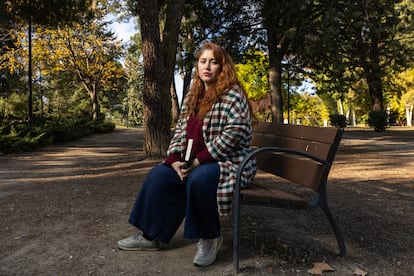
“I knew a case directly: one of the girls had gynecological problems and they told her, ‘You already gave your life to God, what does it matter, take everything out,’” says Camila Bustamante, a Chilean journalist who belonged to the Servant of God’s Plan. “Years later she left, and now she cannot have children. For them you could only be a nun or a mother, and now she is neither.”
After speaking with 30 victims and their families, Bustamante published the book Siervas (Servants) in Chile in 2022, which exposed the abuses in this organization.
Bustamante says the scales fell from her eyes in 2015, when the scandal erupted in Peru following the publication of Mitad monjes, mitad soldados (Half Monks, Half Soldiers), by journalists Paola Ugaz and Pedro Salinas. At the time, she had just married a member of the Sodalitium, in keeping with another common practice within the group: internally arranged marriages.
“Love was secondary; the important thing was to fulfill God’s plan,” she recalls. She and her husband eventually came to realize that they, too, had been victims. Bustamante says she suffered spiritual abuse, manipulation and psychological mistreatment.
‘It is the tip of the iceberg’
“I think the Servants [of the Plan of God] were the cruelest of all the organizations within the Sodalitium,” says Bustamante.
The journalist describes sexual abuse between women, physical punishments, young women being “kidnapped” and locked in rooms for weeks, and offenses against their health, as superiors decided whether members would be allowed to see a doctor. She also recounts untreated accidents that left some women with permanent disabilities.
“There were many nervous breakdowns, panic, which trusted psychiatrists treated with medication at levels that left people drugged, unable to move,” she says. Bustamante says one girl was disabled because she was forced to go down a staircase without basic safety conditions, and others attempted suicide.
Bustamante recalls that many of these women returned to their families in their thirties after years of separation. Relatives who had not seen them since they were 18 found them emotionally devastated.
In her view, only “the tip of the iceberg” has so far emerged about the abuses committed within the Servants of the Plan of God and the wider Sodalitium Christianae Vitae. She believes women are more reluctant to report abuse and often fear that speaking out could harm the Catholic Church.

As for the men’s branches of the organization, the Vatican investigation uncovered a pattern of medical treatment involving the intensive use of psychiatric drugs.
“Yes, the famous Sodalitium psychiatrists, there were two of them,” recounts Renzo Orbegozo, another survivor of the organization. “They controlled promiscuity and homosexuality. A friend of mine was gay and they sent him to a psychiatrist to ‘cure’ it with medication. I also went to the psychiatrist; life in the Sodalitium caused anxiety, depression, suicidal thoughts. When someone gave in, they drugged them. We were lab rats.”
One of the experts on the listening team confirms that the Sodalitium’s two trusted psychiatrists prescribed extremely powerful medications for years, drugs that are in fact intended to treat serious disorders such as schizophrenia and bipolar disorder. “A young man who left later saw a psychiatrist and was astonished by all the medicines he had been taking, because after examining him, he was told he had nothing,” says the expert.
The Vatican’s investigation, however, has run into difficulties in tracing the vast financial empire of the Sodalitium in order to compensate victims, because the organization concealed its assets before it was dissolved, through a network of companies and offshore entities, according to press investigations.
In an unusual move that underscored Leo XIV’s commitment to the clean-up effort he has pursued in Peru, the Holy See sent a dossier to the Peruvian Attorney General’s Office in January over suspicions of possible money laundering and financial irregularities following the privatization of Church assets without Vatican authorization. The Attorney General’s Office nevertheless closed the case last month, a decision that associations representing Sodalitium victims have sharply criticized.
“We cannot accept that an investigation of this magnitude be closed without the public receiving sufficient explanations,” the groups said in a statement two weeks ago.
The organization’s abuses were not limited to sexual misconduct; they were also financial. The rural community of Catacaos, in Piura, has for years alleged that the Sodalitium stole its land through fraudulent documents and mafia-style methods. In an unprecedented gesture, cardinals and archbishops from Peru knelt before local residents last May to ask for forgiveness during a Mass celebrated in the community.
Criticism of Pope’s visit arrangements
Meanwhile, the media and legal harassment of the journalists who exposed the scandal, Pedro Salinas and Paola Ugaz, continues. The Vatican’s envoy, Jordi Bertomeu, has also been the target of a smear campaign, including through far-right Spanish digital media outlets.
Even so, victims say they are concerned that former Sodalitium leaders still wield influence in the country’s highest circles and that, in reality, it is the ultraconservative milieu aligned with the organization that is overseeing the Pope’s visit. The most conservative wing of the Peruvian Church dominates the Peruvian Bishops’ Conference, which long protected the Sodalitium, while the far-right government of President Keiko Fujimori appointed former minister and businessman Raúl Diez Canseco, who is regarded as close to that sector, to coordinate the visit.
Victims of sexual abuse within the Sodalitium fear they may be sidelined and denied a meeting with the Pope, despite having formally requested one. The same has happened to the rural community of Catacaos, which has received no response to its own request. Victims of political violence from Peru’s past also say that the Cardinal of Lima, Carlos Castillo, acting in line with Leo XIV, informed them that they would meet the Pope, only for the meeting to be dropped from the program.
The Vatican has confirmed that the pontiff will meet victims of clerical sexual abuse in Peru, but has provided no further details. “We have only our voice and the Pope’s support,” says Renzo Orbegozo. “We hope that in Peru he will deliver an explicit message of condemnation. We need to bring this process to a close. The Vatican has more powerful documentation that it could use. It should act.”
When he was a bishop in Peru, Leo XIV supported Sodalitium victims and the journalists investigating the organization. They now hope he will do the same as Pope when he arrives in Peru.
Paola Ugaz, the journalist who uncovered the scandal alongside Pedro Salinas, is pessimistic, though she still hopes the Pope’s visit can make a difference. “The outlook is worrying because they want to sweep the Sodalitium case under the rug,” she says. “Although it no longer exists in the Church, it is alive and well. One of the companies linked to them sued me again in October, which gives me the sad record of being a journalist facing legal proceedings for eight consecutive years.”
Ugaz continues: “My colleague Pedro Salinas could face 11 years in prison over a case that is a sham of lies. We find ourselves in a moment similar to others in the past: an organization bent on revenge, a tax system taken over by them and a media blackout around us. It is like living through Groundhog Day.”
Sign up for our weekly newsletter to get more English-language news coverage from EL PAÍS USA Edition