
Finance
Victory lap: Formula One generates €300 Million in Barcelona

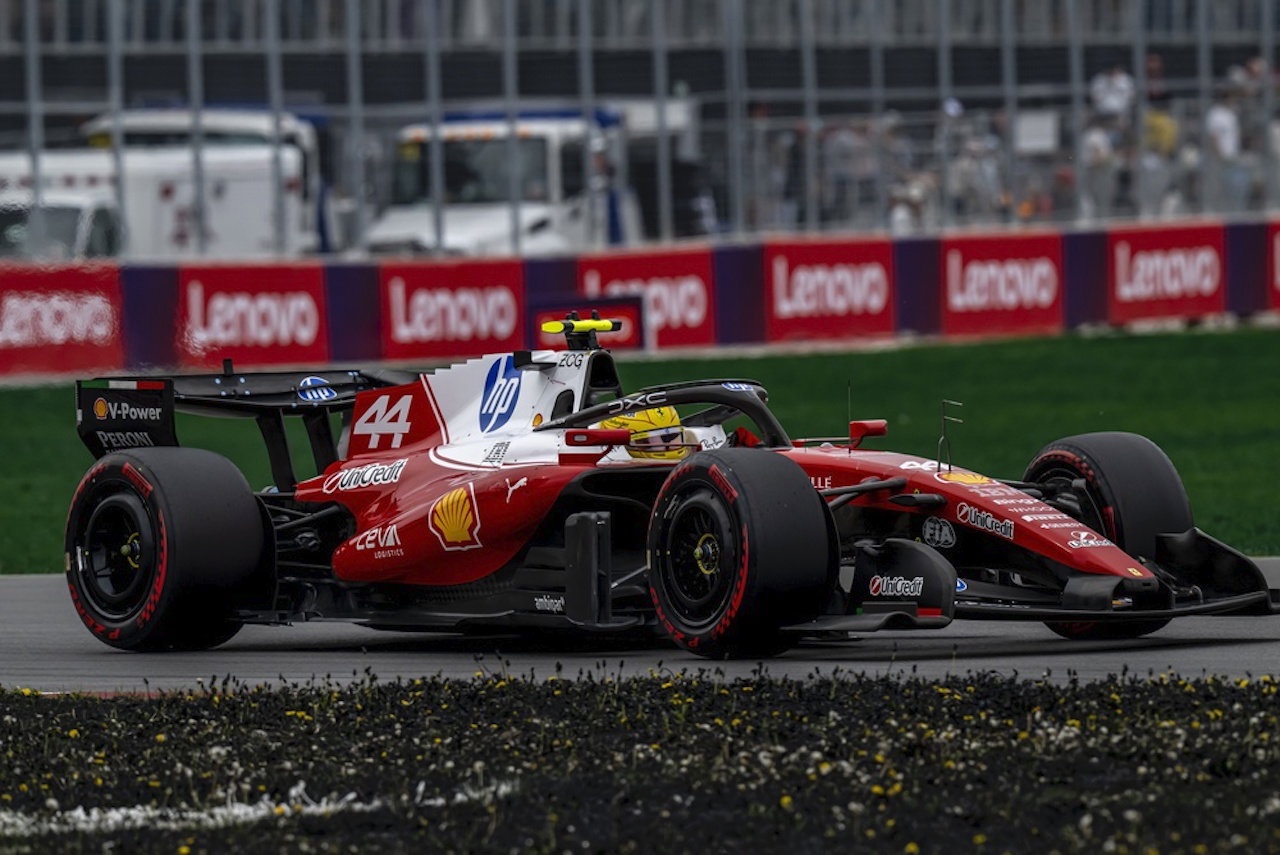
Successful weekend of racing in Barcelona Credit: Shutterstock, Motorsport Photography F1
All eyes were on Barcelona recently when Formula One arrived for another weekend of racing. While it may have been Lewis Hamilton topping the podium, if the weekend’s economic impact is anything to go by then the Catalan government was the real winner.
Barcelona Grand Prix delivers major economic boost
According to data from Perk, when Formula One is in town hotel occupancy rises by 49 per and flight demand by 17 per cent. Barcelona well exceeded those figures. Demand for accommodation surged, increasing by 62 per cent, as hundreds of thousands of fans travelled for the re-branded Barcelona-Catalunya Grand Prix.
Over the course of the weekend, approximately 300,000 spectators descended on the Montmeló track, with around 125,000 fans attending Sunday’s main race. The event is estimated to have generated an economic impact of around €300 million for the region, supporting approximately 2,700 direct and indirect jobs across hospitality, transport, retail and tourism sectors.
Formula One tourism spending continues to rise
The average expenditure on travel and accommodation per attendee was €814. When combined with the average price of a weekend ticket, which ranged between €400 and €600, the total cost of attending the race came to between €1,200 and €1,500 per person.
The spending power of Formula One fans has become increasingly important for host cities. Beyond racegoers filling grandstands, the championship attracts business travellers, sponsors and corporate guests, creating additional demand for hotels, restaurants and transport services throughout the race weekend.
Montmeló circuit benefits beyond race weekend
The Montmeló racing circuit doesn’t solely depend on Formula One to remain operational. Motorsport activities hosted at the track throughout the year generate around €46 million annually, providing an important source of revenue beyond the Gran Prix.
The circuit remains one of Spain’s most important motorsport venues and continues to attract visitors year-round through testing, racing events and other activities.
What is the future of the Barcelona Grand Prix?
Spain is set to benefit from an even greater influx of visitors and spending when Madrid hosts its own Formula One weekend in September.
While many believed Barcelona’s race could disappear from the calendar, Formula One has confirmed the Circuit de Barcelona-Catalunya will remain part of the championship until at least 2032.
Rather than being dropped, the event will rotate with the Belgian Grand Prix, with races scheduled in Barcelona in 2028, 2030 and 2032. The agreement ensures the city will continue to benefit from Formula One’s economic impact, even as Madrid establishes itself as a permanent fixture on the calendar.








For decades, technical indicators have been among the most widely used tools in financial markets.
Moving averages, RSI, MACD, Bollinger Bands, and dozens of other indicators have helped traders identify trends, momentum, and potential entry points. Entire trading strategies have been built around these tools, and platforms such as MetaTrader have made them accessible to millions of traders worldwide.
Yet the way traders conduct research is changing.
Modern financial markets move faster, generate more information, and react to a wider range of events than ever before. As a result, many traders are placing greater emphasis on understanding market narratives and developing trading ideas rather than relying exclusively on technical indicators.
This shift reflects a broader transformation in how market participants process information and make decisions.
Why indicators became so popular
Technical indicators gained popularity because they simplified market analysis.
Instead of manually evaluating every price movement, traders could use mathematical formulas to identify trends, momentum, volatility, and potential reversals.
For many years, indicators provided a meaningful advantage because:
- Market information was less accessible
- Research tools were more limited
- Fewer traders had access to sophisticated analysis
Platforms like MetaTrader accelerated this trend by providing built-in indicators, customizable charts, and automated analysis tools that allowed traders to apply technical methods quickly and consistently.
Indicators helped traders organize information and make decisions more efficiently.
Today, however, the market environment looks very different.
Why markets have changed
Financial markets today operate differently than they did even a decade ago.
Information travels instantly across global markets. A central-bank announcement in the United States can influence currencies in Europe, stock markets in Asia, and commodity prices worldwide within minutes.
At the same time, traders have access to an unprecedented amount of information. Economic releases, earnings reports, analyst commentary, social sentiment, and financial news are available almost instantly.
This has fundamentally changed the research process.
In the past, identifying a technical pattern often provided a meaningful advantage because information moved more slowly. Today, many market participants have access to the same charts and indicators.
As a result, the competitive edge increasingly comes from interpretation rather than observation.
The question is no longer simply whether a market is moving.
The question is why it is moving and whether the underlying conditions support the move.
The problem with indicators
Most technical indicators share one important characteristic.
They are based on historical price data.
Even the most sophisticated indicator analyses events that have already occurred.
This creates several challenges:
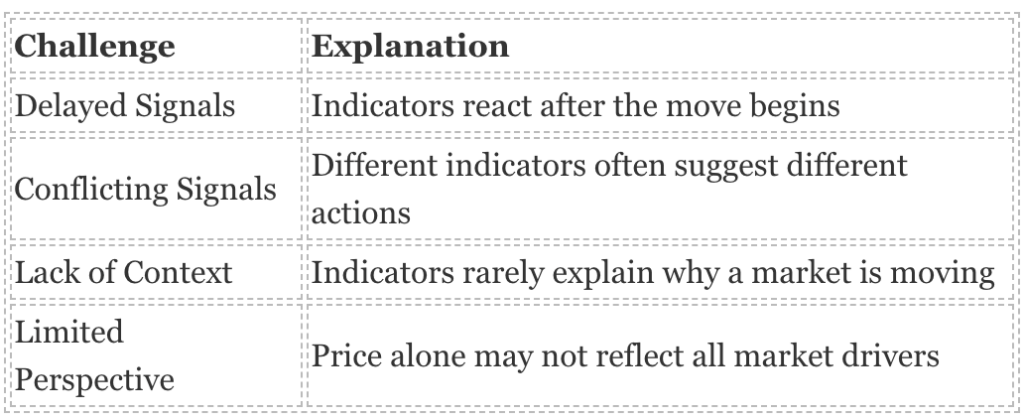
Indicators remain useful, but many traders are discovering that signals alone are often not enough.
This does not reduce the value of technical analysis. In fact, MetaTrader users continue to rely on indicators for trend identification, trade timing, and risk management. The challenge is that indicators often work best when combined with a broader understanding of market conditions.
Markets move on information
Modern financial markets respond to a wide range of information sources.
These include:
- Economic reports
- Central-bank decisions
- Corporate earnings
- Geopolitical developments
- Regulatory changes
- Market sentiment
Consider a simple example.
Example: Gold Market
A trader notices the following:
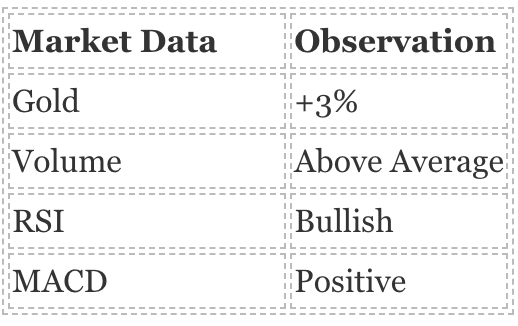
The indicators suggest a bullish market.
However, they do not explain why gold is rising.
Additional research may reveal:
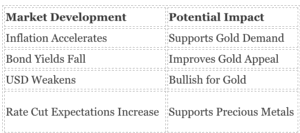
The market data remains the same.
The understanding becomes much deeper.
A trader using MetaTrader can easily identify the bullish technical setup on a chart, but combining that information with economic research and market news often leads to a stronger and more informed trading decision.
The rise of trading ideas
This is where trading ideas become valuable.
A trading idea combines multiple forms of analysis into a structured market view.
It may include:
- Technical analysis
- Fundamental analysis
- Economic context
- Market sentiment
- Risk assessment
- Alternative scenarios
Rather than focusing solely on what happened, a trading idea attempts to explain:
- Why it happened
- What factors are driving the move
- What may happen next
In many cases, this broader perspective provides more useful information than a technical signal alone.
Trading ideas create a market narrative
One reason trading ideas have become increasingly popular is that they help traders connect multiple sources of information into a single narrative.
Consider a trader analysing gold.
A technical chart may show:
- Strong momentum
- Rising volume
- A breakout above resistance
These observations are useful.
However, a trading idea may provide additional context:
- Inflation is accelerating
- Bond yields are declining
- Markets expect future rate cuts
- Safe-haven demand is increasing
The technical setup remains the same.
What changes is the trader’s understanding of the forces driving the move.
This broader perspective often improves confidence, risk assessment, and trade management.
Rather than treating a trade as an isolated signal, traders can evaluate how market conditions support or challenge their original thesis.
How trading research is evolving
Traditional trading workflows often looked like this:
Chart Indicator Signal Trade
Modern research increasingly follows a different process:
Market Data News & Economic Research Market Context Trading Idea Risk Assessment Trade
Technical indicators remain part of the process.
However, they increasingly serve as a confirmation tool rather than the primary source of decision-making.
The growth of collaborative research
Another major factor behind the rise of trading ideas is the growth of collaborative research.
Modern trading communities allow market participants to share:
- Market forecasts
- Technical setups
- Economic analysis
- Risk scenarios
- Alternative viewpoints
Rather than relying solely on their own interpretation, traders can compare multiple perspectives before making decisions.
This often leads to a more complete understanding of market conditions.
The MetaTrader community reflects this trend through trading signals, analytical publications, forums, and shared market commentary that help traders evaluate different scenarios and approaches.
Integrated research is becoming the standard
Modern traders increasingly combine:
- Market data
- Financial news
- Economic analysis
- Trading ideas
- Community research
- AI-assisted insights
within a single workflow.
The broader MetaTrader ecosystem reflects this evolution. Traders can combine chart analysis, technical indicators, economic calendars, automated strategies, market news, trading signals, and community-generated research without constantly switching between multiple platforms.
This integrated approach makes it easier to connect technical setups with the economic and market developments that may be driving them.
As trading research becomes more information-driven, the ability to combine data, analysis, and execution within a connected environment is becoming increasingly valuable.
From signals to understanding
Technical indicators remain valuable tools for identifying trends, measuring momentum, and managing risk.
However, markets are becoming increasingly information-driven, and information rarely arrives in the form of a chart pattern alone.
Economic developments, investor expectations, central-bank decisions, and market sentiment often influence prices long before indicators fully reflect those changes.
This is why trading ideas are becoming increasingly important. They provide context, connect information from multiple sources, and help traders understand the forces driving market behavior.
For MetaTrader users, the most effective approach is rarely choosing between indicators and trading ideas. Instead, successful traders combine both. Technical indicators help identify opportunities, while trading ideas provide the context needed to evaluate them.
As financial markets continue to evolve, the traders who consistently make better decisions are often not those with the most indicators, but those who are best at transforming information into understanding.
In modern markets, understanding the story behind a price movement can be just as valuable as identifying the movement itself. The ability to connect data, context, and market expectations is increasingly becoming one of the most important skills in trading.

Cuba Se Abre Al Capitalismo Y Aprueba Su Mayor Reforma En Décadas: Banca Privada, Mercado De Cambios Y Fin De Los Subsidios

Inside The Most LUXURIOUS Apartment Building In Spain!
Stockholm’s culinary genius launches Beach Club Astoria on Marbella’s shore

Peru’s Roberto Sánchez And Keiko Fujimori Urge Caution As Vote Count Continues In Very Tight Presidential Election
Marbella releases full beach rules for Noche de San Juan bonfires in 2026
Inside Spain: How Drinking Is Becoming An Old Man’s Game


-
 Alberto Fujimori2 weeks ago
Peru’s Roberto Sánchez And Keiko Fujimori Urge Caution As Vote Count Continues In Very Tight Presidential Election
-
Costa del Sol2 weeks ago
Marbella releases full beach rules for Noche de San Juan bonfires in 2026
-
Latest2 weeks ago
Inside Spain: How Drinking Is Becoming An Old Man’s Game
-
America1 week ago
El Pentágono, Evacuado Por Una Falsa Alarma Ante La Sospecha De Un “incidente Con Materiales Peligrosos”
-
Coastal erosion1 week ago
Mallorca launches new plan to save its beaches as coastal erosion threatens popular resorts
-

 America2 weeks ago
Trump Planta E Insulta A Una Entrevistadora En Televisión Por Llevarle La Contraria
-
Almeria2 weeks ago
Balerma ranks as Spain’s most exposed location to tsunami from Averroes fault
-

 Uncategorized2 weeks ago
Every Monaco Grand Prix winner in F1 history: The definitive guide to a unique race