
Costa del Sol
Why buying a business is a smarter path to success on the Costa del Sol


We help buyers discover established businesses across Spain. Credit: Mind Your Own Business®
Relocating to the Costa del Sol is often driven by lifestyle goals – better weather, more freedom, lower stress, and the chance to build a new future. For those seeking income stability, why not consider buying a business versus starting one?
Immediate income – Existing businesses already have revenue, clients, supplier relationships, and operational systems – income certainty from day one.
Faster social integration – Buying a business accelerate integration into the community and business environment, without spending years to build trust, reputation and visibility.
Lower risk – New businesses often fail due to poor market fit, lack of customer understanding, underestimating costs or competitive environment. A successful business already has proof of concept and trading history.
Reputation – A business with good reviews, repeat customers, and recognition gives a head start, especially in competitive areas like Marbella, Estepona, and Fuengirola.
While starting a business involves lower costs and the freedom to build brand, system and culture, there are inherent cons:
Longer road to profitability – Awareness, trust, and consistent income take years to build, especially for seasonal sectors along the coast.
Bureaucracy – Navigating Spanish licences, tax systems, legal structures, and regulations can be challenging.
Higher failure – Many underestimate operating costs, scalability and competition.
At Mind Your Own Business®, we help buyers discover established businesses across Spain, offering immediate opportunity and long-term potential.
Mind Your Own Business®
Calle Mérida de Jarales, Local 4, 29649 Calahonda, Málaga
+34 663 061 669 | info@business-sales-spain.com






Costa del Sol
Whose road is it anyway? Torremolinos Council wants Ministry ruling on MA-20 ownership for rapid repairs
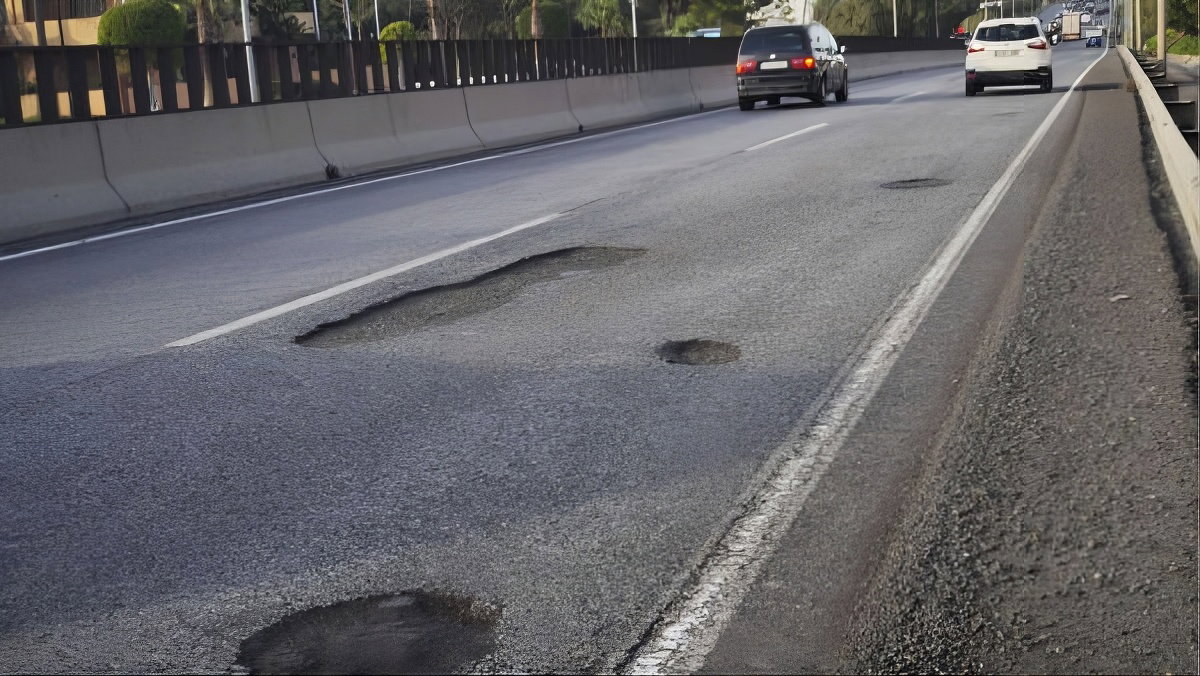
Who does the MA-20 into Torremolinos belong to?
Credit: Ayuntamiento de Torremolinos
Competence over roads in Spain differs depending on where one is. The central government takes responsibility for motorways, even if they pass through a town or city, such as the A-7 and AP-7 passing through Marbella. Autonomous communities control regional roads, which tend to have a strict limit of 90 km/h between major towns but remain outside motorway classification. Local councils deal with roads and streets within a city, town or village. Nuances apply throughout, but everyone generally knows who has to do what and where.
Local councils face limits on national routes
Mijas Council complained about the dire state of the pothole-ridden section of the A-7 that passes through Mijas Costa. Repairs fall outside the town budget, and Spanish law prevents local action. So it’s not Mijas Council’s fault, and they can’t do much about it. Estepona Council had to formally request permission from the central Spanish government before starting work to update the pedestrian bridge over the A-7 between Benamara and Paraiso because the structure counts as central government property. Therefore, the project has taken ages to get off the ground while they awaited the go-ahead from Oscar Puente, the minister of transport.
Torremolinos acts to resolve MA-20 uncertainty
Lines between competences become blurred in some cases. For example, uncertainty over repair responsibilities affects the MA-20 route into Torremolinos from Malaga and the airport.
Councillors from Torremolinos have formally requested the Ministry of Transport to clarify definitively ownership of the deteriorated MA-20 section near Avenida Manuel Fraga Iribarne on the Malaga boundary. This step hopes to accelerate repairs and guarantee legal certainty for any work.
Deterioration proves serious here, with cracks, potholes and surface breakdown affecting road safety and the image of a key access to the town.
María Heredia, infrastructure councillor, explained that the council documented the situation, reviewed planning, cartography, property details and technical data, then sent all material to determine who must and legally can act. Solutions matter for a problem visible to residents and users of this Torremolinos entry, yet intervention requires guarantees on unresolved ownership.
Council reports detail surface problems and risks, including increased danger, water accumulation, loss of grip and longer braking distances. Discrepancies between kilometre points, graphic records and the town’s legal limits have led to a request for formal resolution to identify the competent administration.
Priority lies in fast repairs, either by the owning administration or through arrangements enabling legal council participation.
Requests target a formal ministry statement on ownership or mechanisms for Torremolinos to assume the task with full guarantees.
We all might ignore administrative boundaries when encountering a deteriorated stretch at the town’s entrance and rant on about the supposed terrible job the council is doing. But technical and legal efforts are currently still blocking urgent safety work ahead of the summer peak season.

S
Spanish drivers face new roadside fuel checks that could lead to €6,000 fines
Munich Airport drone sighting causes major shutdown and cancelled flights


-
blackout April 20253 weeks ago
Insurance company Mapfre decides to pay out €14 million compensation for 2025 blackout
-
 Foreign demand3 weeks ago
Who Bought Where In The Second Half Of 2025?
-

 New Developments4 weeks ago
Stylish 3-Bedroom Apartment With Panoramic Sea Views – Benalmádena
-

 New Developments3 weeks ago
Inside The Most LUXURIOUS Apartment Building In Spain!
-
Costa Blanca South3 weeks ago
Alicante police chief to retire after 17 years of service
-

 New Developments3 weeks ago
🌅 Stunning Penthouse With Panoramic Sea & Mountain Views Benalmádena
-

 ElPais1 week ago
Mexico’s Most Controversial Politician, Rubén Rocha, Goes To Ground As Cartel Questions Intensify
-
6 drink rule.4 weeks ago
Spain’s 6 drink rule remains in 2026, tourists face tougher crackdowns and fines up to €3,000