Connect with us

%

Million Flowers Brussels Central Square

Published

on

million-flowers-brussels-central-square

There’s a small window every two years when Brussels’ central square turns into a giant, living canvas in a 55 year old tradition, but only for a brief four days.

A four-hour race against the clock

Putting the Flower Carpet display together is a massive team effort. Around 120 volunteers assemble the entire huge 1,680-square-metre design by hand in under four hours, carefully laying almost one million flowers across a 70-by-24-metre area. Watching the team work on opening morning has become nearly as popular as seeing the finished piece.

This year’s event marks 160 years of diplomatic relations between Belgium and Japan. The design, created by Japanese artist Hiro Sugiyama and his team Enlightenment, is showing off a modern take on Katsushika Hokusai’s famous artwork, The Great Wave off Kanagawa.

Half a million Dahlias

Local florist Etienne Stautemans started the Flower Carpet tradition back in 1971 using begonias, but recent years the display has moved towards using Belgian-grown dahlias as begonia farming has scaled back. More than 500,000 dahlias form the backbone of this year’s display, offering better weather resilience and a wider range of colours.

To finish the pattern, workers lay strips of real turf between the flowers. The blooms are packed close together to retain moisture, but keeping the display fresh over four days takes work. On hot days, the grass needs steady watering, while rainy weather can cause it to grow several centimetres over the weekend.

New for viewers in 2026

For the first time, visitors will also find a second floral display outside the historic Stock Exchange building, designed around hops as a nod to Belgian beer heritage. In the evenings, light projections across the square’s guildhouses will highlight the floral patterns after dark.

Brussels flower carpet 2024
The display after dark
Credit:FlowercarpetFB

The event has run regularly around the Assumption Day weekend since 1986, drawing up to 200,000 people. Brussels has also applied for UNESCO Intangible Cultural Heritage recognition to honour the local volunteers and planning behind the project. Then, by Sunday evening, the colourful event comes to an close and the square goes back to normal, leaving behind plenty of stunning photos and flower fans excited to see what the next arrangement will be.


%

Mosquitoes Are Evolving, And The Sprays Designed To Kill Them Are Losing Power

Published

on

mosquitoes-are-evolving,-and-the-sprays-designed-to-kill-them-are-losing-power

The challenge for scientists is staying ahead of an insect that evolves quickly. Photo credit: BAZA Production/SHutterstock

They are smaller than a fingernail, but mosquitoes remain one of the world’s deadliest animals. Now scientists are warning that some mosquito populations are becoming harder to control, with growing evidence that they are developing resistance to the insecticides designed to stop them. Dr Rohit Lakhwani, whose research focuses on mosquito behaviour and insecticide resistance, says scientists are seeing clear signs that mosquitoes are adapting to chemical treatments that have been used for decades.

“We have evidence that mosquitoes are developing resistance to insecticides,” researchers warn, raising concerns over the future effectiveness of one of the main tools used to control mosquito-borne diseases. The discovery is particularly worrying as mosquito populations continue to spread into new areas, including parts of Europe where warmer temperatures have allowed species such as the Asian tiger mosquito (Aedes albopictus) to establish themselves.

The mosquito’s deadly advantage

Mosquitoes are responsible for spreading some of the world’s most serious diseases, including dengue, malaria, Zika and chikungunya. Their danger comes not from the bite itself, but from the pathogens they can carry between humans. For decades, insecticides have played a central role in reducing mosquito numbers. Sprays, treated mosquito nets and chemical treatments have helped control outbreaks and protect millions of people.

But repeated use of the same insecticides has placed pressure on mosquito populations, allowing those with natural resistance to survive and reproduce. Over time, these resistant mosquitoes become more common, making traditional control methods less effective.

How mosquitoes survive insecticides

Scientists have identified several ways mosquitoes can resist insecticides. Some develop changes that prevent chemicals from affecting their nervous system, which is usually the target of many insecticides. Others produce enzymes that break down or neutralise the chemicals before they can cause harm.

Some mosquitoes have also developed changes in their outer body layers, making it harder for insecticides to enter. These adaptations mean that a treatment that once killed large numbers of mosquitoes may no longer work as effectively.

A growing concern for Europe

Although mosquito-borne diseases have historically been associated with tropical regions, Europe has seen increasing concern over mosquito expansion. The Asian tiger mosquito has spread across much of southern Europe, including Spain, Italy and France. Warmer temperatures allow mosquitoes to survive for longer periods, while international travel increases the chances of diseases arriving in areas where the insects are already established.

Spain has experienced outbreaks of mosquito-borne illnesses, including locally transmitted cases of dengue, while health authorities continue monitoring the spread of invasive mosquito species. The combination of climate change, mosquito expansion and insecticide resistance has created a new challenge for public health experts.

Why scientists want new approaches

Researchers say relying on one type of insecticide is not a long-term solution. Mosquito control programmes are increasingly looking at alternative methods, including rotating different chemicals, improving surveillance and using biological control techniques.

The aim is to reduce mosquito numbers while slowing the development of further resistance. Scientists are also studying mosquito genetics to understand how resistance develops and spreads through populations. Knowing which mechanisms mosquitoes use to survive can help researchers design better strategies to control them.

The battle against a tiny enemy

The mosquito’s ability to adapt has made it one of the most successful insects on Earth. Its size makes it easy to underestimate, but its impact is enormous. According to health organisations, mosquito-borne diseases affect hundreds of millions of people worldwide every year. The challenge for scientists is staying ahead of an insect that evolves quickly.

Every time a new control method is introduced, mosquito populations are placed under pressure to adapt. Those that survive pass their resistance on to future generations. The result is a constant battle between human technology and mosquito evolution.

A warning as summer mosquito numbers rise

For people across Europe, the issue is becoming increasingly relevant during the warmer months when mosquito activity rises. Experts advise reducing standing water around homes, using insect screens where possible and taking precautions against bites, particularly in areas where mosquito populations are increasing.

The tiny insect may be a familiar nuisance on summer evenings, but scientists warn it should not be underestimated. Mosquitoes have survived for millions of years by adapting to changes around them. Now, researchers are watching to see how far that ability to adapt will take them, and whether humanity can develop new ways to keep up.

Continue Reading

%

Two Firefighting Heroes Killed After Helicopters Collide Battling Greece Wildfire

Published

on

two-firefighting-heroes-killed-after-helicopters-collide-battling-greece-wildfire

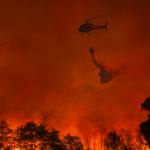
Fighting a wildfire is dangerous enough without the added threat of flying through thick smoke, extreme heat and unpredictable winds. But for two firefighting helicopter crews tackling a blaze near Athens, the danger became fatal. Two people have died and two others have been injured after two anti-fire helicopters collided in mid-air while carrying out operations over a wildfire in Greece’s Attica region. The aircraft were working to contain the flames near Psatha, west of Athens, when they crashed on Sunday, August 2.

One helicopter went down following the collision, killing its two crew members,  a Danish pilot and a Greek co-pilot. The second helicopter was also involved in the crash. Its two occupants, a British pilot and a Greek crew member, survived but were injured and taken for medical treatment. The accident has shocked firefighting teams and highlighted the risks faced by the crews who take to the skies every summer to battle some of Europe’s most dangerous wildfires.

A dangerous battle from the air

Helicopters are among the most important tools used during major wildfires, allowing firefighters to attack flames in areas that are difficult to reach from the ground, but the work comes with huge risks. Pilots must fly at low altitude, often close to trees, mountains and uneven terrain, while carrying out repeated water drops over active fires.

Smoke can suddenly reduce visibility, winds can change direction without warning and intense heat rising from the flames can make flying conditions extremely challenging. For crews operating above a wildfire, there is little room for error. The two helicopters involved in the Attica crash were carrying out those operations when they collided.

Greece battles another difficult wildfire season

The crash happened as firefighters were already struggling to contain a major blaze in the region surrounding Athens. The fire spread during a period of high temperatures and dry conditions, forcing emergency services to respond as flames threatened nearby areas. Attica is one of Greece’s most densely populated regions, meaning wildfires can quickly become a threat to both rural communities and urban areas.

Residents in affected locations were warned to remain alert as firefighters worked to stop the blaze spreading further. The wildfire season has once again placed enormous pressure on emergency crews across Greece, where hot, dry summers create ideal conditions for fires to grow rapidly.

The people behind the firefighting effort

While wildfires are often measured in hectares burned and homes evacuated, the response depends on thousands of people working in dangerous conditions. Firefighters on the ground face extreme heat and smoke. Aircraft crews take risks every time they fly over burning landscapes. Support teams work around the clock to keep operations running. 

For the helicopter crews, every mission involves flying directly into the heart of the emergency. The two men killed in the collision were carrying out that work when the accident happened. Tributes have began to pour in as authorities and fellow emergency workers remember those who lost their lives while helping protect communities from the flames.

Investigation begins into crash

Authorities have launched an investigation into what caused the two helicopters to collide. Investigators will examine flight paths, communication between the crews, weather conditions and the circumstances surrounding the operation at the time of the crash.

The priority will be understanding how two aircraft involved in the same firefighting mission came into contact while working above the fire, no official cause has yet been confirmed.

Growing risks across southern Europe

The tragedy comes during another difficult summer for countries across southern Europe, where wildfires have become increasingly frequent and intense. Greece, Spain, Italy and Portugal have all faced growing challenges as prolonged heat, drought and dry landscapes increase fire risks. For firefighters and emergency crews, the battle often begins long before flames reach homes.

They work to stop fires spreading, protect communities and keep disasters from becoming even worse. But the dangers they face are not limited to the ground. The crash has exposed the extreme risks faced by the crews battling wildfires from the air, where a split-second mistake or sudden change in conditions can have fatal consequences. For two helicopter crew members, that risk became a tragic reality while they were doing exactly that.

Continue Reading

%

Spain Brings In Unusual New Rules Before The Solar Eclipse

Published

on

spain-brings-in-unusual-new-rules-before-the-solar-eclipse

The restrictions come as Spain enters one of the most dangerous periods of the year. Photo credit: Suzanne Tucker/Shutterstock

For those of you planning to head into Spain’s countryside to watch this month’s total solar eclipse, there are new rules you need to know about. Authorities are introducing strict wildfire prevention measures, including bans on illegal raves, restrictions on camping and tighter controls around forest areas, as they prepare for the arrival of hundreds of thousands of eclipse watchers. The restrictions come as Spain enters one of the most dangerous periods of the year for wildfires, with high temperatures, dry vegetation and increased movement through rural areas creating additional risks.

On August 12, the total solar eclipse will draw people from across Spain and beyond to areas where the phenomenon can be seen at its best. Many residents, amateur astronomers, photographers and visitors are expected to travel away from towns and cities in search of open landscapes and clear skies. But the large-scale movement of people into forests and rural areas has raised concerns among officials, particularly in regions already facing extreme fire danger.

Aragón prepares for thousands of visitors

Aragón is expected to be one of the main destinations for eclipse watchers, with estimates suggesting around 400,000 people could arrive in the region during the days surrounding the event. To reduce the risk of fires and manage the expected crowds, the regional government has introduced temporary restrictions between August 10 and August 13.

The measures include a ban on unauthorised raves and outdoor parties, restrictions on activities that could produce sparks, and tighter controls on the use of fire in recreational areas. Fireworks and pyrotechnics will not be permitted in forest areas or nearby zones, while access to certain woodland areas may be limited to prevent overcrowding and allow emergency services to reach incidents quickly. The restrictions apply not only to visitors but also to residents who regularly use rural areas for leisure activities.

Concern over human-caused fires

The biggest concern is not the eclipse itself, but the number of people expected to gather in places where a small mistake could have serious consequences. During periods of extreme heat, dry grass, shrubs and woodland can ignite rapidly. A discarded cigarette, an unattended barbecue, a campfire or even a vehicle parked on dry vegetation can be enough to start a blaze.

Emergency services are particularly concerned about isolated viewing locations where large groups may gather without facilities, access roads or nearby assistance. In previous summers, Spain has experienced devastating wildfires that have destroyed thousands of hectares of land, forced evacuations and placed huge pressure on firefighters. With the eclipse attracting people to areas that are often difficult to monitor, authorities are taking additional precautions.

Fines for breaking restrictions

Anyone ignoring the temporary wildfire prevention rules could face significant penalties. Fines for serious breaches can reach €100,000, depending on the circumstances and the level of danger caused.

Police, environmental officers and emergency teams will increase monitoring in areas expected to attract large numbers of people, particularly forests, mountain areas and rural viewpoints. Authorities are also reminding people that restrictions may vary depending on the region and local fire risk levels.

What eclipse watchers need to know

Those planning to watch the eclipse outdoors are being advised to prepare before travelling. Visitors should check whether their chosen location has access restrictions, avoid parking outside designated areas and follow instructions from local authorities. People heading into rural areas should also avoid any activity that could create flames or sparks.

Camping plans may need to be reconsidered, particularly in areas where temporary restrictions are in place. Those hoping to organise private gatherings or parties in the countryside should check local regulations before making arrangements. For residents living near popular viewing areas, increased traffic and visitors are also expected to bring disruption, with some roads and access points potentially becoming busier than usual.

A major event with major responsibility

The eclipse is expected to be one of the most spectacular astronomical events visible from Spain in years, with many communities preparing to welcome visitors and organise official viewing activities. For rural areas, the event could also bring a boost to local businesses, accommodation providers and tourism services.

But with Spain’s landscapes facing the ongoing threat of wildfires, authorities want the event to pass without adding pressure to already vulnerable areas. The eclipse will last only a few minutes,  the consequences of a wildfire could last for years.

Continue Reading

Trending

Copyright © 2017 Spanish Property & News