Connect with us

%

Princess Isabella To Break Royal Tradition

Published

on

princess-isabella-to-break-royal-tradition

Denmark’s monarchy is stepping into a new chapter and Princess Isabella is at the centre of it. The 18-year-old royal is set to begin military service this summer, becoming one of the first women to take part in the country’s newly expanded conscription programme.

The decision marks a significant cultural shift, not only for the Danish royal family but for Denmark itself, as it modernises its approach to national service.

A royal first in a changing Denmark

Princess Isabella, daughter of King Frederik X and Queen Mary, will begin her 11-month military service in August 2026 after completing her secondary education.

She is set to join the Guard Hussar Regiment in Slagelse, a historic cavalry unit within the Danish Armed Forces known for both its operational role and ceremonial ties to the monarchy.

Her participation places her among the first cohort of young Danish women to undertake extended military service under new legislation, signalling a clear move toward greater gender equality in defence.

The reform behind the headlines

Denmark has recently overhauled its conscription system in response to growing security concerns across Europe.

Under the updated model, military service has been extended from four to 11 months and applies to both men and women. All 18-year-olds are now required to attend an assessment process, often referred to as “Defence Day”, where they are evaluated for suitability.

While not everyone is called up, volunteers are prioritised, making Princess Isabella’s decision to step forward both symbolic and voluntary.

The new structure combines several months of basic training with further operational experience, offering a more comprehensive introduction to military life than previous programmes.

Following in royal footsteps

Princess Isabella is not the first member of her family to pursue military training. Her older brother, Crown Prince Christian, began his own service with the Guard Hussar Regiment in 2025 and has since continued into officer training.

Military service has long been part of royal tradition across Europe, particularly for heirs to the throne. However, Isabella’s role reflects a modern evolution of that expectation, one that increasingly includes women.

Europe’s young royals in uniform

Across Europe, a number of young royals have undertaken military training as part of their preparation for public life.

In Norway, Princess Ingrid Alexandra completed military service with the Combat Engineer Battalion in 2025, serving as an engineer soldier and rifleman.

Belgium’s future queen, Princess Elisabeth, studied at the Royal Military Academy in Brussels, where she completed a year of military and academic training.

In the United Kingdom, both Prince William and Prince Harry served in the armed forces. William spent several years in service, including as an RAF search and rescue pilot, while Harry completed two tours of duty in Afghanistan during his decade-long military career.

Sweden’s Princess Victoria also undertook basic military training in 2003, reflecting a broader expectation that future monarchs gain first-hand experience of national defence structures.

A monarchy evolving with its people

Princess Isabella’s decision reflects a wider transformation in how modern royal families engage with the public. Military service is increasingly seen as a way to demonstrate discipline, responsibility and relatability: qualities that resonate with younger generations.

It also mirrors broader societal changes, particularly around gender roles and equal participation in national duties.

For Denmark, the symbolism is especially powerful. As one of the first women to take part in the country’s expanded military service, Isabella represents a monarchy that is adapting in real time.

And as she prepares to swap royal engagements for regimented training, her journey signals not just a personal milestone, but a defining moment for Denmark’s future, where tradition and modernity move forward side by side.

%

UK Cigarette Ban Creates Spain Loophole For British Teens

Published

on

uk-cigarette-ban-creates-spain-loophole-for-british-teens

Spain continues to use a standard minimum-age approach. Photo credit: Christian Bertrand

The United Kingdom’s planned lifetime tobacco sales ban for people born on or after January 1 2009 could create a loophole for young British teens travelling to Spain and other countries, as they may still be able to purchase cigarettes and vaping products where standard age-based rules remain in place.

The policy restricts tobacco sales based on year of birth, meaning those affected would never be eligible to buy cigarettes from UK retailers. Outside the UK, however, access is determined by national age limits rather than generational rules, creating a clear contrast for those travelling abroad.

Different rules in Spain

In Spain, tobacco sales are regulated through a standard minimum-age system, with purchase generally permitted from 18 years old. Eligibility is based solely on age at the point of sale, rather than year of birth or membership of a specific generation.

Tobacco products are widely available through regulated retail outlets across the country, including supermarkets, kiosks and licensed shops. Sales are subject to identity checks where age is unclear, particularly in urban and tourist-heavy areas where enforcement is more visible.

Travel-related differences

Spain is one of the most frequently visited destinations for UK travellers, with millions of trips each year for tourism, work and study. This makes it a common setting where differences in national consumer rules become visible in practice. For those affected by the UK policy, experiences abroad would depend on local regulations.

In Spain, access to regulated products would be governed by local age verification at the point of purchase. This means availability is shaped by Spanish law rather than any UK restriction, and enforcement is handled entirely by Spanish authorities and retailers. In practice, this creates situations where legal access to tobacco products may differ depending on location, particularly in busy tourist areas where international visitors form a significant proportion of customers.

Could the policy lead to tobacco tourism

The difference between UK and overseas rules has raised the possibility of a form of “tobacco tourism”, where individuals affected by the ban access products while travelling rather than at home. Because the UK restriction is based on year of birth, those in the affected group would never be able to legally buy tobacco domestically, even as adults.

In countries such as Spain, where access is determined by a standard minimum age of 18, the same individuals could legally purchase tobacco once they meet local age requirements. This creates a situation where availability depends entirely on location.

In practice, any such behaviour is likely to be limited and linked to existing travel rather than people making dedicated trips solely to buy tobacco. However, the contrast may be more visible in popular holiday destinations and border regions, where differences in national rules are easier to navigate.

Gibraltar border factor

The issue may also be particularly relevant in Gibraltar, where residents can cross directly into Spain within minutes. If Gibraltar applies UK-aligned restrictions, individuals affected by the 2009 cohort rule could potentially be unable to purchase tobacco locally while still being able to do so across the border in Spain, subject to Spanish law.

That would not change domestic restrictions in either territory, but it could create a practical cross-border difference for residents living near the frontier. Vaping regulations may also differ depending on how each jurisdiction chooses to regulate nicotine products, as tobacco and vape policies are not always aligned across borders. This means access to different products could vary even within short travel distances.

Cross-border policy contrast

The UK and Spain operate different tobacco regulatory systems, with the UK moving towards a generational restriction based on date of birth, while Spain continues to use a standard minimum-age approach.

This creates a policy divergence between a cohort-based restriction and an age-based system. It also means that eligibility rules are structured differently depending on whether the focus is long-term population prevention or immediate age compliance at point of sale. As a result, the experience of future adults affected by the UK measure may differ depending on whether they remain in the UK or travel abroad, particularly within Europe where cross-border movement is relatively straightforward.

Broader implications

The contrast has prompted discussion about how national public health policies interact with international mobility. While domestic restrictions apply within a country’s borders, access to tobacco remains dependent on local law.

This raises questions about consistency in regulation when citizens move between jurisdictions with different frameworks for controlling the same products. Critics point to inconsistencies that arise when individuals face different legal conditions depending solely on geography.

At the same time, supporters argue that national governments retain the right to set domestic health policy independently, even if outcomes differ abroad.

Outlook

As implementation of the UK policy progresses, attention is likely to focus on how the affected generation experiences differences in access during travel.

In Spain, where tobacco remains widely available under conventional age rules, the contrast with UK restrictions is expected to be most visible among young British adults once they reach legal purchasing age abroad. Over time, the practical effect of these differences may become clearer as the first cohort impacted by the UK measure begins travelling internationally as adults.

Continue Reading

%

Bendinat Veterinary Clinic

Published

on

By

bendinat-veterinary-clinic

A veterinary clinic that combines cutting-edge medical technology with genuine compassion. Credit: Bendinat

For pet owners in Mallorca, finding a veterinary clinic that combines cutting-edge medical technology with genuine compassion is the ultimate priority. Since 2003, Clinica Veterinaria Bendinat has been providing exactly that, becoming a trusted pillar of the community for those who consider their pets true members of the family.

Founded by Nick Murgatroyd (BVSc MRCVS), a highly experienced vet with over a decade of practice in the UK before moving to the island, the clinic was born from a clear vision: to create a space where the highest level of veterinary skill meets an unparalleled standard of comfort and care.

Comprehensive services for every stage of life at Bendinat

The philosophy is simple: prevention is better than a cure. The team offers thorough health checks and up-to-date advice on local Mediterranean health challenges, such as Leishmania and Pine Processionary caterpillars.

The facility is equipped to handle everything from routine vaccinations to complex internal medicine and advanced surgery. With a purpose-designed operating theatre, digital X-rays, and state-of-the-art laboratory analysis – providing results in just 15 minutes – diagnoses are swift and accurate. For more specialized needs, the clinic offers diagnostic imaging (ultrasound) and works closely with top physiotherapy specialists for post-surgical recovery.

Global expertise, local feel

One of the clinic’s standout features is its multi-lingual team. Understanding that medical discussions can be stressful, the staff provides clear communication in several languages. Furthermore, Bendinat is a specialist in international pet travel; they have helped more pets relocate to different corners of the world almost than any other practice in Mallorca, ensuring all passports and microchips are perfectly in order.

A stress-free environment

The clinic is designed with the animal’s comfort in mind. The reception area is cleverly arranged so that cats in baskets don’t have to face waiting dogs, reducing anxiety for feline patients.

Whether it is a routine check-up or a 24-hour emergency, the dedicated team at Clinica Veterinaria Bendinat treats every patient with the same love and devotion they give their own pets.

The clinic is designed with the animal's comfort in mind.

Contact details:

Address: C/ Architect Francisco Casas 17, Bendinat.

Phone: 971 40 44 59 (Including 24hr emergency advice)

Web: www.vet-bendinat.com

Continue Reading

%

Nuclear Alert Declared At Two Catalonia Sites Just 24 Hours After Trial Alarm

Published

on

nuclear-alert-declared-at-two-catalonia-sites-just-24-hours-after-trial-alarm

Helicopter crew inspects Ascò nuclear plant. Credit: Miguel Perfectti – Shutterstock

Catalonia’s nuclear sector experienced a series of scares today, April 22, as two separate facilities in Tarragona reported fires within their plants at the same time. Emergency response teams at the Ascó and Vandellós II plants were forced into action starting at 9.35am, creating a period of brief concern for the region. Officials have confirmed that both sites successfully controlled the fires without any radiological leaks into the exterior or for the public to be concerned about.

Prophetic testing of the ES-Alert system

Coincidentally, just one day before, civil protection agencies conducted a large-scale trial of the ES-Alert mobile phone text message notification system before these genuine emergency alerts took place. This exercise reached over 75,000 residents across 61 towns and villages, simulating the exact communication chain required for a nuclear crisis. Residents who received mock alerts yesterday found themselves watching real smoke-related protocols play out today.

Fires reported at Ascó and Vandellós II

Ascó’s management activated the Internal Emergency Plan (PEI) at Level 1, the lowest category, following a fire that lasted approximately 40 minutes. Authorities briefly escalated the response to the PENTA exterior plan to make sure nearby residents remained protected until the flames were doused. Simultaneously, Vandellós II declared a “pre-alert” after a ventilation unit began belching smoke in an electrical housing building. Rapid intervention by on-site brigades stopped the issue from escalating any further, and the Nuclear Safety Council (CSN) eventually classified the event as Level 0 on the international scale.
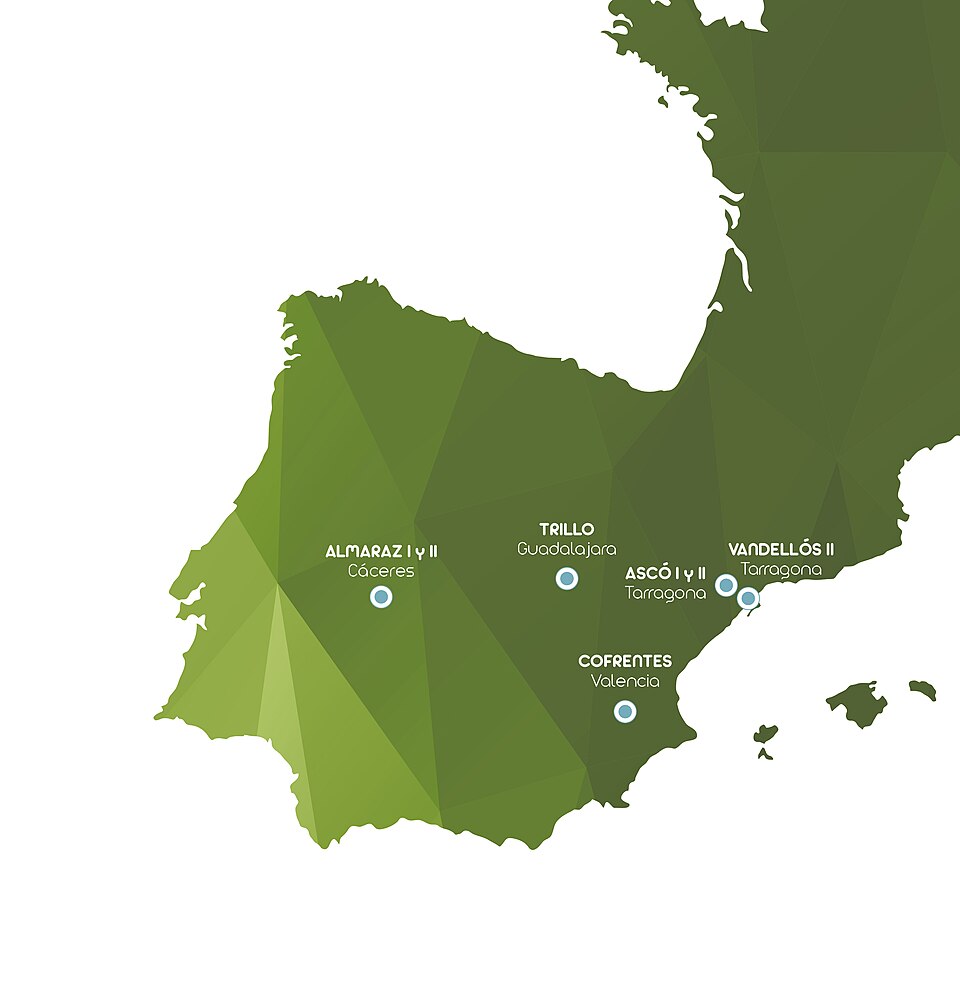
Map of Spain's nuclear power plants.
Map of Spain’s nuclear power plants.
Credit: Foronuclear

Political tensions and the 2035 phase-out

Prime Minister Pedro Sánchez maintains a rigid stance against the long-term future of nuclear energy in Spain, focusing instead on a total transition to renewables. His government plans a staggered closure of all seven Spanish reactors between 2027 and 2035, citing high decommissioning costs and waste management responsibilities. Local leaders, including the mayor of Ascó, argue that such a timeline is reckless given that nuclear power currently provides 60 per cent of Catalonia’s electricity.

Energy security remains a sensitive topic for the Sánchez administration as pressure grows from opposition parties to extend the life of these ageing plants. While the Prime Minister views nuclear as a temporary “bridge” technology, today’s mechanical failures provide ammunition for both sides of the debate. Supporters of the closure point to its potential safety risks, while proponents of nuclear power suggest these minor incidents prove that existing safety protocols function perfectly to protect the Spanish grid. As well, energy security is a hot potato these days in Spain as we approach the anniversary of the great blackout which left the entire country in darkness.

Continue Reading
Advertisement
Advertisement

Spanish Real Estate Agents

Tags

Trending

Copyright © 2017 Spanish Property & News