
Spanish income tax
Spain renta 2025 opens today: Your step by step filing guide as an expat!

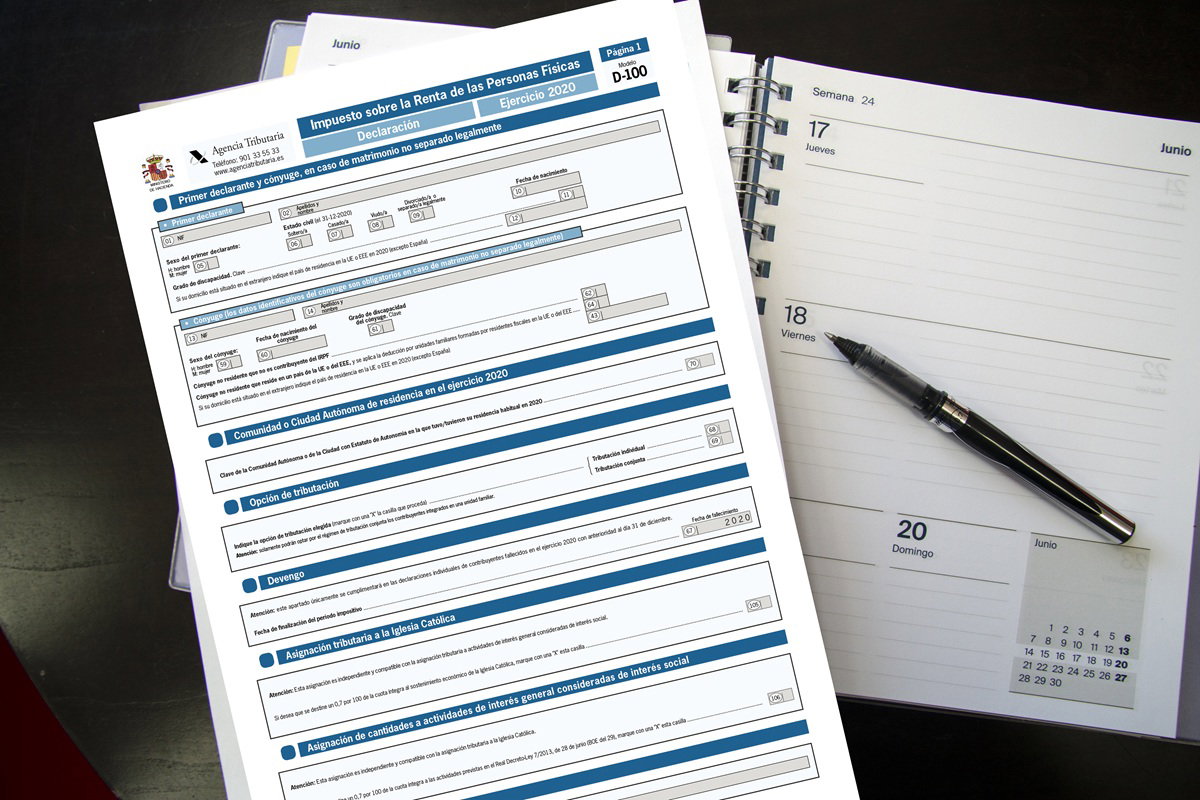
Spain’s renta campaign opens as taxpayers prepare to file their annual return
Credit : Cromavision, Shutterstock
Spain’s 2025 income tax campaign officially opens today, 8 April, giving expats across the country the green light to start filing their annual return. For many foreigners living in Spain, tax season can feel confusing at first, especially when you are dealing with residency rules, overseas income and a system that is not always easy to navigate. The good news is that once you know which category you fall into, the process becomes much more manageable. Here is a clear guide to what you need to know, what to prepare and how to file your return without getting caught out by the most common mistakes.
First things first, who actually needs to file?
This is the question that matters most, because not every foreigner living in Spain is in exactly the same position.
If you are considered a tax resident in Spain, you will usually need to file under the Spanish income tax system, known as IRPF, and that normally means using Modelo 100. In simple terms, Spain generally considers you a tax resident if you spent more than 183 days in the country during the calendar year, or if your main economic interests are based here. In some cases, family ties can also play a role.
That matters because Spanish tax residents are generally taxed on their worldwide income, not just the money they earned in Spain. So if you received salary, pension payments, rental income, dividends or other earnings from abroad in 2025, those may still need to be declared.
If you are not a Spanish tax resident, the rules are different. Non residents are usually taxed only on Spanish sourced income, and in many cases they do not file the standard renta return at all. Instead, they may fall under the non resident system, often using Modelo 210.
This is where many expats go wrong. They assume that having a foreign passport means they are automatically a non resident for tax purposes. That is not how Spain sees it. Tax residency depends on your actual situation, not your nationality.
The key dates you need to know
The renta campaign for income earned during 2025 starts today, 8 April 2026, and runs until 30 June 2026.
If you want to file online yourself, you can start from today. If you prefer to use the phone assistance service, that starts later in the campaign. In person appointments at tax offices also begin later, which means many people who want an early refund choose to file online first.
One date that deserves extra attention is 25 June 2026. That is the deadline if your return is to be paid by direct debit from your bank account. Leave it too late and you may need to use another payment method.
For expats, filing early can be a smart move, especially if you already know your income structure is straightforward. But if you have foreign income, multiple payers, special tax arrangements or doubts about residency, it is worth checking everything carefully before rushing through the draft.
What expats should gather before logging in
Before you even open the tax portal, get your paperwork in order. That can save a lot of stress later.
At a minimum, you should have your NIE, your access method for the tax platform, details of your bank account, and all your income records for 2025. If you worked in Spain, that usually means your salary and withholding information. If you also received money from abroad, you should gather that too, including pensions, freelance earnings, interest, dividends, overseas rent or any other taxable income.
It is also a good idea to collect documents linked to deductions or personal circumstances, such as mortgage or rental details where relevant, pension contributions, family information, disability status if applicable, and anything else that may affect your return in your autonomous community.
For many expats, the awkward part is not the Spanish income. It is the foreign side of the picture. If you had income coming from another country, make sure you have the exact figures, the dates, and where possible proof of any tax already paid abroad.
How to get into the system without losing patience
Spain’s online filing platform is called Renta WEB, and this is where most people will complete their return.
To access it, you will usually need one of three things, a digital certificate, Cl@ve, or a reference number issued for this campaign. If you are using the reference system, remember that the tax agency requires a new one for the current filing season. An old reference from a previous campaign will not do the job.
This is one of the parts that can be surprisingly frustrating for expats, especially first time filers. If your identification details do not match perfectly, or if you are unsure which previous tax data the system is asking for, it can slow you down quickly.
That is why a practical guide matters more than a generic tax explainer. Most people do not need a lecture on tax theory. They need to know how to get in, what to click, and how to make sure they are filing under the right regime.
Do not blindly trust the borrador
Once you enter Renta WEB, you will usually be shown a pre filled draft return, known as the borrador. This can be helpful, but it is not something you should accept without checking carefully.
The draft may contain missing information, especially where foreign income is concerned. It can also overlook deductions, family changes or regional tax benefits that affect the final result. The fact that a figure appears in the tax agency draft does not automatically mean it is complete or correct.
This is especially important for expats, because your financial life is more likely to cross borders. If you earned money in more than one country, changed residency during the year, or received income from several payers, your return may need closer review.
Think of the draft as a starting point, not as a final answer.
What to do if you have income from abroad
This is where many expat returns become more complex.
If Spain considers you tax resident, foreign income normally has to be declared, but that does not necessarily mean you will be taxed twice on the same money. Spain has double taxation agreements with many countries, and these agreements are designed to avoid that problem. Even so, the rules vary depending on the type of income and the country involved.
That means a British pension, a dividend from the United States, or rental income from property in another country may each need to be treated differently.
This is one of the strongest reasons to slow down and review your position properly. Many expats know they have foreign income, but they are less clear on whether it should be included, where relief is available, or how it affects the final bill in Spain.
When it is smarter to ask for help
Not everyone needs a gestor or tax adviser, but some situations clearly carry more risk than others.
If you are filing as a straightforward employee with one Spanish payer and no foreign income, the online process may be fairly simple. But if you moved to Spain during 2025, received money from abroad, have several pensions, own property overseas, or think you may fall under a special regime such as the Beckham Law, getting professional help can be money well spent.
A mistake on a tax return is rarely convenient, and for expats it can take longer to fix because the issue is often tied to documents, translations or cross border income that the standard draft does not fully reflect.
One last thing, watch out for scams
Tax season always brings a wave of fake emails and text messages pretending to come from the Spanish tax agency. These messages often promise a refund or ask you to click a link urgently.
Be careful. If something looks rushed, strange or overly dramatic, it probably is. The safest route is always to go directly to the official tax agency website yourself rather than following a link in a message.
What expats in Spain should keep in mind
Renta 2025 is now open, and for expats the real challenge is not simply filing on time. It is filing under the right status, with the right income declared, and without assuming the draft has done all the thinking for you.
The process is much easier once you answer four basic questions. Are you a tax resident in Spain, do you have foreign income, which form applies to you, and can you safely file on your own?
Get those answers right, and the rest becomes far less intimidating.


Brits brace for new Spain tourist tax – this time in stunning spot near ‘world’s best beach’
Spain’s Health Ministry issues warning on homeopathy as report finds no evidence of effectiveness
Guardia Civil €200 crackdown: Why your car boot is the only place for your bags

Luxury Villas For Sale, Estepona – ProjectL1

Stylish 3-Bedroom Apartment With Panoramic Sea Views – Benalmádena
Brussels warns Spain that migrants regularised under controversial scheme will be deported back to Spain if they try to move to other EU countries


-
 New Developments3 weeks ago
Luxury Villas For Sale, Estepona – ProjectL1
-
 New Developments2 weeks ago
Stylish 3-Bedroom Apartment With Panoramic Sea Views – Benalmádena
-
eu response to spain migration policy2 weeks ago
Brussels warns Spain that migrants regularised under controversial scheme will be deported back to Spain if they try to move to other EU countries
-

 %3 weeks ago
Poland Disconnects Utilities At Russian Consulate That Moscow Refuses To Hand Over
-

 Uncategorized3 weeks ago
Lewis Hamilton goes from Karate Kid to Samurai Warrior with Kill Bill guru
-
AER Lingus3 weeks ago
High-speed internet at 35,000 feet: Aer Lingus launches Starlink Wi‑Fi
-

 Uncategorized4 weeks ago
F1 legend Martin Brundle reveals the thing he hates about living in London
-

 Uncategorized3 weeks ago
How Lewis Hamilton spent break with A-list star