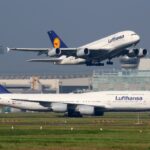
Lufthansa removes 20,000 flights from its summer schedule amid rising fuel costs Credit : Markus Mainka, Shutterstock
Anyone flying in Europe this summer may want to check their booking again. Lufthansa has confirmed it will remove 20,000 flights from its schedule up to October, mainly on short haul routes, as rising fuel costs put pressure on the airline. The German group says the move will save around 40,000 tonnes of jet fuel, but for passengers it could mean timetable changes, busier flights and fewer options during one of the busiest travel periods of the year.
Because Lufthansa is one of Europe’s largest airline groups, changes on this scale rarely stay local. They can affect connections, prices and availability across a much wider network. For holidaymakers, the timing is far from ideal.
Why Lufthansa is making the cuts
Airlines live with changing costs all the time, but fuel remains one of the biggest.
When jet fuel prices rise sharply, every route becomes more expensive to operate. Short haul flights are often the first area to come under review because they can produce thinner margins than long haul services, especially on highly competitive European routes.
Lufthansa says the flights being removed are services considered less profitable across its network.
That usually means routes with weaker demand, overlapping schedules or journeys where the income no longer matches operating costs.
Rather than spread disruption across every part of the timetable, airlines often target the areas where they believe cuts will do the least damage.
Passengers may not enjoy hearing that, but it is a common commercial decision. The company has also said the aim is to protect overall schedule stability during the summer season.
In plain terms, fewer flights now may help avoid larger problems later.
Why this matters beyond Germany
Many travellers hear Lufthansa and think only of Germany.
In reality, the group has a far wider footprint through airlines such as Swiss, Austrian Airlines, Brussels Airlines and ITA Airways, alongside large hub operations in Frankfurt and Munich.
That means people flying between Spain and Europe, or connecting through central Europe to long haul destinations, could feel the impact.
A cancelled short haul service is not always just a short haul issue.
It can affect onward journeys, weekend breaks, cruise departures and business trips linked to another flight later the same day.
Even if your route remains untouched, reduced capacity elsewhere can still create fuller aircraft and fewer alternatives.
That is why airline schedule changes matter even to people not flying directly with Lufthansa.
What passengers may notice this summer
For some travellers, nothing at all. Many flights will continue normally and some passengers may never notice a change.
Others, however, could receive emails with revised departure times, rebooked services or new connection details.
Where demand is high, replacement options may be less convenient than the original booking. That might mean an earlier departure, a longer wait at an airport or travelling on a different day.
Prices may also react.
When one major airline reduces capacity, seats can become more valuable on certain routes, especially in school holiday periods when demand is already strong.
That does not mean every fare will suddenly rise, but bargain hunting may become harder.
What travellers should do now
If you already have a booking, stay calm but stay aware. Check the airline app or your reservation page from time to time. Make sure your contact details are correct so any changes reach you quickly.
If your trip includes a tight connection, it may be worth reviewing it now rather than later.
If you have not booked yet, flexibility can help.
Flying midweek, avoiding peak dates or comparing nearby airports may open better prices and more choice.
It is also sensible to book accommodation with reasonable cancellation terms when possible.
Summer travel can shift quickly.
Could other airlines follow
Lufthansa is not the only carrier dealing with fuel pressure. Every airline in Europe watches energy costs closely because they affect pricing, planning and route decisions.
Some carriers hedge fuel costs in advance, others adjust schedules, and many do a bit of both.
That means each airline responds differently.
There is no guarantee of similar large scale cuts elsewhere, but the pressure is shared across the industry. Travellers may therefore see a tougher market overall, with fewer empty seats and less room for last minute deals.
The simple message for passengers
This summer is still very much happening. Planes will fly, holidays will go ahead and airports will stay busy.
But Lufthansa’s decision is a reminder that travel plans are never fixed until the journey is over.
If you are flying in the coming months, keep an eye on your booking, allow extra flexibility and do not assume the first schedule you saw will be the final one.


















 %3 weeks ago
 Uncategorized4 weeks ago
 Uncategorized3 weeks ago