
Chiapas
The Mystery Of Kevin, The Survivor Of The Mass Disappearances Of Migrants In Chiapas

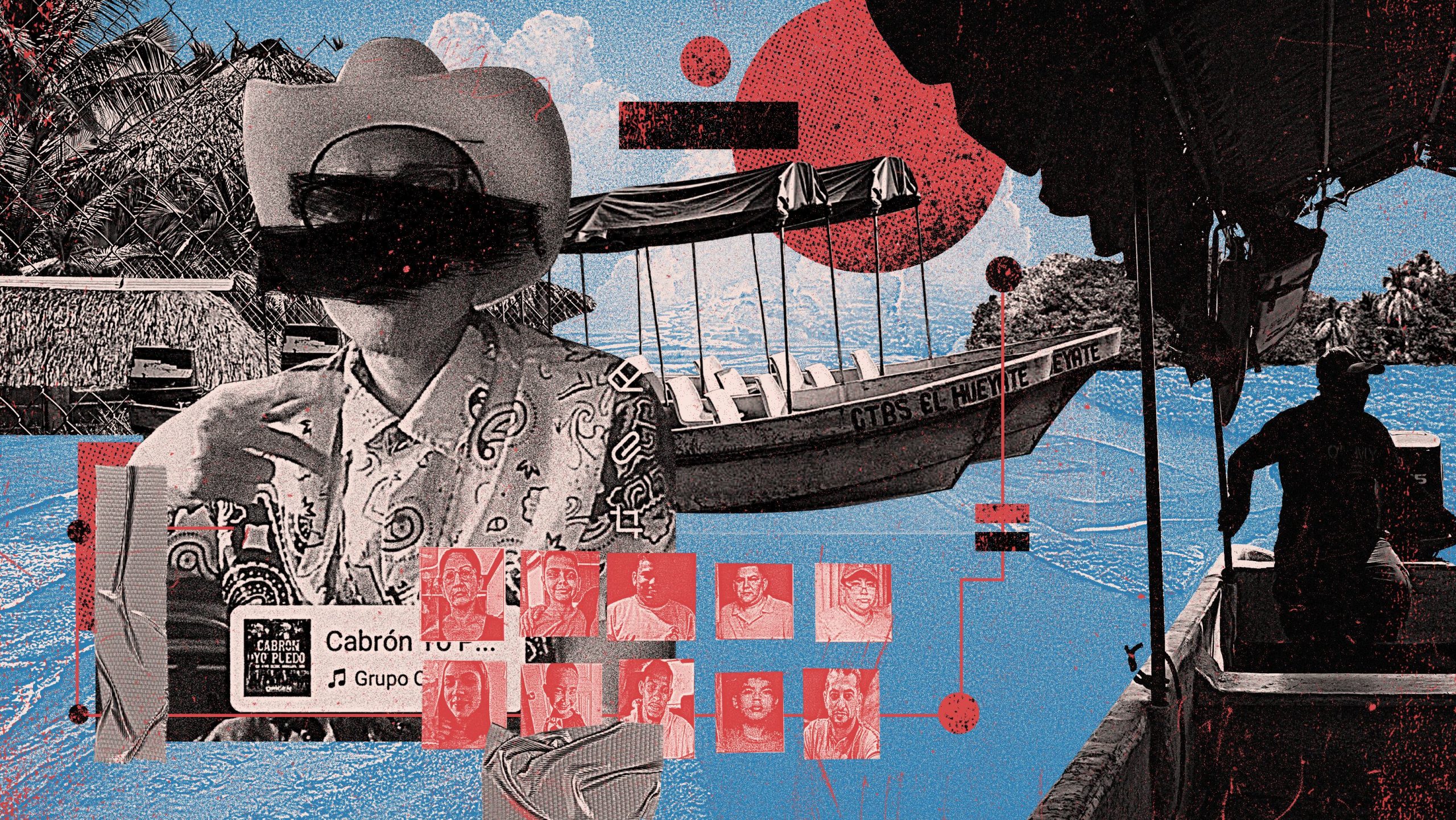
Kevin persuaded his girlfriend, Yosselyn Guerrero, to leave Tapachula for Mexico City with a simple promise: a furnished room awaited them in the Mexican capital. They would finally have a bed — no more sleeping on the floor of a borrowed house. The 30‑year‑old Salvadoran woman hesitated. On the border she already had a job in a small restaurant, and heading farther north meant putting even more distance between herself and her family in Santa Ana, who kept begging her to come home. In the end, Kevin’s plan prevailed. He chose the coyotes and the route, which included a stretch by boat across the ocean.
The departure point was San José El Hueyate, a small, isolated coastal town in Chiapas. From a safe house there, Yosselyn spoke with her family for the last time. She told them she was afraid of the long sea crossing, and that Kevin was acting “strange”: “He’s always on his phone, whispering, hiding something.” “I’m scared, I don’t want to get on that boat, but I’m already here,” her older sister, Claudia Guerrero, recalls her saying. “Don’t go, I told her, don’t go.”
At 3:20 p.m. on October 21, 2024, her WhatsApp messages stopped coming through. That was the last sign of her. She is one of the 83 migrants who disappeared along this stretch of coast between September and December 2024. Kevin is not on that list. He is, so far, the only survivor who has been found.
“I don’t even know how I’m here, because we went under and it was really bad. I swallowed water, and somehow I made it out. Three waves hit me, tossed me around all the way to the bottom. I came out almost dead,” he tells this newspaper by phone. “I think what happened there already happened. And whoever could get out, got out, thank God. Some didn’t.” How many? He doesn’t know. Who? He doesn’t know. Where? He doesn’t know.
On that same journey was Honduran migrant Cindy Bueso, traveling with her one‑year‑old son, Daniel, and her three‑year‑old daughter, Valentina. Their relatives, who were waiting for them in the United States, are the only family among the 83 missing who have received any kind of lead in the past 17 months: they were told the three had been seen in Puerto Madero, a few miles from El Hueyate, and later in Juchitán de Zaragoza, Oaxaca, where, they were assured, Cindy was in the hands of organized crime.
That clue adds to others from different families: a list of 40 names compiled days after the disappearance; cell phones that, months after supposedly “falling into the sea,” pinged on land with full battery; or the number of a missing person being used by someone pretending to be them.
All the federal and state authorities consulted for this report say they have no information — that they don’t know what happened and had never heard of cases like this, so large and so many at once. Yet an official with access to immigration data acknowledges what the families suspect: “Along this border, migrant smuggling turned into human trafficking.”
From 2022 to 2024, Chiapas was a territory under criminal control. A senior official told EL PAÍS that dozens of police officers were effectively appointed by organized crime, that there was “a vacuum of authority” in the state, that “the lack of control was total.” In that period, more than 400,000 migrants entered through Chiapas and were kidnapped, killed, or disappeared. In the best-case scenario, this happened right under the noses of the authorities; in the worst, they were working with them.

A recent large‑scale operation in San José El Hueyate ended with 11 people charged with criminal association — four of them police officers. A source familiar with the case confirmed to EL PAÍS that the officers were working for the Jalisco New Generation Cartel (CJNG): “They’re the group we know is behind the forced recruitment of people.” In Mexico, there is no public data on how many individuals may be enslaved by organized crime, but that possibility hangs over these disappearances — a fear and, for some families, a fragile hope: that their loved ones are in the hands of “the bad guys” but are still alive.
Claudia Guerrero, Yosselyn’s sister, speaking by phone from El Salvador, describes the change in Kevin’s life after the supposed boat accident: “Fifteen days later, I found him on Facebook, and he was posting pictures of himself in trucks, on a motorcycle, in a black car, even wearing a hat. He was using his phone, wearing clothes my sister had bought him. He supposedly lost everything at sea. That’s a lie. I told him, ‘Tell me what you did with my sister. Did you sell her or what did you do?’”
From one to four miles
Some might imagine you can simply walk along the beaches of Chiapas straight into Oaxaca, but that’s not the case at all, say those who know these waters. This coastline is broken up by sandbars, dense stretches that are inaccessible by land, floating forests, estuaries and mangroves — a wild, fragmented shore with countless gaps that no one can fully control, they acknowledge.
Government documents — reviewed by this newspaper — identify with precision that among the migrant‑smuggling routes heading north, there is one that leaves the land behind. For a decade, it has been the escape valve when the roads are full of checkpoints run by Mexico’s National Migration Institute and the National Guard. Authorities, organizations and migrants all recognize it: it’s not as heavily monitored, but it’s far more dangerous.
A warning: the ocean here swallows bodies. In the first mile off the coast, breakers and currents collide — fast, treacherous, unforgiving. Just a few weeks ago, a family of swimmers drifted too far and was pulled away by a current; all of them drowned, but only the two adults were recovered. The child’s body was never found. Everyone who works at sea knows that fury well: fishermen, sailors — and traffickers. They also know how the northern winds hit, how fiberglass boats can disintegrate without leaving a trace, and how close Navy vessels can get once the water gets too shallow for their hulls.
This leaves a strip of water, one to four miles offshore, beyond the worst currents and beyond the reach of authorities. That strip is the “safe” corridor for moving people illegally.

“You’re a rotten egg,” one little boy says. “Who’s last?” asks another. “I’m the rotten egg,” the smallest one laughs. In a video recorded on October 21, 2024, six children run around a patio with green columns and a thatched roof. Yosselyn is filming them from San José El Hueyate before getting on the boat; she sends the clip to her family. Valentina, Cindy Bueso’s daughter, is seen in the recording wearing the same clothes she has on in the photo that her grandmother, Teresa Barrera, received in the United States — sent by the coyote to signal that he had handed them over.
The migrants had reached San José El Hueyate separately, with different smugglers, without knowing one another. Cindy’s family spent months combing social‑media posts and news reports to find anyone who might have traveled with her; they even called Latin American embassies: “Do you have any report of a disappearance on October 21, 2024, in Chiapas, Mexico?”
Every embassy — including El Salvador’s — told them no. But they did have one, because Yosselyn’s family had filed their report there. And so, even now, there are figures from that same date who remain faceless, nameless: a Peruvian woman mentioned by both Yosselyn and Cindy because she was “really kind” (“she gave us coffee and bread,” the Salvadoran woman said), or the five children who appear playing with Valentina.
The wait
Kevin, Yosselyn, Cindy, Daniel, Valentina, the children and the rest of the migrants left after lunch from the small dock at San José El Hueyate. The spot sits on a sandbar — a kind of enclosed lagoon that eventually opens into the ocean. Kevin says that two boats set out that day, both packed with people, at least 40 in total. They were “big boats,” as he describes them. Cindy had told her mother they were already full, around 20 on board. No one was given a life jacket.
“I was worried,” Kevin recalls. “Because we were still in the river, and before we got to the sea, the waves were hitting hard, pushing us out. We got through them, but the boat kept jumping and jumping, hit after hit. You get thrown around. Then slowly the boat settled, everyone calmed down, and that’s when it all started.”
They sailed all afternoon until nightfall, when they stopped. All they could see around them was water. They had to wait for another boat. “They didn’t explain why they were waiting for it; it had gas. I don’t know if it was because it left late or if the person driving our boat didn’t know the way or what, but we spent a whole day waiting for the boat, without food, without water, all of us feeling really bad, vomiting,” says Kevin.

When told about this situation, a federal source offers three possible explanations for the wait: there may have been law‑enforcement patrols nearby and the smugglers were waiting for them to leave; they might have been short on fuel; or it could have been “diversification.” “It’s possible they were going to transfer people from that boat to others — if they’ve already been paid for the trip, they can redirect that workforce. Maybe they had some arrangement, and the other boat never showed,” the source says, referring to the forced labor practices used by organized‑crime groups. Mid‑sea rendezvous are common in illegal trafficking, especially drug routes, where vessels travel 60 to 200 miles offshore and rely on other boats to refuel them along the way.
“We were all feeling awful, really dizzy, with headaches, exposed to the sun and the darkness, but then the boat started moving again at daybreak,” Kevin continues. The young Salvadoran says he remembers what caused the accident, but he won’t answer. When asked what happened next, he hangs up. He changes his number. He becomes unreachable.
The search for Yosselyn
Claudia Guerrero always had access to her sister’s Google account, so she could monitor her movements. On the night of October 21, she tried to track the phone, but it was no longer showing a location. Early the next morning, she saw that Yosselyn still hadn’t received any messages and began to worry. She spoke with Kevin’s family because they knew the people who were taking them. “They’ve already crossed into the mainland, they’ll be in touch with you soon,” they told her, sending a supposed photo of the group in what looked like a parking lot — but Yosselyn wasn’t in it.
At 2 p.m., she received another call, this time from the husband of Kevin’s sister: “I don’t even know how to tell you what I have to say. The boat capsized, and they couldn’t find your sister. Kevin is in bad shape; they lost everything: his phone, his backpack… the water swept it all away. I’ll leave you the coyote’s number; you should ask him.”
“I didn’t say anything,” Claudia recalls. “I went silent and hung up. I felt like I was falling apart.”
The coyote sent her an audio message: “We had an accident, the boat capsized, everyone fell into the water, there were about 15 of them, even children were lost, we didn’t find their bodies, we didn’t find even your sister’s body.”
“Did you see her?” she replied. “I haven’t seen the news report. When things like this happen, everyone posts about it on social media. There are quite a few people involved; what goes around comes around. I think you’re all up to something and you don’t want to tell me. Where was it? Which beach?”
The coyote stopped responding; he blocked her. From that moment on, Claudia kept pressing Kevin’s family every day. His mother — who lived in El Congo, Santa Ana, just like them, and who had received the $1,500 payment for the trip from Tapachula to Mexico City — left her home and moved to another city three days after the supposed accident.
“We went to the Santa Ana prosecutor’s office to file a complaint against them, but they told us they couldn’t do anything because we didn’t have any proof, because we gave them the money voluntarily,” Claudia recounts.
She finally managed to speak with Kevin many months later. He told her it was an accident, that he tried to save Yosselyn but couldn’t. His sister never believed him. “God knows everything,” she told him; “God knows everything,” she says now.

“He used to mistreat my sister. He monitored her, hit her, took the money she earned at work, left her with nothing, grabbed all her clothes and threw them into muddy puddles. He wouldn’t even let her go out. She started telling me all of that, maybe because she was desperate, because she didn’t want to be with him anymore: ‘If you only knew everything he does to me,’” Guerrero recalls.
She also remembers, with frustration, how her sister forgave him every time he promised he would change, told her he loved her, begged for forgiveness. “Someone who loves you takes care of you, they don’t hurt you. Here you had people who would defend you; over there you were alone, and he was taking advantage of you,” the Salvadoran woman says. “She never listened to me.”
Yosselyn had quit her job at a factory in El Salvador in August 2024. She followed Kevin, her sister believes, because she was “deeply in love.” That October, she was fed up, tired of sleeping on the floor, of using her clothes as pillows; her body aching. he agreed to go with Kevin’s coyote. She got on the boat. Her family is still searching for her, every day. Like her, 82 other migrants boarded a boat and were never heard from again.
Sign up for our weekly newsletter to get more English-language news coverage from EL PAÍS USA Edition





Trump Anuncia Una Prórroga De Tres Semanas Del Alto El Fuego Entre Israel Y Líbano

España Experimenta El Mayor Aumento De Muerte Súbita De Europa

Spain’s 018 Accident Helpline Is Now Live. Here’s What Happens When You Call

Luxury Villas For Sale, Estepona – ProjectL1

Stylish 3-Bedroom Apartment With Panoramic Sea Views – Benalmádena
Brussels warns Spain that migrants regularised under controversial scheme will be deported back to Spain if they try to move to other EU countries


-
 New Developments3 weeks ago
Luxury Villas For Sale, Estepona – ProjectL1
-
 New Developments3 weeks ago
Stylish 3-Bedroom Apartment With Panoramic Sea Views – Benalmádena
-
eu response to spain migration policy2 weeks ago
Brussels warns Spain that migrants regularised under controversial scheme will be deported back to Spain if they try to move to other EU countries
-

 %3 weeks ago
Poland Disconnects Utilities At Russian Consulate That Moscow Refuses To Hand Over
-

 Uncategorized4 weeks ago
Lewis Hamilton goes from Karate Kid to Samurai Warrior with Kill Bill guru
-
AER Lingus4 weeks ago
High-speed internet at 35,000 feet: Aer Lingus launches Starlink Wi‑Fi
-

 Uncategorized3 weeks ago
How Lewis Hamilton spent break with A-list star
-
Groundforce4 weeks ago
Spain’s Easter holiday airport strikes: Walkout suspended over weekend but disruption expected to kick in from first day of Semana Santa