
Sponsored
Dr. Rubén Davó, from the Vithas Medimar Hospital, leads the first study that endorses the ‘Quad Zygoma’ as the definitive solution for failed maxillary implants

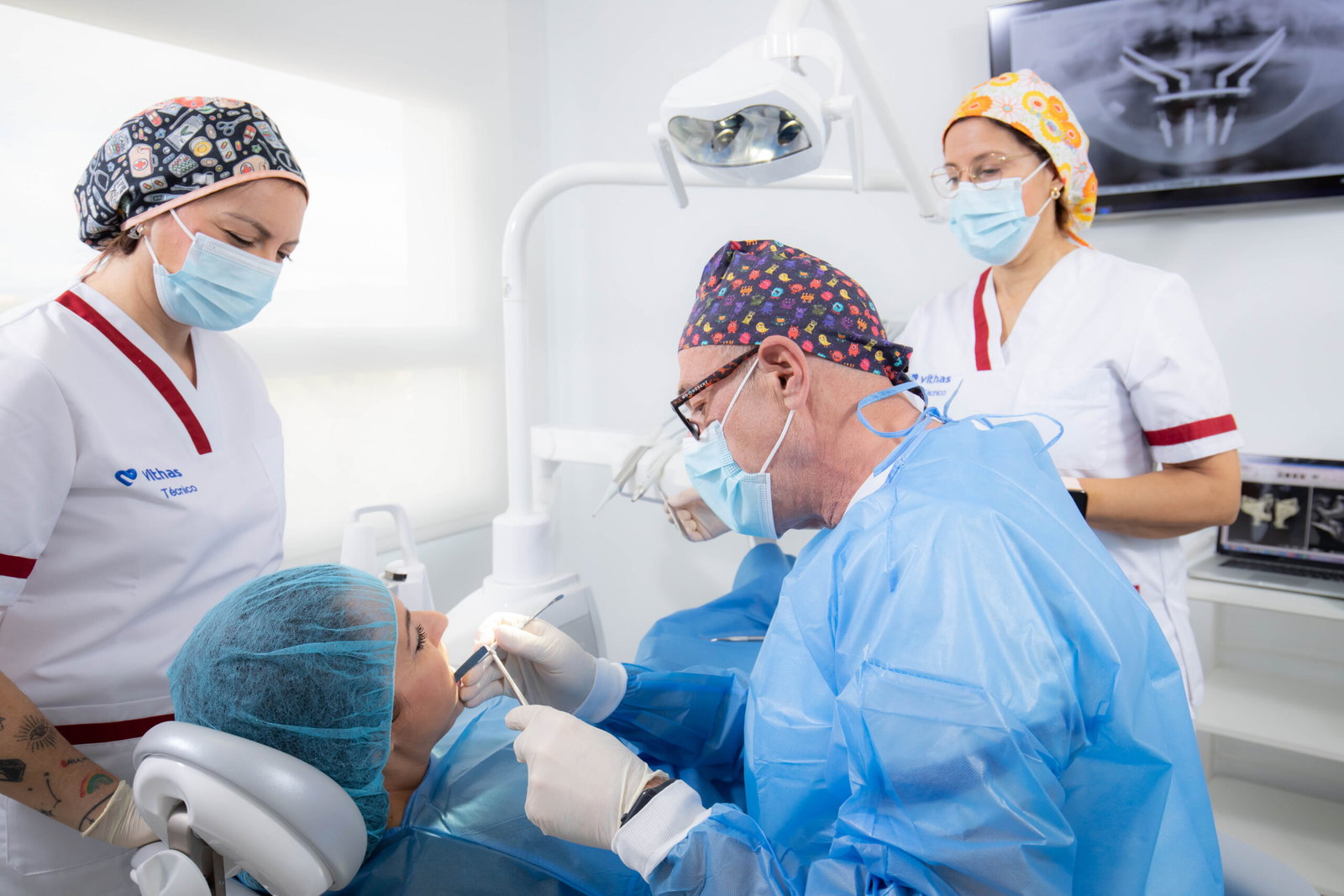
Dr. Rubén Davó, from the Vithas Medimar Hospital. Credit: VITHAS
- Published in the prestigious journal Clinical Oral Implants Research (COIR), the study offers clinical evidence after a follow-up of up to 17.5 years
- Research positions this technique as a reliable salvage therapy for complex cases of failure in implants of the entire upper arch
The first study on zygomatic implants of 2026 has recently been published in the scientific journal Clinical Oral Implants Research (COIR), which is now available in open access. In it, Dr. Rubén Davó, maxillofacial surgeon at the Vithas Medimar Hospital and director of Vithas Davó Dental Institute, positions Spanish maxillofacial surgery and dentistry at the international forefront.
“This publication represents a milestone in providing the first robust, long-term clinical evidence that redefines the Quad Zygoma protocol. Research shows that this technique is a highly reliable rescue therapy for patients who have suffered the failure of previous rehabilitations of complete dentures, definitively overcoming the concept of being a simple alternative treatment,” explains Dr. Davó.
Scientific evidence
The study provides conclusive figures on the effectiveness of this intervention in critical cases. Thus, on a sample of 28 patients treated with a total of 112 zygomatic implants, an average follow-up of 8.2 years has been carried out, with documented cases of up to 17.5 years of evolution.
The survival rate of the implant has been 98.2% and in 100% of cases it was performed with an immediate function protocol, allowing the patient to recover function and aesthetics in record time.
“When conventional solutions fail and there are no longer clear alternatives, the patient is in a situation of extreme vulnerability. This study shows that Quad Zygoma is a highly predictable solution that restores quality of life in the long term,” says Dr. Rubén Davó.
A benchmark in complex surgery
Vithas Davó Dental Institute has thus established itself as a world reference centre for the resolution of complex failures in implantology. The results show that complications are manageable and do not compromise the ultimate success of rehabilitation.
For the scientific community, this work published in COIR sets a new standard, proving that the protocol, led by Dr. Davó, is the definitive answer when the rest of the options to recover fixed teeth have failed.
Vithas Davó Instituto Dental
Hospital Vithas Medimar
C/Padre Arrupe, 20
965 269 104






With the right support, the golden years in Spain can remain golden. Credit: Costa Angels
For many British expats, the dream of retiring to the Costa del Sol is built on the promise of sunshine, a relaxed lifestyle, and a vibrant community. However, as the years pass, tasks that once seemed simple – managing the home, keeping track of appointments, or even daily personal care – can become more challenging.
The traditional assumption was that a move to a residential care home was the only answer. Today, however, more families are discovering a more dignified, flexible, and comforting alternative: professional home care.
The power of staying put
There is an undeniable psychological benefit to remaining in one’s own home. Surrounded by familiar memories, beloved pets, and a known neighbourhood, elderly individuals often maintain better cognitive health and a higher sense of morale. This is the philosophy behind Costa Angels, a premier provider of assisted living services all along the Costa del Sol and soon to be much further beyond.
Tailored support, not ‘one size fits all’
Every individual’s needs are unique, which is why Costa Angels rejects the ‘blanket’ approach to care. Whether it is a few hours a week to help with domestic chores and shopping, or more comprehensive 24-hour live-in care, the focus is always on empowering the individual. By introducing dedicated, international carers all with a good level of English and many multilingual, they ensure that communication – so vital in healthcare – is never a barrier.
A bridge for families
For families living all over the world, the worry of a loved one being alone in Spain can be overwhelming. Professional home care acts as a vital bridge, providing “boots on the ground” and peace of mind. From respite care that allows primary caregivers a necessary break, to specialist palliative support, the goal is to provide a safety net that feels like family.
With the right support, the golden years in Spain can remain just that – golden.
To learn more about how Costa Angels can support you or your loved one, visit www.costaangels.com or call +34 686 402 030 for a friendly, confidential consultation.

Taxadora.com specialises in Spanish income tax returns for international residents. Credit: Lucigerma / Shutterstock
Spain’s annual income tax season has begun, and many foreign residents are now required to submit their Declaración de la Renta (IRPF). If you live in Spain for more than 183 days per year, you are generally considered tax resident and must declare your worldwide income to the Spanish Tax Agency.
This includes pensions, employment income, rental income, dividends, interest and capital gains from abroad. A common misunderstanding among international residents is believing that only Spanish income needs to be declared. In reality, Spanish tax residents are normally required to report income from all countries.
Residency status determines your obligations
Your obligation to file depends primarily on your tax residency status rather than where your income is paid. Even if you still receive income from your home country or maintain financial ties abroad, living in Spain for most of the year usually means Spanish tax residency applies.
In many cases, the standard Spanish exemption thresholds often mentioned for employees do not apply when foreign income exists, meaning a return is still required even at relatively modest income levels.
Foreign income is often missing from draft returns
Each year, the Spanish tax authorities provide many taxpayers with a draft return. However, this document usually includes only information reported within Spain. Foreign pensions, overseas investments and income from bank accounts abroad are rarely included automatically.
This means residents themselves are responsible for reviewing their full financial situation before confirming their return.
Investment accounts abroad may be taxed differently
Many international residents continue holding investment accounts in their home country after moving to Spain. Once you become tax resident in Spain, dividends, interest and capital gains from those accounts generally fall under Spanish taxation rules rather than those you previously followed.
Because these transactions are not visible in the draft return, they are among the most frequently overlooked items.
Foreign pensions require careful treatment
Pensions from the UK, the Netherlands, United States and other countries are one of the areas where confusion often arises. Depending on the pension type and the applicable tax treaty, the income may be taxed in Spain, in the country of origin, or reported in both with double taxation relief applied.
Understanding how your pension is classified can significantly affect your final tax result.
Support for international residents in Spain
Many foreign residents only realise late in the process that their tax situation involves multiple countries. Reviewing your income early in the filing season reduces the risk of corrections later and helps avoid unnecessary stress as deadlines approach.
Taxadora.com specialises in Spanish income tax returns for international residents and assists clients from across Europe each year with pensions, overseas investments and cross-border income reporting.
Learn more at www.taxadora.com/taxes-for-residents-in-spain/



Taxadora.com specialises in Spanish income tax returns for international residents. Credit: Lucigerma / Shutterstock
Spain’s annual income tax season has begun, and many foreign residents are now required to submit their Declaración de la Renta (IRPF). If you live in Spain for more than 183 days per year, you are generally considered tax resident and must declare your worldwide income to the Spanish Tax Agency.
This includes pensions, employment income, rental income, dividends, interest and capital gains from abroad. A common misunderstanding among international residents is believing that only Spanish income needs to be declared. In reality, Spanish tax residents are normally required to report income from all countries.
Residency status determines your obligations
Your obligation to file depends primarily on your tax residency status rather than where your income is paid. Even if you still receive income from your home country or maintain financial ties abroad, living in Spain for most of the year usually means Spanish tax residency applies.
In many cases, the standard Spanish exemption thresholds often mentioned for employees do not apply when foreign income exists, meaning a return is still required even at relatively modest income levels.
Foreign income is often missing from draft returns
Each year, the Spanish tax authorities provide many taxpayers with a draft return. However, this document usually includes only information reported within Spain. Foreign pensions, overseas investments and income from bank accounts abroad are rarely included automatically.
This means residents themselves are responsible for reviewing their full financial situation before confirming their return.
Investment accounts abroad may be taxed differently
Many international residents continue holding investment accounts in their home country after moving to Spain. Once you become tax resident in Spain, dividends, interest and capital gains from those accounts generally fall under Spanish taxation rules rather than those you previously followed.
Because these transactions are not visible in the draft return, they are among the most frequently overlooked items.
Foreign pensions require careful treatment
Pensions from the UK, the Netherlands, United States and other countries are one of the areas where confusion often arises. Depending on the pension type and the applicable tax treaty, the income may be taxed in Spain, in the country of origin, or reported in both with double taxation relief applied.
Understanding how your pension is classified can significantly affect your final tax result.
Support for international residents in Spain
Many foreign residents only realise late in the process that their tax situation involves multiple countries. Reviewing your income early in the filing season reduces the risk of corrections later and helps avoid unnecessary stress as deadlines approach.
Taxadora.com specialises in Spanish income tax returns for international residents and assists clients from across Europe each year with pensions, overseas investments and cross-border income reporting.
Learn more at www.taxadora.com/taxes-for-residents-in-spain/

Calpe erupts in colour for Moors and Christians mid-year festival as 2026 celebrations take shape
Santa Pola film festival expands national reach in 14th edition
Damaged UK passport rules and risks. When can you be turned away at the airport

Luxury Villas For Sale, Estepona – ProjectL1

Stylish 3-Bedroom Apartment With Panoramic Sea Views – Benalmádena
Brussels warns Spain that migrants regularised under controversial scheme will be deported back to Spain if they try to move to other EU countries


-
 New Developments4 weeks ago
Luxury Villas For Sale, Estepona – ProjectL1
-
 New Developments3 weeks ago
Stylish 3-Bedroom Apartment With Panoramic Sea Views – Benalmádena
-
eu response to spain migration policy3 weeks ago
Brussels warns Spain that migrants regularised under controversial scheme will be deported back to Spain if they try to move to other EU countries
-

 %3 weeks ago
Poland Disconnects Utilities At Russian Consulate That Moscow Refuses To Hand Over
-

 Uncategorized4 weeks ago
How Lewis Hamilton spent break with A-list star
-
Costa Calida3 weeks ago
Murcia unveils monument marking 175th anniversary of Burial of the Sardine
-
Costa del Sol3 weeks ago
Easter on the Costa del Sol: a time of renewal
-
ChatGPT4 weeks ago
He used ChatGPT to sell his home – and walked away with €100,000 more than expected