
Latest
When The Dream Home Never Arrives

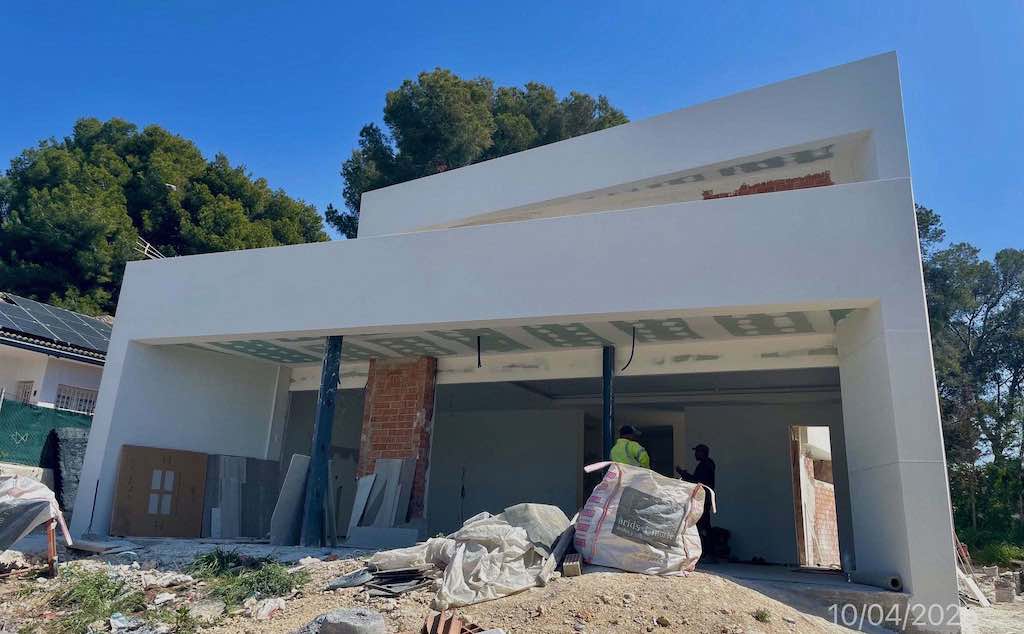
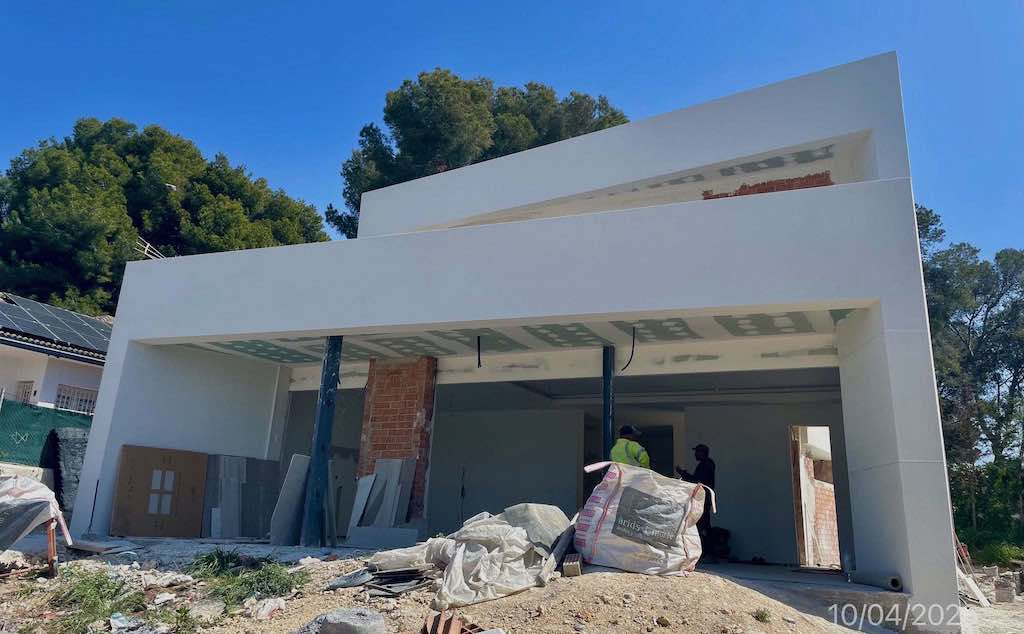
Buying off-plan in Spain can still go badly wrong—even today. A new case study from readers shows how easily things can unravel, and why caution remains essential.
Anthony & Lesley Briggs, both in their late 50s and from the north of England, thought they had done everything right. Nearing retirement, they set out to build a modern villa by the sea in Tarragona—carefully planning finances, conducting due diligence, and working with a reputable law firm. The timeline was clear: completion by spring 2025, funded by the sale of their Barcelona home.
“It was everything we had worked and saved for — our retirement,” says Anthony, describing a “smooth, professionally managed project” that inspired confidence.
Instead, they found themselves effectively homeless, with 70% of the purchase price paid and nothing to show for it but an unfinished shell.
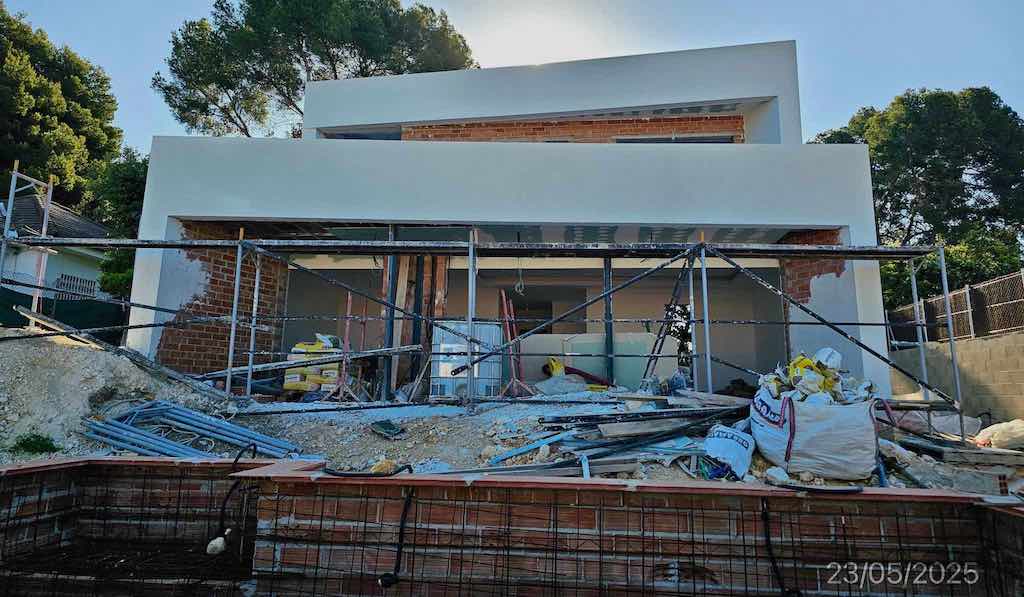
“On the day we should have moved in… it was still just a shell. No windows or doors. No kitchen. No bathrooms. No pool. Nothing that resembled a home.”
From that point on, delays piled up, communication broke down, and legal remedies proved painfully slow.
Nearly two years late, the house remains incomplete, their savings tied up, and the situation unresolved.
A familiar story with a modern twist
If this sounds like something from the last property boom, that’s because it is—at least in spirit.
In the years leading up to the 2008–2009 crash, tens of thousands of off-plan buyers in Spain lost money after developers failed to complete projects. Many discovered too late that their stage payments were not protected by bank guarantees, despite legal requirements.
You might assume those days are behind us. After all, Spain today suffers from a housing shortage, not a construction frenzy. But this case is a reminder that off-plan risk never disappears—it just changes form.
What went wrong? More than just bad luck
The most troubling aspect of this case is that the buyers appear to have taken sensible precautions.
They hired lawyers. They reviewed the contract. They agreed clear completion deadlines. Yet the developer missed those deadlines with minimal consequences, exploiting well-known weaknesses in the system.
As Briggs explains, “we trusted the legal process… we placed our trust in the developer.”
That trust has proved costly.
Developers understand they can delay projects by months—if not years—while the legal process grinds slowly forward. By the time a case reaches court, the buyer may have already endured 18 to 24 months of uncertainty.
Even contractual protections can prove hollow. As Briggs puts it bluntly, the Arras contract “has, in reality, proven to be of little value… effectively a worthless piece of paper when it goes wrong.”
To make matters worse, the developer in this case failed to provide the legally required bank guarantees for stage payments—a basic safeguard that should never be overlooked.
The lesson: trust nothing without proof
If there is one takeaway, it’s this: buying off-plan in Spain is always risky, no matter how polished the marketing or how reassuring the paperwork.
“Look beyond the appearances and polished developer websites,” Briggs warns, and above all “do not place undue reliance on the Arras Contract.”
At a minimum, buyers should:
- Ensure all stage payments are covered by valid bank guarantees before transferring any money
- Work with independent legal advice that goes beyond ticking boxes
- Scrutinise timelines and penalties with a sceptical eye
- Be prepared for delays—and have a contingency plan
Proceed with eyes wide open
Off-plan property can still be a great way to buy in Spain, particularly in a supply-constrained market. But it requires caution, patience, and a clear understanding of the risks.
As this case shows, even well-prepared buyers can find themselves exposed when things go wrong. And when they do, the system may not protect you as much as you expect.










Circuito Jerez
Marc Márquez Baila Sobre El Agua En Jerez Para Conseguir La ‘pole’ En El GP De España




The populations of certain countries in Europe are expected to grow by 2100, but there will be a big drop on average across Europe, new predictions reveal. So which countries will see a population growth?
Please sign up or log in to continue reading
More
Comments
Join the conversation in our comments section below. Share your own views and experience and if you have a question or suggestion for our journalists then email us at news@thelocal.es.
Please keep comments civil, constructive and on topic – and make sure to read our terms of use before getting involved.
Please log in here to leave a comment.
See Also



Marc Márquez Baila Sobre El Agua En Jerez Para Conseguir La ‘pole’ En El GP De España
When the dream home never arrives

When The Dream Home Never Arrives

Luxury Villas For Sale, Estepona – ProjectL1

Stylish 3-Bedroom Apartment With Panoramic Sea Views – Benalmádena
Brussels warns Spain that migrants regularised under controversial scheme will be deported back to Spain if they try to move to other EU countries


-
 New Developments3 weeks ago
Luxury Villas For Sale, Estepona – ProjectL1
-
 New Developments3 weeks ago
Stylish 3-Bedroom Apartment With Panoramic Sea Views – Benalmádena
-
eu response to spain migration policy2 weeks ago
Brussels warns Spain that migrants regularised under controversial scheme will be deported back to Spain if they try to move to other EU countries
-

 %3 weeks ago
Poland Disconnects Utilities At Russian Consulate That Moscow Refuses To Hand Over
-

 Uncategorized4 weeks ago
How Lewis Hamilton spent break with A-list star
-

 Uncategorized4 weeks ago
Lewis Hamilton goes from Karate Kid to Samurai Warrior with Kill Bill guru
-
AER Lingus4 weeks ago
High-speed internet at 35,000 feet: Aer Lingus launches Starlink Wi‑Fi
-
Costa del Sol2 weeks ago
Easter on the Costa del Sol: a time of renewal