Connect with us

%

Last Chance To Visit? The 5 Iconic Destinations At Risk Of Changing Forever

Published

on

last-chance-to-visit?-the-5-iconic-destinations-at-risk-of-changing-forever

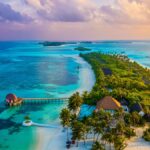
The Maldives, one of the world’s most popular travel destinations, faces long-term risks from rising sea levels Credit: Shutterstock/SennaRelax

“Last-chance tourism” is increasingly discussed as travellers look to visit destinations that may change significantly over time, including places like Maldives and Venice. In Venice, the MOSE flood barrier system is now activated regularly to protect the city during high water events, reflecting how frequently flooding has become part of daily life in certain periods of the year.

Meanwhile, the Maldives remains one of the most exposed countries to rising sea levels, with around 80% of its land sitting less than one metre above sea level, making long-term adaptation a key challenge. At the same time, travel patterns are beginning to shift. Some travellers are showing increased interest in cooler destinations during peak summer months, while others are prioritising trips that have been on their list for years.

Which destinations are under pressure?

Some of the most recognisable travel destinations in the world are also among the most vulnerable. The Maldives receives around 1.8 million visitors a year, with the UK consistently among its largest European markets. Spain also contributes a steady flow of travellers, with over 50,000 Spanish visitors recorded in recent years, highlighting how widely these destinations appeal across Europe. Large parts of the country sit barely above sea level, which is why it is often cited in long-term projections linked to rising oceans.

The Bahamas attracts millions of visitors annually, including a strong flow of international tourists and cruise passengers, while facing increasing pressure from stronger storms, hurricane damage, and coastal erosion.

In Europe, Venice sees roughly 20 to 25 million visitors per year, making it one of the most visited cities on the continent. It has also become a symbol of rising water levels, with flooding events becoming more frequent over time, alongside growing efforts to limit visitor numbers and manage overtourism.

Further south, destinations like Santorini and Mallorca are dealing with a different kind of pressure. Record visitor numbers are straining infrastructure, pushing up housing costs, and leading to new restrictions on short-term rentals and tourism activity.

Cities such as Dubai are also facing increasingly extreme heat, with summer temperatures rising to levels that affect both daily life and visitor experience.

Across the Atlantic, Miami is frequently included in long-term risk projections due to its exposure to sea level rise, flooding, and the impact of stronger storms on coastal development. They are exactly the kind of places expats travel to repeatedly, return to over the years, or consider for longer stays.

Not disappearing, but changing

It is important to keep this grounded. These destinations are not expected to vanish overnight. Many are investing heavily in protection. Venice has installed flood barrier systems. Coastal cities are upgrading drainage and defences. Island nations are working on adaptation strategies.

But even with these efforts, change is already visible. Flooding happens more often. Coastlines shift. Weather patterns become less predictable. For travellers, this does not mean these places are no longer accessible. It means the experience may gradually evolve.

Why this matters especially for expats

Expats tend to think differently about travel. It is not just about holidays, but about where to spend time, where to return, and sometimes where to live. That is where long-term change becomes relevant. A destination that feels stable today may look different in a few decades. Not necessarily gone, but altered in ways that affect daily life, infrastructure, or accessibility. For someone deciding where to invest time or money, that matters.

Travel decisions are shifting

There is a noticeable change in how people approach travel planning. Places that have been postponed for years are being prioritised earlier.

It is not about sudden disappearance, but about uncertainty. More frequent weather disruption, pressure on infrastructure, and new restrictions on tourism in some destinations are all shaping how people think about when to go. For many, “later” no longer feels quite as fixed as it once did.

A different way of looking at familiar places

Nothing changes overnight. But over time, even the most familiar destinations can move in a different direction. For those who travel often, return to the same places, or consider living in them, that is becoming part of the decision-making process. Not everything needs to change immediately. But the assumption that places will always remain the same is starting to fade.

%

Marenostrum Launches Haptic T-Shirts

Published

on

marenostrum-launches-haptic-t-shirts

Marenostrum Fuengirola is taking live music to a new level this season with the incredible introduction of haptic t-shirts that allow concertgoers to physically feel the music through vibrations and sensory feedback. Developed by local Rhytmo, the innovation is designed to make live performances more accessible and immersive for people with hearing difficulties, meaning they can experience rhythm, bass, and musical intensity in a new and inclusive way.

How the haptic T-shirts work

Rhytmo’s garments are fitted with sensors and electrostimulators that convert sound into vibrations felt directly through the skin. Rather than simply listening, wearers experience rhythm, bass, and melody as physical pulses creating what the company describes as a fully immersive alternative sensory experience. Each garment costs around €300 to produce.

Rhytmo transforms music into physical sensations via electrostimulation, creating a new experience that engages other senses,” said Josema Ezquerra, Chief Executive of Rhytmo.

How can I get one this summer at Marenostrum Fuengirola 

This first phase will have approximately 20 t-shirts made available at concerts on the main Unicaja stage, with priority given to those with hearing or visual disabilities.  Anyone wishing to use one must contact the venue at least 24 hours before the event by emailing accesibilidad@marenostrumfuengirola.es, where staff will confirm availability and protocol.

A summer lineup worth feeling

This year’s line up is equally as impressive as the last. The iconic Sting performs on July 13, with Gipsy Kings following on August 9. Latin superstars Romeo Santos and Prince Royce are also due to perform and many, many others. 

The long-term accessibility commitment

Marenostrum Fuengirola has operated an accessibility Plan since 2019, partnering with Fundacion Music For All since 2023. Further measures this season include vibrating backpacks, magnetic hearing loops, subtitles, and sign language interpreters.

Rodrigo Rodríguez, Fuengirola’s Councillor for Culture, confirmed the goal is for every fan to enjoy live music on equal terms, regardless of physical ability.

For more information on the t-shirts and their other sensory equipment visit the Rhytmo website and for the festival visit the Marenostrum pages directly. 

Continue Reading

%

Mazarron Theatre Programme ‘A Escena’ Returns With Free Performances

Published

on

mazarron-theatre-programme-‘a-escena’-returns-with-free-performances

Mazarron hosts free youth theatre festival showcasing local talent. Photo Credit: Region of Murcia

The Costa Calida town of Mazarron is once again preparing to celebrate its young local talent and creativity within the fine arts, with the return of its popular “A Escena” theatre programme. This is a popular cultural initiative that places young performers in the spotlight, and with a varied programme of works, the event is expected to be a major draw for locals and visitors alike this spring.

A springtime event to inspire theatregoers in Mazarron

Running from May 19 to June 3, the event will take place at the town’s Cultural Centre auditorium, where audiences can enjoy the programme free of charge. The initiative, organised by the Universidad Popular de Mazarron, unites schools, theatre groups and educational institutions in a celebration of drama, aimed primarily at children and young people in the municipality.

A programme, putting Mazarron’s young talents in the spotlight

Forming a major part of “A Escena” are the XXIX Theatre Days for Children and the XXIV Theatre Days for Youth, two events that highlight the importance of the performing arts in education. Morning performances are dedicated to younger audiences, with primary school students presenting imaginative and complex theatre productions. These shows not only entertain, but also encourage values including creativity, teamwork and confidence among the little ones of the municipality.

The programme continues with musical storytelling and original plays from secondary school students and other groups, which explore themes like unity, camaraderie and mental and emotional wellbeing. The programme’s evening performances will shift the focus to youth theatre, featuring more complex works staged by student companies. Titles including Todo por el petróleo (“Everything for Oil”) and Arbitrium demonstrate the range and ambition of Mazarron’s emerging young talents.

Commitment to community theatre and fostering young actors and producers

“A Escena” also reflects Mazarron’s wider commitment to culture and community participation. By offering free access to theatre and showcasing local talent, the event reinforces the role of the arts as a vital part of civic life.

As the curtain rises once again on the young talents of the Costa Calida, the “A Escena” programme promises to bring together both performers and audiences in a shared celebration of storytelling, ensuring that theatre continues to thrive in this vibrant Murcia cultural and theatrical hotspot.

Continue Reading

%

Tourist Fines In Europe Over Flip-Flops

Published

on

tourist-fines-in-europe-over-flip-flops

Flip-flop fans in Spain, Italy and other parts of Europe are being warned that wearing flip-flops in the wrong place could lead to unexpected fines. 

European authorities have stepped up seasonal safety campaigns ahead of what hopes to be another busy holiday season. Some social media posts often claim flip-flops are “illegal” across southern Europe, but this isn’t the reality. In most cases, tourists are not fined for the footwear itself, but officials do believe it creates a safety risk.

In Spain, drivers can face fines of up to €200 if police decide their footwear affects safe control of the vehicle. Over in Italy, tourists hiking the famous Cinque Terre coastal trails have been warned they could receive penalties ranging from €50 to as much as a huge €2,500 for wearing flip-flops or unsuitable shoes on steep routes.

Spain’s DGT clarifies the driving rule

Spain’s Dirección General de Tráfico (DGT) has repeatedly clarified that there is no specific national law banning flip-flops while driving. However, officers can still issue penalties under road safety regulations requiring drivers to maintain full control of their vehicle at all times. Traffic police may intervene if footwear appears to interfere with pedal control, reduce freedom of movement, slip beneath pedals, or affect reaction times. That means loose sandals, flip-flops, high heels and even driving barefoot could potentially become an issue if dangerous driving is observed or an accident occurs.

This warning is extra relevant for tourists hiring cars in the busier areas over the summer. 

Italy’s hiking fines are very real

Italy has taken a tougher approach, particularly in Cinque Terre National Park on the Ligurian coast. Authorities introduced the rules after repeated mountain rescue incidents involving tourists attempting steep cliffside trails in beach footwear. The warning is that open shoes such as flip-flops and sandals are unsuitable for the terrain and can result in substantial fines.

Cinque Terre’s hiking routes connect five beautiful villages and attract huge numbers of visitors every summer, mostly cruise passengers and day-trippers with many tourists who underestimate the difficulty of the trails because of the area’s beach-town image.

Why authorities are concerned

Safety experts say the issue is stability and control. Driving with loose footwear means they can slip off while braking, become trapped beneath pedals, or reduce precision during emergency manoeuvres. With the hikers, flip-flops increase the risk of slips on rocky terrain, twisted ankles, falls near steep edges, and emergency rescue situations.

Online travel forums prove that many tourists remain confused about how strictly the rules are enforced. Some Reddit users visiting Cinque Terre this year reported seeing checks on hiking trails, while others said enforcement appeared inconsistent.

What you should know for this summer

Tourists travelling to and through Europe are advised to keep proper driving shoes in the car, wear suitable trainers or hiking shoes on mountain trails, and check local safety guidance before visiting protected tourist areas.

Don’t spoil your holiday and get caught with a fine over something as simple as a flip flop.

Continue Reading

Trending

Copyright © 2017 Spanish Property & News