Connect with us

%

Velez-Malaga Joins Malaga Transport Network

Published

on

velez-malaga-joins-malaga-transport-network

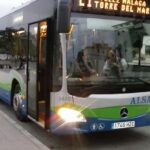
Buses now cheaper between Velez-Malaga and the city. Credit: PorMiPueblo Velez

Residents in Velez-Malaga can now access cheaper travel across the region following the town’s official entry into the Malaga Metropolitan Transport Consortium this May 1. This integration simplifies commutes to Malaga city and surrounding areas while providing big financial relief for frequent passengers.

Huge savings for daily commuters

Commuters travelling between Velez-Malaga and Malaga city will now see fares drop to just 95 cents per journey. Young people under the age of 30 can enjoy even lower rates, with the price fixed at 76 cents. Those heading to Rincon de la Victoria will pay only 71 cents, or 57 cents for youth card holders, such as students.

Switching between different modes of transport, such as buses, the metro, or suburban trains, costs a mere 39 cents within specific time limits. Estimates suggest that regular users, such as commuters, could save over €1,500 every year, a figure that rises to €1,600 for younger residents. Roughly 33,000 people in the local area are expected to benefit from these reduced costs.

Where to buy and top up the Green Card

Twelve authorised sales points across the town now stock the new “Green Card”. These locations are distributed to ensure easy access for residents in various neighbourhoods.

In Velez-Malaga itself, five tobacconists (estancos) provide the service: Avenida Vivar Téllez 81, Calle Aldeodato Altamirano 19, Calle Cristo 58, Calle Reñidero 5, and Pasaje Juan Sebastián Elcano 8C.

Torre del Mar residents can visit four specific sites: Calle San Andrés (Edificio Neptuno 78), Calle Las Yucas 3, Calle Enmedio 24, and Calle del Río 7.

Additional points are available at Carretera de Almería 138 in Benajarafe, Avenida de Andalucía 101 in Caleta de Velez, and Barriada de Lagos 87 in Lagos.

Cards cost between €1.50 and €2.00 to start off with. Credit can then be added in increments of €5, €10, €20, or €30. The system calculates fares based on “jumps” between zones, automatically applying discounts of up to €1.55 depending on the distance travelled.

%

Hand Grenade Explosion In Malmo, Sweden

Published

on

hand-grenade-explosion-in-malmo,-sweden

Controlled explosion on streets of Mälmo. Credit: Viral video on X

Panic gripped Malmö city centre, Sweden, this Friday, May 1, as a live hand grenade was discovered lying in a public outdoor space. Authorities acted rapidly, cordoning off five streets and issuing what they call a “VMA”, or public emergency alert similar to text message alerts, to make sure residents stayed away from windows and balconies. National bomb disposal experts arrived shortly after midday to assess the lethality of the device.

BREAKING:

A hand grenade was found on a busy street in central Malmö, Sweden this afternoon.

A controlled explosion was just carried out on the scene by the authorities 🇸🇪 pic.twitter.com/K79JgYJPWy

— Visegrád 24 (@visegrad24) May 1, 2026

A controlled detonation followed two hours later, with the squad successfully neutralising the threat. Police spokesperson Filip Annas confirmed that preliminary assessments identify the object as a live grenade. Technical investigators remain on-site to determine the intended target and the origin of the weapon. Witnesses reported a heavy police presence near local shops and restaurants, though most cordons have now been lifted. No injuries were reported during the operation.

Why is Sweden facing an explosives crisis?

Criminal networks across Sweden increasingly utilise hand grenades and improvised explosive devices (IEDs) to settle gang disputes. Malmö, in particular, has seen a massive rise in such incidents over recent years, often linked to the illegal arms trade flowing through Europe. These military-grade weapons are frequently smuggled into the country, providing gangs with cheap and terrifying tools for intimidation.

National statistics suggest that Sweden experiences a higher frequency of bombings than almost any other country not currently at war. Government officials are struggling to curb the trend, which sees explosives detonated in residential hallways and public squares. This latest event in Malmö is typical of the volatility within Swedish urban centres. Arguments have been made that until the supply of illegal weaponry is choked off at the borders, the risk of civilian casualties remains a constant worry for the Swedish public. Police continue to investigate this latest incident without any specific suspects currently in custody.

Explosive culture

As of May 1, 2026, the country has already experienced a notable amount of explosive events:

  • Average Rate: Following the trend set in early 2025, where the country saw 27 bombings in the first 27 days, incidents in 2026 have continued to occur at a frequent pace, often averaging nearly one every day or two. Bombings have got to the point in Sweden where explosions are not always mentioned at the top of the news.
  • Comparison to 2025: Last year (2025) was one of the most violent on record, with nearly 200 bombings (reaching up to 317 total “blasts” according to some police data metrics).
  • Explosive centres: Stockholm and Malmö are still the most frequent locations for these incidents. The discovery in Malmö today is part of a persistent wave of violence involving both hand grenades and IEDs.

Continue Reading

%

EU Cars To Get Flashing Brake Lights

Published

on

eu-cars-to-get-flashing-brake-lights

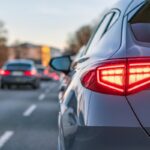
Flashing brake lights will become mandatory in new EU cars from July 2026 Credit : Canetti, Shutterstock

From 7 July 2026, every new car registered in the EU will have to come with a set of built-in safety systems, and one of them is something drivers will spot straight away. When a vehicle brakes sharply, its rear lights will flash quickly instead of staying steady, giving a clearer warning to the car behind.

It sounds like a small change, but it targets a very common type of accident. For drivers in Spain and across Europe, it is likely to become a familiar sight over the next few years as newer cars gradually replace older ones on the road.

And importantly, nothing changes overnight for cars already in use.

Why flashing brake lights are being introduced

Anyone who drives regularly knows how easy it is to misjudge the car in front.

In busy traffic or on fast roads, a standard brake light does not always show how urgent the situation is. A driver might tap the brakes lightly or slam them hard, and from behind, both can look similar at a glance.

That is where flashing lights come in.

When the system detects sudden or heavy braking, the lights blink rapidly to signal that something serious is happening. The idea is simple. Make the warning more obvious, and the driver behind reacts faster.

That extra moment can be enough to avoid a collision or at least reduce the impact.

Rear end crashes remain one of the most common accidents on European roads. Even a small improvement in reaction time can make a difference.

Other safety features arriving at the same time

Flashing brake lights are only one part of a wider set of rules coming into force on the same date.

From July 2026, new vehicles will also need to include:

  • Automatic emergency braking systems that can step in if a crash is likely
  • Lane keeping assistance to help prevent drifting out of lane
  • Warnings for driver fatigue or loss of attention

Intelligent Speed Assistance, which helps drivers stay within speed limits

An event data recorder that stores information in case of an accident. Preparation for alcohol interlock systems, which can stop a car from starting if the driver has been drinking Some of these features already exist in newer models, but they will now become standard rather than optional.

For buyers, it means cars will come with more built in safety as part of the basic package.

What drivers in Spain need to know

One point is worth making clear. These rules apply only to new vehicles registered from July 2026 onwards. If you already own a car, you do not need to change anything.

There is no requirement to retrofit older vehicles or install new systems. The shift will happen gradually as people replace their cars over time.

So if you are driving in Spain today, you will not suddenly see every vehicle with flashing brake lights. It will take a few years before the change becomes widespread.

Will it actually make a difference

That is the question many drivers will ask. On its own, a flashing light does not prevent accidents. But it improves communication between drivers, and that is where its value lies.

Driving is full of small signals. Indicators, brake lights, road markings. They all help drivers understand what others are doing. By making emergency braking more visible, the system aims to reduce confusion in critical moments.

It is not about changing how people drive. It is about giving them clearer information when it matters most.

How driving habits might evolve

At first, seeing flashing brake lights could feel unusual, especially for those who have been driving for years. But like many safety features, it is likely to become normal quite quickly.

Think of how seatbelt alerts or parking sensors were once seen as extras and are now standard.

The same could happen here. Drivers may begin to recognise the difference between a gentle slowdown and a sudden stop more instinctively, simply because the signal is clearer.

For new drivers, it will be part of how they learn from the start.

Part of a broader shift in car safety

These changes are part of a wider effort by the EU to reduce serious accidents and improve road safety. Human error still plays a role in many crashes, whether through distraction, fatigue or delayed reactions.

Technology is increasingly being used to support drivers in those moments. Some systems warn. Others assist. A few can even intervene.

The aim is not to take control away from the driver, but to reduce the chances of something going wrong. Flashing brake lights sit somewhere in the middle. They do not act on behalf of the driver, but they make their actions easier to read.

A change you will start to notice

For now, most drivers will not see any difference.

But from mid 2026 onwards, anyone buying a new car in Spain or elsewhere in the EU will be driving a vehicle with these systems already in place.

And anyone following behind will start to notice something new. A sudden stop will no longer be just a red light. It will flash, and that flash could be the signal that gives you just enough time to react.

Continue Reading

%

Petting Zoo And Family Festival In Estepona

Published

on

petting-zoo-and-family-festival-in-estepona

If you don’t want to fall in love with animals then this is not the festival for you. Hipica Los Limoneros in Estepona is opening its doors and stables to the public on Sunday, May 10 with a full-day fun outdoor festival for all the family. 

Arrival is from 11:30am with a start time of 12pm with a free transfer from Aldi to take you from your car to the venue. A wonderful day is to be had, with full on animal experiences, entertainment, and food. Visitors can enjoy horse and pony rides, a hands-on petting zoo where children can feed and interact with animals, and a range of activities including games, dancing, and a trampoline area and of course a glimpse into their ‘my rabbit’ programme. Food stalls and an artisan market with a generous prize draw with the chance to win rewards such as riding lessons and photo sessions.

The event is free to attend, although advance registration is required due to limited capacity. 

More than your average riding school

Horse riding for all ages from 3 years old with a team of teachers who speak 6 different languages is the main pull for Hipica Los Limonerss. However the venue has expanded into a wider range of fun animal friendly activities. These include a petting zoo experience with mini pigs and little goats, photography sessions against their incredible backdrop and other areas to rent for parties, yoga and masterclasses. 

The cutest programme on the coast

One of the main features for the kids is the ‘My Rabbit’ programme, where your child can choose one from the selection they have, the name plate is put on the hutch and you get a photo in whatsapp every 2 weeks. No cage at home, no smell, just enjoyment. 

The mixture of animals, outdoor space, food and prizes make the Hipica Los Limoneros family festival one for the diary. Details on the shuttle and how to register can be found on their facebook and instagram. 

Continue Reading

Trending

Copyright © 2017 Spanish Property & News