
ElPais
E













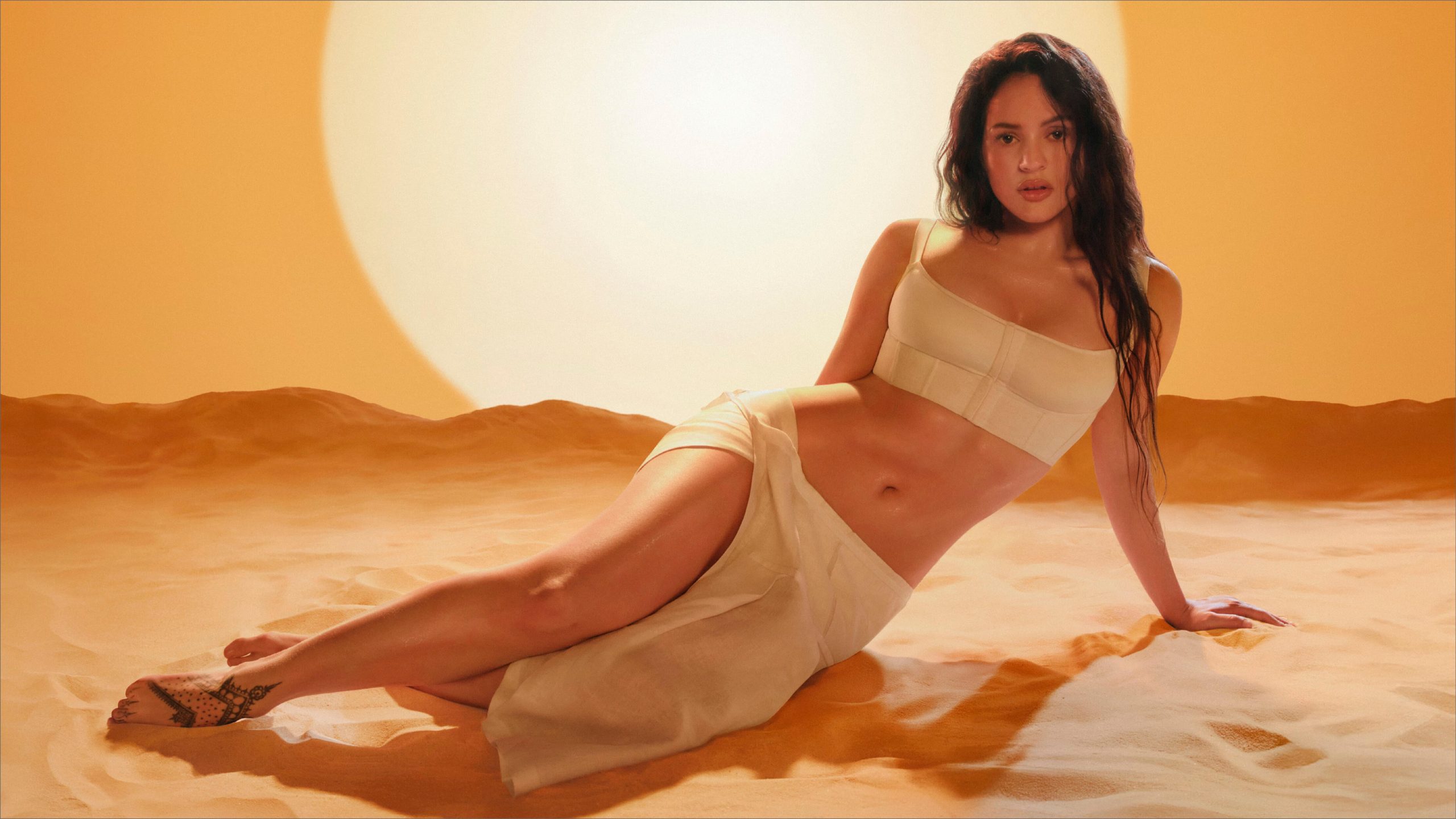
Thirty-three-year-old Rosalía connects and her face appears on the screen. Focused on her Lux Tour, she reflects on the “honor” of being the face of Calvin Klein’s new perfume, Euphoria. The brand first launched its iconic fragrance in 2005. Back then, Natalia Vodianova was photographed by Steven Meisel, the great architect of the unmistakable visual stamp ‘Calvin’ and she became the perfume’s ambassador. Now Rosalía is taking over the role and she does it in her own unique way: she dances sensually in the spot, to the rhythm of her song Dios es un stalker.
Question. What remains of the girl who sang before a small crowd with Raül Refree at the Vida Festival in 2017?
Answer. It is a comforting memory. That was when I was on my first tour with the album Los Angeles. I felt very comfortable playing with Refree. We were very grateful to play at a festival and be able to do our thing. I remember wearing a jumpsuit from a designer friend, María Simón. There is a lot that remains from that period: my tastes, my dreams, my desire to continue making music and to go on stage. This is a different tour, but just as exciting.
Q. How do you feel about being the face of a perfume as iconic as Euphoria by Calvin Klein?
A. Imagine… Calvin Klein is part of the collective imagination. It is an honor to be part of such a campaign. I’m very excited.
Q. When the campaign was being put together, you said that you would wear one of the Euphoria elixirs to go out partying.
A. Yes, it’s the Bold. It’s just that when I wore it I realized that when you come back from a party the fragrance is still there. It’s a strong kind of perfume. But there are also the other two. It is very interesting that there are different options. I respect people who go with just one perfume, but I really like to play with smells. I get up in the morning and depending on the outfit or mood I’ll use this or that.
Q. You also say that you are excited that the campaign will be seen by “your exes.” Is that a joke?
A. You need to be able to joke around and have a sense of humor in life, right?
Q. Of course. Laughter is contagious and I think that you have also dealt with disappointment with humor through music…
A. When it comes to flamenco, if you look closely, tragedy is often sung about and explained from a place of celebration. Comedians also turn things around. It’s very nice to inhabit that space.

Q. Did you expect La perla to connect so much with people?
A. It’s always a surprise. I think the only thing I can do is try to make songs I feel I’ve given my all to and, in the end, if others connect then I’m very grateful. I thought it would take longer for people to get into the album, but people wanted to do their own analysis right away and interpret how it made them feel. That makes me happy. It gives meaning to what I do.
Q. In La perla there is an element of spite, but in other songs on the album, such as Sauvignon blanc, there is a lot of hope…
A. There was that quest. I have tried to build from silence, from contemplation. It is a very personal project. I tried to speak many languages, to learn from other cultures, from other ways of thinking, of living. There is a belief that for creativity and innovation you have to break with things. There’s a lot of love in it for tradition, for the classical, for going back into the past and saying, “Wow, there’s this music that’s amazing, classical music! We are going to give it value, to put it on the table.”

Q. A lot of people can’t get tickets to see you on tour. Did you consider more dates?
A. It’s such a big challenge putting on a show like this… But the truth is that I understand why a lot of people said: “Maybe we should have had more dates.” It is very challenging to be in so many places and be at your best. I hope that life allows me to continue doing many more concerts. Whatever the project is, I am sure that there will be the opportunity to do more performances.
Q. Getting through so many nights in a row on stage is very complicated. How do you do it?
A. You’re right. It’s very demanding physically, emotionally, and psychologically. Preparing for a tour like this requires a lot of discipline, a lot of dedication. You have to sacrifice and commit, and there is really always a search for excellence. But at the same time I believe that by putting love and affection into small things on a daily basis I can give the best of myself. I do pilates, I do dance, and I do a lot of singing.
Q. Do you still do your classes?
A. Yes, I still do the singing and piano lessons. As a person who goes on stage, what I want is for others to arrive, enjoy it, and hopefully feel different from how they arrived, that they can take something away with them… The only way to achieve this is to be as free as possible to be able to transmit emotions.

Q. How has your experience as an actress been in the series Euphoria?
A. It is a very different form of expression, but at the same time it is very connected to my work, which in the end is to talk from a place of emotion. I’m a big fan of the series. I’m really looking forward to seeing how it turned out; I haven’t seen any of it yet. I trust Sam [Levinson] very much and have put myself completely into his hands. I learned a lot from this cast, from watching my friend Alexa Demie act. And watching Zendaya do it was incredible. It has been frankly inspiring.

Sign up for our weekly newsletter to get more English-language news coverage from EL PAÍS USA Edition

E
Hearts of gold: New life-saving defibrillators installed across the Costa del Sol
UK travellers, don’t get caught out – the Spanish airport rules and 100ml confusion
Brussels warns Spain that migrants regularised under controversial scheme will be deported back to Spain if they try to move to other EU countries
Murcia unveils monument marking 175th anniversary of Burial of the Sardine
Easter on the Costa del Sol: a time of renewal


-
eu response to spain migration policy4 weeks ago
Brussels warns Spain that migrants regularised under controversial scheme will be deported back to Spain if they try to move to other EU countries
-
Costa Calida4 weeks ago
Murcia unveils monument marking 175th anniversary of Burial of the Sardine
-
Costa del Sol4 weeks ago
Easter on the Costa del Sol: a time of renewal
-

 Caso Koldo3 weeks ago
Dinero En Efectivo Guardado En Casa Y La Devolución De Los Gastos Del PSOE: La Expareja De Koldo Protagoniza La Cuarta Jornada Por El ‘caso Mascarillas’
-

 Ataque contra Irán3 weeks ago
Última Hora De La Guerra De Estados Unidos E Israel Contra Irán, En Directo | EE UU Asegura Que Dos De Sus Buques Militares Han Cruzado Ormuz Para Desminar El Estrecho E Irán Lo Niega
-
 New Developments4 weeks ago
Inside The Most LUXURIOUS Apartment Building In Spain!
-
 New Developments4 weeks ago
🌅 Stunning Penthouse With Panoramic Sea & Mountain Views Benalmádena
-
Calais4 weeks ago
One dead and 13 injured as train collides with truck in northern France