
Calais
One dead and 13 injured as train collides with truck in northern France

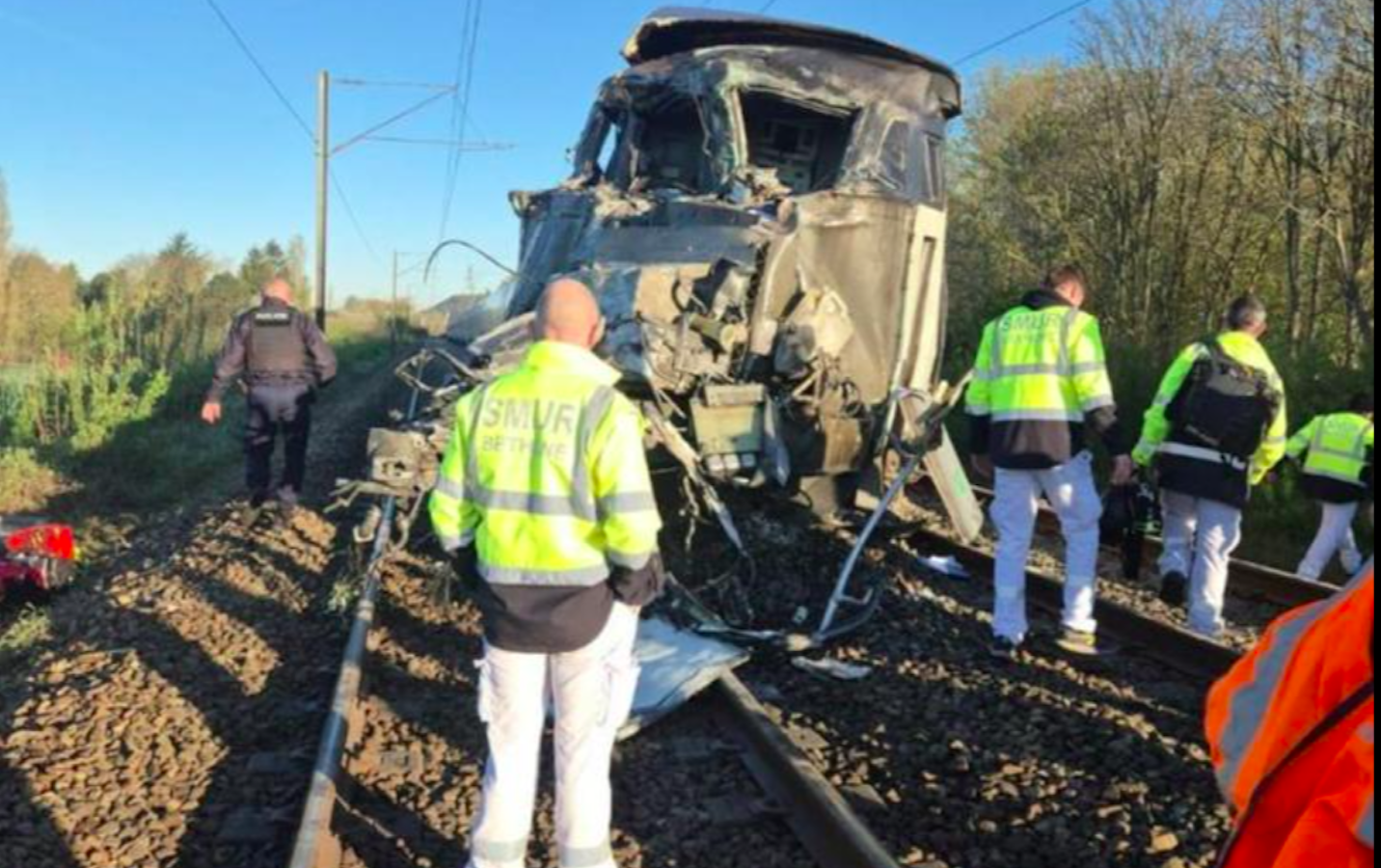
The train was carrying around 246 passengers at the time of the collision. Photo credit: @VilledieuFabien on X
A French high‑speed train collided with a truck at a level crossing in the north of France on the morning of Tuesday 7, killing the train’s driver and injuring several passengers and crew members. The accident occurred shortly after 07:00am local time near Mazingarbe, in the Pas‑de‑Calais region, when a TGV service travelling between Dunkerque and Paris struck the rear of a heavy vehicle crossing its path.
The driver of the TGV, who was in his 50s, died at the scene. Officials confirmed that at least 13 people were injured in the collision, including two in serious condition and others with less severe injuries. Emergency services dispatched teams to the location to treat and transport those affected to nearby hospitals. More than 88 responders were involved in providing medical attention and securing the area following the impact.
The train was carrying around 246 passengers at the time of the collision. After the initial impact, the front of the TGV continued for a short distance before coming to a stop. Railway staff and emergency personnel worked to evacuate the passengers and assess the structural condition of the train and track.
Details of the collision
Authorities said the truck involved was carrying a large piece of military equipment, described as a mobile bridge, and was part of a convoy returning from exercises in Belgium. The driver of the truck was taken into custody by police on suspicion of aggravated involuntary manslaughter while investigations continue. Early indications from officials suggested that the level crossing’s safety barriers were functioning normally at the time of the accident, but investigators are continuing to gather evidence to determine exactly how the collision occurred.
French Transport Minister Philippe Tabarot and the chief executive of SNCF, Jean Castex, travelled to the scene to oversee the response and support emergency teams. They both spoke with local officials and representatives of the rail operator as the investigation progressed.
Immediate response
The collision prompted the immediate suspension of rail services on the affected stretch of track, particularly between the towns of Béthune and Lens. SNCF, the state‑owned national rail company, organised alternative transport for passengers whose journeys were disrupted by the closure. Power was cut to lines in the area while crews inspected and cleared the site. The interruption affected regional rail links and required adjustments to some long‑distance services.
Local fire and rescue teams worked to free passengers and assess injuries, while police set up a perimeter to secure the crossing. Medical personnel treated those with serious injuries at the nearest hospitals, while others received first aid before being transported.
Investigations and safety concerns
Rail safety investigators have been deployed to examine the level crossing and the sequence of events that led to the crash. Officials confirmed that the crossing infrastructure did not show any obvious failures at the time of the incident. They are now reviewing signal operation records, barrier performance data, and the actions of the truck driver in the moments before the collision.
The truck driver remains in police custody as part of the ongoing inquiry. Authorities are assessing whether he failed to obey crossing signals or otherwise misjudged the situation. No formal charges have yet been announced, but prosecutors are examining the possibility of charges related to involuntary manslaughter.
Impact on services and passengers
Passengers on board the train were shaken but most walked away from the scene under their own power once emergency crews cleared the wreckage. Some described the collision as a sudden jolt followed by a brief period of alarm as the train came to a stop and staff instructed them to disembark. Disruption to the rail network is expected to continue for at least several days while track repairs and a safety review are completed. SNCF has advised passengers to check updated schedules before travelling on lines that run through the affected area.
Residents living near the crossing expressed shock at the incident, noting that level crossings are common features of some older rail routes outside urban centres. Many called for a review of safety measures at such intersections, particularly where high‑speed trains share tracks with conventional lines that feature grade crossings.
Wider context
Collisions between trains and road vehicles remain rare in France, particularly involving high‑speed services such as the TGV. The national rail network includes both dedicated high‑speed lines and sections where TGV trains operate on conventional tracks, which can include level crossings similar to the one involved in this accident.
Officials have said they will work swiftly to address immediate safety concerns and to support families of those affected by the collision, while the formal investigation proceeds over the coming weeks.






Costa Del Sol Schoolboy Wows Britain’s Got Talent Judges

British Woman Stranded In Spain After Dual Passport Rule Shock

Spain Hits Record 3.15m Foreign Registered Workers


-

 New Developments2 weeks ago
Luxury Villas For Sale, Estepona – ProjectL1
-

 New Developments4 weeks ago
How To Get A Tourist Rental Licence In Andalusia (Spain) – Step-By-Step Guide 2025
-

 New Developments2 weeks ago
Stylish 3-Bedroom Apartment With Panoramic Sea Views – Benalmádena
-

 Uncategorized4 weeks ago
Max Verstappen left laughing after Nurburgring triumph
-

 %2 weeks ago
Poland Disconnects Utilities At Russian Consulate That Moscow Refuses To Hand Over
-

 Uncategorized3 weeks ago
Lewis Hamilton goes from Karate Kid to Samurai Warrior with Kill Bill guru
-

 Uncategorized4 weeks ago
Max Verstappen team-mate sheds light on Nurburgring mistake
-

 Foreign demand4 weeks ago
Non-Resident Foreign Buyers Retreat Sharply In 2025