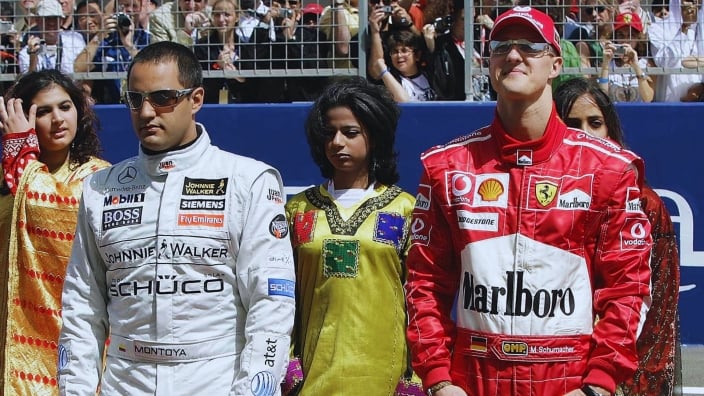
The legendary German racer picked up five of his seven drivers’ titles whilst racing with the Maranello-based squad, who operated under the watchful eye of Ross Brawn during the 2000s.
The Brit followed Schumacher to Ferrari from Benetton in the late 1990s and took up an instrumental role as technical director.
He is now best known for being the mastermind behind the dream team, which consisted of he and Schumacher, as well as Jean Todt and Rory Byrne. Together, they achieved six consecutive constructors’ championships and five back-to-back titles between 1999 and 2004.
Few drivers were willing to challenge Schumacher at the wheel of a Ferrari during that time, but Montoya was always credited for his fearless approach to on-track battles him.
But it turns out it was the German who kept Montoya from ever making a move to Ferrari.
Speaking in a recent episode of the BBC’s F1 Chequered Flag Podcast after the Miami GP, Montoya said: “The crazy thing is when I was in F1, I looked at Ferrari and I never looked at it that way,” referring to the allure that seems to attract so many drivers to the Italian team despite them not winning a title of any kind since 2008.
The Colombian driver-turned-pundit then revealed that Brawn had even gone as far as to extend an offer for him to switch over to Ferrari during his career, but that he had turned it down instantly for one reason.
When asked by 1996 champion Damon Hill why he never felt the pull from Ferrari, Montoya explained: “I don’t know. Ross Brawn once came to me and said, ‘We would love if you ever race for us.’ And I said, ‘No, thank you.’ In hindsight, I go, ‘Oh my god, that was crazy.’
“I remember I came to the Williams meeting, I mean, after the race in Monza, and I told my engineer, [they] said, ‘How was it?’ I said, ‘Well, Ross Brown just said I should go to Ferrari.’ And [they] said, ‘What do you say?’ I said, ‘No, thank you.’ And they all looked at me like, ‘Oh my god, you’re crazy.'”
Montoya was then asked by commentator and co-host Harry Benjamin: “And you don’t regret that?”
To which the former McLaren star replied: “No, I didn’t want to have Michael as a team-mate because I didn’t want to be a second-tier driver.”
Though Montoya’s decline of Brawn’s offer appeared to shock many in F1 at the time, he is far from the only driver to admit that playing second fiddle to Schumacher offered little to no incentive to switch to the Scuderia.
Montoya later added that the driver politics in play at Ferrari have made it hard for many stars of the sport to perform within their ranks, suggesting it was time for a change in operations.
“The hard thing, and I think it’s getting a little better, is the amount of politics that are going on,” the 50-year-old said.
“It’s really hard to perform there when there’s so many opinions and so many layers. You know what I mean? I think nowadays big companies have so many layers of opinions and sometimes [to] simplify things makes a big difference.”
Ferrari had a five-week break to try and build on what had been a positive start to the season, with the team having claimed podiums in each of the first three grands prix of the season.
But they only took 22 points from Miami, their lowest total at a grand prix weekend of the season despite there being more points available at the sprint race weekend.
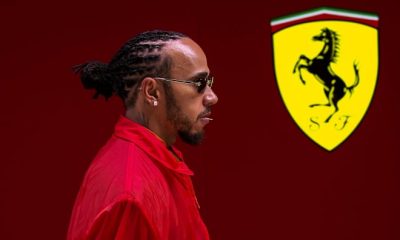
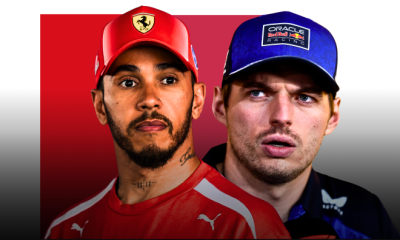
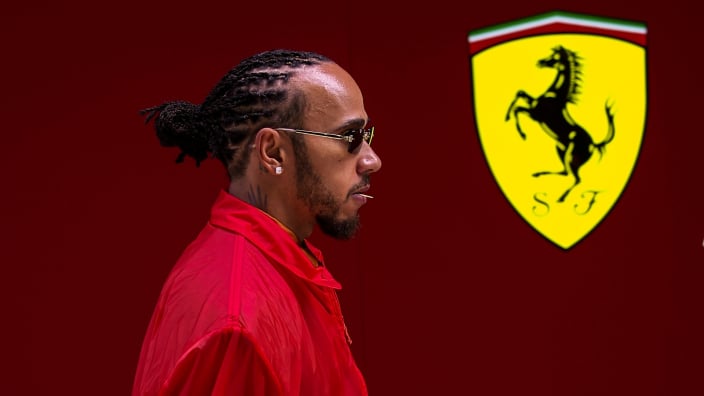
Now, Hamilton has slammed the simulator that he uses back in Maranello, claiming that the work that he did on that during the five-week break was irrelevant once the car actually got out onto the track on Friday.
“I’m going to have a different approach in the next race because the way we’re preparing at the moment is not helping and so we’ll see how that goes for the next race,” Hamilton told media in Miami. “But we’re going to another track with long straights. We’re losing three to four tenths just on straight line speed. So that’s there, and it’s going to be there until we fix it.”
Talking about his simulator work, Hamilton continued: “Ultimately, it’s always correlation. We go on it and then we get to a track and it’s always different when we get to a track. What I mean by it is that I spend time on the simulator. I don’t like simulators in general, but I sat in the simulator every week in the build-up to this race and working on correlation constantly.
“You go on it, you prepare for the track, you drive it and you get the car set up to a certain place and then you come to the track and that set up doesn’t work.”
Hamilton searching for first Ferrari grand prix win
There was real hope at Ferrari that their multitude of upgrades would turn them into championship challengers.
But, as a result of other teams’ improvements, Ferrari have actually appeared to have gone backwards, no longer the outright second-fastest team on the grid.
McLaren and Red Bull – mainly Max Verstappen – were providing a real challenge to Ferrari throughout the weekend, while Mercedes remain the outfit to beat.
It means that the illusive first grand prix win in Ferrari red feels further away from Hamilton now than it did at the start of the year, and he will need to be outperforming team-mate Charles Leclerc consistently if he has any chance of getting in the mix for race wins.
Back to the drawing board for Ferrari and, it seems, Hamilton.
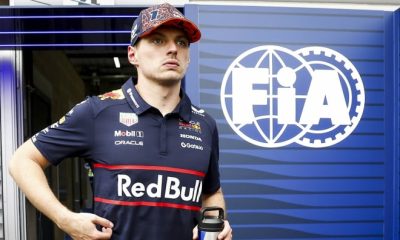
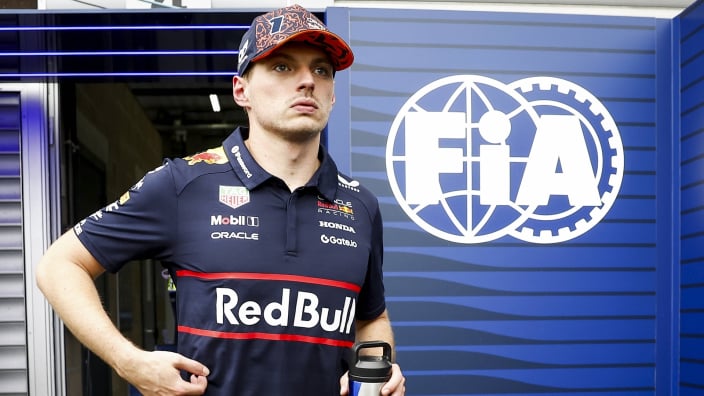
Max Verstappen has been handed a post-race penalty following the conclusion of the F1 Miami Grand Prix.
The Dutchman was noted during the race for potentially crossing the white line on pit exit, but stewards chose to investigate the incident after the race. They have now done that, and handed Verstappen the infraction’s standard five-second penalty.
That would have been enough to knock the Red Bull star down from fifth to sixth in the final classification, had Charles Leclerc behind him not also picked up a penalty – that one for leaving the track and gaining an advantage multiple times as he limped home in a broken Ferrari.
Leclerc’s penalty means Verstappen holds onto his position, which he only picked up in the first place thanks to the Ferrari driver’s substantial drop in pace after his last-lap crash.
Verstappen should be breathing a sigh of relief that his lapse didn’t cost him a position, with the fact that he was stopping (and emerging) under safety car conditions making it somehow more baffling that he managed to breach a basic rule.
The FIA decision document confirmed the decision, and also explained why a theoretically cut-and-dried decision needed to be investigated post-race, rather than a decision being made and announced mid-race.
It read: “The Stewards heard from the driver of Car 3 (Max Verstappen), team representative and reviewed, video and in-car video evidence.
“When the incident occurred there was limited video evidence to make a clear decision on whether an infringement had occurred. We therefore decided to investigate the incident after the race, to see if we could get better video evidence of the incident in the meantime, perhaps from other angles. We were able to do so.
“The new angles did show more views of the pit exit line and the incident in question. The driver of Car 3 explained that he was driving out of the pit exit and rejoined the race under full course yellow.
“The Stewards determined that the outside of the front left-hand tyre did cross the outside of the solid white pit exit line in violation of Appendix L, Chapter IV Article 6 c) of the International Sporting Code. Given the nature of the infraction the Stewards elected to impose a penalty of 5 seconds.”
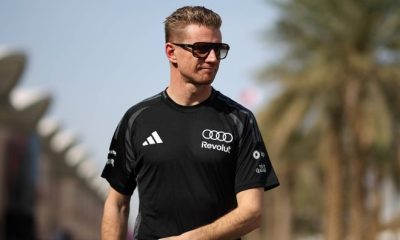
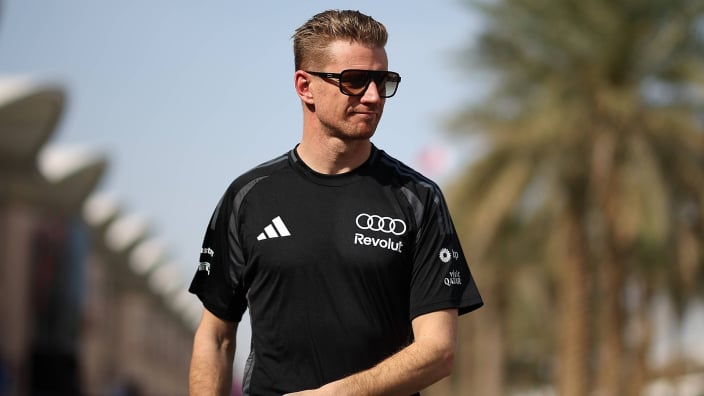
He was able to bring his car to a stop at the side of the circuit, where marshals extinguished the flames, but Hulkenberg’s participation in the sprint race was confirmed to be over by Audi racing director Allan McNish, while his participation in grand prix qualifying later on Saturday was also in doubt.
“We had something in the garage which we thought was sorted out, but clearly there was a problem going to the grid, and we need to get the car back to have a look at it,” McNish confirmed to Sky Sports F1’s Ted Kravitz, before Kravitz then asked about qualifying.
“We need to get it back before we can really see,” McNish replied.
It meant that Audi had just one car taking to the grid for the start of the Miami GP sprint race, with Gabriel Bortoleto their only hope of scoring points, starting the race from 11th with eighth place good enough for points in a sprint race.
After the sprint race action, there will be around three hours before attentions switch to the grand prix, with grand prix qualifying taking place at 4pm local time on Saturday.
It will be a race against time for Audi to figure out what’s wrong with Hulkenberg’s car and fix it before Q1 is over.
If a completely new power unit is needed, then that is unlikely to be fixed in time, but if it’s something more simple, then Audi may just manage to get the German out there.
Audi are in a fortunate position in 2026 in that it’s highly likely that four of the six Q1 exit spots will be taken by the two Cadillac cars and the two Aston Martins, meaning just one lap from Hulkenberg could be enough to get into Q2 and a half-decent grid position for Sunday’s race.
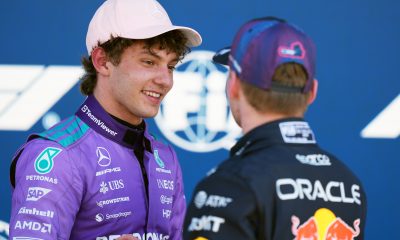
As for the sprint race, there was an empty grid slot where Hulkenberg’s Audi should have been, a bonus for the likes of Oliver Bearman and Carlos Sainz who qualified directly behind him.