
Cuba
Rubén Gallego, Democratic Senator: ‘Marco Rubio Is Obsessed With Cuba, But It Is Not A Threat To The US’

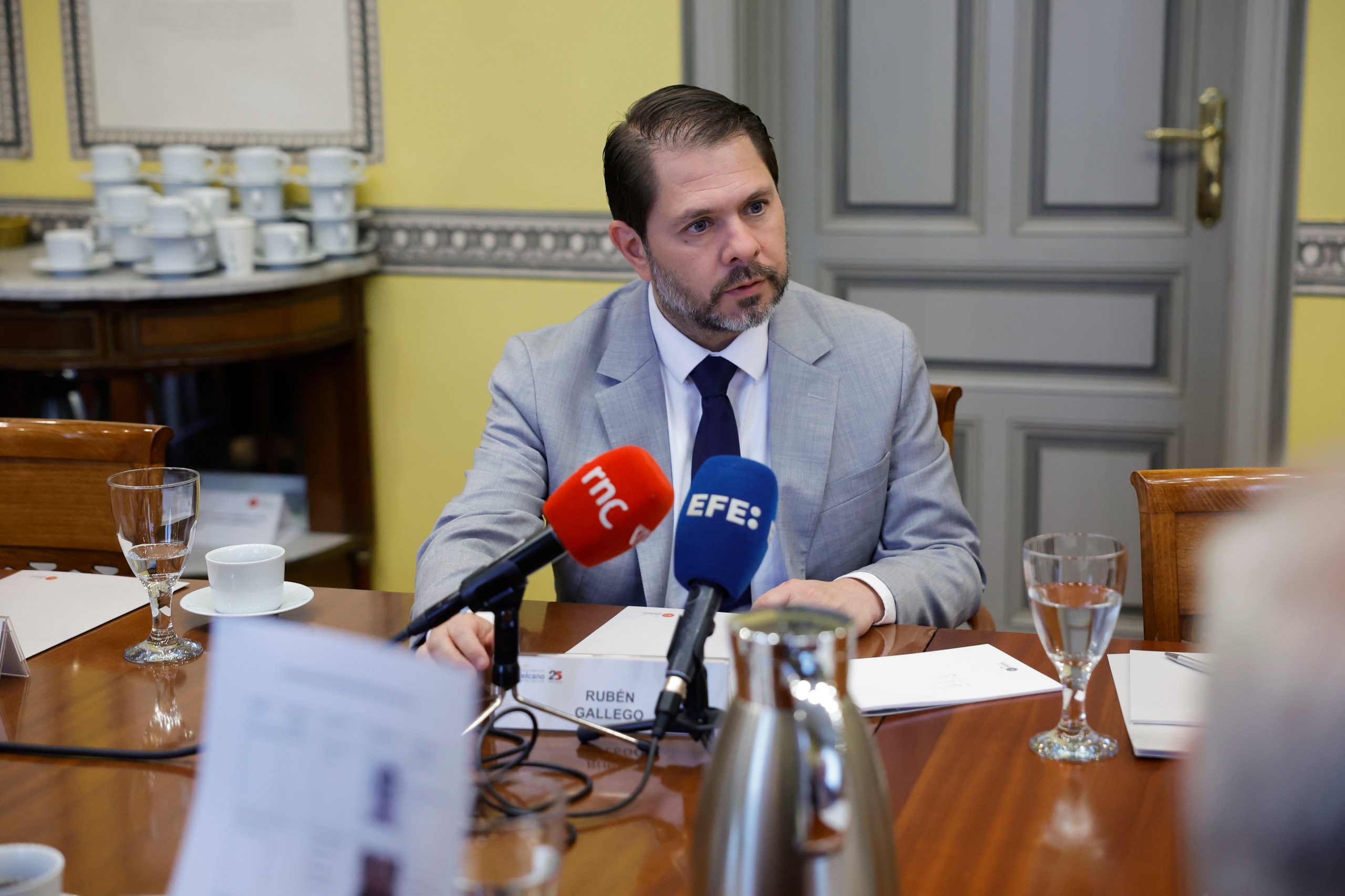
U.S. Senator Rubén Gallego, an emerging figure in the Democratic Party, says it is highly likely the Donald Trump administration will opt for a new military intervention to force a regime change in Cuba. “Cubans in Florida have a lot of power and the State Secretary, Marco Rubio, is obsessed with the island,” he told reporters on Friday at the Real Instituto Elcano think tank headquarters in Madrid. “But I don’t believe Cuba is a threat to the U.S.; it’s a very poor country of nine million inhabitants,” he added.
The Arizona representative criticized the White House’s strategy of turning to military force to pursue political change in Latin America. “The United States should not start wars to overthrow governments, and I think practically 99% of Democrats holding public office are against this war,” Gallego said. In March, the senator introduced a bill in the upper chamber, where his party does not hold a majority, to prevent Trump from launching an operation similar to the one in Venezuela without congressional authorization.

Gallego, a former Marine and an Iraq War veteran, said that although the operation to capture Nicolás Maduro in January was militarily effective, the political results have not met expectations. “What have we changed in Venezuela? We went from one dictator to another, so from a geopolitical standpoint it has been a failure and will continue to be a failure until Venezuela smoothly transitions to democracy,” he added. “Maduro is a horrible person, a corrupt one,” he said, “but that does not give us license to overthrow these governments.”
The senator predicts that the mismanagement of the war with Iran, increasingly unpopular with American voters, will hurt the Trump administration and the Republican Party in the midterm elections this November. All seats in the House of Representatives and one-third of the Senate will be up for election, and the forecast is that the Republican majority, at least in the House, is at risk. Gallego is optimistic and said it is very likely his party could even gain control of the upper chamber.
“The war is a problem for voters,” he said, referring to the widespread rejection of a conflict that has become a political liability for the White House and to the economic impact of the military campaign. “It is distracting the government from the things Americans care about; everything is very expensive in the United States right now,” he added.
Winning back the Latino vote
Although Latinos have historically leaned Democratic, the 2024 presidential election reversed that trend and Trump won the support of a majority of Hispanic men. Now, a poll from UnidosUS released this week indicates that one in four Latinos regrets having voted for the Republican.
Born to a Mexican father and a Colombian mother, Gallego acknowledged that his party fell short two years ago in persuading Latino voters. In 2024, the senator carried a 22-point advantage among Arizona Hispanic voters over his Republican rival, a margin greater than the one the Democratic presidential candidate, Kamala Harris, achieved in the state among members of that community. “We talked about what mattered to people, which were two things: the economy and immigration,” he said of his campaign.
“We need to stop seeing Latinos as we would like them to be and see them as they are,” he said. “Many on the left in the Democratic Party would like them to be more liberal on issues like immigration because they are children of migrants,” he argued. “But my own family told me the border was out of control and that the president had to do something to change that. Those who understood that did well. Those who didn’t ended up losing.”
Although many hopefuls have raised their hands two years before the presidential race, it remains unclear who among the Democrats will step forward after recent electoral setbacks. Gallego, whose name has circulated widely among potential candidates, said there are many strong profiles in the party, though he would not say who, in his view, would be the right contender for the White House. He also declined to say whether he is interested in running himself, or what his plans for 2028 might be. “We have to think first about 2026 and then we’ll see; besides, I have three children,” he said with a laugh.
Sign up for our weekly newsletter to get more English-language news coverage from EL PAÍS USA Edition








Cuba
José Javier Rodríguez, The Cuban‑American Democrat Seeking To Rescue The Florida Attorney General’s Office From Trumpism

Cuba
Mistrust Between The Cuban Exile Community And The Island’s Internal Opposition Complicates A Post‑Castro Transition

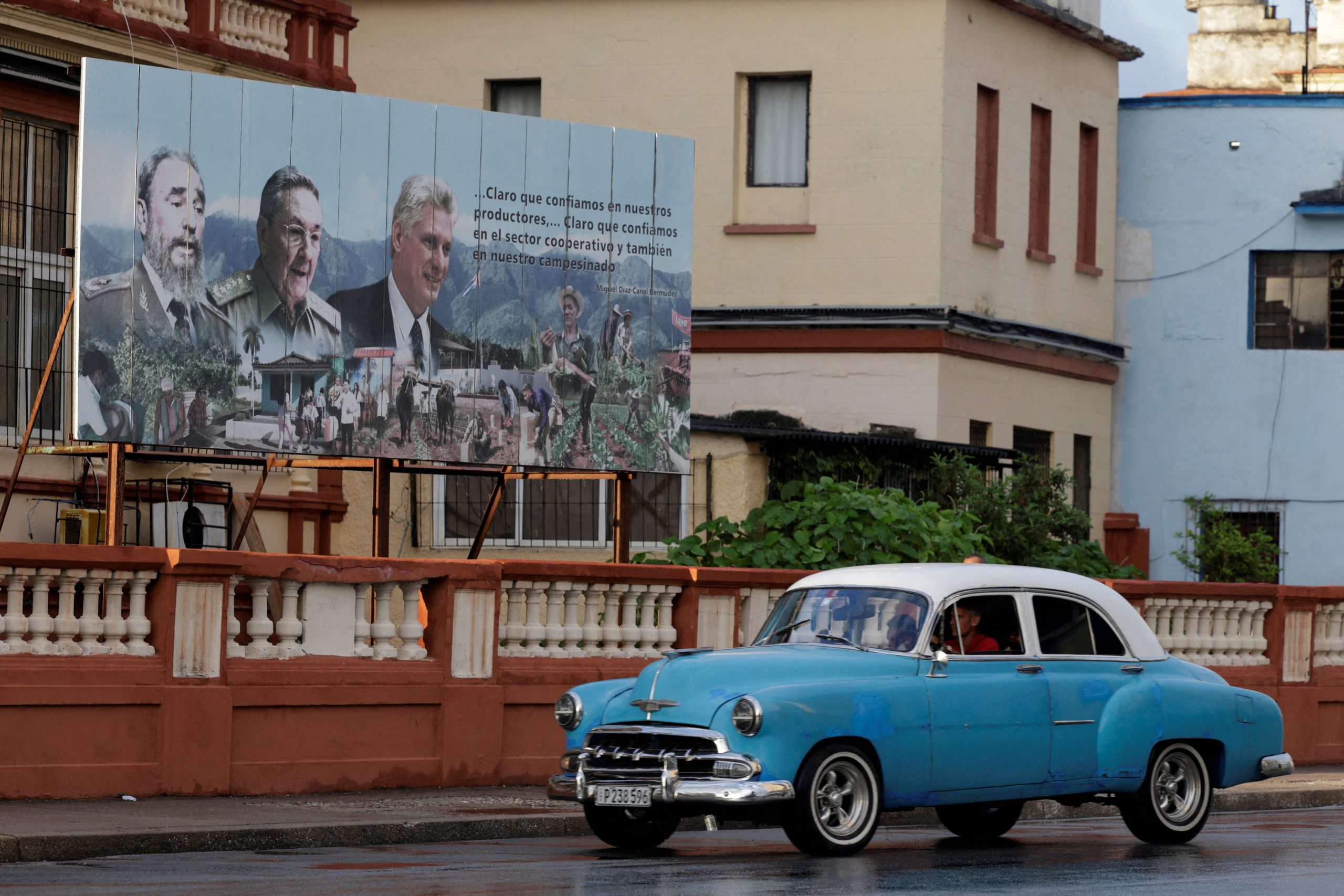
The Cuban dissident Oswaldo Payá used to say that he lived in the crossfire. In May 2002, he achieved the milestone of delivering more than 11,000 signatures to Cuba’s Parliament. The petition demanded a referendum to democratize the island.
The overwhelming popular support garnered by the so-called Varela Project unsettled Havana: it forced Fidel Castro to add, in haste, a clause to the Constitution that made socialism irrevocable. But while Payá challenged Castroism from within — like few others — by using its own rules, he was bombarded with criticism on Miami radio stations for “legitimizing” the system.
Washington’s pressure campaign — and its hints at possible military intervention in the Caribbean nation, which have grown louder since the indictment of Raúl Castro — finds the Cuban anti‑revolution dissidence in its usual state: fragmented, lacking clear leadership and, above all, without a plan that has the approval of the vast spectrum of opinions within the opposition. The maximalist positions of part of the exile community and their open calls for invasion clash with the more centrist proposals of historic figures on the island who advocate a negotiated transition with the Castro regime.
These starkly contrasting views are nothing new. It’s no coincidence that many Cubans — with their characteristic humor — made jokes during the Special Period (the severe crisis caused by the collapse of the Soviet bloc in the 1990s), with the phrase, “This [system] won’t fall, because there’s no one to lift it.”
This fratricidal infighting makes the task of governing the island — should a regime that has ruled it with an iron fist for the past 67 years finally fall — an enormous challenge. Added to this are the chronic ills of an economy in freefall. Cuba’s former engines — tourism, sugar, and tobacco — are in shambles, while the population is the oldest on the continent. There’s been a cumulative drop of 15% in gross domestic product (GDP) since the pandemic.
The example of Payá — who died in a traffic accident in 2012 — is one of many that reflect these historical divisions. For Manuel Cuesta Morúa, director of the Council for Democratic Transition in Cuba (CTDC), one of the main dissident organizations on the island, these divisions are part of a historical problem on the island, one that predates even the 1959 Cuban Revolution.
However, Morúa argues that the regime has also played its part: it has destroyed civil society — the only legal organizations exist within the official sphere of influence — and cultivated a political culture that defines everything in terms of friends and enemies.
“Since the triumph of the revolution, there’s been a process of political destruction and the erosion of the meaning of politics,· says the leftist opposition figure, in a telephone interview with EL PAÍS. “The culture of intransigence has prevailed over the culture of realism, as well as over a politics that encourages centrism.”
Berta Soler agrees with this. She’s the leader of the Damas de Blanco (Ladies in White), a group formed in the 2000s by relatives of political prisoners who were jailed during the wave of repression known as the Black Spring.
“Of course, it’s been very difficult to forge a common path between dissents inside and outside Cuba, because the Cuban regime has been responsible for severing that line, either by imprisoning or harassing activists,” she says. However, she also acknowledges that, “in reality, not everyone thinks the same way.”
Espionage and radicalism
Another reason for the internal strife is the government’s vast counterintelligence apparatus. There’s the G2, a unit made up of agents who infiltrate dissident groups by posing as radical anti-communists. And then, there are the Committees for the Defense of the Revolution (CDRs), with representatives of the single-party state residing in every neighborhood of the country. The organization’s anthem has a clear message: “On every block a committee / in every neighborhood a revolution.” This perpetual state of surveillance has made suspicion the norm. Accusations like “He’s from the G2,” or “That so-called ‘opposition member’ has never been to jail” are commonly heard in Cuba.
The differences have also been shaped by geography, especially by the influence of right-leaning exiled groups in Florida. The Cuban lobby — typically linked to the Republican Party — is one of the most influential and best-funded in Washington. Secretary of State Marco Rubio emerged from within this sphere, which tends to hold the most radical positions.

Before going into exile in Miami last October, José Daniel Ferrer — the historic leader of the outlawed Patriotic Union of Cuba (UNPACU) — also fell victim to the crossfire. The Christian Democrat was targeted by several Cuban-American groups because, during an interview with an independent media outlet, he expressed support for a reconciliation process with the government, should the ruling Communist Party (PCC) yield to pressure and agree to a transition toward democracy.
This controversy is similar to the one faced in 2023 by activist Carolina Barrero. Back in 2020, when she participated in the artists’ encampment outside the Ministry of Culture (known as the 27N protests, referring to the 27 of November), she stated: “Nothing can damage the regime’s standing with the international community more than acknowledging that it has a domestic opposition that identifies as leftist and is against the dictatorship.”
The generational shift
The dynamics of dissent shifted with the arrival of mobile internet in 2018. A generation of young people — many of them artists and intellectuals, like Barrero — entered the scene. This generational shift culminated in the massive protests of July 11, 2021, which resulted in more than 1,000 political prisoners and many leading opposition figures going into exile. The specter of divisions returned. The differences became more apparent on social issues, such as LGBTQ+ rights.
Maykel González Vivero, an independent journalist and queer activist, experienced these disputes firsthand during the debate and approval of same-sex marriage on the island in 2022. “When we started promoting LGBTQ+ rights, we had the support of the opposition, including the right-wing [factions]. [But] when the Cuban government decided to legislate in favor [of these minorities], Miami — and the opposition in general — stopped supporting us,” he recalls.
But that’s not all. Vivero says that other taboos make it very difficult for the two extremes to find common ground. For instance, in the case of the sanctions against the island, the most hardline government supporters claim that they’re the main cause of the crisis, while the hardline opposition denies that the embargo affects the Cuban population.
“We’re seeing it right now. Cubans are suffering from fuel shortages. The entire opposition supports it. And they’re turning us into the ‘collateral damage’ of their political dream. Every so often, someone appears on my social media [feed] — from both the government and the opposition — asking me to take a stand,” he adds.
A recent Miami Herald poll illustrates Vivero’s point. According to the survey results, nearly eight out of 10 Cuban-Americans in South Florida would support a military intervention on the island.

Different transition plans
Now living in the United States, Ferrer is optimistic. In a call with EL PAÍS, the opposition leader highlights the signing of a transition agreement between the Cuban Resistance Assembly (ARC) and the Steps for Change coalition. The document, signed in the first week of March, contemplates the “dismantling” of the PCC, demilitarization, the “eradication” of communist doctrine, and the creation of a provisional government.
For Orlando Gutiérrez-Boronat, leader of the ARC, dialogue with the Cuban authorities “would be a waste of time” if regime change doesn’t occur first. In a telephone interview this past March, the veteran exile leader argued that his organization maintains “fluid communication” with the Trump administration. When asked whether the State Department — headed by Marco Rubio — had consulted him to outline a post-Castro roadmap, he simply replied: “I don’t want to reveal anything confidential. Communication is fluid.”
Cuesta Morúa and the CTDC didn’t sign the Miami accord. The platform he leads has opted for its own path, which involves a negotiated solution. “[Unlike the U.S.], within Cuba, there’s more belief in a negotiated solution. The transition has to take place among Cubans. It’s important to appeal to rationality. Transitions are successful when part of the elite in power acknowledges their necessity.”
Ferrer, on the other hand, rejects that idea outright. “I’ll believe in that option when those who defend it are at the forefront of actions against the regime. When I see them in prison. [Their] position is that of a lukewarm opposition… it’s a very romantic idea, but reality prevails,” he criticizes.
Washington’s tightening pressure is increasingly evident — and so are the divisions within the Cuban dissident movement.
Sign up for our weekly newsletter to get more English-language news coverage from EL PAÍS USA Edition
Cuba
US Supreme Court Paves Way For Companies Affected By Fidel Castro’s Expropriations To Seek Compensation From Cuba

The justices ruled in favor of Havana Docks Corporation receiving compensation after the nationalization of its docks in 1960

A new twist in the tensions between the United States and Cuba. The U.S. Supreme Court ruled on Thursday in favor of a U.S. company whose docks were confiscated by the Castro regime in 1960 after Fidel Castro came to power. The court’s decision — in a case openly supported by U.S. President Donald Trump — opens the door to future claims by other U.S. firms and citizens affected during the wave of expropriations carried out in the early years of the Cuban Revolution.
The ruling passed by a vote of eight to one. The company in question is Havana Docks Corporation. The decision comes amid the White House’s campaign to pressure Cuba, which is gripped by a severe economic and humanitarian crisis. It also comes one day after the U.S. Department of Justice indicted former president Raúl Castro (2008–2018) for his alleged role in the 1996 downing of two planes belonging to the Brothers to the Rescue organization, in which four people were killed.
This is a breaking story. Please refresh your browser for more updates.
Archived In

The Rising Cost Of Finding Love

Luxury Villas For Sale, Estepona – ProjectL1

E


-
blackout April 20253 weeks ago
Insurance company Mapfre decides to pay out €14 million compensation for 2025 blackout
-
 Foreign demand3 weeks ago
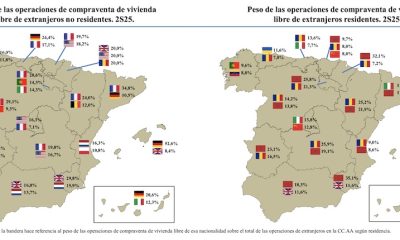
Who Bought Where In The Second Half Of 2025?
-

 New Developments4 weeks ago
Stylish 3-Bedroom Apartment With Panoramic Sea Views – Benalmádena
-

 New Developments3 weeks ago
Inside The Most LUXURIOUS Apartment Building In Spain!
-
Costa Blanca South3 weeks ago
Alicante police chief to retire after 17 years of service
-

 New Developments3 weeks ago
🌅 Stunning Penthouse With Panoramic Sea & Mountain Views Benalmádena
-
6 drink rule.4 weeks ago
Spain’s 6 drink rule remains in 2026, tourists face tougher crackdowns and fines up to €3,000
-
biggest ever cocaine bust4 weeks ago
Spain’s biggest-ever cocaine bust – massive Atlantic seizure stuns authorities