Connect with us

Cuba

José Javier Rodríguez, The Cuban‑American Democrat Seeking To Rescue The Florida Attorney General’s Office From Trumpism

Published

on

jose-javier-rodriguez,-the-cuban‑american-democrat-seeking-to-rescue-the-florida-attorney-general’s-office-from-trumpism

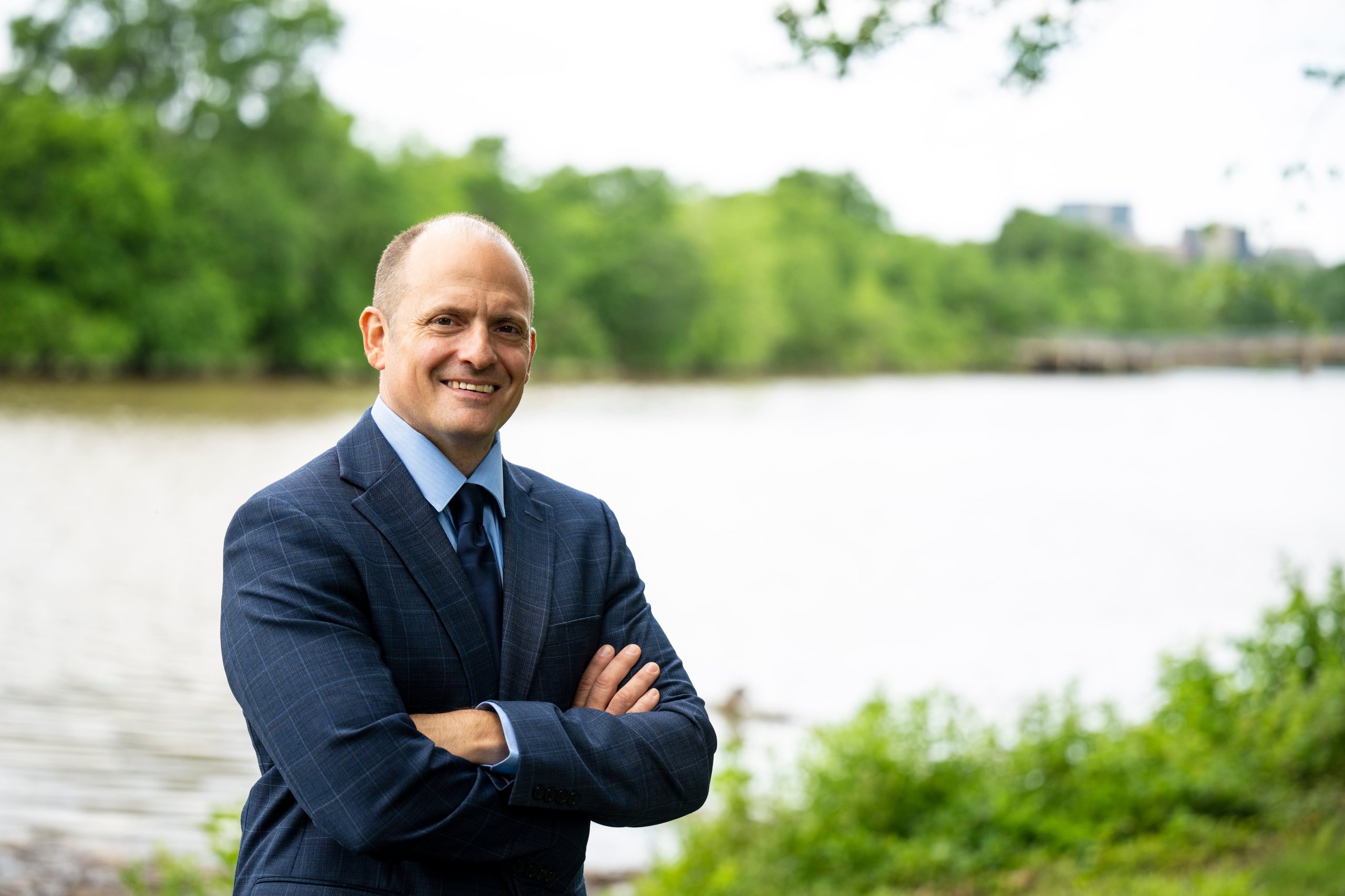
José Javier Rodríguez, the Democratic candidate for Florida attorney general, does not want the page turned on the notorious immigrant detention site Alligator Alcatraz, west of Miami, which has become a symbol of the “cruelty” of the Donald Trump administration. If he wins the November election, the 47-year-old Cuban American says he will investigate how Republican Governor Ron DeSantis’ administration established the facility as a “political theater for consumption in Washington.”

“We’re not going to let that be forgotten,” even if the facility closes next month as expected, Rodríguez says in his Coral Gables office, an affluent, Mediterranean‑style city southwest of Miami. He says DeSantis wanted a boost from Trump and used an “absurd” justification to sign an emergency executive order that “seized local government land, bypassed the legislature and grabbed $500 million that was meant for disaster preparedness” to build the facility.

“Cruelty was the point — to attract attention with a cruel project that would show they didn’t care about basic human treatment or the law, that they would do whatever they wanted,” he adds.

His Republican opponent is James Uthmeier, a former chief of staff and head of DeSantis’ presidential campaign, who was appointed attorney general by the governor last year to replace Ashley Moody after she moved to the Senate to take the seat of now‑Secretary of State Marco Rubio.

In Florida — a Republican‑run state that has been at the forefront of Trump’s anti‑immigrant offensive — the attorney general’s office has become an extension of the governor’s political arm, Rodríguez says. He aims to reclaim the office as an institutional check that protects the public interest.

A lawyer by trade, Rodríguez served as a state representative from 2012 to 2016. He was later elected state senator (2018–2020) for District 37, which covers part of Miami‑Dade County, and served as deputy labor secretary in the Joe Biden administration. Last week he received endorsements from SAVE, one of the oldest and most influential LGBTQ+ organizations in South Florida, and from Service Employees International Union (SEIU) Florida, one of the country’s largest unions. The other Democrat in the race is Jim Lewis, an attorney and former state prosecutor, whom Rodríguez will face in the August primary.

The state attorney general is the chief legal officer of a state and is elected by popular vote independently of the governor. The office legally represents the state government, but it also wields broad powers to investigate corruption cases, sue companies and public agencies, and challenge federal policies in court.

State attorneys general under Trump

Rodríguez’s campaign centers on what role the state attorney general should play under Trump. In recent months, attorneys general in several states have taken leading roles in legal battles against the Trump administration. “Groups of state attorneys general are slowing down Trump’s agenda when it has gone beyond the law,” Rodríguez says, citing as examples deployments of the National Guard to Democratic‑run cities, immigration raids, and attempts to cut food‑stamp benefits (SNAP) without congressional approval. “The attorney general is not the government’s lawyer, but the people’s lawyer,” he sums up.

His campaign directly targets Uthmeier, who has led some of the state’s most aggressive initiatives against immigrants. The attorney general has promoted highly symbolic projects for Trumpism — such as a Trump presidential library in Miami — ordered the removal of LGBTQ+ symbols from public buildings and pressured local officials to expand 287(g) agreements to cooperate with federal immigration agencies. Uthmeier was also one of the main architects and promoters of Alligator Alcatraz.

“What we have is an attorney general who wants to make political theater out of everything, instead of focusing on public safety,” Rodríguez says, adding that many local governments in Florida have been pressured to sign 287(g) agreements. “As attorney general, it’s about enforcing the law, not exercising power. But [in Florida] they’re exercising power. What they want is to create conflict and generate headlines,” he adds.

Rodríguez’s message also reflects an effort by some Cuban American Democrats to offer an alternative to Trumpism without abandoning border‑security rhetoric. While he acknowledges that many voted for tougher border control, he insists that does not justify due‑process violations or indiscriminate attacks on immigrants “who do not pose a danger.”

Trump’s immigration policy has been “terrible,” he says, “a breakdown” that violates basic rights. “Enforcing the law includes ensuring that individuals’ rights and due process are respected. That is the law too,” he says.

On foreign policy, Rodríguez distances himself from both Barack Obama’s opening to Cuba and Trump’s strategy. He says the Democratic administration prioritized economic ties without securing political progress, but argues the current government also lacks a clear plan toward Cuba or Venezuela.

His campaign also focuses on corruption in Tallahassee, the state capital and seat of Florida’s legislature. Rodríguez was one of the politicians affected in 2020 by what became known as the “ghost candidates” scandal, when independent candidates with almost no campaigns were recruited to siphon votes from Democrats in South Florida. Rodríguez lost his Miami‑Dade seat by just 32 votes to Republican Ileana García, while a non‑party candidate — also surnamed Rodríguez — received thousands of votes. Subsequent investigations linked the operation to Republican consultants, and former Republican state senator Frank Artiles was convicted of paying one of the candidates to run. Rodríguez says the incident exemplifies how certain interests operate in the state without real oversight. He also criticizes the closeness between the state government and private companies.

The candidate returns to Alligator Alcatraz, which was erected in just eight days. “It was very obvious they had planned it in secret for months, because it wasn’t possible to sign all those million‑dollar contracts in three days without bidding. At the time I said: ‘In the coming months we will learn that all these contracts are linked to the governor and the attorney general.’ But you didn’t have to wait months — it was days,” he says, referring to reports in the Miami Herald and other outlets that revealed several companies with contracts were linked to DeSantis donors and political allies.

“There’s a lot of corruption. And for a long time Florida hasn’t had an attorney general who actually exercises the office,” he says. “What I’m asking people for is imagination.”

Sign up for our weekly newsletter to get more English-language news coverage from EL PAÍS USA Edition

Continue Reading
Click to comment

Leave a Reply

Your email address will not be published.

Cuba

Mistrust Between The Cuban Exile Community And The Island’s Internal Opposition Complicates A Post‑Castro Transition

Published

on

mistrust-between-the-cuban-exile-community-and-the-island’s-internal-opposition-complicates-a-post‑castro-transition

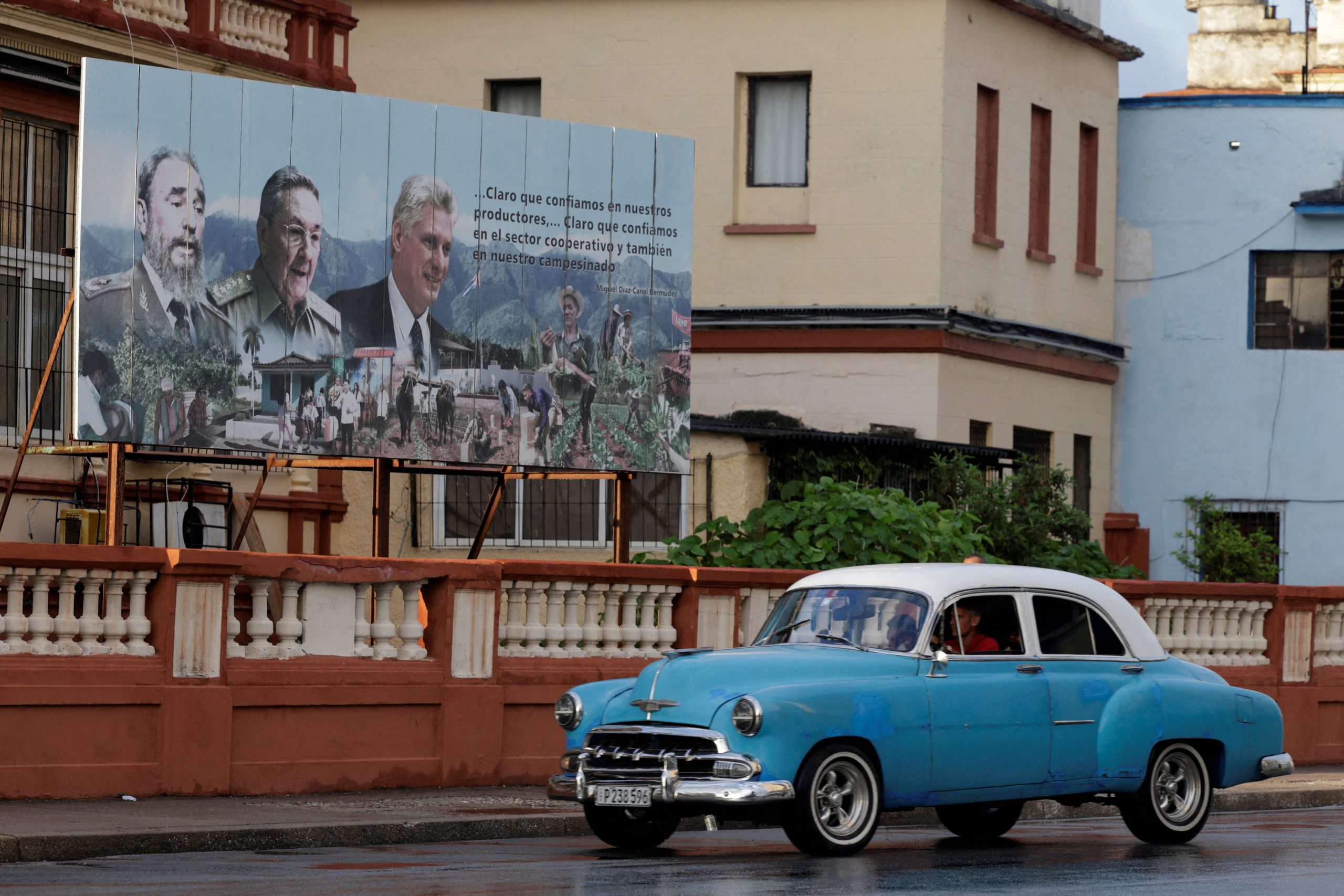
The Cuban dissident Oswaldo Payá used to say that he lived in the crossfire. In May 2002, he achieved the milestone of delivering more than 11,000 signatures to Cuba’s Parliament. The petition demanded a referendum to democratize the island.

The overwhelming popular support garnered by the so-called Varela Project unsettled Havana: it forced Fidel Castro to add, in haste, a clause to the Constitution that made socialism irrevocable. But while Payá challenged Castroism from within — like few others — by using its own rules, he was bombarded with criticism on Miami radio stations for “legitimizing” the system.

Washington’s pressure campaign — and its hints at possible military intervention in the Caribbean nation, which have grown louder since the indictment of Raúl Castro — finds the Cuban anti‑revolution dissidence in its usual state: fragmented, lacking clear leadership and, above all, without a plan that has the approval of the vast spectrum of opinions within the opposition. The maximalist positions of part of the exile community and their open calls for invasion clash with the more centrist proposals of historic figures on the island who advocate a negotiated transition with the Castro regime.

These starkly contrasting views are nothing new. It’s no coincidence that many Cubans — with their characteristic humor — made jokes during the Special Period (the severe crisis caused by the collapse of the Soviet bloc in the 1990s), with the phrase, “This [system] won’t fall, because there’s no one to lift it.”

This fratricidal infighting makes the task of governing the island — should a regime that has ruled it with an iron fist for the past 67 years finally fall — an enormous challenge. Added to this are the chronic ills of an economy in freefall. Cuba’s former engines — tourism, sugar, and tobacco — are in shambles, while the population is the oldest on the continent. There’s been a cumulative drop of 15% in gross domestic product (GDP) since the pandemic.

The example of Payá — who died in a traffic accident in 2012 — is one of many that reflect these historical divisions. For Manuel Cuesta Morúa, director of the Council for Democratic Transition in Cuba (CTDC), one of the main dissident organizations on the island, these divisions are part of a historical problem on the island, one that predates even the 1959 Cuban Revolution.

However, Morúa argues that the regime has also played its part: it has destroyed civil society — the only legal organizations exist within the official sphere of influence — and cultivated a political culture that defines everything in terms of friends and enemies.

“Since the triumph of the revolution, there’s been a process of political destruction and the erosion of the meaning of politics,· says the leftist opposition figure, in a telephone interview with EL PAÍS. “The culture of intransigence has prevailed over the culture of realism, as well as over a politics that encourages centrism.”

Berta Soler agrees with this. She’s the leader of the Damas de Blanco (Ladies in White), a group formed in the 2000s by relatives of political prisoners who were jailed during the wave of repression known as the Black Spring.

“Of course, it’s been very difficult to forge a common path between dissents inside and outside Cuba, because the Cuban regime has been responsible for severing that line, either by imprisoning or harassing activists,” she says. However, she also acknowledges that, “in reality, not everyone thinks the same way.”

Espionage and radicalism

Another reason for the internal strife is the government’s vast counterintelligence apparatus. There’s the G2, a unit made up of agents who infiltrate dissident groups by posing as radical anti-communists. And then, there are the Committees for the Defense of the Revolution (CDRs), with representatives of the single-party state residing in every neighborhood of the country. The organization’s anthem has a clear message: “On every block a committee / in every neighborhood a revolution.” This perpetual state of surveillance has made suspicion the norm. Accusations like “He’s from the G2,” or “That so-called ‘opposition member’ has never been to jail” are commonly heard in Cuba.

The differences have also been shaped by geography, especially by the influence of right-leaning exiled groups in Florida. The Cuban lobby — typically linked to the Republican Party — is one of the most influential and best-funded in Washington. Secretary of State Marco Rubio emerged from within this sphere, which tends to hold the most radical positions.

Before going into exile in Miami last October, José Daniel Ferrer — the historic leader of the outlawed Patriotic Union of Cuba (UNPACU) — also fell victim to the crossfire. The Christian Democrat was targeted by several Cuban-American groups because, during an interview with an independent media outlet, he expressed support for a reconciliation process with the government, should the ruling Communist Party (PCC) yield to pressure and agree to a transition toward democracy.

This controversy is similar to the one faced in 2023 by activist Carolina Barrero. Back in 2020, when she participated in the artists’ encampment outside the Ministry of Culture (known as the 27N protests, referring to the 27 of November), she stated: “Nothing can damage the regime’s standing with the international community more than acknowledging that it has a domestic opposition that identifies as leftist and is against the dictatorship.”

The generational shift

The dynamics of dissent shifted with the arrival of mobile internet in 2018. A generation of young people — many of them artists and intellectuals, like Barrero — entered the scene. This generational shift culminated in the massive protests of July 11, 2021, which resulted in more than 1,000 political prisoners and many leading opposition figures going into exile. The specter of divisions returned. The differences became more apparent on social issues, such as LGBTQ+ rights.

Maykel González Vivero, an independent journalist and queer activist, experienced these disputes firsthand during the debate and approval of same-sex marriage on the island in 2022. “When we started promoting LGBTQ+ rights, we had the support of the opposition, including the right-wing [factions]. [But] when the Cuban government decided to legislate in favor [of these minorities], Miami — and the opposition in general — stopped supporting us,” he recalls.

But that’s not all. Vivero says that other taboos make it very difficult for the two extremes to find common ground. For instance, in the case of the sanctions against the island, the most hardline government supporters claim that they’re the main cause of the crisis, while the hardline opposition denies that the embargo affects the Cuban population.

“We’re seeing it right now. Cubans are suffering from fuel shortages. The entire opposition supports it. And they’re turning us into the ‘collateral damage’ of their political dream. Every so often, someone appears on my social media [feed] — from both the government and the opposition — asking me to take a stand,” he adds.

A recent Miami Herald poll illustrates Vivero’s point. According to the survey results, nearly eight out of 10 Cuban-Americans in South Florida would support a military intervention on the island.

Different transition plans

Now living in the United States, Ferrer is optimistic. In a call with EL PAÍS, the opposition leader highlights the signing of a transition agreement between the Cuban Resistance Assembly (ARC) and the Steps for Change coalition. The document, signed in the first week of March, contemplates the “dismantling” of the PCC, demilitarization, the “eradication” of communist doctrine, and the creation of a provisional government.

For Orlando Gutiérrez-Boronat, leader of the ARC, dialogue with the Cuban authorities “would be a waste of time” if regime change doesn’t occur first. In a telephone interview this past March, the veteran exile leader argued that his organization maintains “fluid communication” with the Trump administration. When asked whether the State Department — headed by Marco Rubio — had consulted him to outline a post-Castro roadmap, he simply replied: “I don’t want to reveal anything confidential. Communication is fluid.”

Cuesta Morúa and the CTDC didn’t sign the Miami accord. The platform he leads has opted for its own path, which involves a negotiated solution. “[Unlike the U.S.], within Cuba, there’s more belief in a negotiated solution. The transition has to take place among Cubans. It’s important to appeal to rationality. Transitions are successful when part of the elite in power acknowledges their necessity.”

Ferrer, on the other hand, rejects that idea outright. “I’ll believe in that option when those who defend it are at the forefront of actions against the regime. When I see them in prison. [Their] position is that of a lukewarm opposition… it’s a very romantic idea, but reality prevails,” he criticizes.

Washington’s tightening pressure is increasingly evident — and so are the divisions within the Cuban dissident movement.

Sign up for our weekly newsletter to get more English-language news coverage from EL PAÍS USA Edition

Continue Reading

Cuba

US Supreme Court Paves Way For Companies Affected By Fidel Castro’s Expropriations To Seek Compensation From Cuba

Published

on

By

The justices ruled in favor of Havana Docks Corporation receiving compensation after the nationalization of its docks in 1960
Boats in Havana’s port, March 24.Gladys Serrano
El País

A new twist in the tensions between the United States and Cuba. The U.S. Supreme Court ruled on Thursday in favor of a U.S. company whose docks were confiscated by the Castro regime in 1960 after Fidel Castro came to power. The court’s decision — in a case openly supported by U.S. President Donald Trump — opens the door to future claims by other U.S. firms and citizens affected during the wave of expropriations carried out in the early years of the Cuban Revolution.

The ruling passed by a vote of eight to one. The company in question is Havana Docks Corporation. The decision comes amid the White House’s campaign to pressure Cuba, which is gripped by a severe economic and humanitarian crisis. It also comes one day after the U.S. Department of Justice indicted former president Raúl Castro (2008–2018) for his alleged role in the 1996 downing of two planes belonging to the Brothers to the Rescue organization, in which four people were killed.

This is a breaking story. Please refresh your browser for more updates.

Archived In

Continue Reading

CIA

Red Roses For The CIA In Havana

Published

on

red-roses-for-the-cia-in-havana

Seeing John Ratcliffe, the CIA director, in Havana might be less surprising than seeing Ramón Romero Curbelo, head of the Intelligence Directorate of Cuba’s Ministry of the Interior. His face had appeared on television before, but not in connection with his official position, and it is his position that gives such a face its expression. Images of him can be found at military events on the island, or in official delegations to Nicaragua and Vietnam, though always as part of a larger group. Another powerful military officer, which is no small matter, but not quite what we now know it to be.

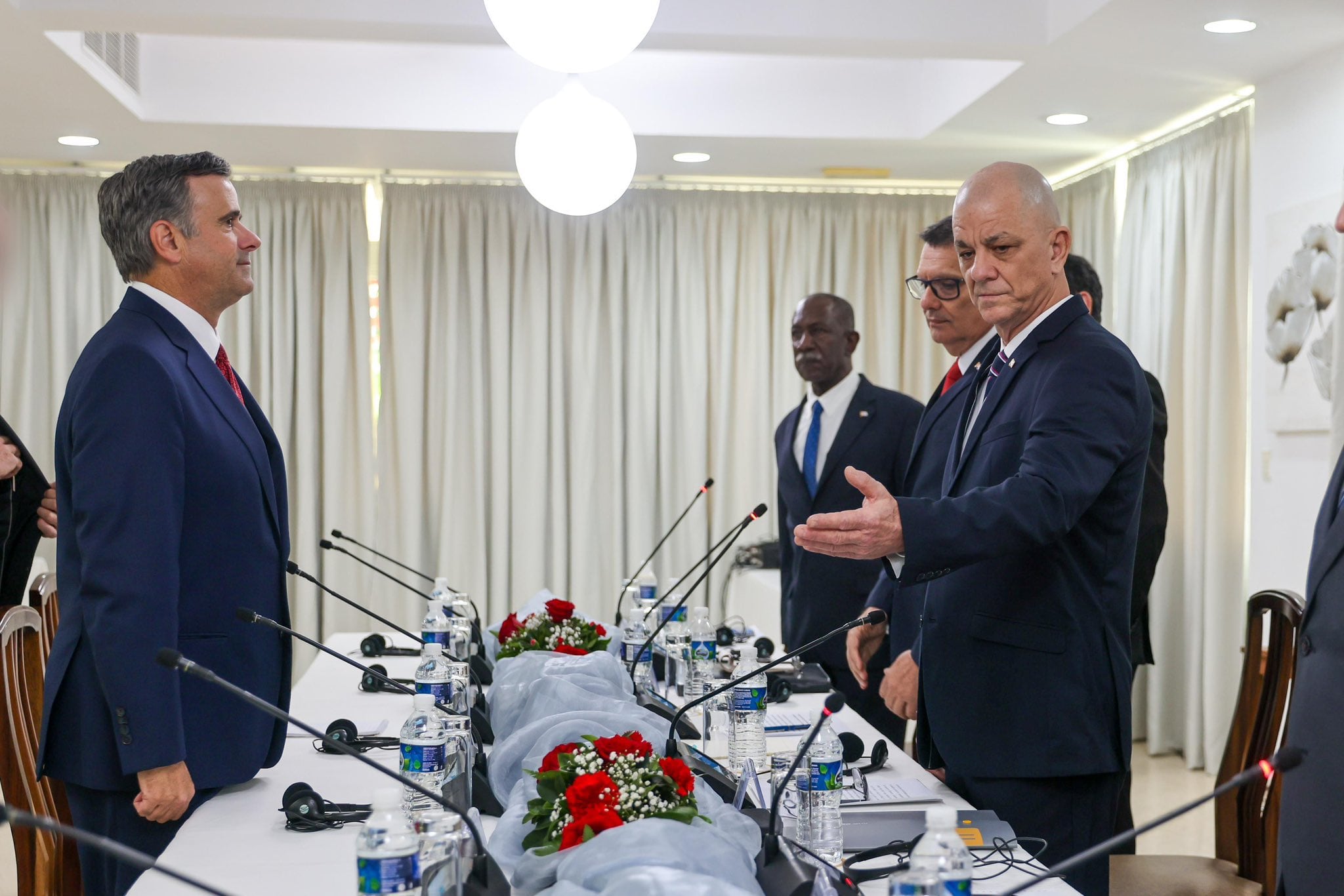
In the photo the CIA published on its X account, Romero presides over a table dotted with socialist kitsch: bouquets of red roses, water bottles from small businesses, and white tablecloths from a workers’ cafeteria. Beside him are several Cuban officials, and in front of them, as if facing the entire communist platoon single-handedly, stands Ratcliffe, at attention. It is a bleak scene. What is being served at that table — and what cannot be seen — is the Cuban people. Curbelo’s hand invites his visitors to sit down and tells them they may eat. The stage has been closing in, and the United States is about to devour a menu that Castroism, chopping away here and there, diligently prepared for it, although Curbelo, in reality, does not seem entirely happy, but rather annoyed at having to share what until now they had been snacking on all by themselves.

The fact that the CIA reached the Cuban intelligence stronghold without firing a shot, after having previously killed 32 Cuban soldiers in Venezuela — stupidly sacrificed to defend a petty tyrant whom his own people had already betrayed — suggests that Castroism has no intention of self-destructing. They won’t wrap themselves in a flag and wait for the Marines on the Malecón; instead, they will try to buy more time, scraping together a way out for themselves, while meekly accepting what we might call a “soft invasion” — the formalization of the existence of big capital.

Be that as it may, the CIA seems to have already announced that it’s not willing to waste time with civilian intermediaries or second-rate scapegoats, such as, in these opaque regimes, even the country’s president himself. Perhaps Miguel Díaz-Canel’s own head is on offer at that ceremonial table, but only as decoration. The Americans didn’t go all the way to Havana to feast on so little. They went, according to their own eyewitness accounts, to see the face of Curbelo, the head of Cuban spies, and for the world to see it too.

In Spartan societies like Cuba — where kings are mere instruments of public negotiation used by the anonymous committee of the political police — the exposure of one of those faces signifies a loss of power. None of those faces are designed to become specific. They come from the people, they are among the people, they have eaten lunch at your school, slept in your shelter, gone to your university, walked through your neighborhood, and they rule and oppress with the omniscience of their ordinariness and under the guise of daily work.

Curbelo, a brigadier general, comes from Cienfuegos and is nobody’s son. In the photo, his face is stern, his brow furrowed, his head freshly shaved, and everything that could have made him a peanut vendor at a provincial train station suddenly transforms into something terrifying. Something deadly. I haven’t met, at least not consciously, any Cuban intelligence agents, but I have met several counterintelligence agents, who are in charge of surveillance within the country. They don’t use spies, but rather informants, yet the principle of the aura, of impenetrability, is the same.

Anyone who’s been through interrogations in Cuba knows that initially you’re approached by one or two individuals of considerably lower rank. Clumsy, amateurish, and brutish. Later, if you endure a couple of rounds, others may arrive, with more years of service, a more polished demeanor, and more refined methods. The violence becomes more concentrated, less hysterical, if you will. My first interrogators in Cuba, several years ago now, turned out to be, when the time came, the drivers of the second-in-command: a burly, middle-aged mulatto who called himself Saucedo and was considerably smarter and more ferocious than his subordinates. Even so, however much Saucedo seemed to be in charge, there was always a way to bring him down, and it consisted of thinking about the interrogator you hadn’t yet encountered, the one above him.

A few months ago, to make matters worse, the newspaper elToque revealed that Saucedo was actually Lieutenant Colonel Rafael Pupo Carnet of the Ministry of the Interior. They found out which neighborhood he lived in and even uncovered a video — from someone’s wedding or birthday, I don’t know whose — where he can be seen standing there, doing nothing, looking like he couldn’t care less. Part of the power of these men lies in the fact that the person being interrogated is unable to imagine them outside the interrogation room, that it seems as if they only exist there, like the anthropomorphic manifestation of a repressive machine.

In this neurotic game of opacity and masks, who, that we haven’t yet seen, might be lurking behind the head of Cuban intelligence? There’s no one left. It’s the anticlimactic end to a historic crime. For Curbelo, who believed he had spent his entire life preparing to be a general in the war against the Americans, history had reserved for him a position as a drawing-room captain.

Sign up for our weekly newsletter to get more English-language news coverage from EL PAÍS USA Edition

Continue Reading

Trending

Copyright © 2017 Spanish Property & News