
Colombia
‘Macondo York’: The Gaze Of A García Márquez Overwhelmed By The Big Apple


Few associate Gabriel García Márquez with the asphalt jungle of New York. Collective memory places the Nobel Prize-winner in the heat of Mexico, the hustle and bustle of Barranquilla or the elegance of Barcelona. But for Colombian graphic designer and author Iván Onatra, the Big Apple was a crucial — and at times, forgotten — stage in the scribe’s life. García Márquez’s time in the city that never sleeps takes on new life in Onatra’s bilingual design book Macondo York, in which he explores the writer’s love-hate relationship that lasted for six months, while he worked as a journalist for the Prensa Latina news agency.
It was a period marked by frustration, which finally led him to leave the city for Mexico. According to Onatra, the trip was a definitive bridge: five years after the exhausting experiment in New York, García Márquez would publish One Hundred Years of Solitude, his masterpiece and perennial bestseller. In Onatra’s view, there is a deep connection between these two worlds. “Gabo saw New York’s magical realism,” and, though the city overwhelmed him, it was a fundamental seed to his creative process.
Macondo York is not a conventional photo book. Onatra, who has lived between New York and Colombia for more than a decade, describes the project as a “comprehensive graphic design approach” that blends literature, history and typography. The book’s visual origin stems from a “typographical safari” Onatra carried out in Brooklyn in 2014, which led him to discover how “the streets are alive.” With his camera, he captured not landscapes, but ephemeral urban messaging: signs, sewers and shop windows that are the true face of New York.
The idea for the book came out of a Gabo Foundation workshop in New York. After a series of mockups, Onatra designed the book’s title and cover, and it struck him that the project had potential. He used his images — capturing graffiti, signs and shop lettering — to tell the story of García Márquez’s relationship with the city. The result is a beautiful editorial object, a work made to delight lovers of graphic books.

Each page is accompanied by a quote from the author of No One Writes to the Colonel. “New York is the greatest phenomenon of the twentieth century… I find it so overwhelming,” wrote García Márquez. “Always so unequal and always so originally American,” he said.
The book also gathers the author’s own experiences, like the music shops he discovered on 116th Street: “They sell all the old Cuban and Antillean music… You can find real gems.” Or his relationship with the people of the city: “In New York, I start out speaking Spanish, and everyone understands me.”
To avoid using erroneous quotes attributed to the author on the internet, Onatra says he worked with the Gabo Foundation to make sure that every reference was verified. The book opens with a phrase from García Márquez that sums up the project’s essence: “Photography will be the best witness to history.”
Onatra also has a close relationship with photography. “I have always taken photographs, since I was in high school,” he says. “I never made a living from photography, but I have always had the camera with me. There’s not a moment on one of my trips that I don’t have a camera. And I took a course on typographical safari with the New York School of Visual Arts that consisted of looking for signs around Brooklyn. That’s when I said, ‘Oh, the streets are alive.’ And ever since, I began to take photos in the street without really knowing what they were for. Some day, I said, I’m going to use them.”
A sensory experience
Onatra presented Macondo York at the Centroamérica Cuenta Literary Festival, which featured more than 80 authors and took place in Panama. After the presentation, he tells EL PAÍS that the book’s impact has transcended its pages, leading to large-scale exhibitions in places like Bogotá’s Casa de Nariño and the International Book Fair, where 88 of its panels were presented.
At Hay Festival, the work was transformed into an olfactory and auditory experience, including a special perfume called Limón de Oro (Golden Lemon), and a band that blended New York sounds with atmospheric notes recalling Macondo, the mythic town of One Hundred Years of Solitude.

Its reception among new audiences has been notable. Onatra notes that the combination of two cultural powerhouses — Gabo and New York— creates an added “plus” that attracts even those who are not familiar with the author. The book is bilingual, and its urban aesthetic connects with young people who see design and street art as vital forms of expression.
Onatra says that Macondo York is just the first step of what he calls his “New York trilogy.” He is already working on the next installation, Lorca York, which will explore the homes of Spanish poet Federico García Lorca in the city, set against a graphic grid in “acid green,” continuing his mission to portray New York through the eyes of great, Spanish-speaking writers. His aim is to capture the essence of a project that demonstrates that, even if the street signs shown in the book disappear in a few years, the words of a genius like García Márquez will continue to speak to us.
Sign up for our weekly newsletter to get more English-language news coverage from EL PAÍS USA Edition





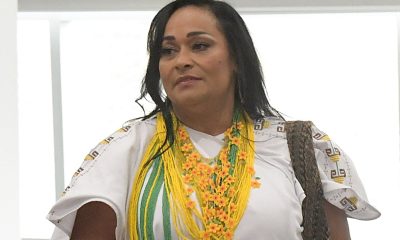


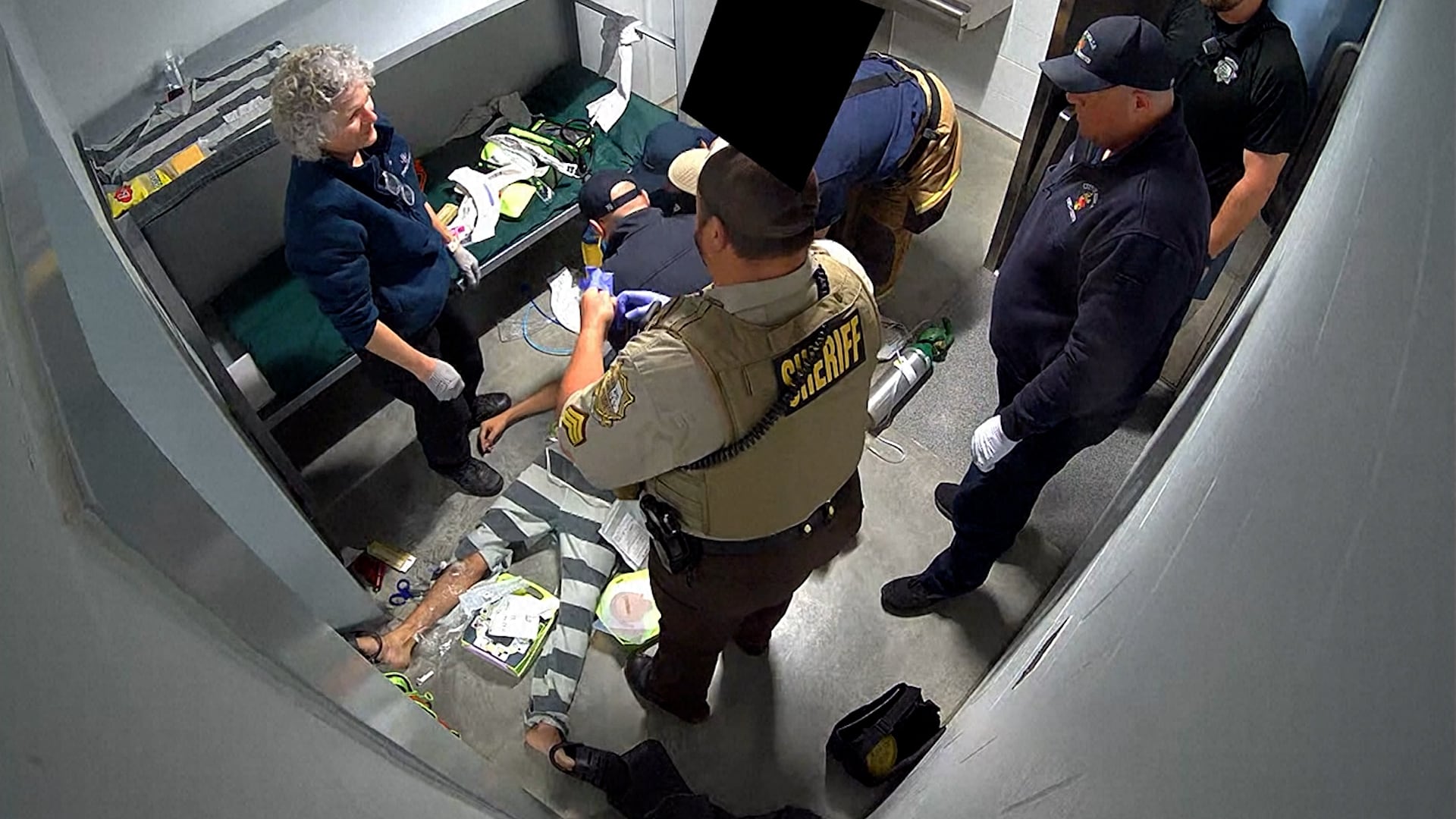

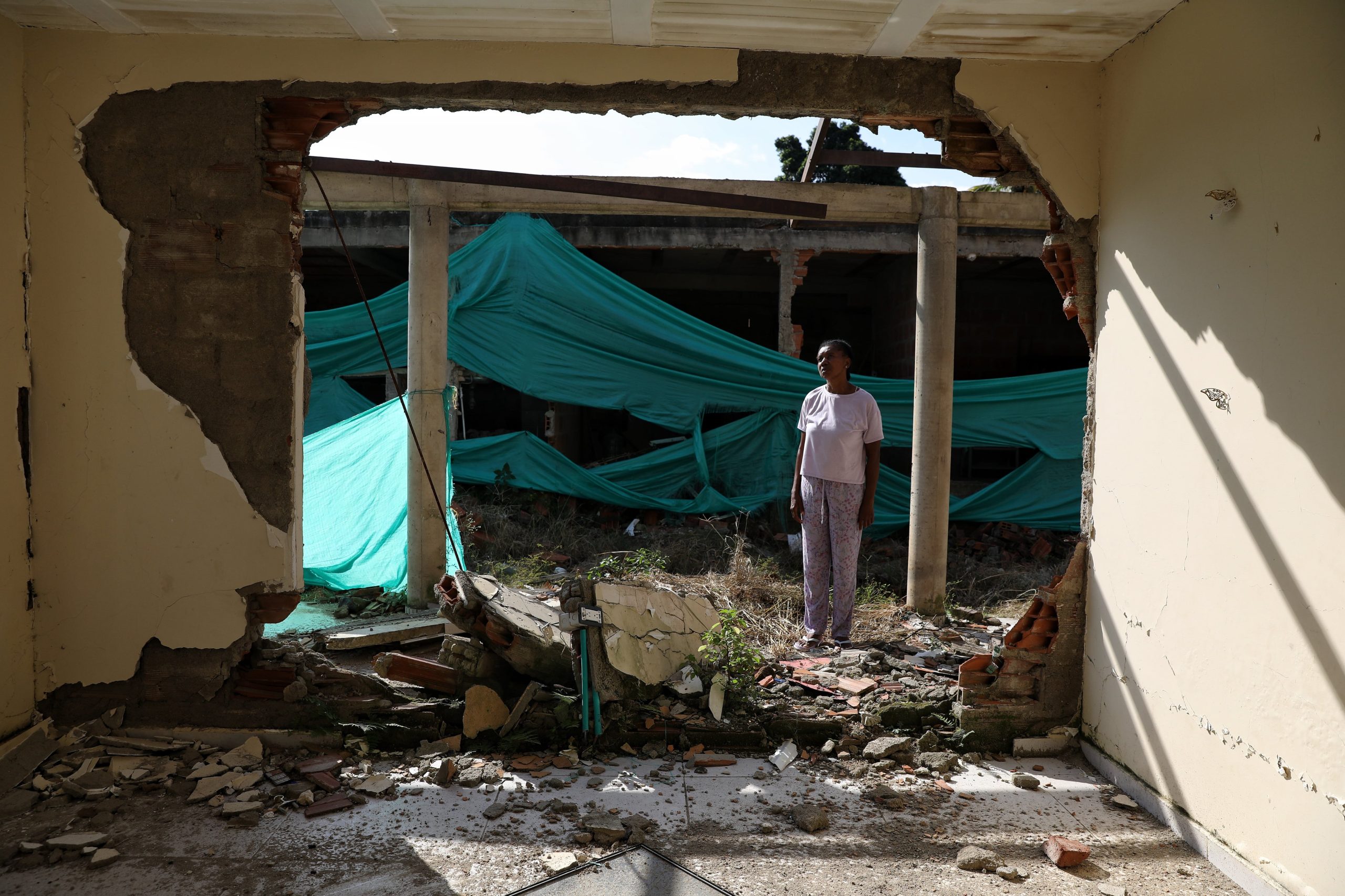
Renewed violence — a kind that has never been fully extinguished in Colombia — marks the presidential campaign to choose Gustavo Petro’s successor. In many places, the first-round vote this Sunday will take place under crossfire. Nearly 10 years after the signing of the historic peace accord with the now-defunct FARC guerrilla organization, other armed actors threaten communities and the war still burns, albeit in a more fragmented phase. The humanitarian consequences of the armed conflict have reached “the most serious level of the last decade,” the International Committee of the Red Cross (ICRC) warned this month. Amid that crisis, public security has become one of the main concerns.
That deterioration includes the killing of all kinds of social leaders. Anxiety is rising among the civilian population, which is suffering homicides, disappearances, threats, and forced recruitment in places such as Catatumbo and Arauca on the turbulent border with Venezuela; Cauca, along the Pacific corridor; Nariño and Putumayo, departments bordering Ecuador; and the forested department of Guaviare in the country’s south. Armed groups have also poisoned the presidential elections.
Left-wing Senator Iván Cepeda, Petro’s party colleague and the frontrunner in all polls, takes the stage flanked by bodyguards carrying heavy ballistic shields that never leave his side. His rival, far-right candidate Abelardo de la Espriella, who is fighting to reach the second round alongside Paloma Valencia, the candidate of the more traditional right, often speaks from behind bulletproof glass. All three have reported death threats. In a presidential race that was shaken early on by the assassination of opposition senator and pre-candidate Miguel Uribe Turbay — who died in August last year after a teenage hitman shot him in the head in broad daylight during a rally in Bogotá — violence looms large.

Petro has vigorously defended the claim that “there is no chaos of violence in this government,” arguing mainly that the homicide rate shows a small but sustained decline. But many other indicators show a tangible deterioration, such as extortion, child recruitment, and kidnapping figures. The next president, who will be sworn in on August 7, will inherit a country with more than 27,000 members of organized armed groups and at least 14 active zones of dispute among illegal actors, according to Public Forces estimates cited by the Ideas for Peace Foundation (FIP). Many new recruits are minors.
The map from the Electoral Observation Mission (MOE), another NGO, identifies violence-related risk factors in 339 of the country’s 1,100 municipalities, 126 of which are at extreme risk. Despite the welcome disarmament of the FARC, a disorderly archipelago of armed groups still operates, with more fractured structures in regions where all kinds of illegal economies exist, not just drug trafficking. The exit of the historic guerrilla group left a vacuum that, in the absence of a state response, has been filled by other armed actors more focused on controlling specific territories to exploit illegal economies than on threatening the state. “Colombia today has multiple local-level conflicts,” says Elizabeth Dickinson, deputy director for Latin America at the International Crisis Group. “The dynamics of the violence and the interests of the actors are local, not national.”
A four-year program of total peace — the ambitious but worn policy with which Petro sought to negotiate simultaneously with all groups — has produced few results. Talks with the ELN guerrilla, once the most advanced, remain deadlocked after a violent onslaught more than a year ago in Catatumbo that caused the forced displacement of more than 100,000 people. Even the staunchest supporters of negotiated exits from the conflict say Petro has failed to implement the 2016 agreement with sufficient determination.

The president who promised total peace has been overtaken by another cycle of Colombia’s endless war. To the old specter of political assassinations once thought to be overcome have been added a string of attacks and bombings. Last week, the vehicle of Senator Alexander López, a Petro and Cepeda ally, was shot at while he was returning from a campaign event in Cali to Popayán, the capital of Cauca, in what the president described as an attempted kidnapping by one of the multiple dissident groups. In mid-May, two campaign activists for De la Espriella were killed in the Meta department. In April, a dissident attack using a cylinder bomb on the Pan-American Highway left at least 19 civilians dead in Cauca, where Indigenous Senator Aida Quilcué — who was briefly kidnapped in February and later became Cepeda’s running mate — had previously been abducted. Cali, the country’s third-largest city, has been the target of several waves of attacks by dissidents led by Iván Mordisco, considered public enemy number one.
Cepeda, the Historic Pact candidate, does not rule out launching new peace talks — an idea widely resisted given the wear of the total peace strategy — and pledges full implementation of the 2016 agreement, arguing that security cannot be reduced solely to state coercion and therefore requires a strengthened preventive approach that tackles the lack of opportunities in peripheral regions. The far-right candidate, De la Espriella, calls for a hard line, strengthening the security forces and toughening the penal system; Valencia adds a call for greater institutional strength. “The narrative on the right is that the only option is to increase military force, but today the Public Forces are already operating with all their capabilities, at all times, and you cannot increase it further,” warns Dickinson of the International Crisis Group. “What can be done is to focus it more strategically.”
Sign up for our weekly newsletter to get more English-language news coverage from EL PAÍS USA Edition
Abelardo de la Espriella
In The Final Stretch Of Colombia’s Presidential Campaign, Undecided Voters Are In High Demand


S
Spanish drivers face new roadside fuel checks that could lead to €6,000 fines
Munich Airport drone sighting causes major shutdown and cancelled flights


-
blackout April 20253 weeks ago
Insurance company Mapfre decides to pay out €14 million compensation for 2025 blackout
-
 Foreign demand3 weeks ago
Who Bought Where In The Second Half Of 2025?
-

 New Developments4 weeks ago
Stylish 3-Bedroom Apartment With Panoramic Sea Views – Benalmádena
-

 New Developments3 weeks ago
Inside The Most LUXURIOUS Apartment Building In Spain!
-
Costa Blanca South3 weeks ago
Alicante police chief to retire after 17 years of service
-

 New Developments3 weeks ago
🌅 Stunning Penthouse With Panoramic Sea & Mountain Views Benalmádena
-
 ElPais1 week ago
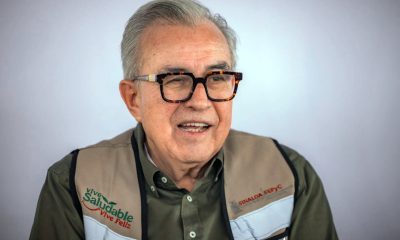
Mexico’s Most Controversial Politician, Rubén Rocha, Goes To Ground As Cartel Questions Intensify
-
biggest ever cocaine bust4 weeks ago
Spain’s biggest-ever cocaine bust – massive Atlantic seizure stuns authorities