Connect with us

Colombia

Colombia’s Super‑rich Pack Their Bags Amid The Rise Of The Left: ‘The Country Is Wonderful If You Have One Foot Out The Door’

Published

on

colombia’s-super‑rich-pack-their-bags-amid-the-rise-of-the-left:-‘the-country-is-wonderful-if-you-have-one-foot-out-the-door’

Paranoia has gripped some Colombian billionaires after four years of President Gustavo Petro’s leftist government. Arturo Ramos, 30, says the country is headed for an economic collapse. “Everyone in Latin America has gone bankrupt because of the delusion that they can spend more money than they have,” says this heir to a business empire, who prefers to remain anonymous.

He fears a decline in his standard of living. “I probably won’t have to sell the house or stop paying the staff or the driver. But a designer shirt, a bottle of whiskey, a trip to Europe, or any other imported product would become ten times more expensive,” he says. So, faced with the possibility of the left holding onto power in the upcoming presidential elections, he made a decision: to leave the country.

The end of his master’s degree in New York, in mid-2024, coincided with a growing concern about what was happening in Colombia. “I was extremely worried about the pension, labor, and healthcare reforms. And that the government had taken on more debt to pay interest, passing the problem on to the next administration,” he explains in a video call.

He hired a lawyer who helped him apply for permanent residency in the United States under a “national interest” category granted to individuals who can demonstrate “exceptional talent. He paid $38,000 (about 145 million pesos), with no possibility of a refund if his application was rejected. He was successful and now feels more at ease. “My life plans can’t depend on an election.”

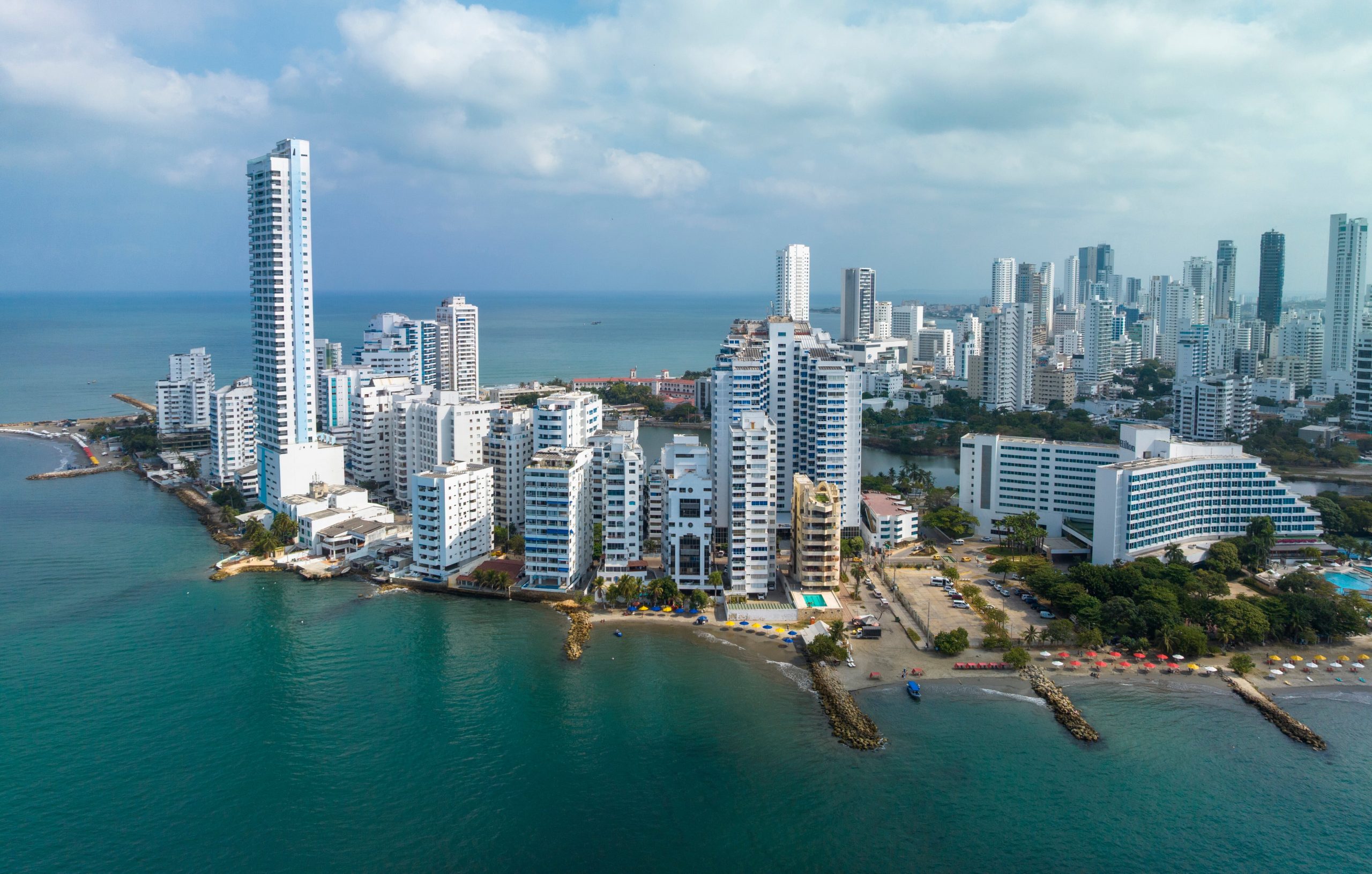
Bogota, Colombia

The architect now earns 21 times more than he did in Colombia — he prefers not to disclose the amounts — and, he says, he’s saving 25%. He invested in a startup and the stock market, and is preparing another investment to acquire a fleet of trucks. All of this, he says, will give him a financial cushion when he decides to retire in his home country. He wants to secure an income of $1 million a year.

“Colombia is wonderful if you have one foot out the door, with a safety net in dollars,” he says. The possibility that the right could win the presidential election in less than two weeks does not make him reconsider. “I’m absolutely certain that Iván Cepeda [the leftist candidate backed by Petro] will win. But even if he doesn’t, the left will return in four years. People have already tasted the drug of welfare.”

Whether or not the fear of an economic collapse is justified, the idea of protecting wealth abroad has long appealed to the wealthy, regardless of the country. Arturo has gone as far as relocating indefinitely, but there are many options. Some simply buy property overseas to collect rent in dollars. Others invest in second citizenships or residency permits as a “Plan B,” with no immediate intention of moving. More familiar is the search for tax advantages in countries like Panama or the United Arab Emirates, which topped the list of popular destinations until the war in Iran caused them to lose ground.

Colombia has a sufficiently robust market to attract those who advise the wealthy on these matters. This year, the firm Henley & Partners — specializing in “citizenship and residency planning” — opened an office in the country. A video on its website suggests that anyone who can afford it should want these services. “The wealthiest and most successful people are international.” “Often you don’t realize you have a need until it’s too late.” “The greatest symbol of freedom is the ability to live wherever you want, raise your children wherever you want, and not subject your family to the fate of the place you were born.” “You can choose”… if you have the money.

An insurance policy of sorts

Isabel Quintero, managing director of Henley & Partners’ Miami and Bogotá offices, explains in a video call that the firm decided to expand into Colombia because it saw “an increase in demand over the last two and a half years.” “High-profile individuals are preparing for any scenario,” she says.

Quintero avoids mentioning Petro or Cepeda, but acknowledges that political uncertainty is one of the common reasons why clients approach them. “The company doesn’t take sides, but people diversify their governments in the same way they diversify their investments, in the United States or in Colombia,” she says. “We see it when there are extreme changes, from both the left and the right. What happens if the laws change? You have to be ready, have a policy.”

Colombia, Quintero explains, has “both components of the cocktail” the company needs, which in recent years has also expanded to Mexico and Brazil. “There are people with high purchasing power, and, at the same time, there is a need. In Austria, there are clients with high net worth, but they don’t have a need,” she states.

The company has a very clear profile of its clients, whom it only accepts after an interview to ensure their applications are likely to succeed. “Colombians, in general, prefer places where the same language is spoken, such as Spain, Costa Rica, or Panama,” says Quintero. They also prefer to invest in income-generating assets, unlike U.S. clients, who favor donation‑based programs.

The programs are varied, both in terms of requirements and benefits. “The higher the client’s profile, the more programs they pursue simultaneously. For example, we offer citizenship in St. Kitts and Nevis because it provides access to a strong passport, and we combine it with Panamanian residency, which is attractive for tax purposes,” Quintero explains.

Spain is often appealing to families seeking a better quality of life for their children: they pursue postgraduate studies there, make an investment of €150,000 ($174,000) in corporate bonds, and after two years, obtain citizenship. This option requires relocation and isn’t suitable for those simply looking for a backup plan. There are more affordable options. “You don’t have to be a multimillionaire to access a program like Costa Rica, which offers a very high quality of life. A pension of $1,000 a month is sufficient,” says Quintero.

Skepticism

The market, however, has its limits. Cristóbal Young, a sociology professor at Cornell University in the United States and an expert on the migration of the ultra‑wealthy, says in a video call that the trend should not be overstated, especially when it comes to permanent relocation.

“The migration rates of millionaires are very low. The more money you earn, the less likely you are to migrate,” says the author of The Myth of Millionaire Tax Flight.

He explains that the wealthy have less incentive to leave because they built their wealth in their home countries. “Their places of origin are a big part of their success. That’s where they have powerful professional networks. So it makes sense for them to stay and continue doing what they do. The cost of starting over somewhere else is especially high for them.”

Bogotá, Colombia

Young also points out that there is a difference between the idea of “leaving the country” and actually doing it. He illustrates this with an anecdote from his arrival in the United States from Canada two decades ago. “Everyone was telling me, ‘If Bush gets re-elected, I’m going to Canada.’ I thought it was charming and funny, but it was just something to say. They didn’t do it,” he says.

At the same time, he acknowledges there is a small group of people who can follow through. “They are very few, but you find them, and they are interesting people,” he says. Arturo, he says, is the ideal candidate: “When they move in the early years of their career, they are more likely to succeed.”

Economist Luis Carlos Reyes, former minister of commerce under Gustavo Petro, agrees with the academic’s assessment. “It’s not that the wealthy are going to leave the country overnight. They try to move their assets to tax havens, but the exchange of information between tax authorities has made this increasingly difficult. No one can set up a Colombian factory here and then move to Hong Kong, Luxembourg, or Switzerland the next day,” he notes in an exchange of messages. “The fact that there are firms offering these kinds of services doesn’t necessarily mean they’re going to migrate; it simply means that some people are afraid, and there are others willing to exploit that fear for their benefit.”

Arturo acknowledges that migration has come at a high price for him. “I miss Colombia a lot, without a doubt,” he says. He feels he fits in “perfectly” with his fellow Colombians, even if they come from different social classes or regions. “Here, on the other hand, I have to change my mindset and assimilate into something I’m not. I become more robotic and stiff,” he says.

A few days after the interview, when asked if he thinks he can spend decades in the United States, he says via text message: “I’m assimilating more and more. It’s sad to see my Colombian side shrinking a bit, and I’m becoming more from here than from there. That’s perhaps how I’ll manage to endure it.”

Sign up for our weekly newsletter to get more English-language news coverage from EL PAÍS USA Edition


America

Bolivia Expulsa A La Embajadora De Colombia Tras Señalar A Petro De “injerencia”

Published

on

bolivia-expulsa-a-la-embajadora-de-colombia-tras-senalar-a-petro-de-“injerencia”

La Cancillería de Bolivia “ha decidido solicitar a la Embajadora de la República de Colombia acreditada en el país la conclusión de sus funciones diplomáticas en territorio boliviano”. La expulsión de Elizabeth García Carrillo es la principal reacción del Gobierno de Rodrigo Paz a unas recientes declaraciones del presidente colombiano, el izquierdista Gustavo Petro, sobre la situación en Bolivia. El mandatario afirmó el documento que el país sudamericano “vive una insurrección popular” como “respuesta a la soberbia geopolítica”. Aunque en el mismo mensaje se señala interesado en mediar en la crisis, también habló de “presos políticos”.

El Gobierno boliviano cerró la oferta de mediación de Petro de un portazo. “En el caso de extender un ofrecimiento de mediación, lo harán como lo han venido haciendo otros países: comunicándose por vías diplomáticas originales y no usando TikTok o redes sociales que muestran realmente una carencia completa a la forma y mecanismos que rigen a los estados” , dijo el ministro de Relaciones Exteriores de Bolivia, Fernando Aramayo, en una entrevista con la radio Panamericana.

Bolivia vive una insurrección popular.

Es la respuesta a la soberbia geopolítica.

Latinoamérica es una civilización diversa y diferente, no se le puede homogeneizar desde ningún lado del planeta.

Latinoamérica y el Caribe deben ser escuchados por el mundo mirando de frente en…

— Gustavo Petro (@petrogustavo) May 17, 2026

Petro también se pronunció a favor del expresidente boliviano Evo Morales, líder de la oposición y el rostro más visible detrás de las movilizaciones que tienen sitiada a La Paz, la capital del país, con una ciudad sin combustible y protestas cada vez más extendidas. “Le solicito al gobierno de EEUU no atacar al expresidente Evo Morales”, escribió el mandatario colombiano en su cuenta de X. La preocupación tiene que ver con la intención del Gobierno de Paz de acudir a Estados Unidos para solicitar información de una posible participación de Morales en el tráfico de drogas.

El líder indígena está en la mira de la justicia después de que un juez ordenara su aprehensión por no presentarse a declarar en un proceso en su contra por presunta trata y abuso infantil. La situación, según ha dicho este martes el secretario de Estado adjunto estadounidense, Christopher Landau, tras hablar con el presidente conservador boliviano, es “un golpe de Estado”. El llamado Grupo Libertad y Democracia, conformado por 16 antiguos jefes de Estado de Iberoamérica, se ha pronunciado en un sentido similar en una carta pública enviada este miércoles. “Rechazamos de manera categórica el intento de quiebre institucional en Bolivia” se lee en el documento que firman los españoles Mariano Rajoy y José María Aznar, el mexicano Felipe Calderón, el colombiano Iván Duque o el chileno Eduardo Frei.

El comunicado de la Cancillería boliviana de la mañana de este miércoles aclara que la “decisión no constituye ruptura de relaciones diplomáticas con la República de Colombia ni afecta los históricos vínculos de amistad, cooperación y respeto entre ambos pueblos y Estados”. El colombiano ha respondido durante una entrevista con Noticias Caracol. Tras rechazar la expulsión, ha reiterado su postura: “Se están pasando a extremismos que pueden llevar a una situación muy difícil al pueblo boliviano” ha dicho en el canal de televisión con más rating de Colombia.

Petro, inserto en una guerra comercial con el vecino Ecuador, ha buscado proyectar un liderazgo regional y con la construcción de alianzas con fuerzas de izquierda en toda América Latina. Para el caso de Bolivia, desde su llegada al poder en 2022, designó a García como embajadora. Era una poderosa señal simbólica: se trata de una indígena del pueblo Arhuaco, que además vivió exiliada en Canadá, un perfil muy diferente a la usual diplomacia colombiana. Uno, además, que habla en especial a una nación con alto componente indígena, como es Bolivia, y donde uno de los protagonistas de la crisis actual es Evo Morales, también líder de los pueblos nativos.

El presidente colombiano ha logrado mejorar la relación bilateral con Estados Unidos, tras una creciente crisis a lo largo de 2025 que incluye el retiro de su visa. Sin embargo, las palabras de Landau respecto de Bolivia despiertan interrogantes sobre la buena situación: “Me encantaría ver, por ejemplo, que Brasil respalda el proceso institucional en Bolivia. Igual digo de Colombia. No me gusta ver que hay países que se vanaglorian de sus valores democráticos, pero que, en cuanto se establece un Gobierno que quizá no se alinea con sus posiciones políticas, de repente guardan silencio”, declaró.

Continue Reading

Argentina

A World Cup In The Middle Of A Climate Crisis: How Will The Heat Affect Your Team?

Published

on

It’s difficult to find an area that hasn’t been affected by climate change, which, among other things, is behind the increased frequency and intensity of heat waves worldwide. Sport is no exception, and competitions like the Winter Olympics and major cycling tours have been — or will be — seriously affected by global warming. The most-watched sporting event on the planet, the FIFA Men’s World Cup, being held in North America and starting in less than a month, will also be impacted by this crisis.

A study by scientists at World Weather Attribution (WWA) warns that around 25% of the World Cup matches to be played — 26 of the 104 scheduled — will likely take place in conditions that pose a risk to the health of the players and, in some cases, even to the fans attending the stadiums. The researchers, led by Frederick Otto and Theodore Keeping of Imperial College London, used historical temperature data and other meteorological variables to determine whether safe conditions would be exceeded at the time each match was scheduled to take place.

In 26 of those scheduled matches, the scientists determined that temperatures are likely to exceed 26 degrees Celsius WBGT during the course of the game. WBGT stands for Wet Bulb Globe Temperature, a unit commonly used in the sports world to measure heat stress on the human body. It takes into account not only air temperature but also humidity, solar radiation, and wind speed. The study estimates that five matches will exceed 28 degrees Celsius WBGT, the equivalent of 38 degrees Celsius in dry heat or 30 degrees Celsius in high humidity, Otto explains.

The authors performed the same risk calculation for 1994, when the World Cup was held in the United States, at the same venues and times of year. They conclude that the “risk of these more extreme conditions has almost doubled” due to “climate change” caused primarily by the burning of fossil fuels. “In 1994, the climate was approximately 0.7 degrees cooler than it is now,” notes Joyce Kimutai, another researcher who participated in the analysis.

The venues, dates, and times for the three group stage matches of the 48 qualified teams have been confirmed. The matches will be played in various cities across Canada, Mexico, and the United States. Data from the study indicates that Portugal will face the worst heat, with an 80% probability of temperatures exceeding 26 degrees Celsius in all three of its group stage matches. The Netherlands, Saudi Arabia, and Cape Verde follow (all with a 74% probability).

In the case of Spain, two of its matches — those held in Atlanta (USA) — carry a 23% probability of exceeding 26 degrees, and in the third, in Guadalajara (Mexico), the possibility is practically zero.

Reining champion Argentina will have it a bit worse. In one of their matches (June 22, in Dallas at 1:00 p.m.) there is a 100% chance of temperatures exceeding 26 degrees Celsius and a 22% chance of exceeding 28 degrees Celsius. In Argentina’s other two matches, the risk of exceeding 26 degrees Celsius is 14% and 24%, respectively.

Professor Otto explains that, to determine the risk thresholds, they relied on the recommendations of the main international players’ union, FIFPRO (International Federation of Professional Footballers). “The union suggests that a temperature of 26 degrees WBGT is quite dangerous and that playing in these conditions would require cooling breaks.” He adds, “28 degrees is objectively dangerous, and the players’ union suggests that matches should be postponed.” But it’s not only dangerous for the players. “There are also the fans, who may gather outdoors beforehand and are at even greater risk because they won’t be supervised,” Otto warns.

In the case of the Colombian national team, only one of its three group stage matches carries a risk (a 40% chance for the June 27 match in Miami). Furthermore, the stadium where it will be played lacks cooling measures, such as air conditioning. Uruguay, for example, plays two of its three matches in the same venue, with a 100% probability of temperatures exceeding 26 degrees WBGT.

On the other hand, there are 13 teams that will play their three matches with less than a 5% probability of temperatures exceeding 26 degrees Celsius. Among them are the three host nations: Mexico, the United States, and Canada.

Given the expected temperatures, this will be the first World Cup to implement cooling breaks in every match — regardless of the weather forecast for each location and day — during each half. This measure has also drawn some criticism. The previous World Cup, held in Qatar in 2022, had to be played between November and December due to the high summer temperatures in the region. “We will probably see more World Cups scheduled during the winter months, as we saw in Qatar in 2022, or held in cooler climates like Northern Europe,” predicts Donal Mullan, a researcher at Queen’s University Belfast, who a year and a half ago published another study focusing on temperatures during the 2026 World Cup.

Theodore Keeping notes that of the 16 designated venues, three will be particularly affected according to his calculations: Houston, Dallas, and Atlanta, all in the United States. In this case, all three venues have air conditioning, which will somewhat reduce the risk.

Once the group stage is over, the knockout phase will begin, where the risk of heat stress will remain. The final is scheduled for July 19 in New York at 3:00 p.m. According to the WWA study, there is a 12% chance that the dangerous temperature of 26 degrees Celsius will be exceeded. And “a one in 37 chance that the 28-degree threshold will be surpassed in that match, the dangerous conditions that, according to the players’ union, should cause a delay in the game,” Keeping points out. At the 1994 World Cup, that chance was one in 56.

Controversial breaks and schedules

FIFA has decreed that, for the first time in history, there will be a three-minute break at the midway point of each half — approximately at the 22nd and 67th minutes, respectively — in all matches, regardless of temperature, time of day, venue, or whether the stadium is covered or air-conditioned. The widespread implementation of hydration breaks has not been without controversy.

Initially, criticism focused on the possibility that the risk could be reduced if matches were scheduled for the evenings, when temperatures drop. However, playing matches during the hottest hours is necessary to accommodate international broadcast schedules: matches played in the evenings in the Americas, which will also take place, will be broadcast in the middle of the night in Europe, where the most valuable audience for television networks is located. Given the value of the World Cup broadcasting rights — it is estimated that FIFA will pocket $3.9 billion from this alone — the option of eliminating prime time was never considered. In fact, the opening match and the final will be played at 1:00 p.m. in Mexico and 3:00 p.m. in New York (9:00 p.m. CEST), respectively, times when the heat reaches its daily peak.

Therefore, some believe the decision to implement hydration breaks across the board may be related to economic reasons. These six minutes of broadcast time also constitute a new commercial break with a very high audience, presumably larger than during the 15-minute halftime break. The price of advertising space will vary enormously depending on the match, but the highest estimates for a 30-second ad are around $585,000 for the final, presumably during one of the hydration breaks.

Beyond the motivations, the fact remains that the breaks will impact the flow of the matches. Critics believe the pauses will disrupt the rhythm of the game. Other analysts, however, believe they will be a good opportunity for coaches to make tactical adjustments.

Sign up for our weekly newsletter to get more English-language news coverage from EL PAÍS USA Edition

Continue Reading

Abelardo de la Espriella

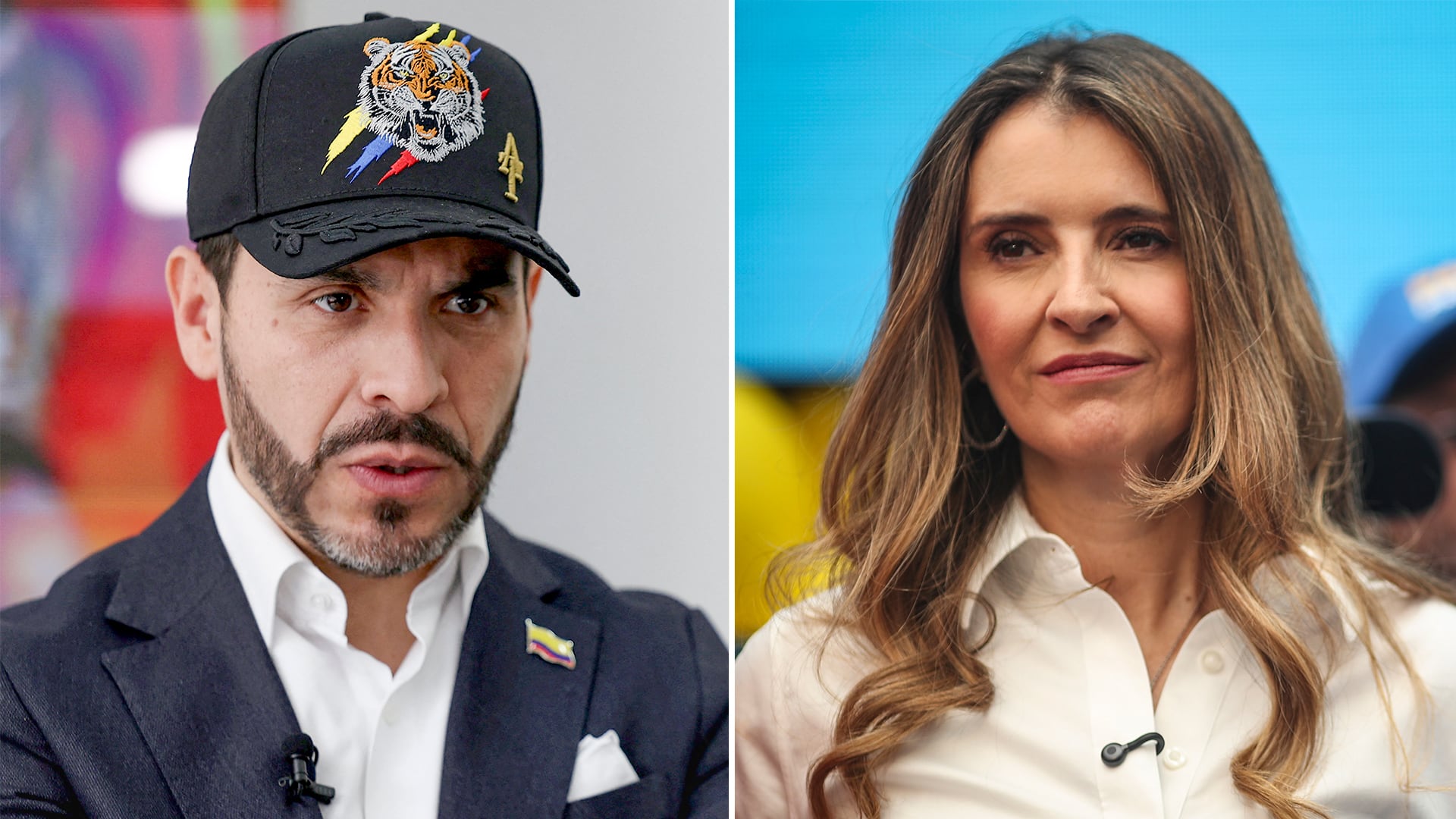
Sexism Looms Over Colombia’s Presidential Race Between Paloma Valencia And Abelardo De La Espriella

Published

on

sexism-looms-over-colombia’s-presidential-race-between-paloma-valencia-and-abelardo-de-la-espriella

The far-right candidate is navigating treacherous ground to reach the second round of the Colombian presidential election. Abelardo de la Espriella, who is vying for second place in the polls with Uribista candidate Paloma Valencia, gave two interviews — one on radio and one on television — that have dominated the debate due to his misogynistic remarks. On the radio program Piso 8, he claimed that he gained many female votes because of the size of his genitals and asked the reporter present to zoom in on a photo that highlighted them. On television, he called a veteran journalist ignorant when she asked him about a comment the criminal lawyer had made years earlier: “Ethics has nothing to do with the law.” Journalists and politicians came out in defense of women and criticized the lawyer, making sexism a central issue in the electoral arena. This presents an opportunity for Valencia to gain ground, but De la Espriella also has a path to maintain his lead in the polls.

The electoral opportunity was first recognized by Juan Daniel Oviedo, Valencia’s vice-presidential running mate, who shared a video of De La Espriella’s radio program appearance on social media. “To say that he won the female vote ‘because of how big he is’ only speaks to his own small-mindedness,” he wrote. The far-right candidate’s misstep resonated particularly with Ovideo, an economist, who had been the target of homophobic comments from De La Espriella just days after the presidential primary in which Oviedo faced Valencia and other right-wing candidates. Rather than damaging his campaign, these comments ended up giving the former Bogotá councilman more visibility: he garnered the second-highest number of votes, second only to Valencia, and thus became her running mate for president.

But Oviedo capitalized at that moment on votes from the political center, which his running mate, Valencia, now faces the difficult challenge of winning over without losing the support of her traditional base on the established right. That’s why, when the senator speaks about gender, she always does so from a conservative perspective: she doesn’t consider abortion a right, she says feminism is left-wing, and she talks about defending children who are adopted by diverse families (like that of her vice-presidential candidate).

This Tuesday, Valencia also saw an electoral opportunity and rejected the comments of her right-wing opponent. But she did so discreetly, without mentioning his name or speaking of sexism. Instead, she suggested an apology. “Women journalists shouldn’t have to put up with sexual jokes, offensive insinuations, or personal attacks for daring to ask questions,” she said on her social media, adding: “Whoever is wrong in their treatment of women should acknowledge it and apologize.” A middle ground in which she points out her opponent’s obvious sexism without calling him a misogynist. A stark contrast to the reaction of the left-wing candidate, Iván Cepeda: “We must defeat the patriarchy in Colombian society.”

However, those surrounding Valencia on the campaign trail were less discreet. “Sexist attitudes cannot continue to be normalized or disguised as humor, nonsense, or vulgarity. That is neither charisma nor authenticity. It is a lack of respect,” said former senator David Luna, who is campaigning for Valencia.

Although the Uribista candidate has much to gain if De la Espriella’s comments backfire, she could also lose a great deal if the far-right campaign portrays her as the “woke” candidate, the one who espouses political correctness. This is demonstrated by the reaction of Senator-elect and influencer Alejandro Bermeo, who is close to De la Espriella’s campaign communications team and a member of the party that endorsed him, National Salvation. “The establishment, with the direct backing of Paloma Valencia, is fabricating a #MeToo movement against Abelardo de la Espriella,” he said on social media. “Like desperate ‘progressives,’ they’re using gender issues as a weapon to eliminate anyone who doesn’t belong to the ‘yes we can’ club of watered-down progressivism,” he added.

Valencia’s campaign has already struggled to attract a segment of the right-wing electorate, who are drawn to De la Espreilla not only for his “outsider” rhetoric but also because they perceive him as “stronger.” “I have the balls to do what Colombia needs done,” the candidate declared at an event in Bogotá last week, in another instance where he elected to allude to his genitals to emphasize his gender. He has also stated that he does fight against violence against women, having represented, as a lawyer, the family of Rosa Elvira Cely, a woman brutally raped and murdered in Bogotá in 2012, and Natalia Ponce de León, a woman attacked with acid by her partner in 2014.

What remains to be seen is whether a sexist incident will deflate a candidacy or simply prove ineffective among right-wing voters. Engineer Rodolfo Hernández, who ran against Petro four years ago as an outsider to the political establishment and a right-wing candidate, was hit hard by a video published by journalist Daniel Coronell two days before the election, in which he appears on a yacht in Miami dancing with several women in swimsuits. The former mayor of Bucaramanga had also previously stated that “ideally, women should dedicate themselves to raising children,” but that comment did not prevent him from advancing to the second round.

Another example of this lack of impact was provided by Donald Trump in 2016, when he was the Republican candidate. A month before the election, an audio recording surfaced in which the businessman spoke about grabbing women’s genitals whenever he felt like it: “When you’re a star, they let you do anything to them.” Despite the scandal the audio generated, he defeated Hillary Clinton, who represented “old politics” for a large part of the electorate. The anti-establishment vote can carry more weight than the rejection of sexism.

That has been precisely De La Espriella’s strategy. His AI-generated videos repeatedly claim that Valencia represents “the usual suspects,” a term that includes not only traditional Uribismo but also the senator’s old political rivals: former president Juan Manuel Santos, presidential candidate Claudia López, and Interior Minister Armando Benedetti. None of the three are even remotely involved in the Uribista campaign, but the far-right candidate’s campaign has sought to establish this narrative. Valencia has defended herself by arguing that she is “one of the usual suspects,” but in the sense that she has always worked for Colombia, while he has lived abroad for many years. This second narrative has not been as successful.

Valencia and De La Espriella know that any misstep between now and May 31 will determine who wins among right-wing voters and advances to a virtually certain runoff against left-wing Senator Cepeda. They also know that sexism played a role in the campaign, but it’s still unclear whether it worked in favor of or against the candidate who boasted about his genitals to a reporter.

Sign up for our weekly newsletter to get more English-language news coverage from EL PAÍS USA Edition

Continue Reading

Trending

Copyright © 2017 Spanish Property & News