
Barcelona
S
















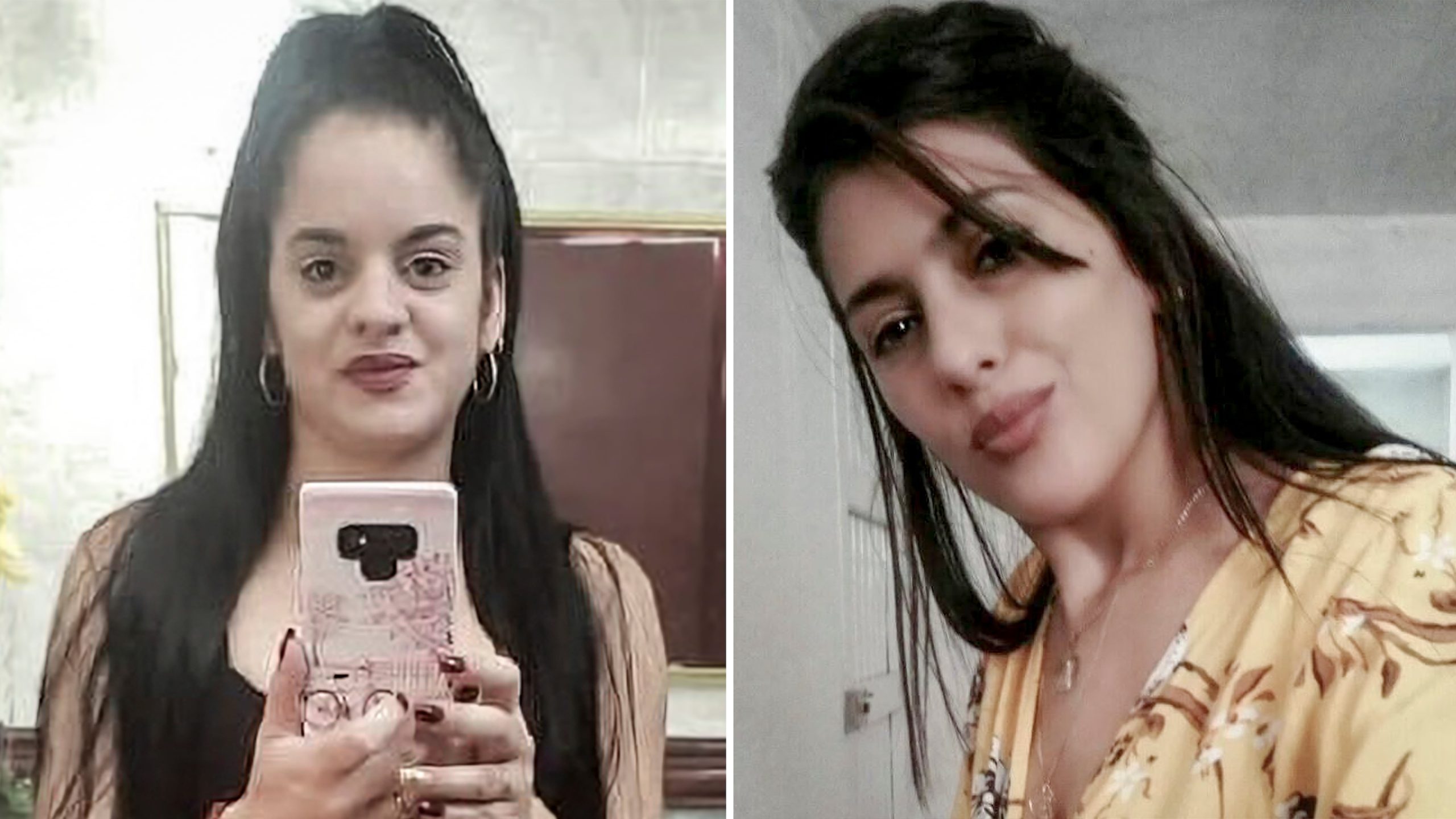
Vanesa Rodríguez Valdés, based in Las Vegas, and her best friend, Liuddibet Calzadilla, in Barcelona, Spain, talked almost daily about their lives and their families back in Cuba, where they were both from. They talked about how much Valdés missed her teenage daughter and the diminutive size of the bedsit in the United States. On Sunday, May 26, Calzadilla wrote to her to ask how she was. She also asked if her husband Roelmer Sánchez Garrido was at home. If he was not, it meant they could talk freely.
He was not there. “Today I’m having a break. I had a day of it yesterday, I can tell you,” Valdés told her friend. They talked about how good it would be to live closer to each other and the money Valdés needed to leave. The week of her death Valdés told her friend that she wanted to return to Cuba. “Why don’t you self-deport?” asked Calzadilla. But Valdés was afraid: both of her husband, now charged with murder, and of the U.S. Immigration and Customs Enforcement, ICE.
As she told her friend, Valdés’ plan was to leave her husband and the U.S. According to Calzadilla, her friend told her that she was not going to wait for the papers. The police report confirms this: Valdés argued with Garrido on Tuesday, April 28, over her plans to return to Cuba. “She always said she regretted going to the United States; that the worst mistake she had made was to leave her 13-year-old daughter behind,” Calzadilla told EL PAÍS.
A neighbor told authorities that, before her murder, Valdés asked her to keep her and her younger daughter’s passports safe. That night, Garrido, 46, flew into a rage, not for the first time. He beat her, grabbed her by the neck, strangled her, tried to revive her and then covered her with a blanket on the floor so that their little girl would not see what he had done. At 3:17 a.m. Nevada time, Valdés, 38, was pronounced dead by paramedics.
Calzadilla wrote to Valdés in the morning. She didn’t want to believe what Valdés’ family had told her. Three minutes after her first message, she sent another one, “Sister, you’re ignoring me.” Then a third: “Mimi, tell me you’re okay, please. I want to hear that what I’ve been told is a lie.” It wasn’t. In the early morning, the Las Vegas police 911 emergency service received a call from the neighbors in Esmeralda Avenue who said Garrido’s wife had stopped breathing. When paramedics arrived, Garrido was pacing about in the yard, holding the couple’s child in his arms. Inside, Valdés lay still, her face and neck covered with bruises.

Valdés had told her friend that she was completely depressed. Since she and Garrido had arrived in the United States in 2023 on a temporary permit granted on humanitarian grounds, Garrido “totally shut her off from the world … He was very jealous, my friend was very pretty. He didn’t let her go out alone, he had her locked up,” says Calzadilla. Garrido changed Valdés’ phone number four times. A month before he killed her, he let her take a job with him cleaning condominiums. Up until that point, they had joint bank accounts, but she asked the boss to put their pay into separate accounts. “I think that’s when the problem began. He wanted all the money for himself,” says Calzadilla.
Valdés told Calzadilla that her husband had become ”very aggressive.” She sent her recordings of them arguing. “She told me to save them in case anything happened to her,” said Calzadilla. Valdés was scared of what he might do to her. He had already broken her nose once. The beatings became more frequent; he often came home drunk. “Because she was afraid of him, she tried to keep the peace. She told me: ‘Don’t worry, I’ve learned not to answer him back.’ She told me that the neighbors were going to be looking out for her, but I told her: ‘Mimi, when something happens, you won’t have time; he won’t even give you time to open the door.”
On April 28, at about 2:00 a.m., Garrido knocked on a neighbor’s door and confessed that he had done “something very ugly.” He handed the neighbor some jewelry, the phone numbers of several relatives, and asked him to be the one to call 911. When the paramedics arrived, they called the Las Vegas Metropolitan Police Department. Garrido is now in custody and has been charged with murder.
“She was afraid to even go to the police because she was scared they would take her child away from her because she didn’t have papers, that’s why she never went,” said Calzadilla. Valdés was an undocumented migrant, like the more than half a million migrants left in legal limbo after the Donald Trump Administration suspended the program that had allowed them until then to live legally in the U.S. “She told me, ‘They are taking the children, and then they put you in prison.’ She was terrified of ICE,” says Calzadilla.
Distrust of the authorities
María Elena Valdivia has noticed that the calls to her organization have increased in recent months, while calls to the police have decreased. She is the executive director of the Florida-based Migrant and Minority Alliance and has seen people rapidly lose trust in local authorities. Valdivia says that, sometimes, women call her organization so that they can file a complaint about a case of domestic violence: “They don’t dare to call 911 even though their lives are in danger when they call us for help.”
“It is time that is wasted while that woman is unprotected, because there is no trust, because it is generally believed that ICE will detain them. Before, you could speak to the local police or sheriffs and you could be sure that they would protect you; not anymore,” says Valdivia.
Since Trump returned to power in January 2025, more than 1,100 law enforcement agencies across the country have signed so-called 287(g) agreements with ICE, which authorize state and local authorities to act as immigration agents. According to experts, this has made undocumented women feel less safe when reporting this kind of violence. A significant number of men have taken advantage of that reality to threaten their victims with reporting them to the police or ICE, Valdivia explains. Other policies or proposals made by the current administration are aimed at removing any protection for migrants, such as the call to deactivate the End U Visa Abuse Act, a visa program that served to protect victims of violence.

The situation has become particularly delicate for these women. Brandy Farmer, former director of Domestic Violence Prevention at the Utah Attorney General’s Office, has no doubt that many women are avoiding reporting abuse or seeking help from women’s shelters now that the Trump administration “threatens to wipe out immigrants … Latinas often suffer abuse and murder in silence due to fear of deportation, cultural pressures, economic dependency, and language barriers,” she says.
Farmer is promoting the campaign “Not One More Latina” in order to make femicides visible both in Latin America and in the United States. Farmer “does not rely” on statistics, because the numbers in the country “are incomplete and outdated.” However, studies indicate that Latinas in the United States “face disproportionately high risks of intimate partner violence (IPV) and associated homicides.”
There is no official register of femicides as a legal category in the country. But other data sheds light on the situation. According to a study by the Violence Policy Center, more than 1,000 people died in homicide-suicide cases in the United States in 2025: 92% of the killers were men, 65% involved an intimate partner, and 80% occurred in the home. It is also difficult to know the magnitude of the phenomenon given that the U.S. Penal Code does not have a femicide category.
“Legally defining femicide often requires proving that the crime was motivated strictly by gender hatred, which is notoriously difficult to prove in court,” explains Farmer. While many women are murdered each year at the hands of partners or ex-partners, “current legislation classifies these acts as general homicide, manslaughter or domestic violence, instead of considering them gender-motivated murders.”
But as Farmer explains, studies show that approximately one in three Latinas will experience male violence in their lifetime and that they are more likely than women of other races to be killed by their intimate partner.
“All we want is justice”
An agitated officer walks across a plot of land with a K-9 agent. “Put your hands behind you, put your hands behind you!” he shouts. The barking of a dog can be heard. A shirtless, sweaty man throws himself on the ground. The moment is filmed and the clip shared by the sheriff of Lee County, in southwest Florida, as a warning to residents: “Let me be clear: if you commit this type of violence, we will find you, arrest you and you will be fully accountable to the law.”
The man on the ground is Alain Wilfredo Samon, a 44-year-old Cuban who is clearly scared. Shortly before the arrest he had tried to escape in his white van. On Thursday, April 30, deputies from the Lee Sheriff’s Office responded at 4:49 p.m. to a call from a home in North Fort Myers, reporting a domestic disturbance. A woman had been stabbed and was unresponsive. Yaneicy Hilda Prieto Rodríguez, 38, was dead.
Rodríguez’s mother, Bárbara de la Caridad Rodríguez Suárez, who is based in Havana, has said that the only thing she wants is to see her daughter’s body. “She didn’t deserve that, she was a very feisty woman,” she said. Rodríguez’s daughters, a 10-year-old and a 16-year-old, are now living with their grandmother in Cuba, and have begun to see a psychologist. Rodríguez’s brother, Raidel, still can’t believe that the man who was with his sister for six years ended up stabbing her.

Raidel arrived in the United States seven years ago, where he met Rodríguez’s partner Samon. They worked together delivering packages. Once Rodríguez and Samon got together, there were telltale signs that Rodríguez was in trouble such as Samon forcing her to go to work with him when she needed to rest, says Raidel. Things went from bad to worse: “He threatened and beat her. The last time he did this, he grabbed her by the neck while holding a machete and almost suffocated her. He threatened to harm the girls and also her mother in Cuba.”
On the day of the attack, Rodríguez’s mother had spoken to the couple at noon. “Everything was normal, my mom told me they were laughing,” Raidel says. But then they stopped answering calls and messages. It was a friend who confirmed the news. “Alain just killed your sister,” he told Raidel. She had been stabbed 17 times. Despite this, she managed to get to some neighbors to ask for help.
“This is very hard,” says Raidel. Samon is in custody at the Lee County Jail, charged with second-degree murder and awaiting trial. There is little that can be done to console Rodríguez’s daughters or her mother who just want her back. But her mother also wants Samon to pay for what he did to him. “I want justice. She went to the United States with the aim of fighting [for a better life],” she says. “The only thing we want is justice.”
Sign up for our weekly newsletter to get more English-language news coverage from EL PAÍS USA Edition



Mexico’s Most Controversial Politician, Rubén Rocha, Goes To Ground As Cartel Questions Intensify
Insurance company Mapfre decides to pay out €14 million compensation for 2025 blackout

Who Bought Where In The Second Half Of 2025?


-
 ElPais1 week ago
Mexico’s Most Controversial Politician, Rubén Rocha, Goes To Ground As Cartel Questions Intensify
-
blackout April 20253 weeks ago
Insurance company Mapfre decides to pay out €14 million compensation for 2025 blackout
-
 Foreign demand3 weeks ago
Who Bought Where In The Second Half Of 2025?
-

 New Developments3 weeks ago
Inside The Most LUXURIOUS Apartment Building In Spain!
-
Costa Blanca South3 weeks ago
Alicante police chief to retire after 17 years of service
-

 New Developments3 weeks ago
🌅 Stunning Penthouse With Panoramic Sea & Mountain Views Benalmádena
-
biggest ever cocaine bust4 weeks ago
Spain’s biggest-ever cocaine bust – massive Atlantic seizure stuns authorities
-
Abelardo de la Espriella6 days ago
In The Final Stretch Of Colombia’s Presidential Campaign, Undecided Voters Are In High Demand