Connect with us

%

Formally Enrol School By June 1 Andalucia

Published

on

formally-enrol-school-by-june-1-andalucia

Registration opens on June 1 for pupils entering infant education, primary education and special education at publicly funded schools across Andalucia. Hundreds of thousands of families across the region can begin registering children for the 2026–27 academic year from Monday, with education officials encouraging parents to complete enrolment before the deadlines.

Families whose children have already been offered places must still complete the enrolment process to confirm their attendance in September. Nearly 667,000 pupils are expected to register across Andalucia during the coming days.

Important registration dates for families

General enrolment remains open until June 8 for Infant Education (second cycle, ages 3–5), Primary Education and Special Education. Children enrolled in the first cycle of Infant Education, covering ages 0 to 3, have a slightly longer deadline, with registrations accepted until June 10. Missing the official registration period will result in families losing their allocated place and being excluded from the ordinary admissions process.

Earlier stages of the admissions process took place during March, when parents submitted new applications for school places. The current registration period forms the final compulsory step for successful applicants before the new academic year begins in September.

A major change this year, smaller class sizes

The biggest change for families enrolling three-year-olds this September is a reduction in Reception class sizes. From 2026–27, classes for children entering their first year of Infant Education will be capped at 22 pupils, down from the previous maximum of 25. This is lower than the national standard set by the Spanish government and comes after agreements between the Junta de Andalucia, teaching unions and school associations.

At least 152 new classrooms are being created to accommodate the smaller groups, a figure expected to grow as final demand becomes clear. The reduction will be introduced progressively, starting with three-year-old Reception classes and extending into Primary in future years.

For families in high-demand areas, including parts of Malaga, Seville and popular bilingual schools along the Costa del Sol, the smaller class sizes mean fewer places per group. The points threshold needed to secure a preferred school may be higher than in previous years.

Online school registration grows

Families can complete registration through the Junta de Andalucia’s Virtual Secretariat platform using a computer, smartphone or tablet. Paper forms are also available directly from schools for those who prefer in-person registration.

More than 296,000 registrations were completed online during the previous academic year, representing over half of all enrolments and a 16 percent increase on the year before. Most families used the iANDE authentication system, while others accessed services through the Cl@ve platform and digital certificates. Around 59 percent of online registrations were submitted using mobile devices.

Families who already have a child at the school can find their iANDE key in the iPasen app under the Comunicaciones section.

School meals and extra services

Parents can request additional services during registration, including school meals (comedor), breakfast clubs (aula matinal) and extracurricular activities. These are requested at the same time as enrolment. Applications for complementary services can generally be submitted until June 10 but families should confirm this with their individual school.

What should you do now

Check the admission result published by your child’s school. Results were published on May 14
Log in to the Junta de Andalucia’s Virtual Secretariat using your iANDE or Cl@ve credentials to enrol online.
If you have a child already enrolled, find your iANDE key in the iPasen app under Comunicaciones.
Complete enrolment by June 8 (or 10 June for ages 0–3).
Request school meals, breakfast club and any other services at the same time.
If you prefer to enrol in person, collect a paper form direct from the school.
Do not miss the deadline. Families who fail to register within the official window will lose their allocated place.

Common questions

I was on the waiting list and have just been offered a place. What do I do?

Families on the waiting list who are offered a place have a separate enrolment window from June 11 to 17. Any offered place not taken up by June 18 will be considered renounced. Remaining vacant places will be published on June 18, and a reallocation process runs from June 19 to 25.

My child is already at the school. Do I still need to enrol?

Yes. Receiving an offer or being a returning pupil does not automatically secure the place. All families must formally complete enrolment during the June window or risk losing the place.

My child was assigned to a school that was not our first choice. What can I do?

Your child’s assigned school should have been confirmed on May 25. You must enrol at the assigned school by June 8. If you remain unhappy, you can apply for reallocation between June 19 and 25 once vacant places are published on June 18

What happens next

Once the standard registration window closes schools will confirm final class lists. Vacant places freed up by families who did not enrol will be published on June 18. A reallocation round will allow remaining families to apply for places at schools with availability, with final enrolments completed between June 26 to 39

Families moving to the area after the main enrolment period, or those whose circumstances change, may apply through an extraordinary admissions process running from July 1 onwards.

For full information and to access the online enrolment portal, visit the Junta de Andalucía Portal de Escolarizacion at the official website.

%

NASA Explains Mystery Boom That Shook Homes

Published

on

nasa-explains-mystery-boom-that-shook-homes

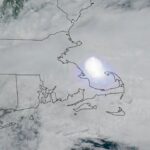
A satellite captured the moment a meteor exploded over New England, creating a shockwave heard across parts of Massachusetts and New Hampshire. Credit : X – CIRA @CIRA_CSU

For a few confusing moments on Saturday afternoon, residents across parts of Massachusetts and New Hampshire were left wondering what had just happened.

Some described hearing a loud boom that echoed across the area. Others said their homes shook unexpectedly.

As reports began appearing on social media, people searched for answers. Was it an explosion? An earthquake? Some kind of aircraft incident?

The explanation turned out to be far more unusual. According to NASA, a meteor travelling at around 120,000 kilometres per hour entered Earth’s atmosphere and broke apart above the Massachusetts and New Hampshire border at 2.06pm local time on 30 May. The event produced a powerful shockwave that was heard across a wide area and startled residents on the ground.

Although dramatic, the space agency says the object posed no threat to the public.

Why so many people heard the blast

Most meteors burn up in the atmosphere without attracting much attention.

This one was large enough to produce what astronomers call a fireball, a particularly bright meteor that can generate a powerful shockwave when it fragments.

NASA estimates that the energy released when the object broke apart was equivalent to roughly 300 tonnes of TNT.

That figure helps explain why residents reported such a strong boom.

Across social media, people shared similar experiences. Some said windows rattled. Others reported feeling vibrations inside their homes. Several described being startled by the sudden noise, especially as there had been no obvious warning beforehand.

The event happened in daylight, making it even more surprising for many people who were simply going about their normal Saturday afternoon when the boom occurred.

While the sound caused concern, experts stress that the meteor disintegrated high in the atmosphere.

The noise heard on the ground came from the shockwave created when the object fragmented during its passage through the sky.

NASA says it was a natural meteor and not space debris

Following events like this, one of the first questions often concerns the object’s origin.

NASA quickly clarified that the fireball was a natural meteor. The agency also stated that it was not linked to any active meteor shower and was not caused by the re-entry of a satellite or other human made space debris.

That distinction is important because objects returning from orbit can sometimes create bright streaks across the sky and attract similar attention.

In this case, however, researchers concluded that the object was a naturally occurring piece of space rock entering Earth’s atmosphere.

The clarification helped answer speculation that had begun circulating online shortly after the boom was heard.

Why events like this remain relatively rare

Every day, Earth encounters material from space.

Most of it is tiny.In many cases, these objects are no larger than grains of dust and burn up harmlessly before anyone notices.

Larger meteors are far less common.

When they enter the atmosphere at high speed and begin to break apart, they can create spectacular fireballs visible across large areas. Under certain conditions, they can also generate shockwaves powerful enough to be heard many kilometres away.

That appears to be what happened over New England on Saturday.Scientists study these events because they provide valuable information about the objects moving through our solar system and how they behave when they encounter Earth’s atmosphere.

For residents who heard the blast, though, the scientific explanation came later.

At the time, many were simply trying to understand why a peaceful afternoon had suddenly been interrupted by a boom loud enough to shake houses and send people searching for answers.

Within a few hours, NASA had provided the explanation. The source was not on the ground at all.

It had travelled through space before ending its journey high above Massachusetts and New Hampshire in a brief but dramatic burst of light and energy.

Continue Reading

%

Toll Prices Rise On Costa Del Sol Stretch Of AP-7 Motorway Ahead Of Summer Season

Published

on

toll-prices-rise-on-costa-del-sol-stretch-of-ap-7-motorway-ahead-of-summer-season

Drivers on the Costa del Sol will have to prepare for much higher AP-7 toll charges starting Monday, June 1 as the special summer rates take effect.

Patricia Navarro, president of the Popular Party in Malaga, has described the adjustment as an “infernal price hike” and demanded action from the Spanish government.

Full journey costs increase

Users completing the full route from Fuengirola to Manilva will pay €19.55 instead of the previous €12 during the peak period.

Navarro warned that the Spanish government has already increased its toll revenue by 10 per cent, raising collections from €30 million to €35 million over just two years. She insists this extra money should return to Malaga province to offer discounts for regular AP-7 users rather than disappear elsewhere.

Political demands grow louder

Navarro criticised the current situation in which funds fail to support local needs such as improvements to the congested A-7 road or construction of a third lane between San Pedro Alcantara and Puerto Banus. She called on the government led by Sanchez to stop squeezing residents in this way especially now that the high tourist season begins.

Details at each toll booth

Drivers can expect the following prices for light vehicles at the main toll points along the Costa del Sol stretch of the AP-7. All figures include VAT and show the change from normal season to special summer rates.

Toll Booth Normal Season Price (€) Special Summer Season Price (€)
Calahonda 5.70 9.25
San Pedro Alcantara 3.85 6.25
Manilva 2.45 4.05
Full Fuengirola to Manilva journey 12.00 19.55

Special summer rates will be in place for the whole of June, July, August and September. The full list of prices can be found at autopistsdelsol.com and includes commercial vehicles too.

Advice for regular users

People who travel the AP-7 often can reduce their costs through the Via-T electronic payment system. Discounts increase with the number of journeys completed each month and may even allow some loyal users to keep normal rates year-round.

All drivers should check their exact route costs in advance using the official Autopista del Sol calculator to avoid surprise charges at the booths.

Navarro repeated her call for the government to direct toll income towards practical help for Malaga residents instead of allowing the pressure on motorists to continue unchecked.

Anyone planning journeys between towns in the Costa del Sol area during the coming months needs to budget for these higher tolls or consider alternative routes where possible.

Motorists face this change every year with the arrival of peak tourist season, yet many still get caught out by the sudden jump. Regular commuters who use the road daily for work or family visits will notice the biggest impact on their budgets over the next four months. Families heading out for day trips or holidays along the coast should factor in the extra expense when planning travel between Fuengirola, Marbella, Estepona and further west to Manilva.

Continue Reading

%

Flames Return To Malaga Ibis Hotel’s A Week After Original Blaze

Published

on

flames-return-to-malaga-ibis-hotel’s-a-week-after-original-blaze

Flames reappeared in the upper floors of the Ibis Hotel in Malaga around 9.30am on Sunday. Visible smoke and occasional flames showed through windows in sections difficult for fire crews to reach internally. Firefighters previously focused efforts entirely on external operations using aerial ladders, pumps and water hoses to cool the structure and contain the activity within.

Thick smoke columns rose once more and became noticeable from several points across the city. This latest development occurred exactly seven days after the initial fire broke out in the same building.

The Ibis Hotel in Malaga is back on fire today. This is the fourth time the fire was supposedly put out, and then after a day or so, it started back up. We have been staying in Malaga the last week and it is crazy. pic.twitter.com/Yjx8M80Dlm

— Eddie Gray (@eddiegray) May 30, 2026

Firefighters continue external operations on site

Crews are continuing cooling tasks from both the front and rear of the building with support vehicles still deployed. One fire engine, one aerial ladder and one water tank remain in position at the Ibis Malaga Centro in Pasillo de Guimbarda next to the river. Hot spots can reactivate during ventilation efforts, yet the council states the incident is under control.

Operations have run without pause for six and a half days. Firefighters have accessed the roof to create additional ventilation routes that release accumulated heat and gases from ceilings and internal spaces. Smoke continues to exit as crews complete full extinguishing work.

Safety fencing encloses hotel and surroundings

Owners of the building have now installed complete perimeter fencing around the structure. This step prevents injury from falling debris and stops unauthorised access to the site. Pedestrian movement is blocked along the section of Pasillo de Guimbarda between Aurora and Trinidad bridges. Vehicles keep moving normally on Calle Cerrojo.

Malaga council confirmed these closures via its social media account. Measures form part of broader precautions to protect the public and the immediate area.

Original outbreak started in ground floor cafe

The blaze began a week ago on Monday, May 25 inside Le Grand Cafe on the lower level of the building. Fire spread quickly through the hotel above and caused extensive damage. No injuries were reported.

Material inside the building, high heat load and broken windows that allowed oxygen entry fuelled rapid spread and complicated initial extinguishing, although the cause of the blaze is still under investigation.

Plans had been in place to duplicate the size of the hotel by adding another 3 floors. Now, it appears that the whole structure is irretrievably damaged and will likely have to be demolished.

Council orders urgent structural protections

Urban planning technicians have been inspecting accessible parts of the building together with firefighters. They had already seen a partial collapse of the first-floor slab in the north section while the overall structure appeared stable in examined areas. South side access has been limited by debris, but the ground floor showed resistance. Exterior brickwork looked bulging with risk of pieces detaching and falling into the street.

Bomberos mantiene el operativo en el incendio registrado la madrugada del 25 de mayo en un edificio del Pasillo de Guimbarda, que está controlado y prácticamente extinguido. pic.twitter.com/Xafgacb3Fm

— Ciudad de Málaga (@malaga) May 27, 2026

Malaga council then instructed owner Anta Res Soli IEI, S.L. to carry out immediate actions under technical supervision. These include perimeter fencing, boarding up facade openings, debris removal and progressive propping of the south ground floor. Continuous surveillance must remain in place until full closure takes effect. The same company owns nearby Ibis Budget and Novotel Malaga Centro properties.

La propiedad del edificio de Pasillo de Guimbarda afectado por el incendio registrado la madrugada del 25 de mayo ha procedido al vallado perimetral del inmueble para impedir daños a terceros por caídas de material y el acceso de personas no autorizadas. pic.twitter.com/SmbPfnMhPl

— Ciudad de Málaga (@malaga) May 30, 2026

Council officials and the Malaga fire service continue monitoring the site while continued focus on prevention and cooling is carried out and until extinguishing work finishes completely.

Continue Reading
Advertisement
Advertisement

Spanish Real Estate Agents

Tags

Trending

Copyright © 2017 Spanish Property & News