Connect with us

%

Spain’s Bottle Return Rules Include A Surprise

Published

on

spain’s-bottle-return-rules-include-a-surprise

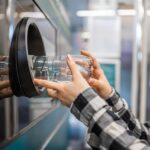
Under Spain’s upcoming deposit return scheme, shoppers will be able to return eligible bottles and cans to recover their deposit. Credit : T.Vyc, Shutterstock

Most people assume that if a shop takes something back, it’s because they sold it in the first place.

From this summer, that idea could change for millions of consumers in Spain.

Under Spain’s upcoming deposit return scheme for drinks containers, supermarkets, shops, bars and restaurants may be required to accept eligible bottles, cans and cartons even if those items were originally purchased somewhere else. In practical terms, that could mean buying a bottle of water in one supermarket and returning the empty container to a completely different business to recover your deposit.

The detail has received far less attention than the deposit itself, but it could become one of the biggest day to day changes for both consumers and businesses when the system begins operating.

The measure forms part of Spain’s implementation of the Deposit, Return and Refund System, known as SDDR, which aims to improve recycling rates and increase the recovery of single use drinks containers. Under the scheme, consumers will pay an additional 10 cents when purchasing certain packaged drinks and receive the money back when the empty container is returned.

For shoppers, it could make recovering the deposit more convenient. For businesses, it may create an entirely new responsibility.

The little known rule that could change how returns work in Spain

For decades, returning an item has generally meant going back to the place where it was purchased.

The new system takes a different approach. According to the plans outlined for the scheme, participating establishments will not simply be collecting containers they have sold themselves. They will also be expected to accept eligible containers returned by consumers regardless of where the original purchase took place.

Imagine buying a soft drink during a day trip, finishing it while travelling and then returning the empty container closer to home.

Under the proposed model, that should be possible.

Supporters of the system argue that making returns easy is essential if Spain wants to achieve the high collection rates seen in countries where similar schemes already operate.

The reasoning is straightforward. The more convenient the process, the more likely people are to participate. If consumers had to remember exactly where each bottle was purchased and return it to the same location, many would simply give up.

By allowing returns at different participating businesses, authorities hope to remove that obstacle.

Why businesses may face a new logistical challenge

For consumers, returning a bottle sounds simple. For businesses, the reality may be more complicated.

Supermarkets, convenience stores, bars and other participating establishments will need to handle a flow of returned containers that may have been purchased anywhere within the system.

That raises practical questions.

Where will containers be stored until collection? How much additional space will be required? How will businesses process refunds efficiently during busy periods?

Many retailers are expected to rely on reverse vending machines, which automatically accept containers and process refunds. These machines are already common in countries that operate deposit return systems.

Even so, businesses will need to integrate the new procedures into their daily operations.

Large supermarkets may find the transition easier because they have more space and infrastructure.

Smaller businesses could face greater challenges, particularly in locations where customer numbers rise significantly during the tourist season.

The system will affect not only supermarkets but also bars, restaurants and other establishments that sell eligible drinks. That broad scope is one reason the changes are attracting attention across the retail and hospitality sectors.

How the new deposit system is expected to work

The scheme will apply to a range of common drinks containers used every day across Spain.

According to the information released so far, plastic bottles, cans and cartons with a capacity of up to three litres will be included.

Products such as bottled water, soft drinks, juices and canned beverages are expected to fall within the system.

When consumers purchase one of these products, an additional 10 cent deposit will be added to the price. That money is not intended to function as a tax or a permanent surcharge.

Instead, it acts as a refundable deposit that can be recovered when the empty container is returned through the approved collection network.

Spain hopes the system will significantly increase recycling rates and help recover more packaging materials for reuse and processing.

The long term objective is ambitious. Authorities want to achieve a 90 per cent recovery rate for eligible containers before the beginning of 2029.

Whether consumers embrace the system quickly remains to be seen.

What is clear is that many people may soon find themselves looking at an empty bottle differently. Not as rubbish, but as something worth holding onto for a little longer.

Q&A section

Can I return a bottle to a different shop from where I bought it?

According to the planned system, participating businesses will be required to accept eligible containers even if they were originally purchased elsewhere.

How much is the deposit?

The proposed deposit is 10 cents per eligible container.

Which containers are included?

Plastic bottles, cans and cartons with a capacity of up to three litres are expected to be covered.

Is the 10 cent charge a tax?

No. It is a refundable deposit that consumers can recover when returning the empty container.

Will bars and restaurants have to accept returns?

The system is expected to affect bars, restaurants, supermarkets and other participating establishments.

Why is Spain introducing the scheme?

The aim is to increase recycling rates and recover a higher percentage of drinks containers for recycling and reuse.

When will the system start?

The changes are expected to begin from 12 August 2026 as part of Spain’s implementation of the SDDR framework.

%

Cars & Coffee Sotogrande At Trocadero.

Published

on

cars-&-coffee-sotogrande-at-trocadero.

The stunning Sotogrande beach venue will host its first casual community meet for drivers and automotive enthusiasts.

A new meet up for car lovers on the coast

Cars & Coffee Sotogrande is revving its engines to launch its first organiser‑led motoring social on Sunday, June 14. This debut meet will take place at the gorgeous Trocadero Sotogrande, giving car enthusiasts a chilled morning surrounded by impressive vehicles and other car superfans.

The event will run from 11am to 2pm. Organisers are hoping for a wide range of supercars, sports cars and classic vehicles, with additional models all welcomed by the Cars and Coffee team. Designed and advertised to be a laid‑back community meet rather than a formal show, the morning is looking to bring together owners, drivers and fans who all share an appreciation for automotive culture and the lifestyle that surrounds it.

Event entry and venue details

There is no fee to attend or to display a vehicle. Guests are encouraged to support Trocadero Sotogrande, whose hospitality has made the launch possible, by enjoying coffee, drinks or lunch at the venue during or after the meet.

Parking and display vehicle information

Spaces for display vehicles are limited, with entry operating on a first‑come, first‑served basis. Early arrival is recommended. Visitors attending without a display vehicle are asked to use the nearby parking along the main road outside the venue.

Building a respectful motoring community

As this is the first official Cars & Coffee Sotogrande event, the team hopes to start off on the right note by creating a welcoming and respectful gathering that can hopefully grow into a regular monthly meet. Attendees are asked to respect the venue, staff, guests and nearby residents throughout the day.

If you are a super, classic or sports car owner, or just have an interested in the motoring world then head down for a coffee and surround yourself with people who share your passion.

Cars & Coffee Sotogrande is 11am to 2pm Sunday, June 14 at Trocadero Sotogrande.

Continue Reading

%

Torrox Romeria San Antonio 2026

Published

on

torrox-romeria-san-antonio-2026

Traditional Torrox Romeria celebrations. Credit: Ayuntamiento de Torrox FB

Torrox residents are currently looking forward to the Romeria de San Antonio from June 12 to 14 packed with cultural, musical, equestrian and religious activities that celebrate local traditions.

Community leaders value local involvement

Mayor Oscar Medina values the role of neighbours and associations in making each Romeria edition possible. The town hall is providing logistics and lighting to support what ranks as one of the most special events in Malaga province. Medina is encouraging everyone to join in with activities such as hot chocolate serving, horseback ribbon race, rociera mass, popular paella and equestrian acts. Councillor Salvador Escudero says that this 49th edition, coming one year ahead of the 50th anniversary, makes this a special event everyone will want to be a part of. The festival is organised with neighbours and associations in a rewarding collaboration. Council is also praising the work to keep the romeria essence and is focusing on the Saturday family water party to involve more children and families.

Full programme for the Romeria

Friday, June 12 features L&L Academy performance at 9.30pm in San Antonio Square followed by Young Zone opening and guateque party with Miguel Botana. Saturday, June 13 offers family inflatables and water fun from 12am then afternoon hot chocolate by San Roque Women Association children’s show, choir performances by La Biznaga Musical Almedina and Las Nieves, humour by Los Quillos and music from Ascen Nunez and Rubenline.

Sunday, June 14 starts at 10.30am with San Antonio procession to Nuestra Senora de las Nieves neighbourhood for rociera mass at 11am. Bread blessing and popular paella follow the arrival. Afternoon brings ribbon race on horseback, dance acts, awards for floats and pilgrims and saint return to church. Mecamela performs at 9.30pm with firework display at 11pm. Contests for floats, pilgrims and ribbon race offer prizes up to €450 for top floats and trophies for other categories.

Continue Reading

%

Crumbling Railway: Fuengirola Pedestrian Narrowly Avoids Falling Concrete

Published

on

crumbling-railway:-fuengirola-pedestrian-narrowly-avoids-falling-concrete

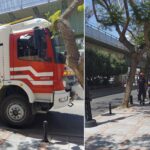
Fire brigade arrives to cordon off area. Credit: Freda.

Local Fuengirola resident, Freda headed out from her home near the elevated Los Boliches station in Fuengirola. A chunk of concrete broke loose from the structure overhead and landed close by. The falling piece could easily have caused serious harm or proved fatal.

Close call forces immediate safety response

Freda first mistook the debris for something harmless before spotting the damaged concrete overhead. Unsure of the right steps, she contacted the Euro Weekly News office for guidance. Office manager Alison there encouraged her to report the matter straight to the emergency services. Firefighters arrived quickly to make the area safe and protect passers-by. Local police then recorded her formal statement about the incident.

Crumbling infrastructure raises alarms along C1 route

Residents voice mounting frustration over the state of the Cercanias C1 commuter line. Crumbling concrete, broken lifts and failing support structures appear at multiple points along the line. These problems affect stations serving Fuengirola, Benalmadena, Torremolinos and Malaga. The essential route carries thousands of daily passengers between coastal towns and Malaga centre.
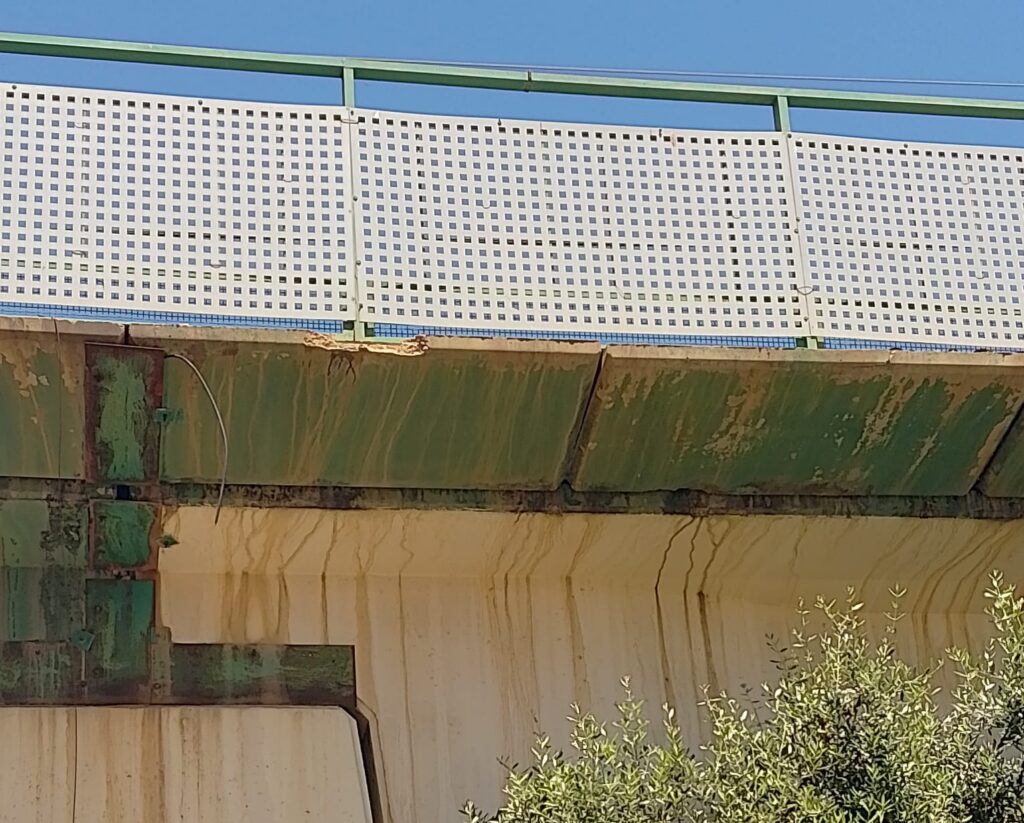
Crumbling Los Boliches platform overhead.
Credit: Freda.

Councils hold no legal power for rail line fixes

Local authorities cannot step in with repairs even when safety concerns arise. The entire line falls under Renfe and the national Ministry of Transport. This central government responsibility blocks any direct action by town halls despite repeated requests for urgent maintenance.

Mayors stage protests over years of neglect

In July 2025, mayors from Costa del Sol towns gathered to protest the serious lack of investment in both the C1 line and the A7 motorway. These routes remain the only main practical links between coastal communities. Little progress followed the demonstrations, leaving daily users exposed to ongoing risks and delays.

Major upgrade works expected for final quarter of 2027

Engineers plan a complete service suspension lasting several months from late 2027. Replacement buses will operate while crews carry out track duplication, station upgrades and tunnel improvements. Officials expect these changes to increase capacity once complete. Freda’s recent experience shows the current condition already creates immediate hazards for users.

Formal police reports push central government to act

Freda followed the correct procedure by lodging an official complaint with police. Authorities now wait for more residents to document similar issues in the same way. Each formal report adds weight to requests for emergency funding. Private grumbling achieves little, yet collective official records might accelerate budget decisions at national level, or it is at least hoped. Residents who spot serious damage should contact emergency services without delay to help protect everyone who relies on the line.

Continue Reading
Advertisement
Advertisement

Spanish Real Estate Agents

Tags

Trending

Copyright © 2017 Spanish Property & News