
deposit on bottles and cans
A new rule could change where you return bottles in Spain

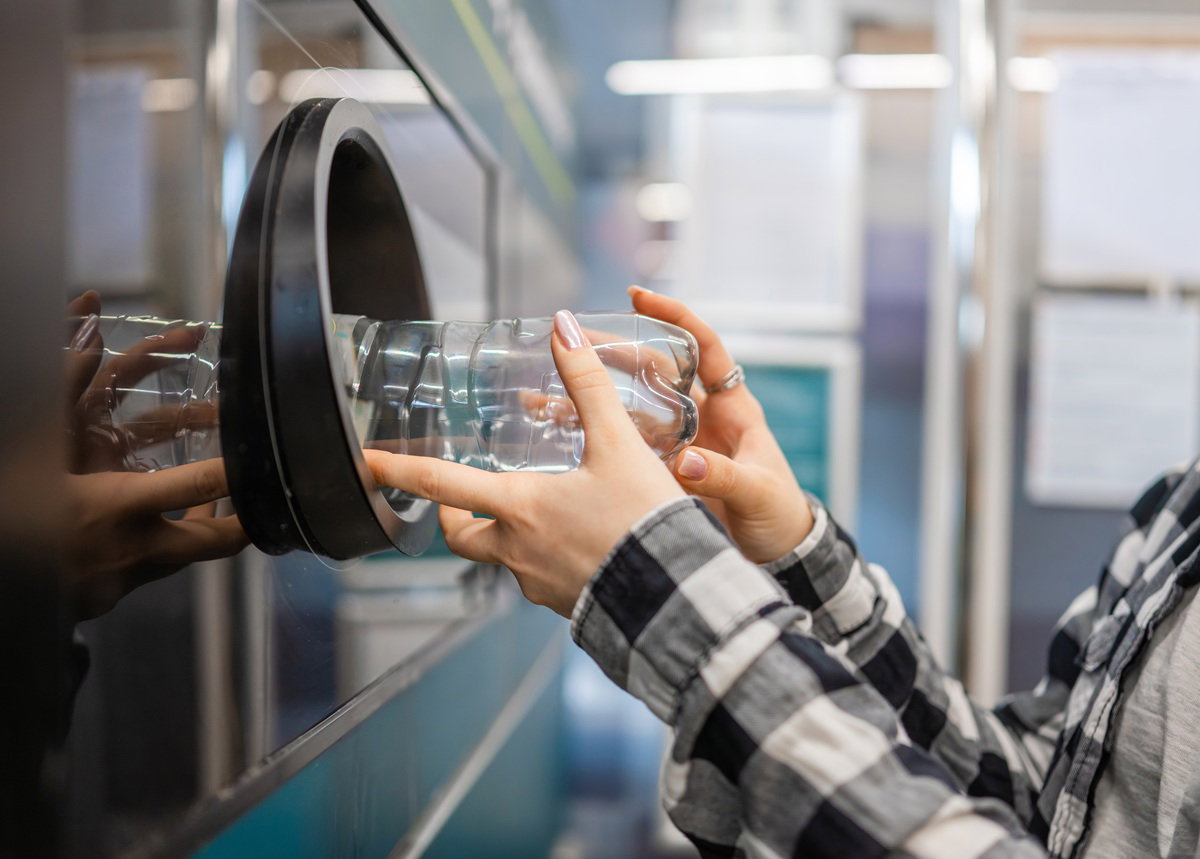
Under Spain’s upcoming deposit return scheme, shoppers will be able to return eligible bottles and cans to recover their deposit.
Credit : T.Vyc, Shutterstock
Most people assume that if a shop takes something back, it’s because they sold it in the first place.
From this summer, that idea could change for millions of consumers in Spain.
Under Spain’s upcoming deposit return scheme for drinks containers, supermarkets, shops, bars and restaurants may be required to accept eligible bottles, cans and cartons even if those items were originally purchased somewhere else. In practical terms, that could mean buying a bottle of water in one supermarket and returning the empty container to a completely different business to recover your deposit.
The detail has received far less attention than the deposit itself, but it could become one of the biggest day to day changes for both consumers and businesses when the system begins operating.
The measure forms part of Spain’s implementation of the Deposit, Return and Refund System, known as SDDR, which aims to improve recycling rates and increase the recovery of single use drinks containers. Under the scheme, consumers will pay an additional 10 cents when purchasing certain packaged drinks and receive the money back when the empty container is returned.
For shoppers, it could make recovering the deposit more convenient. For businesses, it may create an entirely new responsibility.
The little known rule that could change how returns work in Spain
For decades, returning an item has generally meant going back to the place where it was purchased.
The new system takes a different approach. According to the plans outlined for the scheme, participating establishments will not simply be collecting containers they have sold themselves. They will also be expected to accept eligible containers returned by consumers regardless of where the original purchase took place.
Imagine buying a soft drink during a day trip, finishing it while travelling and then returning the empty container closer to home.
Under the proposed model, that should be possible.
Supporters of the system argue that making returns easy is essential if Spain wants to achieve the high collection rates seen in countries where similar schemes already operate.
The reasoning is straightforward. The more convenient the process, the more likely people are to participate. If consumers had to remember exactly where each bottle was purchased and return it to the same location, many would simply give up.
By allowing returns at different participating businesses, authorities hope to remove that obstacle.
Why businesses may face a new logistical challenge
For consumers, returning a bottle sounds simple. For businesses, the reality may be more complicated.
Supermarkets, convenience stores, bars and other participating establishments will need to handle a flow of returned containers that may have been purchased anywhere within the system.
That raises practical questions.
Where will containers be stored until collection? How much additional space will be required? How will businesses process refunds efficiently during busy periods?
Many retailers are expected to rely on reverse vending machines, which automatically accept containers and process refunds. These machines are already common in countries that operate deposit return systems.
Even so, businesses will need to integrate the new procedures into their daily operations.
Large supermarkets may find the transition easier because they have more space and infrastructure.
Smaller businesses could face greater challenges, particularly in locations where customer numbers rise significantly during the tourist season.
The system will affect not only supermarkets but also bars, restaurants and other establishments that sell eligible drinks. That broad scope is one reason the changes are attracting attention across the retail and hospitality sectors.
How the new deposit system is expected to work
The scheme will apply to a range of common drinks containers used every day across Spain.
According to the information released so far, plastic bottles, cans and cartons with a capacity of up to three litres will be included.
Products such as bottled water, soft drinks, juices and canned beverages are expected to fall within the system.
When consumers purchase one of these products, an additional 10 cent deposit will be added to the price. That money is not intended to function as a tax or a permanent surcharge.
Instead, it acts as a refundable deposit that can be recovered when the empty container is returned through the approved collection network.
Spain hopes the system will significantly increase recycling rates and help recover more packaging materials for reuse and processing.
The long term objective is ambitious. Authorities want to achieve a 90 per cent recovery rate for eligible containers before the beginning of 2029.
Whether consumers embrace the system quickly remains to be seen.
What is clear is that many people may soon find themselves looking at an empty bottle differently. Not as rubbish, but as something worth holding onto for a little longer.
Q&A section
Can I return a bottle to a different shop from where I bought it?
According to the planned system, participating businesses will be required to accept eligible containers even if they were originally purchased elsewhere.
How much is the deposit?
The proposed deposit is 10 cents per eligible container.
Which containers are included?
Plastic bottles, cans and cartons with a capacity of up to three litres are expected to be covered.
Is the 10 cent charge a tax?
No. It is a refundable deposit that consumers can recover when returning the empty container.
Will bars and restaurants have to accept returns?
The system is expected to affect bars, restaurants, supermarkets and other participating establishments.
Why is Spain introducing the scheme?
The aim is to increase recycling rates and recover a higher percentage of drinks containers for recycling and reuse.
When will the system start?
The changes are expected to begin from 12 August 2026 as part of Spain’s implementation of the SDDR framework.







Quirky Almuñecar ship house receives fresh facade update in popular coastal spot
Lorca residents warned of loud sonic booms in June
A new rule could change where you return bottles in Spain
In The Final Stretch Of Colombia’s Presidential Campaign, Undecided Voters Are In High Demand

How To Get A Tourist Rental Licence In Andalusia (Spain) – Step-By-Step Guide 2025

Luis Rafael Sánchez: ‘Republicans Can’t Stand The Idea Of Puerto Rico Becoming A US State’


-
Abelardo de la Espriella2 weeks ago
In The Final Stretch Of Colombia’s Presidential Campaign, Undecided Voters Are In High Demand
-
 New Developments3 weeks ago
How To Get A Tourist Rental Licence In Andalusia (Spain) – Step-By-Step Guide 2025
-
 Bad Bunny2 weeks ago
Luis Rafael Sánchez: ‘Republicans Can’t Stand The Idea Of Puerto Rico Becoming A US State’
-
aemet3 weeks ago
Spain heatwave 2026: When the next extreme temperatures could hit and which areas may suffer most
-
Competiciones4 weeks ago
E
-
Costa Blanca North4 weeks ago
Benidorm unveils massive new SkyFest venue expecting 200,000 visitors this summer
-
buffet4 weeks ago
Toyo Japanese, Asian favours in Fuengirola
-
Costa Blanca South4 weeks ago
Torrevieja opens registration for Concilia Verano 2026 summer school