Connect with us

%

Janey Lee Grace Brings Sober Inspiration To Costa Del Sol

Published

on

janey-lee-grace-brings-sober-inspiration-to-costa-del-sol

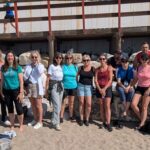
Sober Socials walking group on Mijas coast. Credit: SS

Local initiative Sober Socials invites everyone on the Costa del Sol to explore alcohol-free ways to enjoy summer social life through connection, confidence and improved wellbeing.

Empowering breakfast meet-up launches new series

Sober Socials’s first breakfast event is titled Boss Your Summer Without the Booze on Tuesday, July 7, at 10am in Urban Chai, San Pedro Alcantara. Anyone who identifies as sober, sober-curious or simply interested in healthier choices gathers for practical discussions on managing summer occasions without alcohol.

Participants can discover strategies to upgrade summer rituals, get through social events with greater confidence, and protect personal wellbeing during peak social periods. Conversations will also focus on finding joy, freedom and authentic connections in daily life without the booze.

There will be coffee, tea and a tasty breakfast in the €20 ticket price, with limited places available. People book by emailing hello@sobersocials.es in advance.

Janey Lee Grace shares expertise as a special guest

Broadcaster and author Janey Lee Grace joins as the headline speaker. She founded The Sober Club, a global community that supports individuals rethinking their relationship with alcohol. Her background includes years as a backing singer with artists such as George Michael and Wham, plus 25 years presenting on BBC Radio 2.

Grace delivers a warm, relatable perspective on sobriety, holistic wellbeing and building fulfilling lives. Her books include Happy Healthy Sober, a comprehensive guide to alcohol-free living, and Imperfectly Natural Woman, an Amazon bestseller on natural holistic approaches. She also hosts the popular Alcohol-Free Life podcast.

Community response to growing demand for alcohol-free options

Founders Emma and Louise established Sober Socials to create welcoming spaces for people to connect and enjoy experiences without alcohol pressure. Louise says that many feel extra expectations to drink during summer months and appreciates Grace’s empowering message at this time.

Numbers choosing alcohol-free lifestyles continue to rise across different age groups. Individuals report benefits such as better sleep, stronger mental health, increased confidence and higher life satisfaction after cutting down or stopping alcohol consumption.

Sober Socials organises events, conversations and shared activities to show fresh possibilities for social connection in areas where drinking often dominates. Visitors access more information via the website www.sobersocials.es or social media channels @sobersocials.es on Facebook and Instagram.

Broader movement gains momentum in popular destinations

This gathering reflects wider interest in mindful living choices among both locals and tourists in southern Spain. Experts like Grace provide tools and inspiration for those seeking alternatives during busy holiday seasons.

Event details confirm the focus remains inclusive and informal. Anyone curious about healthier habits around alcohol finds practical support and community in a relaxed setting.

%

DGT Issues Heatwave Warning For Drivers

Published

on

dgt-issues-heatwave-warning-for-drivers

The DGT is warning drivers to take extra care as Spain’s first major heatwave of summer pushes temperatures towards 40C. Credit : stock adobe

Spain’s first major heatwave of the summer is arriving just as roads begin filling up with weekend travellers and early holidaymakers. With temperatures forecast to approach 40C in parts of the country, the DGT is warning motorists to take extra care. The concern is not only what the heat can do to a vehicle, but what it can do to the person sitting behind the wheel.

For many people, a summer drive across Spain is part of the season.

Whether it is a weekend at the coast, a family visit or the start of a long awaited holiday, thousands of motorists will be spending hours on the road over the coming days.

The car is fuelled, the luggage is packed and the route has been planned. What often receives far less attention is how quickly extreme heat can affect concentration.

Anyone who has driven through Spain during a heatwave will recognise the feeling. The journey starts comfortably enough. The air conditioning is running, traffic is moving and everything seems under control.

Then the kilometres begin to add up. The sun beats through the windscreen. Traffic slows. Drivers become more impatient. Small frustrations suddenly feel bigger than they should.

That gradual change is exactly what worries road safety authorities every summer. The DGT has once again reminded motorists that heat can affect alertness, increase fatigue and make driving more demanding, particularly on longer journeys.

Why extreme heat can affect drivers more than they realise

Most people think about road safety in terms of speed, weather or vehicle condition.

Heat tends to be overlooked. Yet it can have a surprisingly strong effect on the body.

When temperatures rise, drivers tire more quickly and often struggle to maintain the same level of concentration for extended periods. Long hours behind the wheel become more exhausting and reaction times can suffer.

According to information highlighted by Euromaster based on research from the Foundation for Road Safety, cabin temperatures above 35C can significantly increase the risk of an accident.

The organisation says the likelihood of a crash may rise by as much as 25 per cent under those conditions.

Researchers have also pointed out that excessive heat can affect alertness and decision making. Some comparisons have even been made between driving in extreme heat and driving after consuming alcohol within certain legal limits, not because the effects are identical, but because both can reduce a driver’s ability to react effectively.

Heat can also influence behaviour. Drivers may become more irritable, more impatient in traffic and less attentive to what is happening around them.

During busy summer weekends, when roads are already under pressure, that combination can create additional risks.

The car problems that often appear during a heatwave

While the DGT’s focus is often on drivers, vehicles can suffer too. Mechanics frequently describe the first major heatwave of the year as a test that exposes weaknesses which may have gone unnoticed during spring.

Tyres are among the components most affected by high temperatures.

Hot road surfaces place extra stress on rubber, making tyre pressure and tread condition particularly important before setting off on a long journey.

Cooling systems also come under greater strain. A vehicle with a minor issue that causes no problems in mild weather may suddenly struggle when temperatures climb towards 40C.

Experts recommend checking coolant levels, engine oil and braking systems before travelling.

Batteries can also be affected by prolonged exposure to heat, especially older units approaching the end of their lifespan.

Then there is the air conditioning. Most drivers see it as a comfort feature. Traffic authorities see it as something more important.

The DGT recommends maintaining the interior of the vehicle at around 22C to 24C, arguing that comfortable temperatures help drivers remain alert and focused throughout the journey.

The summer mistake authorities keep seeing every year

Despite repeated warnings, emergency services continue to respond to the same preventable situations every summer and one of the most dangerous involves leaving children, elderly people or pets inside parked vehicles.

Even when outside temperatures seem manageable, conditions inside a closed car can become dangerous in a surprisingly short period of time.

The DGT is also encouraging drivers to avoid travelling during the hottest hours whenever possible, particularly during long journeys.

Regular breaks remain one of the simplest ways to reduce fatigue. The agency recommends stopping every two hours or roughly every 200 kilometres, drinking water frequently and pulling over immediately if signs of tiredness begin to appear.

With temperatures climbing across much of Spain and summer traffic expected to increase over the coming weeks, authorities say preparation matters more than ever.

Most drivers will remember to check their tyres, fuel level and air conditioning before setting off.

The DGT’s message is that they should not forget to check something else as well : The condition of the driver. Because during a Spanish heatwave, that may be the most important safety feature in the entire vehicle.

Continue Reading

%

World Cup ‘miracle’ Leaves Social Media Baffled As Colombian Fans Leap From Wheelchairs To Celebrate Goal


Published

on

world-cup-‘miracle’-leaves-social-media-baffled-as-colombian-fans-leap-from-wheelchairs-to-celebrate-goal

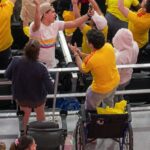
Colombia’s goalscorer deserved credit not only for finding the back of the net but also for apparently performing wonders usually reserved for saints and faith healers. Photo credit: @aldiaGuayaquil on X

Football has produced plenty of miracles over the years, but the latest viral moment from the Club World Cup may have prompted some fans to question whether they had witnessed something altogether different. A video shared widely across social media shows two Colombian supporters sitting in a wheelchair-accessible section suddenly springing to their feet to celebrate a goal by their national side.

Within minutes, the internet had done what the internet does best: jump to conclusions. Comments jokingly hailed the moment as a “miracle”, with some users claiming Colombia’s goalscorer deserved credit not only for finding the back of the net but also for apparently performing wonders usually reserved for saints and faith healers.

The goal that broke the internet

As the clip spread, many viewers were quick to point out an important reality that often gets overlooked. Not everyone who uses a wheelchair is unable to stand or walk. Many people rely on wheelchairs because of limited mobility, chronic pain, neurological conditions, fatigue disorders or fluctuating health issues. Some can walk short distances but use mobility aids to avoid pain, reduce exhaustion or maintain independence.

The viral celebration has unintentionally shone a spotlight on invisible illnesses and disabilities, an issue that campaigners have spent years trying to explain. For many people living with conditions that are not immediately obvious, public judgement can be an almost daily occurrence. Someone may use a wheelchair one day and walk the next. They may park in a disabled bay and appear perfectly healthy. To an outsider, it can seem confusing. To the person living with the condition, it is simply everyday life.

Internet detectives launch their investigation

As with most viral moments, social media quickly divided itself into two camps. One pointed out that many wheelchair users can stand or walk for short periods, particularly when caught up in the excitement of a goal celebration. The other immediately transformed into a team of amateur detectives, convinced they had uncovered the greatest seating scandal in World Cup history.

According to this group, the pair had somehow masterminded an elaborate plan involving wheelchairs, football tickets and Oscar-worthy acting performances, all in pursuit of a better view of the match. The reality, of course, is that nobody knows the supporters’ medical circumstances. Many disabilities and chronic health conditions are invisible, and mobility can vary dramatically from person to person. But that didn’t stop thousands of social media users from conducting investigations that would make a crime drama detective proud.

Football, emotions and a touch of comedy

Of course, that did not stop the internet from doing what it does best. Memes quickly appeared online suggesting the goal had achieved more than years of medical treatment, while others joked that Colombia had discovered a revolutionary new healthcare programme hidden somewhere in their attack.

One tongue-in-cheek post suggested FIFA should investigate the player responsible for the goal because his finishing ability appeared to possess supernatural powers. Another claimed football clubs should immediately start replacing physiotherapists with strikers.

Fortunately, much of the humour remained light-hearted, with many of the jokes aimed more at people’s assumptions than at the supporters themselves. After all, football has a long history of making people behave in ways they never expected. Fans have celebrated goals by hugging strangers, spilling drinks over themselves, falling down rows of seats and temporarily forgetting every ounce of dignity they once possessed.

For a few seconds after a dramatic goal, logic often leaves the stadium.

hasta los discapacitados se levantaron de su silla para festejar los goles de Colombia en el mundial 🇨🇴pic.twitter.com/03P3IFqcW0

— Laura (@phavlovah) June 18, 2026

A viral moment with an important message

That appears to be exactly what happened here. Two passionate Colombian supporters saw their team score and reacted instinctively, creating one of the most talked-about moments of the tournament. While the clip has provided plenty of laughs, it has also sparked a wider conversation about invisible illnesses and the assumptions people make about disability.

The reality is that many wheelchair users can stand, some can walk short distances and others experience fluctuating symptoms that change from day to day. Disability is not always obvious, and it does not fit neatly into the categories many people expect.So while social media may continue debating whether football produced a miracle, a misunderstanding or simply a burst of World Cup excitement, the viral clip has done something valuable.

It has reminded millions of people that not everything is as it first appears, and that sometimes the biggest surprise is not the goal itself, but the assumptions made afterwards.

Continue Reading

%

New Era Dawns At Age Concern Marbella – San Pedro

Published

on

new-era-dawns-at-age-concern-marbella-–-san-pedro

Carol and Ophelia at the handover. Credit: Simon Pecovnik

Carol Woolnoth, the much-loved president of Age Concern Marbella – San Pedro, is retiring after six successful and energetic years, but will continue working hard to support the charity’s vital work.

Age Concern Marbella – San Pedro has ushered in a major new chapter on June 17 with a warm farewell and hug for retiring president Carol Woolnoth and an enthusiastic welcome for her successor, Ophelia Smith.

Carol has led the charity for the past six years, taking over from founder and first president Tom Burns. During her tenure she has strengthened the organisation’s position as a valued and integral part of the Marbella and San Pedro community, providing essential support to the older English-speaking expat population.
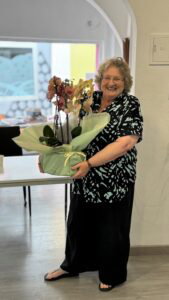
Carol Woolnoth
What a wonderful smile! Hats off to Carol!
Credit: Simon Pecovnik

While stepping down from the high-profile role of president, Carol will remain actively involved with all aspects of Age Concern, focusing on training, induction and home visits.

The charity’s core mission is still unchanged: to combat the loneliness and isolation that many older people fear as an inevitable part of ageing. As the organisation continues to grow, its commitment to the English-speaking senior community on the Costa del Sol stays firmly at the heart of everything it does.

“Thank you, Carol, and our very best wishes to Ophelia,” the charity said. “We look forward to the future under your leadership.” Ophelia brings a wealth of practical knowledge with her, being totally bilingual and fully integrated into both the Spanish and English-speaking communities. She will undoubtedly be a massive benefit to the Age Concern community.

Summer schedule update

As summer gets underway, some activities will be temporarily suspended to give the charity’s hard-working volunteers a well-earned break. However, the lovely folk at Age Concern are absolutely determined to keep ever-popular coffee mornings going through all the summer months, as well as the Helpline (689 35 51 98), open every weekday from 10am to 6pm.

Holidaymakers looking for a friendly break from the sun, sea and sangria and some refuge in the air-conditioned cafes of Marbella and San Pedro are warmly invited to pop in and join a coffee morning for conversation and companionship. For details of your nearest session, simply call the helpline on 689 355 198.

Continue Reading
Advertisement
Advertisement

Spanish Real Estate Agents

Tags

Trending

Copyright © 2017 Spanish Property & News