
EU rules
A major EU border system goes live today – What changes for travellers?


Passengers pass through border control at a European airport as the EU activates new interconnected migration and visa databases.
Credit : Alexanderstock23, Shutterstock
A major change has taken effect across the European Union today, with European authorities now able to search several migration, visa and border databases through a single portal. While most travellers won’t notice anything different at airports or border crossings, the move marks another step in the EU’s long-running effort to connect the systems used to manage visas, asylum applications, border checks and security information across member states.
Two major interoperability tools officially entered service on 12 June as part of a project first approved by the European Union in 2019.
The launch comes as Europe has already begun its transition towards a more digital approach to border management, with the Entry Exit System (EES) and the future ETIAS travel authorisation scheme forming part of that broader transformation.
For ordinary travellers, there are no new forms to complete today and no new travel requirements linked directly to this launch. The biggest changes are taking place behind the scenes, where authorities now have access to tools designed to make information searches faster and more efficient.
A new EU search portal is now live
At the centre of today’s launch is the European Search Portal.
Until now, officials dealing with border management, visas, migration or asylum procedures often had to check several databases separately. Depending on the situation, that could involve consulting multiple systems to verify information relating to the same person.
The new portal changes that process.
Authorised users can now carry out a single search through one interface and access information held across several connected EU databases.
According to the European Commission, the portal links systems including the Entry Exit System, the Visa Information System, Eurodac, the Schengen Information System, ETIAS and ECRIS TCN, which contains information relating to criminal records of third-country nationals.
The aim is not to create new information about travellers. Instead, the objective is to make it easier for authorised authorities to locate and compare information that already exists within EU systems.
For someone applying for a visa, seeking asylum or crossing an external Schengen border, the process itself remains largely unchanged. What changes is the way authorities can access relevant records when carrying out checks.
A shared identity system is also entering operation
Alongside the search portal, the EU has also activated the Common Identity Repository. The name sounds highly technical, but the purpose is relatively straightforward.
Information relating to the same person can currently appear across several different databases used for migration, visas, asylum procedures and security checks. The repository is designed to help authorities identify individuals more accurately by bringing together identity information that is already stored in those systems.
European officials say the system should help reduce errors, make identity verification more reliable and assist authorities in detecting situations where multiple identities may be linked to the same person.
The repository draws information from several existing databases, including Eurodac, VIS, EES and ECRIS TCN.
According to the Commission, the project is intended to improve the organisation and use of existing information rather than create entirely new categories of personal data.
Why the EU is introducing these systems now
The launch reflects years of work by European institutions to improve cooperation between member states and reduce the fragmentation of information systems used across the bloc.
Migration management, asylum procedures, visa applications and border controls increasingly rely on digital systems. One of the challenges has been ensuring that relevant information can be located efficiently while remaining subject to existing legal safeguards.
The European Commission says technical testing carried out by eu-LISA, the agency responsible for managing large-scale EU information systems, was successfully completed before today’s launch. The Commission also confirmed that the necessary legal and technical conditions had been met.
As of today, authorised national and European authorities have access to more advanced tools for identity verification, migration case management and border-related checks.
For most people travelling this summer, the impact is likely to be invisible. Passengers will still present the same travel documents and follow the same procedures that apply to their particular journey.
However, today’s launch represents another step towards a more interconnected European border management system, one that is increasingly built around digital information sharing between member states.
The changes may not be obvious when passing through an airport or applying for a visa, but they form part of the infrastructure that will support Europe’s future border, migration and travel systems.










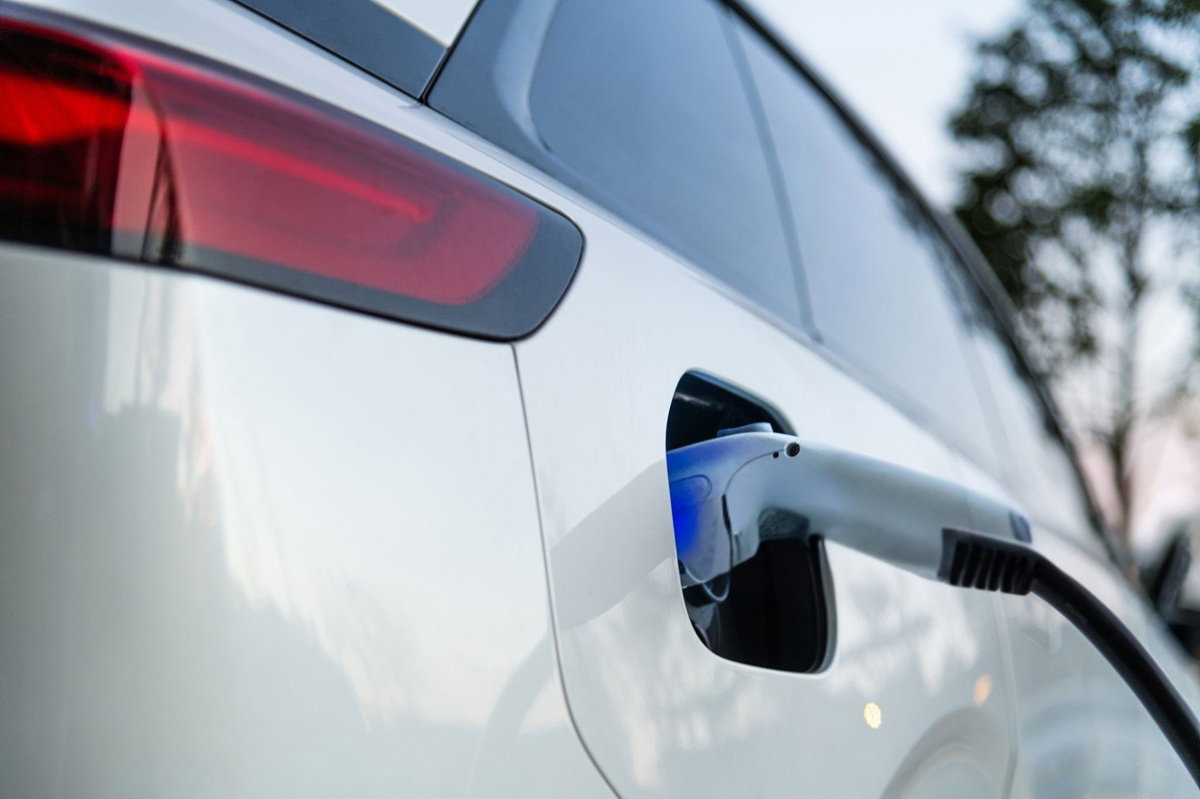
New EU battery passport rules aim to give EV owners clearer information about battery health and performance.
Credit : baona jnr, Shutterstock
Anyone who has ever looked at a used electric car has probably wondered the same thing : What condition is the battery really in?
Mileage is easy to check and service history can usually be verified. The battery, however, is a different story.
It is often the most expensive part of the vehicle, yet for many buyers it remains something of a mystery.
Sellers can provide information. Manufacturers publish official figures. There are battery health reports and specialist inspections available.
Even so, many drivers still feel they are making an educated guess when it comes to understanding the true condition of an electric vehicle’s battery.
That uncertainty is exactly what the European Union hopes to reduce with a major change arriving in 2027.
From 18 February 2027, electric vehicles sold in Europe will be required to carry a digital battery passport, known as the Battery Pass. Accessible through a QR code attached to the vehicle, it will allow drivers, buyers and repair professionals to access detailed information about the battery with a simple scan.
For anyone thinking about buying an electric vehicle in the future, it could make one of the most important parts of the car far easier to understand.
Why battery information has become such a big issue for drivers
The battery sits at the centre of almost every conversation about electric vehicles.
How long will it last?How much range has it lost?Will it still perform properly in five years?How expensive would it be to replace?
These questions matter because the battery influences everything from daily driving range to the resale value of the vehicle.
The challenge is that finding reliable information is not always straightforward.
Two electric cars may look identical from the outside and have similar mileage, yet their batteries may have experienced very different levels of wear.
One might have spent years fast charging several times a week.Another may have been driven gently and charged more slowly.
Until now, much of that information has remained difficult for ordinary buyers to access.
That has helped create uncertainty in the used EV market, particularly among people considering their first electric vehicle.
The new Battery Pass is designed to make some of those unknowns easier to understand.
What drivers will actually be able to see
The QR code will act as a digital record linked directly to the battery.Once scanned, it will provide information including the battery manufacturer, production date, place of manufacture, serial number and technical specifications.
Drivers will also be able to see details about the materials used in the battery, including recycled content and certain environmental information.
For many consumers, however, the most interesting part will be the information relating to performance and durability.
The aim is to provide greater visibility into how the battery has been designed and how it is expected to perform throughout its life.
The system will not apply only to electric cars.It will also cover plug in hybrids and other battery powered vehicles equipped with batteries of 2 kWh or more.
That includes certain vans, motorcycles, scooters and electric bikes.
The measure forms part of the EU Battery Regulation approved in 2023, which seeks to improve transparency, sustainability and traceability throughout the battery industry.
Why the used EV market could benefit the most
Many industry observers believe the biggest impact may be felt in the second hand market. Buying a used petrol car has become relatively familiar territory for most drivers.
People know what to look for. Electric vehicles are still newer territory.
For many potential buyers, battery health remains the biggest unknown.
A standardised system providing official battery information could help build confidence and make comparisons easier between different vehicles.
That does not mean every concern about battery ageing will suddenly disappear.
Drivers will still have questions, battery technology will continue evolving and different manufacturers will continue using different systems.
What may change is the level of transparency available to consumers.
The information that many buyers currently struggle to find could soon be available with a simple scan.
As electric vehicles become a bigger part of everyday life across Europe, that extra visibility may prove valuable not only for buyers, but also for sellers, dealers and repair specialists.
For years, battery health has been one of the hardest parts of EV ownership to understand.In less than two years, it could become one of the easiest.

Muchamiel launches free urban gardening workshop to help residents grow their own food
Free beach Zumba returns to Calpe for the summer 2026 season
Future of European banking: Tech trends to watch


-

 %2 weeks ago
Fake Hacienda Text Targets Taxpayers
-

 Uncategorized2 weeks ago
Montoya vs Brundle BEEF, Newey
-

 Africa1 week ago
Europe Enters The ‘era Of Deportations’
-

 %2 weeks ago
Tourist Begs Police Not To Fine Her After Swimming In The Trevi Fountain During Heatwave
-

 New Developments2 weeks ago
Luxury Villas For Sale, Estepona – ProjectL1
-

 Foreign demand2 weeks ago
German Demand For Spanish Property Cools After A Strong Run
-

 %2 weeks ago
Portugal Notifies Of Temporary Suspension Of EU Border Biometric Checks
-

 Alberto Fujimori4 days ago
Peru’s Roberto Sánchez And Keiko Fujimori Urge Caution As Vote Count Continues In Very Tight Presidential Election