Connect with us

%

Belgium Tightens Rules For EU Jobseekers

Published

on

belgium-tightens-rules-for-eu-jobseekers

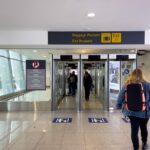
Travellers arrive at Brussels Airport as Belgium moves to tighten residency checks for EU jobseekers. Credit : Mounir Taha, Shutterstock

EU citizens who move to Belgium to look for work could soon face much tougher checks, under a new Belgian government proposal that would force jobseekers to prove from day one that they are actively applying for jobs and, six months later, that they still have a realistic chance of being hired. If they cannot show that, Belgium says it wants the power to withdraw their right to stay.

The proposal, backed at first reading by Belgium’s Council of Ministers, is part of a broader push by Migration Minister Anneleen Van Bossuyt to tighten migration rules and crack down on what she describes as abuse of the system. But for EU citizens thinking of moving to Belgium for work, simply arriving and saying you’re looking for a job may no longer be enough.

At the moment, EU nationals who want to stay in Belgium for more than three months while looking for work already have to provide some evidence that they are searching for a job. Under the new plan, that burden of proof would become heavier straight away and would not stop once the residence card has been issued.

In other words, Belgium is not just looking at whether someone arrives with the right paperwork. It also wants to know what happens afterwards.

Belgium wants two checks instead of one for EU citizens looking for work

The proposed system would work in two stages. The first hurdle comes when an EU citizen applies for a residence card to stay in Belgium for longer than three months as a jobseeker. Under the current rules, applicants only need to provide one form of proof, either evidence of job applications or proof that they are registered with the relevant employment service.

Belgium now wants both.

That means a person applying on the basis of looking for work would need to show that they have actually been applying for jobs and that they are registered with the appropriate employment service, such as Actiris in Brussels or another regional body depending on where they live.

That may sound like a technical tweak, but it matters because it raises the bar at the very start of the process. Instead of showing one sign of activity, applicants would have to build a fuller file from the beginning.

The second check would come after six months, and that is the part of the proposal that could have the biggest consequences.

At that stage, the person would not just need to prove that they had looked for work. They would also need to show that they had a realistic chance of actually finding a job. According to the Belgian government, that could include evidence such as training, qualifications, work experience or targeted job applications that show the search is serious and credible.

If they cannot demonstrate that, Belgium says it wants to be able to end their right of residence.

That is the point where the tone of the proposal becomes much sharper. This is not being sold as a simple administrative clean up. It is being presented as a political warning that the right to stay as an EU jobseeker should not become an open ended route into the Belgian welfare system.

The Belgian government says the right to stay is ‘not a free pass’

According to Van Bossuyt, Belgium has seen cases where EU citizens take a few initial steps to secure a residence permit, then stop making a genuine effort to find work and later apply for social assistance. Her argument is that freedom of movement should not be used as a back door into welfare.

In her words, the right to stay as a jobseeker is ‘no free pass’.

That line gives a good sense of where this proposal sits politically. Belgium is not challenging the principle that EU citizens can move to another member state to look for work. What it is trying to do is tighten the conditions around that right and make it easier to remove people who, in the government’s view, are not genuinely pursuing employment.

The government is also linking the reform directly to public money. Van Bossuyt has argued that the rules should be fair not only to people who come to Belgium to work, but also to Belgian taxpayers and public services. That language is likely to resonate with voters who support a tougher migration line, but it will also raise questions about how strictly Belgium can police the right of free movement without running into legal challenges.

That matters because EU citizens do have a recognised right to move to another member state to look for work. The real legal fight, if one comes, will be about where Belgium is drawing the line between legitimate checks and making that right harder to use in practice.

Family reunification rules are also being tightened

The draft law does not stop with jobseekers.

Belgium also wants to tighten the way family reunification applications involving EU citizens are handled. Under the proposal, applications would need to be complete from the start. If key documents are missing, the case could be declared inadmissible instead of being kept open while the applicant fills in the gaps later.

The government says that should reduce unnecessary paperwork for local authorities and speed up decision making. In practical terms, though, it also means less room for error. People applying through family reunification would be under more pressure to get the file right the first time.

The numbers help explain why the government is putting so much emphasis on this category. In 2025, Belgium issued 1,266 residence cards to EU citizens who said they were in the country to look for work. In the same category, there were 705 refusals and 202 terminations of residence. The government has also pointed to a high number of applications involving Romanian and Bulgarian nationals, while claiming that some further checks uncovered cases where applicants were in fact from non EU countries in the Western Balkans.

That is politically useful for a government arguing that the current system is too easy to manipulate.

The proposal is part of a wider hardening of Belgian migration policy

The tougher checks on EU jobseekers are not appearing in isolation. They are part of a broader migration package unveiled by Van Bossuyt, who also announced a fast track approach for asylum seekers considered unlikely to receive protection.

Under that separate plan, Belgium wants to accelerate asylum procedures for applicants from countries with a low protection rate, with the aim of reducing reception pressure and speeding up returns. The government says the full asylum procedure in those cases should ideally be completed within three months, compared with an average of around 16.5 months at present.

That is a different track from the EU jobseeker proposal, but the political logic behind both measures is the same. Belgium wants to show that it is making residence, asylum and migration rules stricter, faster and harder to exploit.

For EU citizens thinking of moving to Belgium to find work, the headline is straightforward enough. If this proposal becomes law, they will need to arrive with stronger proof, keep building that case after they arrive, and be ready six months later to show that the job hunt is still real and still going somewhere.

%

Torre Del Mar Unites Community In Powerful Stand Against ALS.

Published

on

torre-del-mar-unites-community-in-powerful-stand-against-als.

At the finish line. Credit: Ayuntamiento de Rincon de la Victoria

The Axarquia coastline saw outstanding success of Imparables contra la ELA this weekend, with scores of residents and families joining forces in Torre del Mar for a 24-hour charity marathon that raised awareness and vital support for those affected by the condition. Participants enjoyed sports, music and heartfelt moments while contributing to research and resources. Many expats joined in with the inclusive atmosphere that welcomed everyone regardless of fitness level.

Diverse activities keep energy high throughout the weekend

Organisers delivered over 25 sporting and musical events without pause from Saturday, June 20, at midday until Sunday at the same time. A 200-kilometre cycling route through Axarquia kicked off proceedings early on Saturday, followed by taekwondo displays. Crowds then enjoyed beach volleyball tournaments, indoor football matches, basketball games, CrossFit sessions, roller skating, rowing and swimming challenges. Live concerts added rhythm and enjoyment for all ages. Most activities remained free, although some required advance registration for smooth running.

Emotional highlights bring participants together

Saturday evening at 8pm delivered a moving manifesto reading led by Miguel Angel Roldan and other people living with the condition. Their call for more funding, medical research and official recognition resonated deeply with the audience. Families and supporters listened intently as speakers shared personal experiences and hopes for progress.

A massive pink tide creates an unforgettable finale

Sunday morning from 11.30am saw the grand pink wave form near the Torre del Mar nautical club. Participants and locals gathered to cheer affected individuals as they crossed the finish line together. Many expats wore the signature pink t-shirts and walked alongside families to show solidarity. No athletic ability was needed to take part, only a willingness to support the cause through presence and small purchases.

Amyotrophic lateral sclerosis (ALS), or ELA in Spanish, also known as motor neurone disease, is a progressive neurological condition that attacks nerve cells in the brain and spinal cord. This leads to gradual loss of muscle function, affecting movement, speech, swallowing and eventually breathing. Currently incurable, the disease requires greater research funding and support services to improve quality of life for those affected.

This community-driven initiative strengthened bonds among Axarquia residents and provided practical help for ALS families. Local expat groups noted increased visibility for the condition and fresh motivation to continue fundraising efforts. The success of the event encourages similar future gatherings that bring people together for meaningful change.

Continue Reading

%

Dinosaurs In Massive 5,000m² Exhibition

Published

on

dinosaurs-in-massive-5,000m²-exhibition

Estepona will get a prehistoric invasion this summer as the world-renowned Dino Expo XXL unrolls its massive exhibition in Estepona. Billed as the world’s most-visited dinosaur exhibition, the touring phenomenon will transform the Palacio de Exposiciones y Congresos into a roaring, breathing jurassic world from June 27 until September 13, 2026.

What to expect at Dino Expo XXL in Estepona

Spanning a whopping 5,000 square metres, the fully air-conditioned indoor exhibition features around 120 life-size animatronic dinosaurs. Families can walk among towering replicas that move, breathe, and roar, offering a glimpse into a world that vanished millions of years ago.

As an added bonus for history enthusiasts, the event includes a dedicated “Giants of the Ice Age” section. This specialized zone showcases meticulous replicas of prehistoric mammals, including woolly mammoths, cave bears, rhinos, and saber-toothed tigers. The exhibition has already drawn in over 3 million visitors across 250 cities globally.

Essential visitor information, dates, hours, and ticket prices

For those planning a family day out, the exhibition is open daily throughout its summer run. To help visitors avoid the peak afternoon heat, the event operates on a split daily schedule from 10am to 2pm and reopening in the evening from 7pm to 11pm.

An average visit lasts approximately two hours, and the entire venue is fully wheelchair accessible. On-site amenities include a dedicated kids’ zone, a snack bar, and a souvenir shop. Ample surface parking is available directly outside the Palacio de Congresos venue.

Tickets are priced at €12 for adults and €10 for children with toddlers under 24 months able to enter free of charge. Tickets can be purchased directly at the venue box office with no administrative fees, or booked online in advance via the official website Interactive highlights for families and group bookings

The event has several interactive zones designed specifically for younger palaeontologists. Children can get hands-on in dedicated sandboxes to excavate hidden fossils, climb aboard specialized dinosaur replicas for photo opportunities, and interact with digital drawing displays.

Continue Reading

%

Annual Calahonda Day Celebration

Published

on

annual-calahonda-day-celebration

Residents and visitors in Calahonda are preparing for a full day of sport, food, and music as the Sitio de Calahonda Urbanisation, managed by the E.U.C., hosts its annual “Día de Sitio de Calahonda” celebration on Saturday, June 27 2026.

Golf tournament kicks off proceedings

The day starts in the morning with a golf tournament at La Siesta Golf Club, beginning with a shotgun start (where all players begin play simultaneously from different holes around the course, rather than teeing off one after another from the first hole) at 9:30am, following a meeting at the club at 8:45am. The competition follows an 18-9 hole individual Stableford format (a scoring system where players earn points based on their score relative to par on each hole, rather than simply counting total strokes, with the highest points total winning), with trophies awarded for male and female winners (1st and 2nd place), as well as closest-to-the-pin prizes for both ladies and gentlemen.

How to register for the La Siesta Golf Tournament

Registration costs €25 for non-members and €15 for La Siesta members, and includes a drink and tapas at the awards ceremony, held afterwards at the club’s driving range. Those interested in taking part can register by calling La Siesta Golf on 952 93 33 62 or Chris on 696 364 323, between 9am and 6pm.

Family fun and children’s games at Parque de Calahonda

In the evening, festivities move into Parque de Calahonda, where a food and drinks bar will open from 7pm with children’s games and competitions, giving families plenty to enjoy.

Live music and Verbena Festival to close out the celebration

The celebration builds toward 9:30pm, when the popular “Verbena” festival begins, featuring live music from well-loved local band “Black Betties”, continuing late into the night.

A fun filled day of sport, culture, and community

Organisers describe the event as a chance to bring together sport, community spirit, and public participation, with this year’s celebration once again offering residents and visitors a mix of sporting, cultural, and leisure activities to enjoy together.

Where to find further information

For golf tournament registration, contact La Siesta Golf on 952 93 33 62 or Chris on 696 364 323. For further details on the wider Día de Sitio de Calahonda celebrations, residents can get in touch with the Sitio de Calahonda E.U.C. (Entidad Urbanística Colaboradora) directly.

Continue Reading

Trending

Copyright © 2017 Spanish Property & News