
Donald Trump
A Kennedy Grandson And Mamdani’s Challenge To Centrists: New York Primaries Shed Light On Democrats’ Future

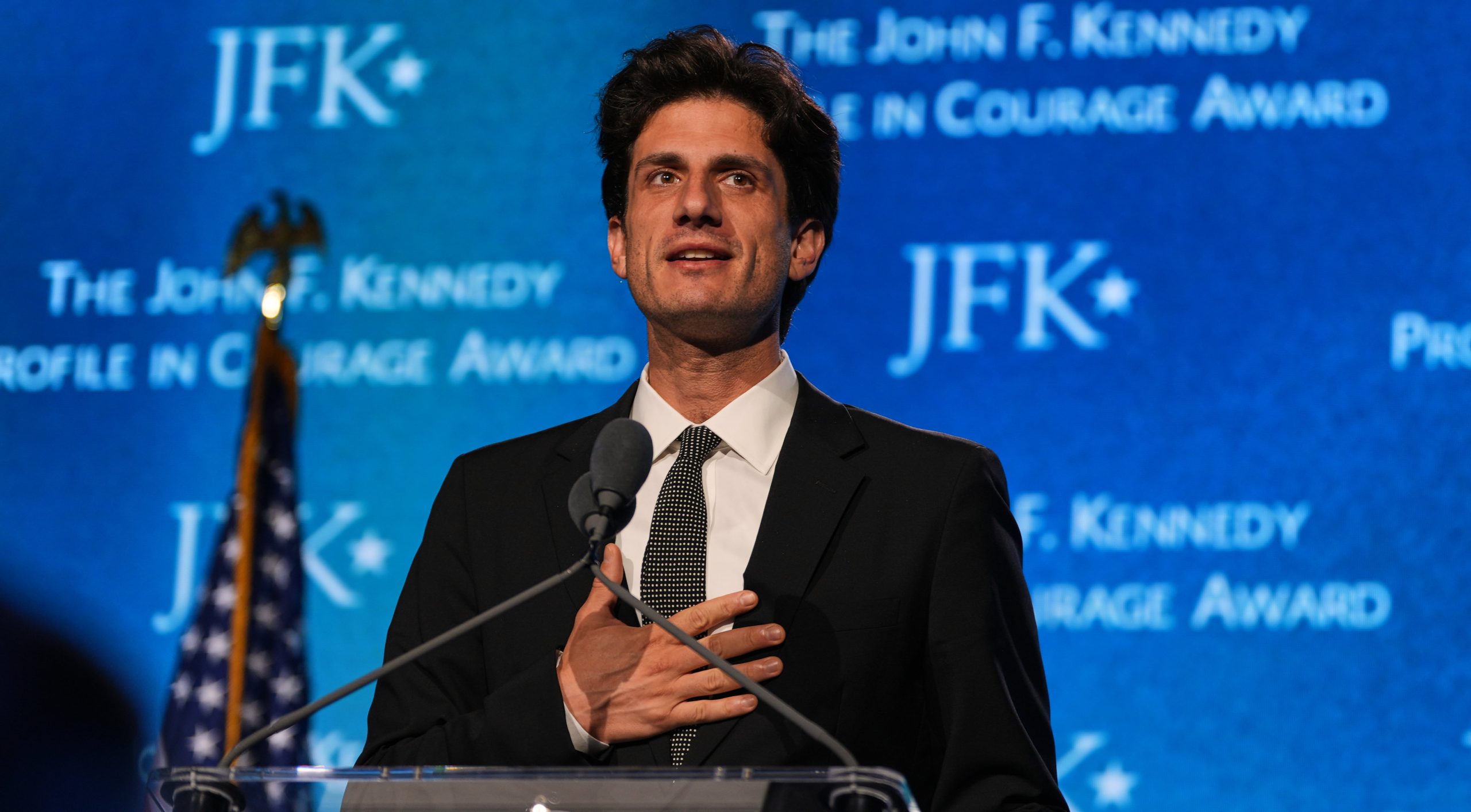
It couldn’t have gotten off to a worse start. A fierce summer storm pours down on New York just as Jack Schlossberg is about to begin his major campaign event. There are plenty of enthusiastic young people, but it’s impossible to hide the fact that Terminal 5 — a nightlife staple in Hell’s Kitchen — is not full.
On stage, volunteers warm up the crowd. Between somewhat routine speeches, an 80-year-old woman manages to strike an emotional chord. “I’m here because John Fitzgerald Kennedy changed my life. And today, Jack is doing for young people what his grandfather did for me.” Applause and a few tears.
Between that and the charm of showman David Letterman, an old friend of the Kennedy-Schlossberg family, the audience is fully won over. Once on stage, the young candidate lashes out at the influence of money in politics and criticizes the current leadership of the Democratic Party. “Don’t pay attention to the polls. When I’m elected to Congress, I’ll be able to change a lot of things,” he tells the already-convinced crowd.
On Tuesday, June 23, New York Democrats will choose their candidates in primaries for a range of municipal, state, and federal offices. But all eyes will be on two things. The first is who will win in the city’s 12th district, where Jack Schlossberg — the only male grandson of the president assassinated in 1963 — will face Micah Lasher, the party establishment’s preferred candidate, and Alex Bores, a rising star who has built a reputation around efforts to regulate artificial intelligence.
Polls give little chance to Schlossberg, 33, whom The New York Times last month portrayed in a scathing article that highlighted, among other things, his disappearances at key moments in the campaign because he needed a nap.
“He’s a terrible candidate,” says Lincoln Mitchell, a professor of public affairs at Columbia University. “He’s not disciplined, he’s not focused… He is handsome, though. And he’s running at a time when the Kennedy name is less popular among Democrats because of his second cousin Robert [Secretary of Health in Donald Trump’s administration],”
The U.S. political world will be watching closely what happens in this part of Manhattan, not only because of the symbolic weight surrounding the Kennedy family. The importance of the 12th district also stems from the fact that it is one of the wealthiest in the country, overwhelmingly Democratic, and with a high percentage of Jewish residents. A sign of its importance is the millions of dollars being spent on a contest in which only registered Democrats in a district of around 750,000 people can vote.
Although these are technically primaries, in practice they amount to a final election: there is little doubt that whoever wins here will be elected to the House of Representatives in the midterm elections on November 3.
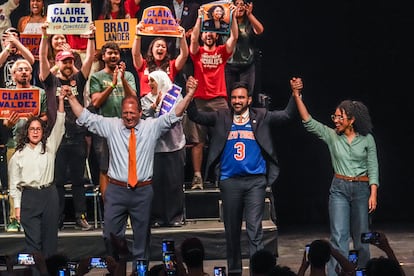
The second most interesting aspect of Tuesday’s vote concerns New York City Mayor Zohran Mamdani. Although his name will not appear on any ballot, it will be a good opportunity to assess whether his surprising victory last year in the largest city in the United States was an isolated event or a sign of something deeper within the rank and file of the Democratic Party.
Anger within the party
Mamdani has angered much of the party establishment by strongly backing three candidates for the House of Representatives (Brad Lander, Darializa Avila Chevalier, and Claire Valdez) against figures who either already hold seats in Congress or had been seen as the natural successors.
“Daring to challenge Adriano Espaillat — a progressive running for reelection who was the first Dominican to win a seat in Washington — that’s simply not done!” a visibly irritated Democratic source said a few days ago.
The three candidates backed by Mamdani have something in common. Valdez and Chevalier are socialists, like the mayor himself, while Lander belonged to that movement until 2023. It’s an ideology that until recently was effectively taboo in the United States but is now experiencing something of a resurgence. If several of these candidates end up going to Washington as members of Congress, it will be a strong sign of shifting times within the party. If the opposite happens, it will be a heavy blow for Mamdani, who has invested significant political capital in television ads and joint appearances with all three.
Professor Mitchell insists that the phenomenon of left-wing candidates challenging established centrist politicians goes beyond New York, pointing to the case of Maine, where the little-known Graham Platner unseated the governor and is now seeking a Senate seat, as well as Michigan, where something similar could happen.
“Mamdani and his allies are trying to build a movement,” says Mitchell in a video call. “For a long time, they were told that candidates too far to the left could not be elected because they wouldn’t be able to win. But if they succeed now, that argument will no longer hold. That’s what is really at stake right now.”
The Democratic primaries have been dominated by issues such as the cost of living and the best way to oppose President Trump during his remaining two years in the White House (whether to launch a new impeachment process in Congress or whether that would be counterproductive).
Another of the most contentious issues is the relationship with Israel and how much criticism of Benjamin Netanyahu’s government is acceptable (a particularly sensitive topic in a city with the largest Jewish community in the world outside Israel).
Eli Northrup, a candidate for the State Assembly in Albany from the Upper West Side — also backed by Mamdani and himself Jewish — rejects the accusations of antisemitism leveled at the mayor. “This is a neighborhood with a very large Jewish community. And I, as part of that community, feel that criticizing Israel, the Netanyahu government for what it is doing, is also my responsibility,” he says from his campaign office.
Sign up for our weekly newsletter to get more English-language news coverage from EL PAÍS USA Edition










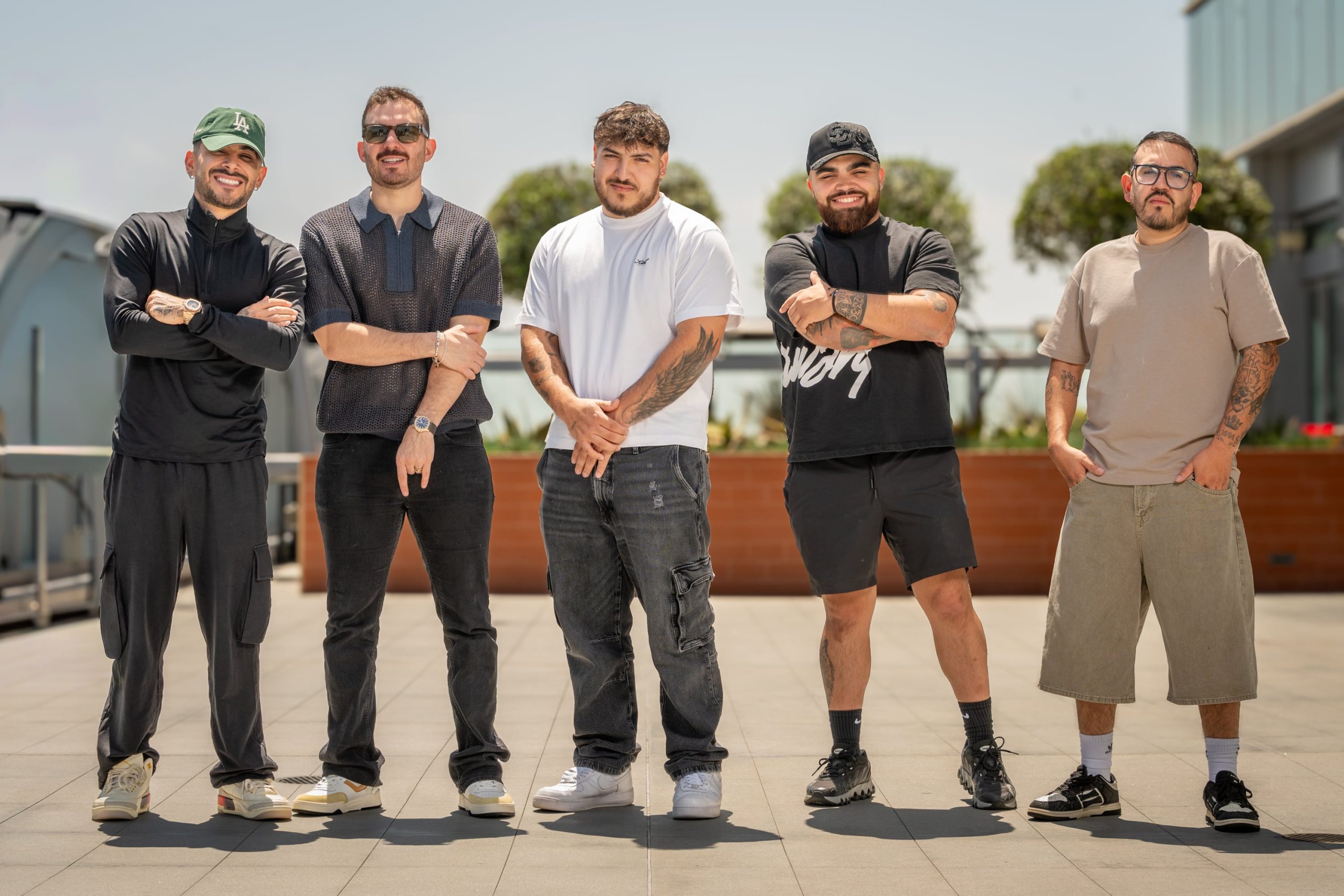
Until a few years ago, the true barometer of an artist’s or band’s popularity was recording an acoustic concert for the MTV Unplugged series. Today, that seal of approval has migrated to Tiny Desk — the short performances held behind an open desk at the U.S. National Public Radio (NPR) headquarters in Washington. Grupo Frontera reached that peculiar stage on April 24, 2025, performing five norteño ballads in 20 minutes, a set that allowed them to connect with a different audience. They rehearsed for six days to be ready for the appearance. “All the office workers see you,” recalls Alberto Acosta, the group’s guitarist.
That day, however, the most enthusiastic audience wasn’t in the newsroom — it was in NPR’s kitchen. The staff who prepare food and wash dishes couldn’t enjoy the performance because they were working. When the set ended, the six band members went back there to play El amor de su vida. It was a second Tiny Desk — improvised and intimate — that never appeared on NPR’s YouTube channel. “It was awesome,” Acosta says
This is a familiar scene for these musicians, who have become a phenomenon within regional Mexican music. At almost any restaurant they visit, whether in Mexico or the United States, the same thing tends to happen: a waiter will come over and ask them to step into the kitchen to greet the staff. “Our audience is working people — the folks out picking crops, the gardener,” says Juan Javier Cantú, the group’s accordionist. “In this industry, if you’re only in it for the money and the fame, it doesn’t work anymore, because you’re not connecting with your people,” he reflects.

A large share of their followers are workers who often go unnoticed by most people — those who labor in the back rooms of restaurants, raise buildings on construction sites, and keep gardens pristine in U.S. cities. It is also a community now living under pressure due to the tightening of immigration policies under the Donald Trump administration and the increase in raids by Immigration and Customs Enforcement (ICE).
The members of Grupo Frontera — a band formed in Texas, just a stone’s throw from the U.S.-Mexico border — say they are not immune to that reality. “We want all this fixed. Because what’s happening in our country is sad. We see it with our workers, with people close to us. It hurts us,” says Cantú.
They see the negative effects of Trump’s hard-line approach “closer than people think,” says the group’s singer, Adelaido Payo Solís III. The band’s drummer, Carlos Guerrero, agrees: “Those of us who live there [in the border city of McAllen] see it every day. It’s sad, but we’re fighting and standing strong.”
Days after releasing their new EP Con Dolor on May 28, the musicians spoke with EL PAÍS in a downtown Los Angeles skyscraper, where they were staying while taking part in World Cup-related events. They recorded a song tied to the tournament for a Spanish-language TV network.
Their time in the city was just a brief pause after a tour through Central America and Mexico. In a few days, they will head to Europe for shows in Paris, London, Zurich, Barcelona and Madrid, before wrapping up their Triste Pero Bien Cabrón tour at home in the United States. It is the most ambitious tour of their career and, for them, a sign of the global reach Mexican music has achieved — a phenomenon driven by artists such as Peso Pluma, Carín León, Natanael Cano and Fuerza Régida.
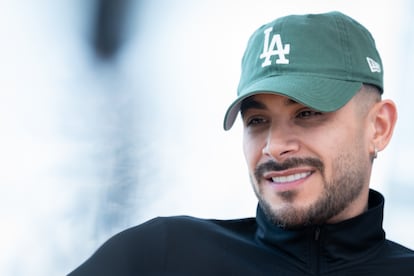
“Mexican music is at a point where it’s widely accepted in many places,” says Carlos Guerrero, the drummer. “Before, artists in this genre weren’t seen filling stadiums or arenas. The fact that our music has travelled this far — that we’re about to tour Europe — is something not everyone gets to experience. We take it with a lot of pride and a lot of respect.”
From local parties to massive concerts
Grupo Frontera’s rise has been nothing short of meteoric. In just six years, they went from playing at quinceañera parties in the Rio Grande Valley, Texas, to selling out large-scale concerts. Their breakthrough came in 2022, when their version of No se va went viral on social media.
But that was just the beginning. A year later, they made the definitive leap to stardom with UN X100TO, recorded as a duet with Puerto Rican superstar Bad Bunny. The scale of the hit is clear from the numbers beneath the video: more than 1.1 billion views on YouTube — and counting. “The collaboration with Bad Bunny helped the industry respect us more,” says Solís.
That same year, the Puerto Rican star invited them to share the stage at Coachella, one of the world’s biggest music festivals — another milestone in their career.
Despite their fame, they have remained close to McAllen, the border city where they grew up. They describe it as a place you can drive across in just 15 minutes — a far cry from the global cities they now tour. Back home, they are still surrounded by neighbors who speak Spanish and regularly cross into Mexico to shop, see doctors and enjoy the food. Rather than being a barrier, that environment shaped their artistic identity and led them to sing in their parents’ language, they say.
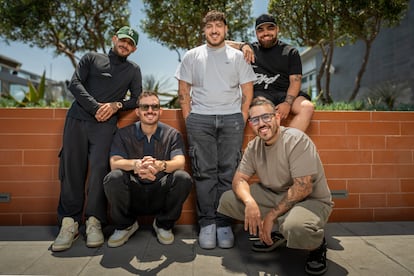
“Before, we used to say: for Mexicans, we’re not Mexican enough, and for Americans, we’re not American enough,” Solís recalls. “People would ask us: ‘How can you sing in Spanish if you don’t speak it?’ Well, that’s exactly what Selena did. She didn’t speak Spanish perfectly, but she sang in it. When we started, I kept improving my Spanish.”
The reference to Selena Quintanilla is no coincidence. In the 1990s, the so-called “Queen of Tex-Mex” paved the way from Texas for generations of artists raised between two cultures. She was one of the first figures to win over audiences on both sides of the border, at a time when much of the regional Mexican music consumed in the United States was coming from across the Rio Grande. Before her, Chalino Sánchez, from Los Angeles, had connected with migrant communities through corridos. Later came artists and groups such as Lupillo Rivera, Jenni Rivera, Intocable and Gerardo Ortiz.
Grupo Frontera’s rise coincides with a moment of uncertainty for the genre. In recent months, several artists — especially performers of narcocorridos — have seen their work visas revoked. The band members view the situation with concern, although they trust the outlook will soon shift for the better. “What happened to that famous ‘freedom of expression’?” asks percussionist Julián Peña, making air quotes with his fingers. “You’re supposed to be free to sing and talk about whatever you want in songs.”
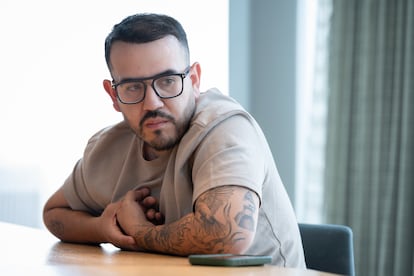
Solís believes the worst is over. “At first it did feel heavier, both because of the visas and because people were afraid to go to concerts [because of ICE operations]. But I feel like things are improving.” In times marked by the immigration debate and political tensions, these musicians believe their cumbia songs serve a purpose beyond entertainment. “They’re giving strength to the whole community,” they say.
The group’s list of collaborations is long: Shakira, Maluma, Carlos Santana, Morat, Christian Nodal… They have moved between bachata, country, R&B, reggaeton and electronic music. Their next goal is to strengthen their own artistic identity, says accordionist Juan Javier Cantú: “We want to show little by little that we’re not just featuring artists.”
Sign up for our weekly newsletter to get more English-language news coverage from EL PAÍS USA Edition
Ataque contra Irán
Última Hora De La Guerra De Estados Unidos E Israel Contra Irán, En Directo | Irán Y EE UU Pactan Una Hoja De Ruta Para Alcanzar Un Acuerdo Final Del Conflicto En 60 Días


Donald Trump
The Democratic Battle Over A Florida District Reveals The Political Cost Of DeSantis’ New Electoral Map

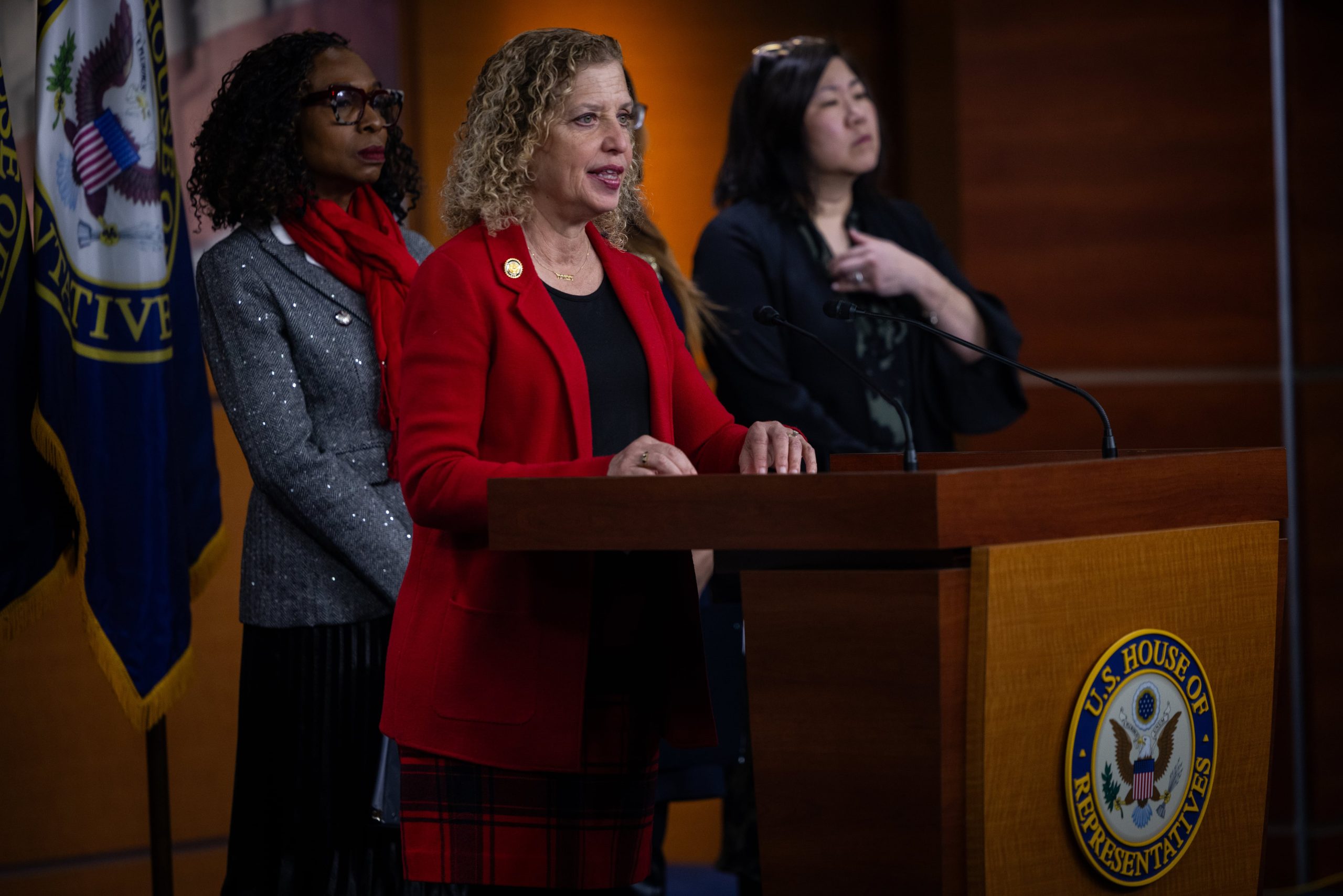
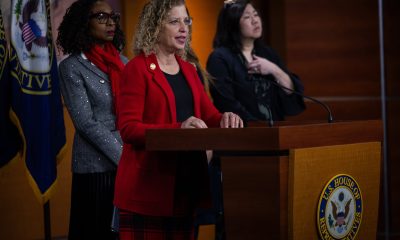
The ripple effect of the Republicans’ political maneuvering to secure a congressional majority has opened a rift within the Democratic Party in Florida. The new electoral map promoted by Governor Ron DeSantis altered the electoral geography so dramatically that it erased District 25, the seat Debbie Wasserman Schultz previously held in Broward, north of Miami, leaving the congresswoman living in another district and her voters dispersed into other, more Republican-leaning districts.
Wasserman Schultz is now running for the nomination in District 20, a Black-majority Democratic stronghold north of Miami that became vacant after Sheila Cherfilus-McCormick resigned in April. For Wasserman Schultz, who has represented Broward voters for more than 20 years, District 20 is one of the few viable options to remain in Washington.
But the fact that Wasserman Schultz is white and is seeking to represent a Black-majority congressional district in Florida has highlighted a dilemma for Democrats: redistricting has cornered them ahead of the November elections, forcing them to compete against one another for a shrinking number of safe seats while the new map has reduced minorities’ opportunities for representation.
According to Andra Gillespie, an expert on Black politics and electoral participation, the dispute is a direct consequence of redistricting. “Republicans are taking advantage of the lack of oversight to redraw districts to their advantage. If that means combining a Black-majority Democratic district with a white-majority Democratic district so Democrats have to compete against each other for the same seat, they will do it.”
In April, the U.S. Supreme Court struck down a key part of the Voting Rights Act of 1965, a cornerstone of the U.S. electoral system that prohibits racial discrimination in elections. DeSantis had been waiting for that ruling to advance his new map, designed to give his party four additional seats, and last week the Florida Supreme Court allowed it to be used in the upcoming elections. Florida’s primary elections are scheduled for August 18.
Florida retains only one Black-majority congressional district, District 24, represented by Frederica Wilson in Miami-Dade and Broward. But District 20 — which covers parts of northwest Broward County and southern Palm Beach County and has been represented since its creation by Black legislators — remains a Black access district, one of the few where Black voters retain sufficient electoral weight to elect candidates of their choice. Both are considered the state’s most solidly Democratic districts.
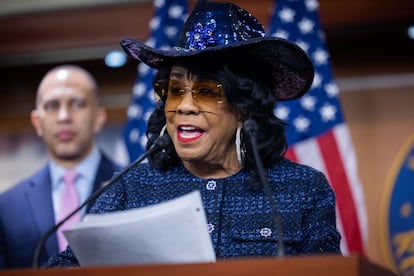
Tensions were evident on Wednesday at a forum organized by Black Democratic leaders in Broward, where the contenders shared the stage, including Wasserman Schultz, whom they accused of political intrusion, before an audience of about 150 people, mostly Black voters. The congresswoman defended her candidacy during the nearly two-hour event, appealing to her experience in Washington and the federal resources she has secured for her district over her career.
Cherfilus-McCormick, who has filed to run again after resigning in April amid accusations of diverting federal funds —which she has denied— said during the debate, referring to Wasserman Schultz, that it was necessary “to talk about what is wrong right now: someone coming into our district looking for a more favorable political opportunity.” Another candidate, Elijah Manley, a teacher and activist from Fort Lauderdale, said the community would not return “to a time when there were no Black people in Congress,” and that while Republicans were “doing everything they can to silence Black voices,” he did not expect members of his own party to do the same.
In a statement sent to EL PAÍS, Wasserman Schultz said she has dedicated her life “to fighting for Broward County,” and that she wants “to keep working to make life more affordable for families in Congressional District 20, who are stretched thin because of Trump’s MAGA agenda.” “Over the years I have secured billions of dollars in funding for parks, drinking water, public transit and many other projects in Broward, as well as the jobs those resources create. That is why I am running: to continue bringing resources to Broward residents who know me, trust me and want me to continue this crucial fight for our families against Trump’s costly and corrupt agenda,” she said.
The debate has reached the Democratic Party leadership. Nikki Fried, chair of the Florida Democratic Party, said she was “disappointed” by “the congresswoman’s refusal to engage in meaningful dialogue about her decision, especially after our Democratic ecosystem worked so coordinatedly to oppose the Republicans’ redistricting.”
House Democratic Leader Hakeem Jeffries declined to endorse Wasserman Schultz’s candidacy, despite saying he supports all sitting Democratic members of Congress.
In a statement issued late last month, the Florida Black Democratic Caucus said that for generations Black Americans have fought for the right to vote so that it “translates into meaningful representation.” District 20 “was designed to remedy decades of racial exclusion and ensure that Black communities have the opportunity to elect leaders who truly reflect their experiences and needs,” the organization said.
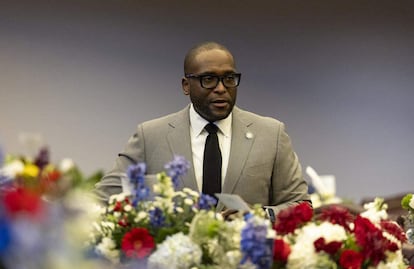
State Senator Shevrin Jones of Miami, who is Black and an ally of Wasserman Schultz, has said he will not support her candidacy. “This is not about Debbie [Wasserman Schultz], because she has shown she can lead. My fight is for Black representation, and my goal is to expand it, not reduce it,” he said.
According to Gillespie, the controversy is not solely about the candidate’s race, since other white legislators have effectively represented Black-majority districts, but about the broader impact on representation. “What is at stake is that there will be fewer Black Americans in Congress relative to their share of the U.S. population.”
“There is a loss when Congress does not reflect the country’s composition. Black representatives represent their districts in ways that benefit Black voters. For example, although Democrats in general tend to take more progressive stances on civil rights than Republicans — and therefore it would be preferable to have any Democrat in a congressional seat rather than a Republican on those issues — differences remain between Black Democrats and white Democrats. That is a question long established by studies of how lawmakers vote,” she explained.
“Moreover, Black voters represented by Black legislators tend to give them higher approval ratings, and Black representation also increases political participation and electoral mobilization,” she concluded.
Sign up for our weekly newsletter to get more English-language news coverage from EL PAÍS USA Edition

Francia – Irak: El Partido Del Mundial 2026 En Directo | Se Activa El Protocolo Por Tormenta Eléctrica En El Descanso Y El Encuentro Está Detenido

Prime Day 2026 En Directo: Fichamos Las Rebajas Que Merecen La Pena Contadas Minuto A Minuto

Mundial 2026, últimas Noticias En Directo | Suspendido El Entrenamiento De España En Chattanooga
A major EU border system goes live today – What changes for travellers?
El Pentágono, Evacuado Por Una Falsa Alarma Ante La Sospecha De Un “incidente Con Materiales Peligrosos”
Mallorca launches new plan to save its beaches as coastal erosion threatens popular resorts


-
EU rules2 weeks ago
A major EU border system goes live today – What changes for travellers?
-
America2 weeks ago
El Pentágono, Evacuado Por Una Falsa Alarma Ante La Sospecha De Un “incidente Con Materiales Peligrosos”
-
Coastal erosion2 weeks ago
Mallorca launches new plan to save its beaches as coastal erosion threatens popular resorts
-
fira de ses herbes2 weeks ago
Selva herb fair returns: Mallorca’s most magical tradition blooms again
-
european airport delays1 week ago
1,225 delays at major European airports raise summer warning for Spain travellers
-
 %1 week ago
Barcelona Tests Olive Pit Asphalt That Could Transform How Cities Build Roads
-

 california2 weeks ago
Migrants At The Mercy Of Gangs: ICE Detainees Forced To Live Alongside Organized Crime
-

 Casa Real2 weeks ago
Victoria Federica De Marichalar Fue Vestida De Dior Para Ver Al Papa