
california
Migrants At The Mercy Of Gangs: ICE Detainees Forced To Live Alongside Organized Crime

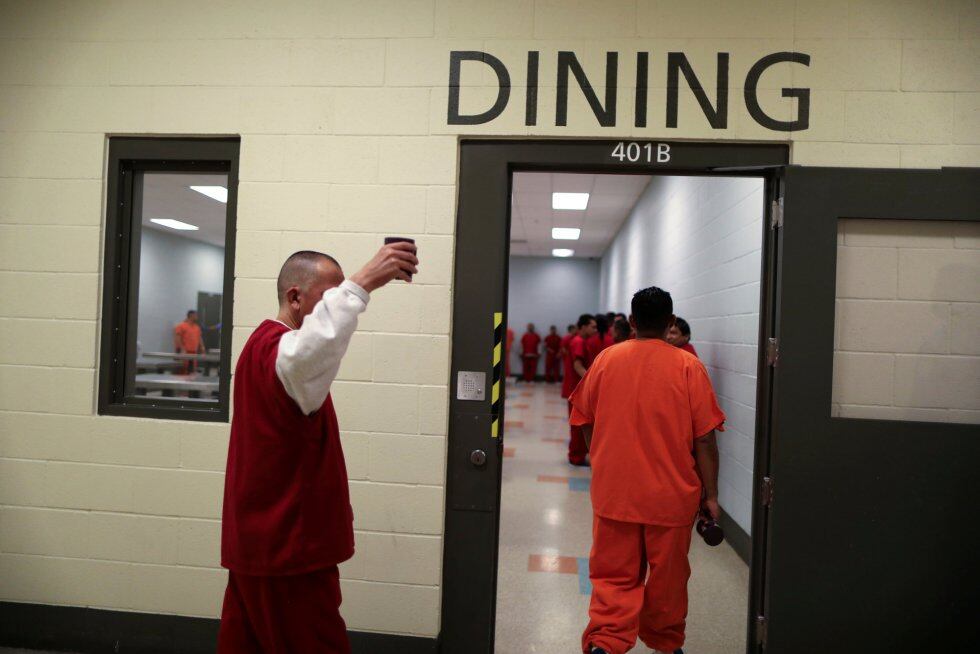
Esteban had never heard of the prison gang Los Paisas until he was held at the Adelanto immigrant detention center in California. As soon as he passed through the bars of his housing unit, other detainees made it clear he had to choose: join them or join another group made up of Russians, Indians, Chinese, and Armenians. He understood that doing neither would leave him defenseless, so he accepted. There was no initiation ritual and he was not asked to swear allegiance. The rules were simple: protect your own from violent people, settle internal disputes, and keep a measure of order in a place where authority often seemed insufficient. Over the months, deportations and transfers took away people he knew. They were replaced by newcomers, some of whom did not understand the dynamics of detention. He had to teach them. Before he knew it, Esteban was among the most long-standing members and, without seeking the role, he became one of the leaders of the gang.
“We Paisas are anyone who speaks Spanish: Mexicans, Central Americans, Cubans. A number of people who were gang members arrived with us, fully tattooed, who wanted to feel like they owned the place, wanted to boss the weakest around, and got violent. But we didn’t allow that. We banded together and told those people: ‘You know what? It’s going to be like this here, or you leave.’ We gave them a bag, they put their things in it, and they left on their own,” says Esteban, who agreed to speak to EL PAÍS on condition of anonymity.
This Hispanic man spent nearly a year in one of Adelanto’s housing areas reserved for detainees that U.S. Immigration and Customs Enforcement (ICE) considers medium- to high-risk. These hold people accused or convicted of serious crimes, including gang members, murderers, rapists, and drug traffickers. After serving their sentences in state or federal prisons, many are moved to immigration detention centers while they await deportation. In Adelanto, they are often identified by orange or red uniforms.
But in those same units are also migrants whose criminal cases remain open, as was the case with Esteban. He is charged with attempted homicide. Last year, while he was fighting his case out on bail, ICE agents arrested him as he was heading to his job in Los Angeles. Days later he was sent to Adelanto. “When I first arrived, there were a lot of problems. People were constantly getting into fights with each other. At first, I was afraid they’d label me as a gang member, but I became a Paisa because that’s what was expected. There was no other choice,” he recalls. He was released a few weeks ago and was able to return to his home in Los Angeles.
The Adelanto detention center, one of the largest in California, rises in the Mojave Desert about 90 miles northeast of Los Angeles. The facility, with capacity for 1,940 people, is operated by the private company GEO Group under a contract with ICE. For years it has been the subject of complaints alleging abuse, medical negligence, poor food, overcrowding and the deaths of migrants. A recent report from the California attorney general added another concern to the list: the alleged excessive use of force by security staff charged with overseeing the complex.

In addition, migrants in ICE custody are exposed to violent situations. In Adelanto and some other centers, inmates live alongside prison gangs that wield power within the housing units. Prominent among them are Los Paisas and Los Sureños, considered the “soldiers” of the criminal organization known as the Mexican Mafia or La Eme; and their historic rivals, Los Norteños, linked to the criminal group Nuestra Familia.
“It’s a dangerous situation because you have people who have been in extremely violent prisons, with gangs where killings regularly occur, and suddenly they’re next to someone who has never had legal trouble, maybe only for drunk driving, a traffic ticket, or crossing the border illegally,” explains Gabe Morales, author of several books on prison gangs and former chief of security at the ICE detention center in Tacoma, Washington.
“They attack them, harass them, take their belongings, their food. Many people are afraid of them because they have committed murders inside and outside prisons,” he adds.
ICE’s press office said in a statement provided to EL PAÍS that its detention centers use a classification system to separate detainees by security risk, criminal history, gang affiliation, and other factors. “ICE detention standards require centers to maintain safe, orderly environments while maximizing detention capacity and public safety,” the agency said. It however did not specifically address illicit activities or violent incidents that occur inside its facilities.
“They can be very violent”
The history of Los Paisas goes back to the mid-1980s, when a growing number of Mexican migrants convicted of violent crimes who did not speak English began arriving at Folsom State Prison in northern California. Morales links that phenomenon to the tougher immigration policies of the era. Outnumbered by Los Sureños and Los Norteños — a disadvantage that made them easy prey — many of those inmates banded together for protection. Border Brothers was born, adopting the hierarchical structure typical of prison gangs.
A decade later a split occurred. Some newly arrived Mexicans rejected Border Brothers’ rules and began meeting on their own. They referred to one another affectionately as “paisa,” a derivative of paisano. The group grew quickly.
“At one point Los Paisas outnumbered Border Brothers. They began organizing by states of origin: those from Sinaloa, those from Jalisco, those from Guanajuato. Many tattooed phrases like ‘Hecho en México’ or the eagle from the old Mexican commercial logo. That’s because they are first-generation immigrants who don’t speak English and haven’t fully assimilated American culture,” Morales explains.
According to the specialist, part of their expansion was due to imposing fewer rules than other organizations. The group exists only behind bars, he says. “They don’t have a rigid structure. They consider themselves equals. Unlike Los Sureños, when they leave prison no one retains authority over the others. Inside prison they may appoint someone to represent them to other gangs, something like an ambassador. Today they accept Cubans, Colombians and Central Americans, although about 90% of their members remain Mexican,” he explains.
Today Los Paisas rank among the country’s largest prison gangs and are present in both federal prisons and immigration detention centers. Some members have experience serving sentences in penitentiaries in their home countries. “They’re in places you wouldn’t expect: Arkansas, Georgia, New Jersey. Wherever there is a sizable Mexican population, they’re probably there,” Morales says. “And they can be very violent. They have taken part in riots and clashes in numerous prisons.”
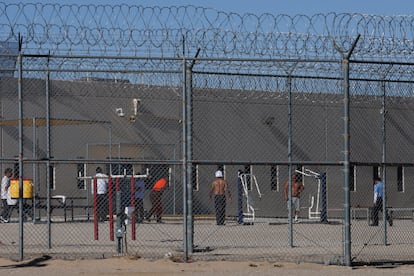
Miguel, a South American migrant who asked that his identity be withheld, says he suffered that violence during his time at an ICE detention center in Texas. “I had to give them part of the food I bought with money my family sent me. If I didn’t, they beat me or prevented me from leaving the unit. They did the same to other people,” he told this newspaper.
Afraid of retaliation and convinced immigration authorities would not protect him, he never reported the abuse. “They controlled the internal sale of drugs. They wanted me to become Paisa. I never accepted and I paid dearly. I didn’t get relief from them until I was released,” he recalls.
Esteban, for his part, denies that the group in Adelanto he belonged to was dedicated to intimidating other detainees or engaging in criminal activity. Those who did that acted on their own, he says.
Morales maintains that the reality of Los Paisas varies considerably from one facility to another and from one political context to another. Not all of their groups, he explains, seek to exert control over other detainees or participate in illegal activities.
The former chief of security at the ICE detention center in Washington State attributes part of that change to shifts in the population in immigration custody. As the government of Donald Trump increased detentions of migrants without serious criminal histories, ICE centers began housing people with profiles very different from those that predominated years earlier. “I worked at the Tacoma center during the Biden administration in 2022. There were murderers, rapists, thieves, drug traffickers. We didn’t have working Mexicans, less-violent Paisas, like now,” he says.
Disputes
Among Los Paisas, leadership positions often fall to those who are older, have longer tenures behind bars and speak both English and Spanish. The gang dominates by numbers: in that section of Adelanto there were about 60 members, almost three times the size of the group made up of migrants from Asia and Europe, who mostly communicated in English.
At the center, Esteban’s authority was not limited to other detainees. Guards also saw him as a kind of informal intermediary within the unit. Each day he received reports about what was happening in the module. He had to mediate disputes, calm tensions, and decide who could stay and who had to leave. “They would tell me: so-and-so fought with such-and-such, they removed that one, this many new people arrived.” According to his account, when he informed guards that a detainee was causing problems they tended to move him to another unit, typically one where risks were higher.
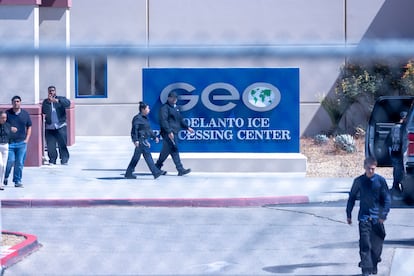
Esteban says the most frequent disputes revolved around the tablets the center lent detainees to listen to music, watch movies, or communicate with their families. There were just over 20 devices, so each had to be shared by several people. It was enough for someone to exceed the agreed time for an argument to erupt.
Often it was Esteban who had to intervene to prevent disagreements from escalating, even when they involved men convicted of serious crimes and people he feared. “I lived with people who had killed someone, but who no longer wanted trouble. They just wanted to get out as soon as possible and became calmer. They didn’t have the same hatred they had in prison,” he reflects.
Despite the differences, coexistence was usually peaceful. People settled their disputes among themselves. Sometimes they shared food and even exchanged one of the most coveted items inside the center: jars of peanut butter.
Sign up for our weekly newsletter to get more English-language news coverage from EL PAÍS USA Edition
















Alabama
The Battle To Redraw Electoral Districts Ahead Of The Midterms: Where Changes Have Been Confirmed And Where They Are Awaiting Approval

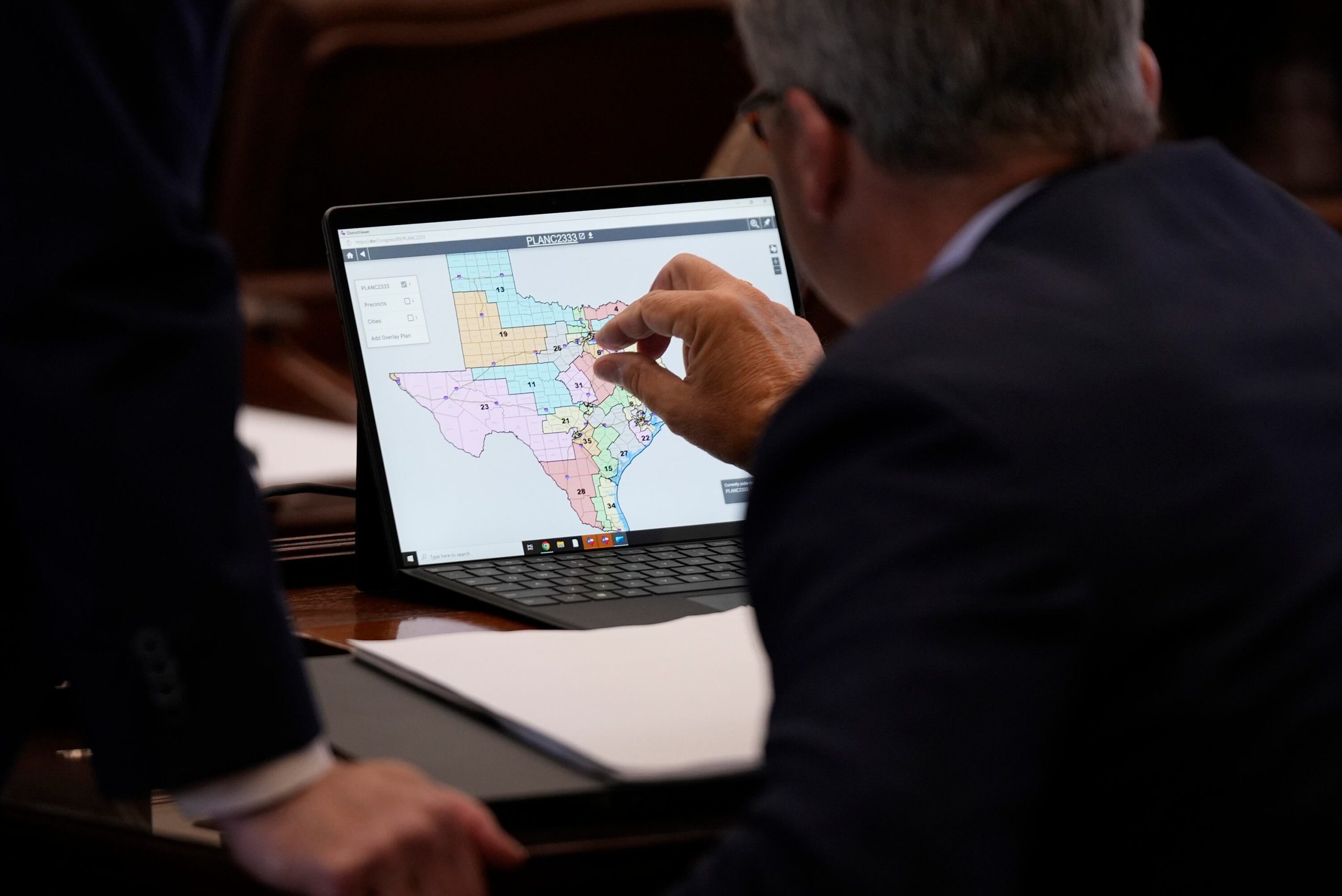
The redrawing of electoral districts, or gerrymandering, in the United States is reaching unprecedented levels. After the Supreme Court’s late-April ruling changed electoral rules and curtailed minority rights, Republicans have stepped up efforts to dismantle majority-Black districts, especially in the South, though the strategy extends to states beyond that region.
So far, the governing party hopes the new maps approved in states it controls will give it at least 14 additional seats in the November midterm elections. But Democrats have not remained idle and are on track to gain six seats from the revised districts in California and Utah; they had expected to gain 10 until Virginia’s state supreme court ordered current maps to remain in effect after an attempt to redraw them so Democrats would pick up four more seats. In all, eight states have taken formal steps toward new maps, although not all have been finalized just months before the decisive November midterms, when the entire House is up for election.
With the narrowest possible margin (the current balance is 218 Republicans and 212 Democrats, with five vacancies), Trump fears that if he loses the elections he could be removed from the White House. “You gotta win the midterms because, if we don’t win the midterms, they’ll find a reason to impeach me,” the president told Republican lawmakers earlier this year.
It was the magnate himself who launched this battle after asking Texas Republicans last year to change electoral districts to give the party an advantage in upcoming elections. The opposition’s response was swift, and California Democrats advanced their own electoral maneuver, called Proposition 50. Since then, the contest has been replayed in other jurisdictions.
Historically, the Republicans usually lose seats in midterm elections, and the president’s falling popularity — 63% of the public disapprove of Trump’s handling of his duties, according to NBC News Decision Desk’s April poll — suggests that trend could be repeated this time, though the outlook remains uncertain.
New electoral maps confirmed
Of the eight states that have changed their congressional districts, six did so voluntarily, one did so under a provision of its state Constitution, and another by court order.
Texas
Republican Governor Greg Abbott signed an overhaul of the electoral map in August 2025 that could help Republicans win five additional seats. In December, the Supreme Court authorized use of the new districts in this year’s elections. Currently, Texas has 25 Republicans and 13 Democrats in the House of Representatives.
California
In November voters approved Proposition 50, which could help Democrats pick up five additional seats in Congress — the same number Republicans are aiming for in Texas. It was upheld by the state Supreme Court in February of this year. Currently, California has 43 Democratic and nine Republican representatives.
Missouri
Republican governor Mike Kehoe signed a revision of the House map in September 2025 that could help Republicans gain an extra seat. The state Supreme Court validated it and it will be used in the November elections, but litigation remains that could derail it, though that becomes less likely as Election Day approaches. The state’s current delegation is two Democrats and six Republicans.
North Carolina
In October 2025 the Republican-controlled state legislature approved a redrawing of districts. The resulting design could help Republicans gain an additional seat by eliminating a majority-Black district. The state currently has four Democratic and 10 Republican representatives.
Tennessee
Republican Governor Bill Lee signed a map revision on May 7 prompted directly by the federal Supreme Court’s late-April ruling, which opened the door to partisan-based redistricting. The map splits Memphis — which until then had its own Democratic seat — into three Republican-leaning districts. The state’s current delegation is eight Republicans and one Democrat.
Ohio
The state Constitution required new maps to be drawn before the November elections, so a bipartisan panel with a Republican majority voted in October 2025 to revise the districts. The approved map would add two seats to the governing party out of the state’s 15. The current map gives five seats to Democrats and 10 to Republicans.
Utah
In November last year, a judge ordered a redrawing of the districts. The redistribution that followed the court order is projected to give Democrats one additional seat. The court had ruled that local lawmakers bypassed voter-approved anti-gerrymandering rules when adopting the previous map, which had awarded all four of the state’s seats to Republicans.

Florida
Republican governor Ron DeSantis signed the state’s new congressional maps on May 4 aiming to give the Republican Party four more seats. An ongoing lawsuit sought to overturn them, arguing the state Constitution prohibits drawing districts with the intent to favor or harm a political party. But a judge dismissed the lawsuit this Tuesday. The state’s current delegation includes eight Democrats and 20 Republicans.
New districts pending approval
Legislators in at least three states are working to reconfigure their electoral maps. That is the case in Louisiana, where governor Jeff Landry canceled primaries scheduled for May 16 to allow the state legislature to review current districts.
Another jurisdiction doing the same is Alabama, where lawmakers hope to revive a map approved in 2023 (but later discarded) to help Republicans pick up a seat. The state’s current map stems from a court order that requires it to be used until after the 2030 census.
In Georgia there have also been moves, though the state has not voluntarily pushed through a congressional redistribution ahead of November; its electoral maps have long been the subject of litigation. The federal Supreme Court’s late-April decision has complicated matters, as state Republicans now consider how to use that ruling to consolidate their advantage, though any legislative action is already pointing toward the 2028 elections. Republican Governor Brian Kemp has called a special session beginning June 17 to address redistricting. The state’s current delegation includes nine Republican and five Democratic representatives.
Meanwhile, the Republican effort to redraw South Carolina’s congressional districts will not proceed in time for November. In mid-May the state Senate rejected an initial resolution to extend the legislative session and address redistricting, with five Republican senators voting against it. On Tuesday, May 26, the state Senate voted to postpone redistricting until the next legislative session. That result means the state’s current map — six Republicans and one Democrat — will remain in place for the November elections.
Sign up for our weekly newsletter to get more English-language news coverage from EL PAÍS USA Edition

Nintendo Revela Que El Esperado ‘remake’ De ‘The Legend Of Zelda: Ocarina Of Time’ Llegará Este Año A Nintendo Switch 2

El PP Se Reúne Con Vox Para Negociar La Investidura De Moreno En Andalucía

Victoria Federica De Marichalar Fue Vestida De Dior Para Ver Al Papa


-

 Argentina2 weeks ago
Trump Receives Flávio Bolsonaro In The Oval Office Three Weeks After Lula
-

 Uncategorized1 week ago
Montoya vs Brundle BEEF, Newey
-

 %2 weeks ago
Tourist Begs Police Not To Fine Her After Swimming In The Trevi Fountain During Heatwave
-

 Anthropic2 weeks ago
The IPOs Of SpaceX, OpenAI And Anthropic Threaten To Drive Wall Street To Bubble-Like Levels
-

 Foreign demand1 week ago
German Demand For Spanish Property Cools After A Strong Run
-

 New Developments2 weeks ago
Luxury Villas For Sale, Estepona – ProjectL1
-

 %2 weeks ago
The Rising Cost Of Finding Love
-

 %1 week ago
Portugal Notifies Of Temporary Suspension Of EU Border Biometric Checks