
Claudia Sheinbaum
Mexico Reveals Alliance Between The Jalisco New Generation Cartel And Los Chapitos

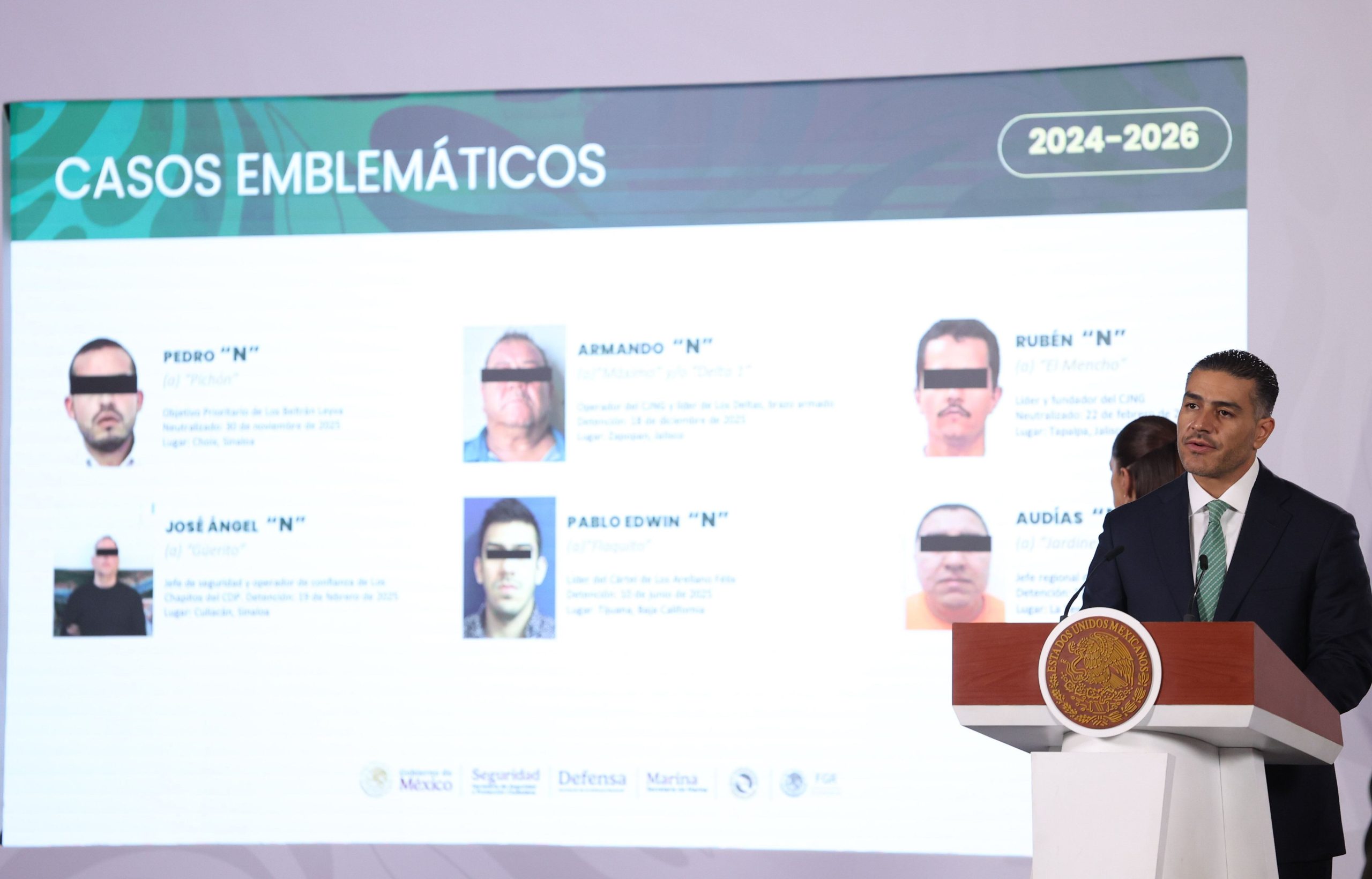
It is June 2025. Three men stand in the middle of a road 14 miles north of Culiacán, the capital of the Mexican state of Sinaloa. They are armed with rifles; two wear boots and another only sandals. One of them, who is also wearing a helmet, has a vest bearing four letters: CJNG, the Spanish acronym for the Jalisco New Generation Cartel.
The image of several men from the CJNG in the cradle of the Sinaloa Cartel was captured by one of the vehicles that work for Google Maps. It had been uploaded for users to see when activating the “Street View” feature. In other images, captured between El Tecorito and the community of Los Algodones, the same members of the Jalisco New Generation Cartel can be seen in different positions: signaling cars to stop, directing them to the side, and walking after the arrival of more armed men.
The coordinates were shared on the account of a Mexican historian and verified by dozens of users, including this newspaper. Google Maps has since blocked Street View on that stretch of road, which became another example of the pact between Mexico’s two main criminal groups.
This alliance was acknowledged last week by Mexico’s security chief, Omar García Harfuch. The existence of an agreement between the Los Chapitos faction of the Sinaloa Cartel and the Jalisco New Generation Cartel has been widely suspected for more than a year, but the Mexican government confirmed it for the first time last Tuesday.
During a press conference at Mexico’s National Palace, García Harfuch reported on the “link” between the leader of the CJNG, Nemesio “El Mencho” Oseguera Cervantes, and the sons of Joaquín “El Chapo” Guzmán, who lead Los Chapitos. According to the security chief, this was a direct relationship: El Mencho provided “funding and personnel resources in southern Sinaloa”: “nothing more.”
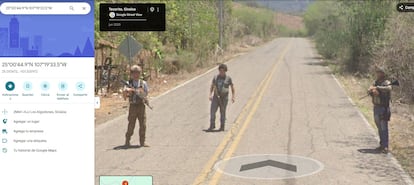
García Harfuch’s statements align with the report published by the U.S Drug Enforcement Agency (DEA) in May 2025, which warned of this possible “strategic alliance.” The seizure of vests bearing the CJNG initials in Culiacán and the appearance of videos on social media showing members of that group in the Sinaloa Cartel’s stronghold reinforced the theory.
At the time, local authorities revealed that members of the Jalisco Cartel were operating freely in the rural northern area of Culiacán, a territory dominated — according to data from Mexico’s Attorney General’s Office (FGR) and the Defense Ministry — by Los Chapitos. It was the same area where, that very June, the Google Maps images were captured.
However, García Harfuch himself dismissed the existence of an alliance between the two groups in August of last year. That had been the case — until now.
Betrayal
That pact cannot be understood without the fratricidal war that has torn through the Sinaloa Cartel since September 2024. The fact that Ismael “El Mayo” Zambada was kidnapped and handed over to the United States by his godson Joaquín Guzmán López, son of his former partner, is not something easily forgotten in a criminal family. Since then, Sinaloa has been gripped by violence and disappearances. In the past 20 months, the fighting between the groups has left more than 2,800 people dead and 1,700 missing, according to official figures, in what is now the most serious security crisis of Claudia Sheinbaum’s government.
That betrayal, says Eduardo Guerrero, a security analyst and director of Lantia, led to “most of the organizations that formed part of that cartel siding with the Zambada family.” “That initially gave them an advantage,” he explains. “Many other groups preferred to stay out of it, and a smaller group supported the Guzmán family, which invested heavily in securing allies because they had enormous profits from fentanyl exports.”
However, as the months passed, the balance remained uneven. The downfall of figures such as Kevin Alonso Gil, known as “El 200,” head of security for Iván Archivaldo Guzmán, and “El Güerito,” a financial operator, in February 2025 tightened an increasingly suffocating noose around Los Chapitos. In recent months, the faction had lost most of its key operatives on the ground.
It was in this context that the agreement with the CJNG emerged. It was a “request for an alliance and support” from the Guzmán family to the Oseguera family, Guerrero notes. Guerrero, the director of the security consultancy Lantia, reconstructs the origins based on conversations with intelligence agents and media leaks: “The first thing El Mencho asked for was a show of loyalty, which apparently involved one of the Guzmán brothers — Alfredo, it seems — having to go live at a ranch next to El Mencho’s, without his own guards; the guards would be provided by El Mencho.” This kind of “special invitation” worked for a few months.
The deal included protection and money for Los Chapitos “as long as they facilitated the expansion of the Jalisco Cartel in the northwest of the country,” Guerrero explains, referring to the state of Sinaloa, as well as Sonora, Chihuahua, Baja California, and Baja California Sur. The Guzmán family presented these territories as areas they controlled, including key trafficking routes.
“It’s an alliance that quickly wears thin because, reportedly, the Guzmán family is unable to fulfill these promises and deliver these territories, since they are being contested. It wasn’t so easy to move into or hand over control of a territory they didn’t fully control,” the security analyst notes.
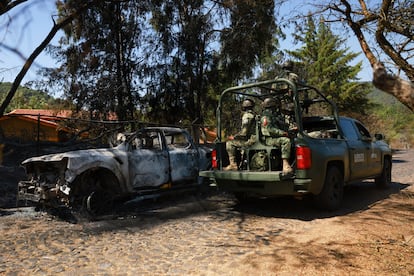
García Harfuch said that the alliance stopped working after the death of Nemesio Oseguera in a military operation in Tapalpa on February 22. “At present we have no indication that it continues. But we do not rule it out,” the security chief said.
The fall of El Mencho profoundly disrupted Mexico’s criminal landscape. While some of the main figures of the Sinaloa Cartel — such as Ovidio Guzmán and even El Mayo Zambada — are signing cooperation agreements with the U.S. Department of Justice, the succession within the CJNG remains uncertain, especially following the arrest of Audias “El Jardinero” Flores Silva.
Guerrero, who points to the intense monitoring currently being carried out by Mexican and U.S. intelligence in Jalisco because of the World Cup, believes the uncertainty will not be resolved until the soccer tournament is over. The analyst highlights the strong regional leadership within the CJNG and notes that they “do not want to risk any internal conflict now, given the reinforced security lockdown.”
On the other hand, he points to the economic strain in Sinaloa after nearly two years of conflict. “There are attempts by the Zambada family to bring about a truce,” he observes. “What remains is a great deal of uncertainty.”
Sign up for our weekly newsletter to get more English-language news coverage from EL PAÍS USA Edition












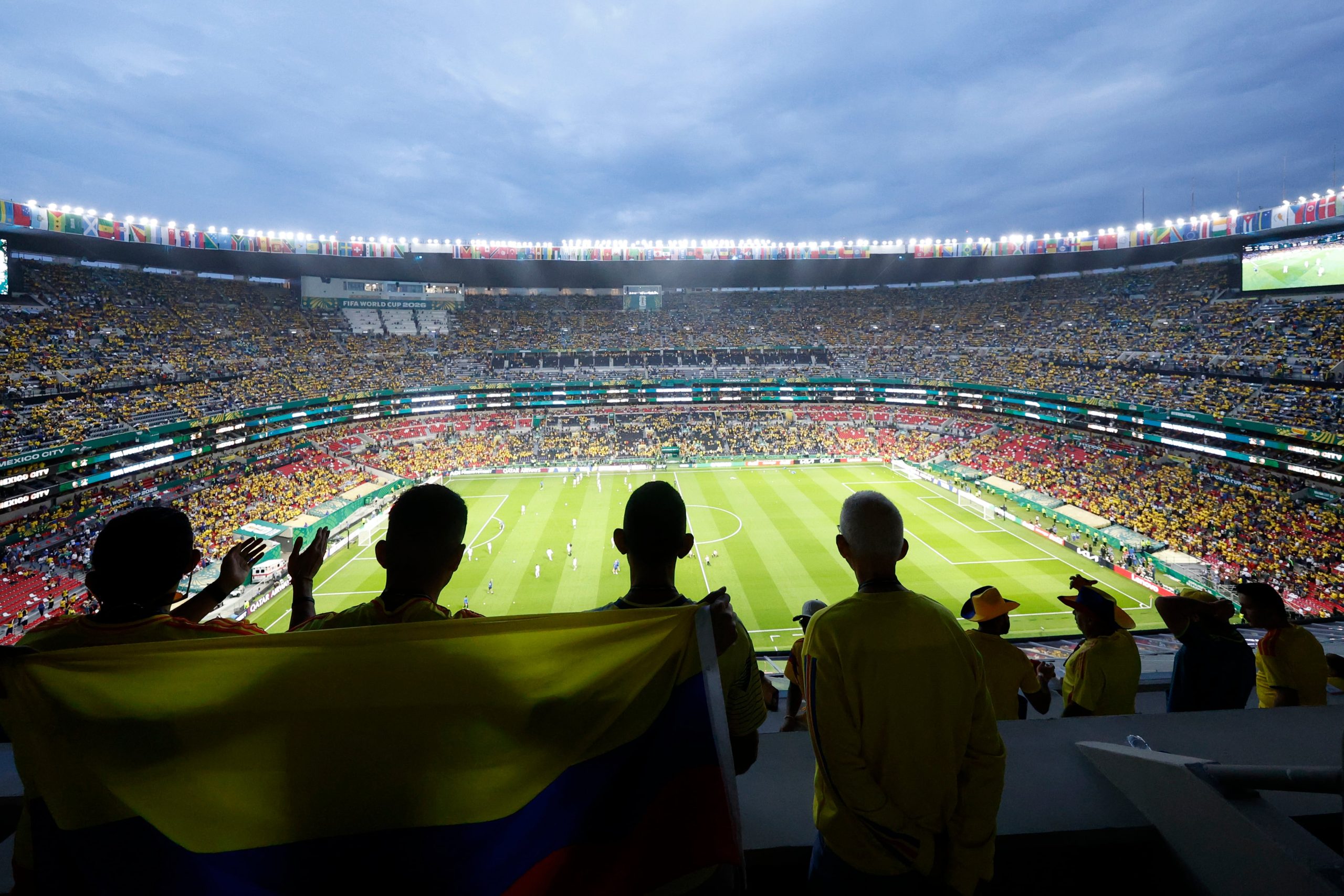
The World Cup celebrations reflect the decline in homicidal violence in Mexico — a scourge that has persistently plagued the country over the past 20 years and the tip of a gigantic iceberg: criminal governance, the source of the country’s major unresolved problem. The news is good and is shining brightly on the global stage. On the opening day of the tournament, June 11, Mexico recorded 30 homicides, according to preliminary figures from the Secretariat of Security and Citizen Protection (SSPC), a record low. This Tuesday, with the latest data added to the platform, the figure hit a new low of 27.
Taken out of context, the figures can appear shocking because of how high they are, but it is important to consider where the North American country is coming from: counts of above 70 murders a day at the start of Claudia Sheinbaum’s term, just a year and a half ago. It was even worse before that. In the year of the Qatar World Cup in 2022, Mexico recorded 33,287 murders, an average of more than 90 a day, and earlier, during the 2018 World Cup in Russia, the number rose to 36,685 — the second-highest in the country’s history, according to the National Institute of Statistics. Pending the agency’s final figures, 2025, Sheinbaum’s first full year in office, could show a considerable decline at close to 20,000 fewer murders.
Wrapped in problems of all kinds — teachers’ protests, demonstrations by families of the disappeared, and constant threats from Washington over drug cartels — Sheinbaum’s executive branch is boasting about its major success, a claim often challenged with the argument that the figures hide a more complex reality in which organized crime still calls the shots, whether it is killing people or not. The numbers also raise eyebrows among activists and analysts, who note that the number of people missing in the country — a range from 40,000 to over 130,000 — is linked to the decline in homicides, a hypothesis that has not been proven.
The figures are what they are, and Sheinbaum and her team gleefully brandish spreadsheets and statistical tables. This Tuesday, in one of his two monthly press briefings alongside Sheinbaum, Security Cabinet spokesman Omar García Harfuch closed his remarks by citing the data. “There has been a 46% decrease in the national daily average of intentional homicides,” he said, using the start of the president’s term as a reference point. “This represents 39 fewer homicides each day. This May is the lowest since May 2015,” he added.
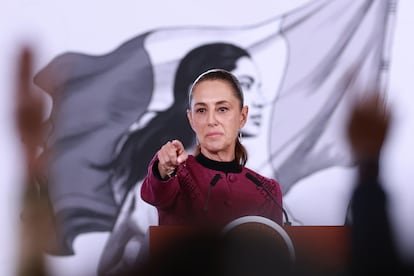
The road has been complicated and the future looks as challenging as the past few months. The blow against crime has been significant, but it remains large and powerful. When Andrés Manuel López Obrador left the presidency at the end of September 2024, the situation was dire. Mexico was recording more than 80 murders a day, with peaks over 90. Large criminal conglomerates reigned over different territories, notably the Jalisco New Generation Cartel (CJNG), particularly in the country’s central-east. The word “reigned” is not used lightly: crime acted as a manager of both legal and illegal economies, poisoning public life and bending it to its methods.
Battles between criminal groups, part of the landscape in previous years, intensified. In Guerrero, Colima, Zacatecas, Baja California, and Guanajuato, among other states, criminal networks flexed their muscle in countless battles, blows that reached into the political establishment, which was linked to them by force, necessity, or ambition. This wasn’t a new phenomenon that emerged under López Obrador’s watch. Previous administrations had their share of responsibility, but the veteran politician from Tabasco — wary of the excesses committed by security forces in previous six-year terms — took a step back. With their eyes always on the playing field, the cartels advanced.
It is not that the situation has radically changed now. Criminal rule continues in many parts of the country, but Sheinbaum’s government, pushed strongly from the north with Donald Trump back in the White House, has stepped forward. Aware of the war between factions of the Sinaloa Cartel, a conflict that began in September 2024, the Security Cabinet practically dismantled the main faction, Los Chapitos, responsible for criminal governance in Sinaloa according to a U.S. indictment against politicians in the state — including the governor, of the ruling Morena party like Sheinbaum, and the former security secretary, a retired general.
The focus then turned to Jalisco, the CJNG stronghold — the group that had grown the most over the last 10 years. In barely two months, authorities killed its absolute leader, Nemesio Oseguera, “El Mencho,” who until then had seemed untouchable, and arrested its number three, Audias Flores, “El Jardinero.” The crisis of disappearances in that state and neighboring areas, and evidence that the group was forcibly recruiting young people, forced the authorities to act. The Security Cabinet has also tried to strike at networks of political-criminal complicity with Operation Enjambre in the State of Mexico, Jalisco, and Morelos, with dozens of local officials detained.
The question now is whether Sheinbaum and her team will continue to untangle the criminal web — the knot tightly bound by decades of impunity and laissez-faire, the basic condition that allowed crime and violence to advance. With the mafias contained — or at least warned that murder and extortion will not be tolerated — the Security Cabinet knows the only path forward is to deepen Operation Enjambre and disentangle the exercise of public service from cartel ambition once and for all. Otherwise, any reduction in homicide rates could become anecdotal, reversible at the first sign of official hesitation.
Sign up for our weekly newsletter to get more English-language news coverage from EL PAÍS USA Edition

Claudia Sheinbaum
Final Countdown To Defuse Protests Against Mexican Government Ahead Of World Cup Opening Game

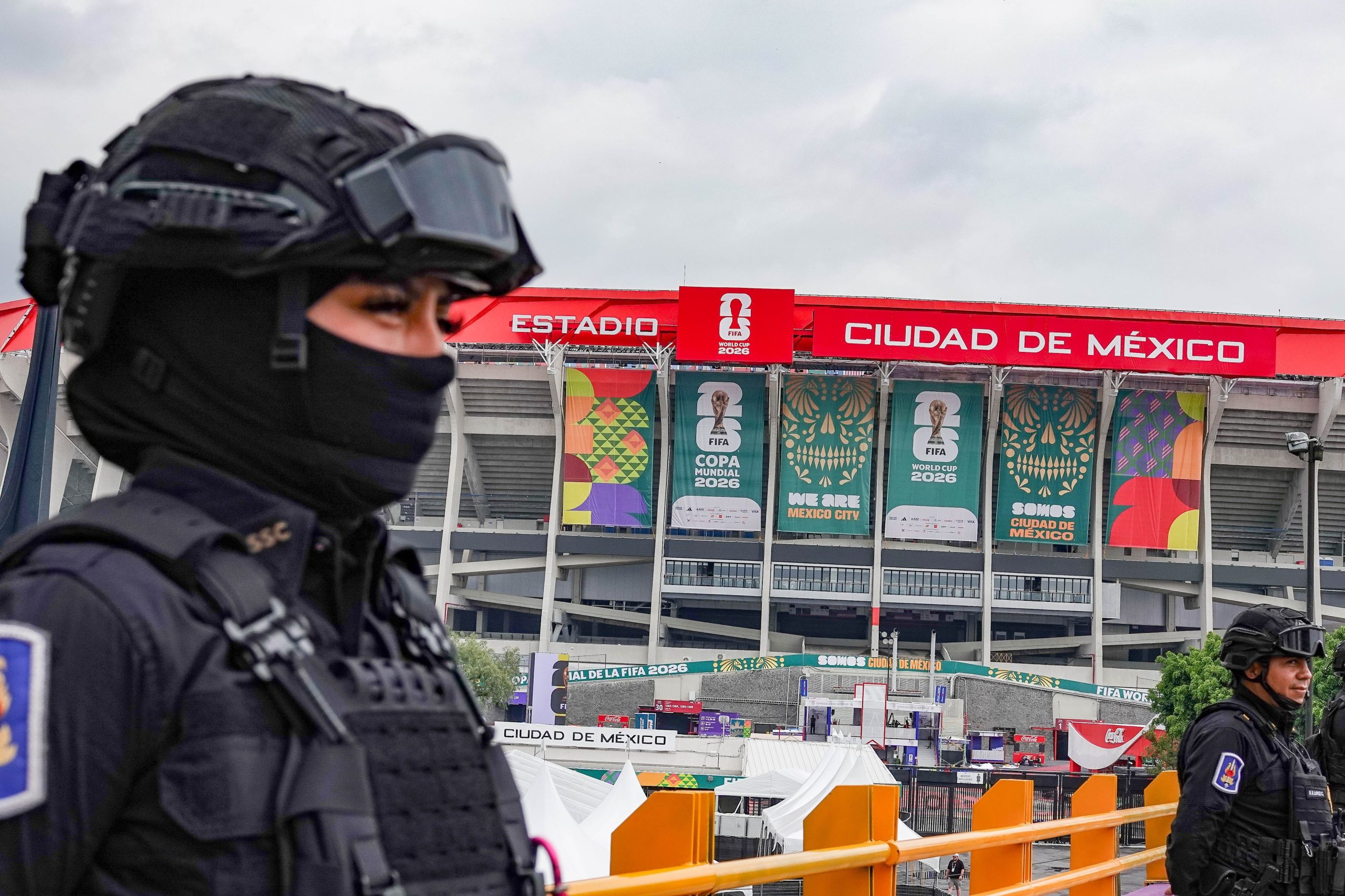
Only 24 hours remain before the World Cup kicks off in Mexico and the country is going though its final dress rehearsals. Preventing demonstrations on opening day is already a pipe dream: negotiations with teachers have stalled and search groups will march to make their missing relatives visible. With everyone in position and the cards on the table, attention is focused on avoiding the worst-case scenario for the government of Claudia Sheinbaum — an image of a police officer striking a teacher circling the globe on the day the country is playing for its international image. The concern is not unfounded: on the first day of protests a teacher lost an eye in clashes with police. The past two weeks have tested containment measures, and Wednesday will be the last chance to fine-tune the public staging. To ease the pressure, authorities have canceled classes for Thursday and ordered remote work for public servants.
The opening match will be the first of five games played in Mexico City. There are 13 matches in total across the country, which is expected to receive more than five million fans, according to official forecasts. The government is banking on World Cup fever to dilute the complaints. The tournament — the third to be hosted at Estadio Azteca — has acted as a catalyst in a country riven by social crises. Thousands of teachers — 10,000 according to the union, 3,000 according to the government — have camped in the historic downtown for two weeks with the same demand they made 18 months ago: a return to public pensions, a request the government considers unworkable. After 50 working tables, neither Rosa Icela Rodríguez nor Mario Delgado, the Interior and Education secretaries leading negotiations, have managed to stop the National Coordination of Education Workers (CNTE) from returning to the streets, despite warnings given a year ago. So far, the massive police deployment has prevented them from reaching Estadio Azteca and the Zócalo, where the president had planned to attend the opening match — now uncertain and pending the protest’s evolution.
Collectives that search for the disappeared have also announced marches for this Wednesday and for Thursday morning. It was the last recourse they had left. Mothers have already put their children’s faces on national team shirts, in a sticker album, on banners along avenues — they have done everything to force people to look into the eyes of the roughly 133,000 people who remain unaccounted for in the country. The opening date is their last spotlight. At the last minute, a protest for judicial independence in the city’s south and a contingent of Ayotzinapa students — who arrived on Monday with explosives that were confiscated — also joined them. The government has managed, however, to halt the powerful farmers’ front, which told EL PAÍS that it has given the executive this week’s breathing room because talks with the new head of the Agriculture Secretariat are on track.
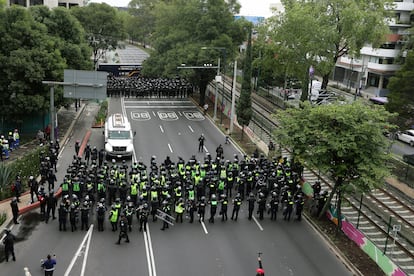
With the Colossus of Santa Úrsula sealed off for a one-kilometer radius, Sheinbaum’s government will focus on keeping all elevated roads leading directly to the stadium open. Authorities will allow entry to this last protected stretch from 6.00 a.m., that is, seven hours before kick-off. “Fans’ access is guaranteed. We only ask that they arrive early. If someone wants to arrive at the last minute, they may face more complications. Be more prepared — that’s what we ask,” Mexico City’s secretary of government, César Craviotto, said on Tuesday. With the planned marches and tourists in the capital, authorities are now relying only on peaceful coexistence. The aim is to contain, not confront. The president has repeatedly said during her morning briefings that the right to protest is guaranteed and that her government will never punish public demonstrations. Sheinbaum is less concerned about Tlalpan Avenue being closed than about Mexico projecting an image of repression before Shakira takes the stage.
Teachers explode, countryside concedes
Over the past year Sheinbaum has faced two major domestic challenges: the organizing power of the CNTE and the farmers’ pressure on the highways. The government has chaired one negotiation table after another for months to prevent unrest from getting out of control, but the results have been mixed. While teachers press in the streets to unblock their main demand — the return to public pensions — the countryside says it is tentatively satisfied with the course of talks. “We don’t feel completely attended to, but we do feel we will make progress,” says Eraclio Rodríguez, one of the leaders of the National Front for the Defense of the Countryside, which has granted the government the enjoyment of the opening match, though it does not rule out mobilizations afterward.
Interlocutors play a different role in each case. While teachers point to dissatisfaction with the proposed measures — the latest being to strengthen the only public pension fund and create a public insurer — the farmers’ representative speaks of a change “like night and day” at the Agriculture Secretariat, previously headed by Julio Berdegué and now by his former undersecretary, Columba López. “We are doing better, things are going well,” Rodríguez says, contrasting that with the difficulties they face with the economy minister, Marcelo Ebrard. The picture changes on the teachers’ side. “This is not a personality issue. She [Rosa Icela Rodríguez] has the disposition. They are decent people, they have treated us well; the problem is substantive: they are not proposing to repeal the ISSSTE law (which governs public-sector retirement),” summarizes Pedro Hernández, CNTE’s general secretary in Mexico City.
The head of the public body, Martí Batres, and Sheinbaum herself once mobilized in the streets in the same way they are now. They know each other, they are the same people on both sides, and, broadly speaking, they respect one another. That adds a layer of complexity to negotiations, but it does not resolve them. “They have a history of fighting for rights. Sometimes power makes you forget that. We would think that sympathy should favor negotiation frameworks,” the union leader laments.
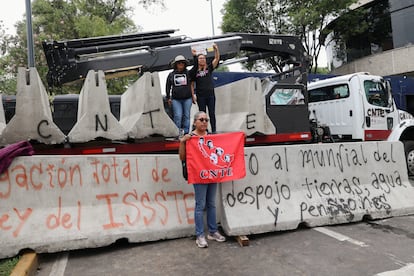
Disappointment has spread through the most radical sector of the teaching ranks while the government bets on fatigue and a deterrent police presence in mobilizations that always manage to secure some additional measure, but never the one they want. According to the government, a return to public pensions would require a disbursement equal to 20% of national GDP — an interpretation teachers reject and one that has driven them to escalate tensions on the eve of the tournament’s opening. It is unclear which side time will favor once the collective euphoria takes hold of the national mood.
The disappeared, a perpetual crisis
Among all of Mexico’s crises there is an old lament: a country where, government after government, thousands go missing and no authority halts the tragedy. International bodies have described it as a humanitarian emergency, but inside the country it is so common that it sometimes goes unnoticed. Every World Cup venue has its square, its memorial to the disappeared, a space where families insist on leaving that reminder: many are still missing. So far Sheinbaum’s government has presented a package of laws and a reinterpretation of the missing persons registry, both heavily criticized by collectives. With the World Cup’s imminent arrival, the president stepped up the pace. “In recent months we have had meetings to build some improvements to the investigation protocol and the law,” says Jacky Palmeros, who founded the collective Una luz en el camino after the disappearance of her daughter, Monserrat Uribe, in 2020 in Iztapalapa, east of the capital: “But there is a lack of willingness and commitment.”
These meetings, however, have been accompanied by what the collectives define as “a new way of repressing and violating families”: removing the photos and banners of the disappeared as soon as families put them up. Faced with that scenario, they decided to march. “Our intent is never to sabotage the World Cup; it is not to prevent people from going, watching and enjoying themselves, only to make visible what you have so strenuously tried to hide. In that context, we ask that upcoming actions be respected,” Palmeros told Secretary of Government César Craviotto this week. “They told us we will not be able to approach, to make ourselves visible and to protest freely because they will close access to free movement,” the activist adds, saying there “is a feeling of hostility in the air”: “There is fear, I think, on both sides. No one knows what will happen. All that remains is to wait. Neither they nor we will change our minds.”
Sign up for our weekly newsletter to get more English-language news coverage from EL PAÍS USA Edition

Francia – Irak: El Partido Del Mundial 2026 En Directo | Se Activa El Protocolo Por Tormenta Eléctrica En El Descanso Y El Encuentro Está Detenido

Prime Day 2026 En Directo: Fichamos Las Rebajas Que Merecen La Pena Contadas Minuto A Minuto

Mundial 2026, últimas Noticias En Directo | Suspendido El Entrenamiento De España En Chattanooga
A major EU border system goes live today – What changes for travellers?
El Pentágono, Evacuado Por Una Falsa Alarma Ante La Sospecha De Un “incidente Con Materiales Peligrosos”
Mallorca launches new plan to save its beaches as coastal erosion threatens popular resorts


-
EU rules2 weeks ago
A major EU border system goes live today – What changes for travellers?
-
America2 weeks ago
El Pentágono, Evacuado Por Una Falsa Alarma Ante La Sospecha De Un “incidente Con Materiales Peligrosos”
-
Coastal erosion2 weeks ago
Mallorca launches new plan to save its beaches as coastal erosion threatens popular resorts
-
fira de ses herbes2 weeks ago
Selva herb fair returns: Mallorca’s most magical tradition blooms again
-
european airport delays1 week ago
1,225 delays at major European airports raise summer warning for Spain travellers
-

 %1 week ago
Barcelona Tests Olive Pit Asphalt That Could Transform How Cities Build Roads
-

 Casa Real2 weeks ago
Victoria Federica De Marichalar Fue Vestida De Dior Para Ver Al Papa
-

 california2 weeks ago
Migrants At The Mercy Of Gangs: ICE Detainees Forced To Live Alongside Organized Crime