Connect with us

%

Salobreña Residents Gain Voice In New Circular Economy Strategy

Published

on

salobrena-residents-gain-voice-in-new-circular-economy-strategy

Salobreña rubbish collection. Credit: Ayt de Salobreña

Salobreña Council has launched its citizen participation process to develop its Local Circular Economy Plan. The initiative carries the slogan “Your opinion counts to build a more sustainable Salobreña”. Councillors hope to create a practical roadmap that makes the town more efficient while protecting the environment for years ahead.

Circular economy principles at core of plan

Circular economy thinking focuses on cutting waste through greater reuse and recycling. It also hopes to get smarter use of resources and the creation of fresh economic and social chances. Adopting this approach supports daily life improvements for people in Salobreña. It safeguards the natural surroundings that define the area. Innovation receives promotion, and long-term development becomes possible for current residents plus future generations.

Councillor stresses value of local knowledge

Councillor Luis Cano, who leads the area, described citizen input as essential. He said that participation helps identify what matters most and reveals actual needs. Actions can then match real challenges because local people understand Salobreña opportunities better than anyone else. Cano added that neighbours and businesses should join the effort. Working together produces a more responsible place ready to face future demands.

Benefits expected across Salobreña community

The plan targets practical gains in several areas. Waste reduction frees up space and lowers costs for households and firms. Reuse and recycling habits build cleaner streets and beaches that attract visitors. Resource optimisation lowers energy and material bills over time. New opportunities appear in repair services, green products and local projects that employ people. Overall quality of life rises when the environment stays healthy and innovation spreads through schools and small enterprises. Future generations inherit a place organised around lasting balance rather than constant disposal.

Participation process now open to all

Town hall staff want every voice heard during this stage. Proposals, ideas and suggestions will shape a plan that fits Salobreña conditions exactly. Residents can share thoughts on daily waste habits, business practices or community spaces. Businesses can get chances to suggest changes that cut costs while meeting environmental goals. Associations and groups bring perspectives from different neighbourhoods. All contributions help build ownership so the final document reflects genuine priorities rather than top-down ideas alone.

Path forward for sustainable Salobreña

This process marks the start of wider conversations about daily habits and municipal decisions. Early input now influences later actions on collection systems, repair networks and education campaigns. Salobreña makes itself meet national and regional circular economy targets through grounded local work. Continued resident involvement keeps the plan relevant as conditions change. The result should deliver measurable progress on waste volumes, resource use and community wellbeing across the whole area.

Local people in Salobreña can take part through several straightforward routes. They visit the official participation platform at salobrenaparticipa.es to submit proposals and follow progress on the circular economy plan. Social media posts from the council include a QR code that links directly to more details and input forms. Residents also contact the participation office by email at participacion@salobrenaparticipa.es or by calling the main number 958 610 011. Upcoming workshops offer chances to discuss ideas in person with councillors and staff. Formal suggestions go through the electronic headquarters at sede.ayto-salobrena.es for official recording.

%

World’s First Ship Tunnel Through Mountain Wins Approval In Norway

Published

on

world’s-first-ship-tunnel-through-mountain-wins-approval-in-norway

Ship emerges from the mountains. Credit: kystverket.no

Norway has finally given approval for construction of the world’s first maritime tunnel intended for massive ships. Project planners chose a route that cuts through a mountain on the Stadlandet peninsula. Clear benefits in safety and efficiency now await coastal shipping operations.

Vessels trading in western Norway currently face serious challenges from the Stadhavet Sea. Storms affect the area for about 100 days each year. Norwegian authorities class this stretch as one of the most dangerous on the planet. Those conditions create high costs, delays and real risks for passenger ferries, fishing vessels and cargo carriers. The new tunnel removes that exposure by providing an inland alternative between two fjords.

Safety improvements for maritime traffic

Crews will get a calmer and more controlled environment for the short crossing. Passenger services will become more reliable and dependable because operators no longer depend on favourable weather windows. Fishing boats and cargo ships will be able to avoid physical strain and damage from rough conditions on hulls and equipment. Everyone on board benefits from the protection the mountain provides against wind and waves, albeit in the darkness of a tunnel passing under a mountain range.

Economic benefits for fishing and exports

Operating costs fall when ships take the shorter protected route instead of longer detours or waiting periods. Salmon exporters in particular will see advantages from quicker and cheaper transport of their catch to markets. The fishing industry gains a practical tool supporting steadier production and delivery. Steady schedules help maintain Norway’s reputation for reliable seafood supply chains.

Completion date and what lies ahead

Construction has been now planned for 2027 and will run at least until 2032. Users of the future route can look forward to a straightforward ten-minute passage free of charge from that year onward. Regular services including cruise ships will have access to this new option along Norway’s coastline. Crews and visitors can look forward to trying the new route once it opens officially in 2032.

Tunnel size and crossing experience

The bored rock section will measure 1.7 kilometres, while the total length rises to 2.2 kilometres once water-based entrance structures are included. Internal dimensions provide generous clearance with a height of 50 metres and a width of 36 metres. Capacity covers ships up to 16,000 gross tonnes. Travel proceeds at speeds between five and eight knots throughout the journey.

Design accommodates regular traffic from fishing boats, ferries and cruise ships without issue

The Norwegian Coastal Administration is overseeing the entire project. This infrastructure represents an important step in modernising maritime connections in a region long affected by difficult sea conditions. Once finished, crews and passengers gain a welcome change from traditional exposed routes.

Continue Reading

%

Terminal Patients In Poland Ask For The Right To Say Goodbye To Their Pets

Published

on

terminal-patients-in-poland-ask-for-the-right-to-say-goodbye-to-their-pets

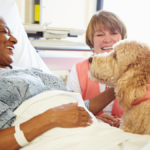
A final visit from a beloved pet can bring the feeling of home into the hospital. Credit: Monkey Business Images / Shutterstock

For some patients in hospice or palliative care, the hardest separation is not only from home, but from the animal that makes it one. A proposed law in Poland would give dying patients the right to receive pet visits, raising difficult questions for hospitals in Spain, the UK and across Europe.

One last pet visit can matter so much at the end of life

For many people, a dog or cat is not just a pet. It is another family member that follows them from room to room, loves unconditionally, waits by the door, sleeps beside the bed and somehow knows when we need their company.

In Poland the question being raised is if a dying patient should have to spend their final days cut off from the animal they love?

Polish MPs have proposed a legal change that would give patients in stationary hospices and palliative medicine wards the right to have contact with their domestic animals. The proposal would amend Poland’s Act on Patient Rights and the Patient Rights Ombudsman, meaning pet visits would no longer depend only on whether a hospital or hospice decides to allow them.

The debate has been shaped by deeply human cases in Warsaw. One woman with advanced cancer was reportedly more worried about the dog waiting at home than about herself. Another seriously ill patient was reunited with his cats in a palliative ward, a moment doctors said showed how much comfort an animal can bring when words are no longer enough.

In practice, the rule would affect the kind of moment that rarely fits neatly into hospital policy: a patient asking to see the dog that has slept beside them for years, or the cat still being cared for by relatives at home.

How Poland’s proposal would turn comfort into a patient right

The Polish proposal would not create an open-door rule for animals in hospitals. Managers would still be able to refuse or restrict visits logically where there are infection risks, safety concerns or practical barriers.

Hospitals also have to protect other patients, staff and visitors. While some wards care for people with weakened immune systems and others have strict hygiene rules or limited space.

But the important change is where the conversation begins. Instead of families asking for an exception, the patient’s need for contact with a beloved animal would be recognised in law.

That shift in the Polish case could influence other European countries to follow suit. It asks whether emotional comfort at the end of life should be treated as an optional extra, or as part of dignified care. 

Patients in Spain depend completely on individual hospital rules

Spain does not appear to have a single national rule giving hospital patients a general right to see their pets. Instead, the answer depends on the hospital, the region and the patient’s condition.

In Andalucía, the Hospital Civil in Málaga launched “Tu mascota te acompaña”, meaning “Your pet accompanies you”, through its palliative care unit in 2025. The programme is aimed at terminal patients who have expressed the wish to say goodbye to their companion animal before their last day in hospital.

The scheme allows authorised and identified pets to visit under agreed safety rules. It is a compassionate model, but still a local programme rather than a national guarantee.

How UK patients face the same emotional uncertainty 

In the UK, pet visits also depend heavily on local rules.

Royal College of Nursing guidance says patients’ own pet dogs are generally not permitted in healthcare settings, except in exceptional circumstances. Hospices and some care settings are among the places where such visits may be appropriate.

Some NHS hospital policies are more direct. Worcestershire Acute Hospitals NHS Trust, for example, permits domestic pets to visit end-of-life patients only, while also warning about infection, allergies and patient safety.

These uncertainties and lack of general standing rules could sound unreasonable and without sense. A patient is allowed many human visitors, but not the dog or cat that has been a part of their family and daily life for years.

Hospices are often more flexible than acute hospitals, but permission is still usually needed in advance. The visit may require veterinary documents, a lead or carrier, a responsible handler and agreement from staff.

Europe is slowly making space for animals in care

Other European countries show that the idea is spreading. In France, residents in care homes known as Ehpad and independent living residences can now keep pets under certain conditions linked to hygiene, safety and the resident’s ability to care for the animal.

French hospitals are also experimenting. In Paris, Pitié-Salpêtrière hospital has introduced a protocol allowing dogs and cats to visit hospitalised patients under strict hygiene conditions and individual assessment.

In Italy, some local health authorities permit dogs and cats to enter inpatient healthcare facilities if families meet set rules. 

It would seem that Europe is beginning to recognise the emotional role of animals in illness, but remains to take any concrete action towards legitimising the issue. 

How families can ask for permission for a visit

Families hoping to arrange a pet visit should ask as early as possible, especially if a patient is in palliative care or facing a long hospital stay.

Most hospitals that allow visits will want proof that the animal is healthy, vaccinated and under control. Visits may be refused if the patient is clinically unstable, in isolation, dependent on continuous oxygen, severely immunocompromised, allergic risk is high or the animal is likely to become distressed.

Poland’s proposal has put a quiet but painful question into public view. In the final days of life, should a pet be considered another familiar visitor, as it may be their strongest link to emotional connection and their home?

Continue Reading

%

Paris Bans Public Drinking During Heatwave

Published

on

paris-bans-public-drinking-during-heatwave

People seek relief from extreme heat near the Eiffel Tower as Paris introduces emergency heatwave measures. Credit : Here Now, Shutterstock

People planning a weekend in Paris will face temporary restrictions that have nothing to do with security or public events. As extreme temperatures continue to grip Europe, the French authorities have announced a ban on drinking alcohol in public and restrictions on takeaway alcohol sales in the capital.

The emergency measures come after officials warned that hospitals are under severe pressure as the heatwave continues, with ambulance crews responding to far more medical emergencies than usual.

The decision underlines how seriously French authorities are treating the current weather conditions. This is no longer simply a question of people feeling uncomfortable in unusually hot weather. Doctors are dealing with more heat related emergencies, intensive care units are filling up and health officials are urging people of every age to change their daily routines until temperatures fall.

Why Paris has introduced temporary alcohol restrictions

The measures will be in force over two consecutive nights.

From midday on Friday until 7am on Saturday, drinking alcohol in public spaces across Paris will be prohibited. The same restrictions will apply again from midday on Saturday until 7am on Sunday.

In addition, shops will not be allowed to sell takeaway alcohol between 6pm and 7am on both evenings.

The rules do not affect bars, cafés or restaurants, which can continue serving customers as normal.

According to the French authorities, the aim is to reduce the number of alcohol related incidents that could place even more pressure on emergency departments already dealing with the consequences of the heat.

Paris police chief Patrice Faure said hospitals in the capital were approaching saturation point.

To help cope with the situation, Prime Minister Sébastien Lecornu announced that France had raised its national health emergency response to its highest level. The move allows hospitals to increase staffing levels and organise resources to protect the most vulnerable patients during the heatwave.

The warnings coming from doctors have become increasingly direct.

Health Minister Stéphanie Rist said many people still believe that extreme heat mainly threatens older adults or those with existing health conditions. She stressed that this assumption is wrong.

According to Rist, young people have also suffered cardiac arrests during the current heatwave. She revealed that ambulance services in Paris dealt with four times the usual number of cardiac arrest cases over a single 24 hour period.

Officials have not released confirmed figures for deaths directly caused by the heat, but Paris deputy mayor Emmanuel Grégoire said mortality in the capital was rising.

Speaking on French television, he criticised people who continued jogging outdoors despite the temperatures, saying there was nothing wrong with taking a short break from exercise until conditions improved.

The message from public health officials has been simple. Drink plenty of water, avoid physical activity during the hottest hours of the day and do not assume that being young automatically protects you from the effects of extreme heat.

Spain already under intense heat, Germany prepares for the next blast of heat

Although France remains under intense heat, the weather pattern is beginning to shift.

Spain, which recorded 45.1C in Andújar earlier this week during its exceptional June heatwave, is expected to cool slightly as Atlantic air begins moving across the country.

Temperatures will remain high in many areas, with forecasts still reaching 38C or 39C, and the impact of the heat in Spain has already been significant.

The country’s MoMo mortality monitoring system estimates that 213 deaths recorded between Sunday and Wednesday could be linked to high temperatures. Of those, 95 occurred on Wednesday alone.

Germany could see temperatures reach 40C, while much of the Czech Republic is now under extreme heat warnings as forecasters expect the same hot air to spread across central Europe.

France also faces another challenge.

After days of exceptional heat, meteorologists are forecasting powerful thunderstorms across parts of the west of the country. Winds of up to 110 kilometres per hour are expected along sections of the Atlantic coast.

The first day of the Garorock Festival has already been cancelled because of the forecast, while temperatures could still climb to 42C before storms arrive.

The extreme weather has also affected France’s electricity network, with three nuclear power plants taken offline because of the heat.

Europe is seeing longer, hotter summers

The latest heatwave has once again highlighted how vulnerable Europe has become to prolonged periods of extreme temperatures.

According to the Copernicus Climate Change Service, Europe is warming faster than any other continent, with temperatures rising at roughly twice the global average.

That trend is bringing more frequent heatwaves, increasing pressure on healthcare systems and placing greater strain on water supplies and energy infrastructure.

Wildfires have also become a growing concern.

More than one million hectares burned across Europe last year, with Spain among the countries most severely affected.

For millions of people, the consequences of this week’s heatwave have been impossible to ignore. Schools have had to adapt, hospitals have activated emergency plans, festivals have been disrupted and governments have introduced measures that would once have seemed extraordinary for a spell of hot weather.

Health authorities across Europe continue to repeat the same advice. Stay hydrated, remain indoors during the hottest part of the day whenever possible and avoid strenuous physical activity until temperatures ease. With much of the summer still ahead, officials believe those precautions could become necessary more than once before the season comes to an end.

Continue Reading

Trending

Copyright © 2017 Spanish Property & News