Connect with us

%

Morocco Returns To GMT: Could Europe Finally End Changing Its Clocks?

Published

on

morocco-returns-to-gmt:-could-europe-finally-end-changing-its-clocks?

The European Union’s attempt to end seasonal clock changes highlighted this tension. Photo credit: hydebrink/Shutterstock

Morocco is set to move its clocks back by one hour after the summer of 2026, returning to Greenwich Mean Time (GMT) after around eight years on GMT+1. In practical terms, the country will move away from a near-permanent daylight saving system and reintroduce standard time during winter months.

The adjustment itself is simple: clocks go back one hour after the summer period ends. But the wider significance is less about the mechanics and more about what it signals. Time systems are rarely changed unless governments believe the trade-offs between daylight, productivity and coordination have shifted. Morocco’s decision suggests that balance has been reconsidered.

What is happening is a reversal of Morocco’s GMT+1 policy. How it works is a seasonal return to GMT after summer. Why it matters is that it reopens a wider question Europe has been unable to answer for years: whether seasonal clock changes still make sense, and if not, what should replace them.

Europe’s long-running debate on clock changes remains unresolved

Europe has been discussing the end of changing the clocks forward for years, but no reform has been implemented. In 2019, the European Union backed a proposal to stop changing clocks twice a year. The idea was to allow each member state to adopt a fixed time permanently, removing the seasonal shift between winter and summer.

On paper, the reasoning was straightforward. Clock changes were seen as increasingly outdated in a global economy where digital coordination matters more than local daylight savings. They were also criticised for being disruptive, particularly in the days immediately after the shift. But the proposal stalled, member states could not agree on a single approach. Some preferred permanent summer time, others preferred permanent winter time. Geography complicated the issue further, since daylight patterns vary significantly between northern and southern Europe.

As a result, the reform was left in limbo. No new system was agreed, and the existing cycle of changing clocks in March and October continues. This is the key contrast with Morocco. While Europe debates and delays, Morocco has reversed its approach and returned to a more traditional structure.

Why Morocco is moving away from GMT+1

Morocco adopted GMT+1 in 2018, largely to align more closely with European working hours and improve consistency in business and trade. In practice, it reduced time differences with key trading partners for much of the year. But over time, domestic concerns became more prominent than international alignment.

One of the main issues was the effect on daily routines during winter. Later sunrises meant darker mornings for schoolchildren and workers, which became a recurring public concern. While the system was designed for efficiency, it created friction in everyday life.

The return to GMT is therefore not a sudden shift but a correction. It prioritises natural daylight alignment during winter months, even if it reduces the year-round synchronisation with Europe. It also reflects a broader reality: time systems are not neutral. They shape behaviour, routines and even perceptions of the working day. When that balance feels off, governments eventually revisit the structure.

What Europe could realistically gain from ending clock changes

If Europe were to revisit and implement its stalled proposal, the potential benefits would be practical rather than symbolic. The most immediate advantage would be stability. Removing seasonal clock changes would mean no biannual disruption to sleep patterns, schedules and transport timetables.

It would also reduce avoidable friction in cross-border coordination. Airlines, rail networks, logistics companies and digital platforms currently operate across two time shifts each year, requiring constant adjustment. Other potential benefits include:

  • fewer scheduling errors during transition weeks 
  • more consistent international business coordination 
  • improved clarity for digital communication across time zones 
  • reduced disruption to sleep and productivity immediately after clock changes 

There is also a wellbeing argument. The clock shift has been linked to short-term disruption in sleep patterns and concentration for some people, particularly in the days immediately following the change. While the effects are temporary, they are repeated twice a year across large populations.

However, any reform would still face the same political barrier: agreement on what permanent time should look like. That issue remains unresolved.

Will Europe actually follow this direction?

Despite repeated discussion, there is no confirmed timeline for the end of clock changing in Europe. The European Commission’s proposal remains effectively frozen. Member states still operate under the existing system, changing clocks in spring and autumn as a default.

The core problem has not changed: countries experience the changes very differently. A permanent “summer time” may suit some regions but feel extreme in others, while permanent “winter time” has the opposite effect.

Because of this, the debate has persisted without resolution. The system continues not because it is widely supported, but because no alternative has achieved consensus. Morocco’s decision does not directly force Europe to act, but it does sharpen the contrast. One system is being revised and simplified at national level. The other remains unchanged despite years of discussion.

How Morocco’s change affects its own rhythm

Within Morocco, the return to GMT will be most noticeable in winter. The country will shift back to standard time after summer, resulting in:

  • earlier alignment of sunrise and sunset with daily routines 
  • a clearer separation between summer and winter schedules 
  • seasonal variation in time difference with external partners 

For international coordination, this introduces more fluctuation across the year compared to the previous near-permanent GMT+1 system. Timing will depend more visibly on whether other regions are observing daylight saving time at the same moment. The change is not disruptive in itself, but it removes the sense of a fixed year-round offset.

A small shift that brings a bigger question

On the surface, Morocco’s return to GMT is a straightforward administrative change. But in context, it sits inside a larger unresolved debate about how modern societies organise time. Europe has been discussing simplification for years without implementation. Morocco has now adjusted its system in the opposite direction, prioritising seasonal alignment over permanent offset.

Neither approach is necessarily final. Both reflect attempts to balance local experience with international coordination. What remains uncertain is whether Europe will eventually resolve its debate, or continue adjusting clocks twice a year while others quietly move away from it.

%

Why A Video Showing How To Make Olive Oil Is Going Viral As Food Prices Rise

Published

on

why-a-video-showing-how-to-make-olive-oil-is-going-viral-as-food-prices-rise

When prices rise people start paying more attention to how things are made. Photo credit: Davide Bonaldo/Shutterstock

In Spain, the weekly food shop has become noticeably more expensive for many households. Not in a sudden way, but slowly enough that people are starting to change how they buy things. A basket that once felt predictable now often comes out higher than expected. Some products are left on the shelf more often. Others are swapped for cheaper versions.

It is not just one item or one category. Bread, eggs, dairy, fruit, vegetables and cooking oils have all played a part in that shift. Most people are not changing what they eat completely. Instead, they are adjusting how they shop. Smaller baskets. More checking of prices. Less impulse buying.

Changing Habits in the Kitchen

That change has also affected how people cook at home. More meals are being made from basic ingredients instead of convenience food. Eating out during the week has dropped for some households. Nothing about it feels like a lifestyle decision. It is just a response to what things cost. Because of that, everyday ingredients are being looked at differently. Things that were once taken for granted now get more attention.

Olive oil is one of them. It is used constantly in Spanish cooking, so it runs out quickly and gets replaced often. When the price rises, it becomes noticeable in a way that occasional purchases do not.

That is part of why a short video posted on YouTube by the channel Chefsale showing olive oil being made by hand has been widely shared online. It shows a young man known as Valentín producing extra virgin olive oil using olives from a family tree, and it has circulated widely because it connects directly with something many people are already thinking about, whether it is possible to make more basic food items at home instead of relying entirely on shops.

Why the Video Has Gone viral

Valentín’s video is getting so many shares is not just because people are suddenly planning to start producing their own oil in large quantities, (although some might). It is because the idea feels less distant than it used to. When food prices rise, more people start paying attention to where things come from and what goes into them. Content that shows food being made from raw ingredients starts to feel more relevant than it once did.

Olive oil fits into that space clearly. It is something people use every day, but rarely think about beyond the bottle. Seeing it linked to a large amount of raw olives makes the cost feel more understandable, even if most people will never attempt it themselves.

It also sits alongside a new online trend of watching basic food production being done at home or on a small scale. Bread, cheese, butter, preserves and oils all appear in these contents. The interest is not just turning people into producers, but also in understanding what everyday products actually require before they reach a supermarket shelf.

What stands out in this case is the contrast between effort and output. A relatively small amount of finished oil comes from a large quantity of olives, which is part of what people react to when they watch it.

For Those That Want to Know: How to Make Olive Oil at Home

Im pretty sure some of our more curious readers are wondering how making your own olive oil is actually done. The process begins with fresh, ripe olives taken from the tree and cleaned so only the fruit remains. In the video, around seven kilos of olives are used, however I’ve actually looked this up and you can use anywhere between 4 to 9kgs for your own homemade ones. The olives are then washed and selected before being crushed, including the stones, into a paste.

Once crushed, the paste is placed into a fine cloth. The liquid is extracted through this cloth, separating the solid material from the liquid. The remaining solid part can be used as compost or fertiliser. The liquid collected at this stage is not yet the final oil. It is left to rest overnight in sealed containers.

After resting, the liquid naturally separates into layers. The top layer is removed carefully using a spoon or a ladle, the process requires patience as the separation happens slowly. Finally, the liquid is filtered again. After this final step, it becomes extra virgin olive oil. From around seven kilos of olives, the result is approximately 200 millilitres of oil.

Changing perspectives 

The appeal of the video is tied to a simple idea: when everyday food becomes more expensive, people start looking at how it is made and whether it can be done at home.

When prices rise across basic items, more people pay attention to the process behind them. Things that once felt distant start to feel more accessible, and content showing food being made from raw ingredients begins to spread more easily because of that.

Olive oil is one example of this shift, but it sits alongside other foods people are now experimenting with at home as a way of responding to rising costs, rather than just consuming them without question.

Continue Reading

%

Salobreña Residents Gain Voice In New Circular Economy Strategy

Published

on

salobrena-residents-gain-voice-in-new-circular-economy-strategy

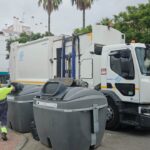
Salobreña rubbish collection. Credit: Ayt de Salobreña

Salobreña Council has launched its citizen participation process to develop its Local Circular Economy Plan. The initiative carries the slogan “Your opinion counts to build a more sustainable Salobreña”. Councillors hope to create a practical roadmap that makes the town more efficient while protecting the environment for years ahead.

Circular economy principles at core of plan

Circular economy thinking focuses on cutting waste through greater reuse and recycling. It also hopes to get smarter use of resources and the creation of fresh economic and social chances. Adopting this approach supports daily life improvements for people in Salobreña. It safeguards the natural surroundings that define the area. Innovation receives promotion, and long-term development becomes possible for current residents plus future generations.

Councillor stresses value of local knowledge

Councillor Luis Cano, who leads the area, described citizen input as essential. He said that participation helps identify what matters most and reveals actual needs. Actions can then match real challenges because local people understand Salobreña opportunities better than anyone else. Cano added that neighbours and businesses should join the effort. Working together produces a more responsible place ready to face future demands.

Benefits expected across Salobreña community

The plan targets practical gains in several areas. Waste reduction frees up space and lowers costs for households and firms. Reuse and recycling habits build cleaner streets and beaches that attract visitors. Resource optimisation lowers energy and material bills over time. New opportunities appear in repair services, green products and local projects that employ people. Overall quality of life rises when the environment stays healthy and innovation spreads through schools and small enterprises. Future generations inherit a place organised around lasting balance rather than constant disposal.

Participation process now open to all

Town hall staff want every voice heard during this stage. Proposals, ideas and suggestions will shape a plan that fits Salobreña conditions exactly. Residents can share thoughts on daily waste habits, business practices or community spaces. Businesses can get chances to suggest changes that cut costs while meeting environmental goals. Associations and groups bring perspectives from different neighbourhoods. All contributions help build ownership so the final document reflects genuine priorities rather than top-down ideas alone.

Path forward for sustainable Salobreña

This process marks the start of wider conversations about daily habits and municipal decisions. Early input now influences later actions on collection systems, repair networks and education campaigns. Salobreña makes itself meet national and regional circular economy targets through grounded local work. Continued resident involvement keeps the plan relevant as conditions change. The result should deliver measurable progress on waste volumes, resource use and community wellbeing across the whole area.

Local people in Salobreña can take part through several straightforward routes. They visit the official participation platform at salobrenaparticipa.es to submit proposals and follow progress on the circular economy plan. Social media posts from the council include a QR code that links directly to more details and input forms. Residents also contact the participation office by email at participacion@salobrenaparticipa.es or by calling the main number 958 610 011. Upcoming workshops offer chances to discuss ideas in person with councillors and staff. Formal suggestions go through the electronic headquarters at sede.ayto-salobrena.es for official recording.

Continue Reading

%

World’s First Ship Tunnel Through Mountain Wins Approval In Norway

Published

on

world’s-first-ship-tunnel-through-mountain-wins-approval-in-norway

Ship emerges from the mountains. Credit: kystverket.no

Norway has finally given approval for construction of the world’s first maritime tunnel intended for massive ships. Project planners chose a route that cuts through a mountain on the Stadlandet peninsula. Clear benefits in safety and efficiency now await coastal shipping operations.

Vessels trading in western Norway currently face serious challenges from the Stadhavet Sea. Storms affect the area for about 100 days each year. Norwegian authorities class this stretch as one of the most dangerous on the planet. Those conditions create high costs, delays and real risks for passenger ferries, fishing vessels and cargo carriers. The new tunnel removes that exposure by providing an inland alternative between two fjords.

Safety improvements for maritime traffic

Crews will get a calmer and more controlled environment for the short crossing. Passenger services will become more reliable and dependable because operators no longer depend on favourable weather windows. Fishing boats and cargo ships will be able to avoid physical strain and damage from rough conditions on hulls and equipment. Everyone on board benefits from the protection the mountain provides against wind and waves, albeit in the darkness of a tunnel passing under a mountain range.

Economic benefits for fishing and exports

Operating costs fall when ships take the shorter protected route instead of longer detours or waiting periods. Salmon exporters in particular will see advantages from quicker and cheaper transport of their catch to markets. The fishing industry gains a practical tool supporting steadier production and delivery. Steady schedules help maintain Norway’s reputation for reliable seafood supply chains.

Completion date and what lies ahead

Construction has been now planned for 2027 and will run at least until 2032. Users of the future route can look forward to a straightforward ten-minute passage free of charge from that year onward. Regular services including cruise ships will have access to this new option along Norway’s coastline. Crews and visitors can look forward to trying the new route once it opens officially in 2032.

Tunnel size and crossing experience

The bored rock section will measure 1.7 kilometres, while the total length rises to 2.2 kilometres once water-based entrance structures are included. Internal dimensions provide generous clearance with a height of 50 metres and a width of 36 metres. Capacity covers ships up to 16,000 gross tonnes. Travel proceeds at speeds between five and eight knots throughout the journey.

Design accommodates regular traffic from fishing boats, ferries and cruise ships without issue

The Norwegian Coastal Administration is overseeing the entire project. This infrastructure represents an important step in modernising maritime connections in a region long affected by difficult sea conditions. Once finished, crews and passengers gain a welcome change from traditional exposed routes.

Continue Reading

Trending

Copyright © 2017 Spanish Property & News