Connect with us

%

Drivers In Spain Could Save €300 A Year By Choosing These Petrol Stations

Published

on

drivers-in-spain-could-save-e300-a-year-by-choosing-these-petrol-stations

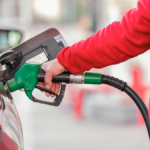
Choosing the wrong petrol station in Spain could cost drivers hundreds each year. Credit: Engin Akyurt / Unsplash

Families, commuters and summer travellers in Spain could cut hundreds of euros from their annual fuel bill by choosing cheaper petrol station chains, according to a new OCU comparison of more than 12,000 service stations. But the biggest savings depend heavily on where drivers live.

Why one petrol stop can quietly push up Spain’s yearly car costs

Fuel prices are already one of the car costs drivers in Spain feel most sharply. But a new comparison by the Organisation of Consumers and Users (OCU) suggests the difference between one petrol station chain and another could still be larger than many households realise, with some drivers able to save hundreds of euros a year by changing where they fill up.

The Spanish consumer association says choosing cheaper fuel chains can mean annual savings of up to €300 for petrol drivers and €250 for diesel drivers, compared with filling up at many of the larger, more expensive chains.

Fuel is no longer a small background expense for many households in Spain and across Europe. OCU says its annual family solvency study found that 45 per cent of people in Spain have serious difficulty meeting car-related costs, including fuel.

For British residents in Spain, workers who rely on a car, families driving between towns, and tourists renting vehicles for summer holidays, the difference is not just about finding a bargain for a quick refill. It can decide whether a weekly shop, airport run or weekend trip costs noticeably more than it needs to.

Which cheap fuel chains drivers should keep an eye on in Spain

OCU compared prices at more than 12,000 petrol stations across Spain and found that the cheapest chains were, unsurprisingly, not the biggest names on the roadside.

BonÀrea was named as the cheapest chain for both diesel and 95 petrol, although its stations are concentrated mainly in Cataluña and nearby areas. It was followed by Alcampo and low-cost self-service chain GM Oil.

OCU said filling up at BonÀrea, Alcampo and GM Oil could bring savings of more than 11 per cent on petrol and more than 10 per cent on diesel compared with many major chains.

The consumer group also highlighted AN Energéticos, Petroprix, Esclatoil, Plenenergy and Ballenoil as chains where drivers may find slightly smaller, but still worthwhile, savings.

At the other end of the ranking, OCU listed big names like Moeve, Repsol, Petronor, BP and Eni among the more expensive chains, along with IDS, Valcarce and Iberdoex. However, the group warned that loyalty cards, points schemes and discounts can change the final price paid.

Where cheaper petrol is easier to find across Spain

The size of the savings depends heavily on geography. A driver lucky enough to be in an area with several low-cost chains nearby has far more choice than someone in a province dominated by larger traditional operators.

OCU found the best chances of saving in Navarra, Teruel, Lleida and Barcelona, with the wider north-east of Spain benefiting from the presence of cheaper operators such as BonÀrea, AN Energéticos and Esclatoil.

By contrast, the consumer group pointed to Baleares, Palencia, Asturias and Ávila as more expensive areas, with petrol stations around 5 per cent dearer on average.

For drivers in rural Spain or on the islands, this is especially relevant. The nearest station may be chosen out of convenience rather than price. A cheaper brand ten minutes away may make sense for a planned weekly fill-up, but not for a small emergency top-up.

Canary Islands drivers may have a slight advantage

The Canary Islands are a special case. OCU notes that fuel prices are generally lower than on the peninsula because the islands apply the Canary Islands General Indirect Tax (IGIC), rather than mainland Spain’s Value Added Tax (IVA).

According to OCU, diesel prices in Canarias are around 11 per cent lower than on the peninsula, while petrol is around 6 per cent lower. Even there, the organisation said drivers can still save by choosing the cheapest chain, with Canary Oil again standing out in its ranking.

How to check prices before the next refill

OCU offers a petrol station calculator where drivers can search by postcode to find cheaper stations near home or work.

For live fuel prices, Spain’s official Geoportal Gasolineras and Ruta-e app can also be used to compare nearby stations.

With fuel still squeezing household budgets, many drivers in Spain are already thinking twice before filling up. OCU’s latest ranking suggests that checking nearby prices and chain names before a long journey, airport run or weekly refill could still leave more money in the monthly budget.

%

Heatwave Shock As France Turns To Spain To Learn How To Survive 40º Heat

Published

on

heatwave-shock-as-france-turns-to-spain-to-learn-how-to-survive-40o-heat

Spain is often viewed as a country that has had longer experience dealing with extreme heat conditions. Photo credit: F. J. CARNEROS/Shutterstock

When temperatures push into the high 30s and 40ºC range, much of Europe tends to slow down, grind to a halt, or struggle to cope. But in Spain, life continues in a way that is now catching the attention of neighbouring France, where officials are reportedly preparing to visit Spain to learn how the country manages extreme heat.

The idea is that Spain could offer practical lessons on adapting to increasingly intense summers, particularly in cities where extreme heat has become a regular feature rather than an exception. At the centre of that interest is Madrid, where even at 40ºC, the city continues to function.

France looks to Spain as heatwaves intensify across Europe

The French government is preparing a study visit to Spain to better understand how public services, infrastructure and daily routines cope with extreme heat. The move reflects growing concern in France about how to adapt to rising temperatures, particularly in urban areas where heatwaves are becoming more disruptive to transport, workplaces and public health systems.

Rather than focusing purely on emergency response, French officials are said to be interested in how Spain has gradually adapted its way of life, from working patterns to public behaviour, in order to function during prolonged periods of extreme heat. Spain, especially cities like Madrid, Sevilla and Córdoba, has long experience of dealing with summer temperatures that regularly exceed 35ºC and often reach or surpass 40ºC.

Madrid’s ability to function in 40ºC heat draws attention

The reference point repeatedly highlighted is Madrid itself, where summer heatwaves are now a familiar part of life rather than an exceptional event. Despite extreme temperatures, the city continues to operate with offices open, public transport running, and daily routines largely maintained, albeit adjusted for the conditions.

Life does not stop during heatwaves; instead, it shifts. That includes later working hours in some sectors, extended evening activity, widespread use of air conditioning in public spaces, and cultural habits such as avoiding peak afternoon heat. It is this combination of infrastructure and lifestyle adjustment that is believed to be attracting international interest.

What France hopes to learn from Spain

The focus is expected to be on practical adaptation strategies, local media reports that French officials want to examine how Spain manages:

  • Public health responses during extreme heat 
  • Urban planning and cooling strategies in cities 
  • Work patterns and labour adjustments during heatwaves 
  • Transport and infrastructure resilience 
  • Communication with the public during heat alerts 

The aim is not to replicate Spain’s climate or geography, but to understand how systems can remain functional under sustained heat stress. As heatwaves become more common across southern and central Europe, governments are increasingly looking at cross-border learning rather than developing strategies in isolation.

Heatwaves becoming a shared European challenge

The interest from France comes as heatwaves are no longer confined to traditionally hotter southern regions. Countries such as France, Germany and the Netherlands have all experienced record-breaking summer temperatures in recent years, leading to increased pressure on hospitals, transport systems and energy grids.

Spain is often viewed as a country that has had longer experience dealing with extreme heat conditions and has gradually built infrastructure and habits around it. This does not mean Spain is unaffected by heatwaves, far from it, but rather that adaptation has become part of everyday life over time.

Why Spain is being used as a reference point

Part of the reason Spain is attracting attention is because of how normalised extreme heat has become in many regions. In cities like Madrid, temperatures above 35ºC are not unusual during summer months, and 40ºC days are increasingly common. Over time, this has influenced how cities operate, from shaded public spaces to adjusted working hours and increased reliance on cooling systems.

A growing change in how Europe prepares for heat

As climate patterns continue to change, European countries are beginning to treat heatwaves with the same seriousness traditionally reserved for cold-weather emergencies. The reported French interest in Spain highlights a wider shift: learning how societies adapt, rather than only how they respond in crisis.

Whether through infrastructure, policy or daily habits, the focus is increasingly on resilience. And for Spain, long used to high summer temperatures, that experience is now being watched more closely than ever by its European neighbours.

Continue Reading

%

Nerja Lawyers Jailed For €1,000,000 Inheritance Fraud

Published

on

nerja-lawyers-jailed-for-e1,000,000-inheritance-fraud

Policia Nacional vehicle. Credit: martinpixel – Shutterstock

Guardia Civil officers have detained three lawyers and placed eleven others under investigation over a criminal network that stole inheritances from deceased foreigners in Nerja. Authorities accuse the group of fraud, document forgery, identity theft, property usurpation, misappropriation, money laundering and organised crime membership.

Bank alert called for police probe

A Spanish bank fraud investigation team contacted police after noticing large unauthorised cash withdrawals from an elderly British client’s account at cash machines across the country. Officers discovered a Nerja lawyer listed with full powers on the account. Records showed the documents used to open it had been falsified, with the victim listed as twenty years younger. Further checks revealed the account holder had already died, yet the account continued operating normally. Two lawyers, both running practices that handled property deals and inheritances for foreign residents in the Axarquia area, were identified as the people withdrawing the funds.

Falsified will used to seize Swiss estate

Investigators linked the same group to the estate of a Swiss woman who died in a Nerja residential care home. Neighbours had provided her with food and clothing before social services arranged her admission due to mental health difficulties. The lawyers produced a forged will claiming she had handwritten it herself. They recruited other network members to act as witnesses, falsely confirming her handwriting and inventing a romantic link to a dead British man whose account they already controlled. The genuine heir, her son in Switzerland, received contact from one lawyer offering power of attorney to transfer the inheritance, including a Nerja apartment. He accepted initially but never received any assets and later reported the matter to Swiss authorities.

Extensive laundering operation uncovered

Over several years the three main figures are said to have carried out property transactions repeatedly, fake family donations, vehicle sales between associates, investment fund placements, ATM cash withdrawals and bank transfers designed to give illegal gains a lawful appearance. Total proceeds exceeded €1,000,000. Seven house searches in Nerja and Almuñecar come up with €200,000 in cash, jewellery, electronic devices and documents belonging to the deceased victims. Two of the detained lawyers have been remanded in custody while the third remains under investigation. The case, led by Nerja officers under Torrox court direction, remains open to identify more possible victims and participants.

Protecting foreign residents from exploitation

Foreign residents in Spain must treat inheritance and property matters with extreme caution, especially when elderly relatives live alone or have limited contact with family abroad.

Independent legal verification of any local representative prevents criminals from gaining control through falsified documents or powers of attorney. Regular communication with overseas heirs and prompt reporting of unusual bank activity or unexpected legal approaches reduce exposure to organised groups that target isolated foreigners. Official channels and registered wills provide stronger protection than informal arrangements in popular coastal areas.

Continue Reading

%

What To Consider Before Making An ETF Investment

Published

on

what-to-consider-before-making-an-etf-investment

Exchange-Traded Funds (ETFs) are one of the most popular investment options available today.

They give investors easy access to many different assets without the high price tags seen in actively managed funds. But as user-friendly as these products are, finding an ETF investment for you is going to take some time and consideration. Here are a few things you should consider before making an ETF investment.

What is an ETF?

An ETF (exchange-traded fund) is a fund that owns a group of assets such as stocks and other securities. When you buy shares of an ETF, you buy a piece of the portfolio, which can include any asset the ETF holds.

So why do people invest in ETFs? Here are the top three reasons. ETFs can help diversify a portfolio, increase flexibility and provide a level of transparency and liquidity that actively managed funds just cannot provide. You can purchase and sell shares throughout the trading day, which is another bonus.

Define your investment goal first

When considering whether to invest in an ETF, the first step is to define what you’re looking to accomplish. Remember, not all ETFs are created equal, and if you don’t have a goal, the ETF you choose might not meet your expectations.

The investor saving for retirement, for example, will likely focus on broad-market ETFs, which tend to offer long-term growth prospects. Conversely, the income-minded may consider bond- or dividend-focused ETFs. Investors with regular monthly contributions may also look to market ETFs.

Whatever your goal, it should be at the centre, and you should remember it whenever building your ETF portfolio. If you don’t have an investment goal, you’ll never really know if any particular ETF investment is right.

Think carefully about diversification

One of the main reasons to buy an ETF is diversification. But not all ETFs offer the same level of diversification.

Broad-market ETFs spread your investment over hundreds, sometimes thousands, of different companies. This diversification can reduce the impact of one company having a bad year.

Sector and thematic ETFs can pose a higher risk. They concentrate on a single industry or theme, which can give your portfolio extra growth potential. However, funds like these can also be riskier. For most investors, a broad market ETF serves as a better building block for a long-term portfolio.

Know your costs, fees and liquidity

Even small costs can add up over time. Look at underlying expenses when comparing ETFs, including the expense ratio, and any additional management or performance fees.

Liquidity is also something to keep in mind. Highly liquid ETFs usually have tighter ratios in trades, which can make it both easier and less expensive to trade. While ETF investing fees are usually lower compared with most traditional investing methods, a cost comparison remains an essential step in making a choice.

Accumulating vs distributing ETF

You should also know the difference between an “accumulating ETF” and a “distributing” ETF.

An accumulating ETF accumulates any dividends paid into the fund, so they can help you to benefit more through compound interest. This makes them ideal for somebody looking to maximise their long-term growth.

A distributing ETF will pay any dividends out to you. For anybody looking to take a regular stream of income, this will suit you. You’re not going to miss out on more growth by the fund reinvesting your dividends.

Currency & domicile/tax considerations

Some ETF investments are made in other currencies. When there are fluctuations in the forex rate, this can have a big impact on your investment. It’s important to know how much of an ETF’s exposure is made up of other currencies.

Similarly, where an ETF is domiciled can also influence regulatory and tax considerations. Tax treatment can vary between different countries, so you might want to do some further research before investing.

Common mistakes made by ETF investors

One of the most common errors is buying a particular ETF because it’s popular or has experienced a run of good performance. Just because a particular ETF has done well in the past, it is no guarantee that the ETF will be a top performer moving forward.

Another is using multiple funds that own many of the same underlying investments (i.e. owning an S&P 500 fund along with a domestically focused Large Cap Growth fund). This creates unnecessary risk and can actually concentrate exposure to a single market or asset class. Individuals can also underestimate the risk in ETFs because they incorrectly think that owning a large number of stocks will smooth out all volatility in the marketplace.

Taking the time to understand objectives, costs, diversification, and structure can help investors avoid these common blunders…

How to build a smarter ETF portfolio

There is no doubt that ETFs can represent a useful and cost-effective way to generate wealth, achieve retirement goals, and accomplish passive investing with ease. However, this success largely hinges on how investors go about uncovering their risk profile, investment goals, time horizon, and asset allocation requirements. Ultimately, investors should avoid getting caught up in the “blogosphere” hype, as finding the right fund is more of an individual process. Take the time to carefully compare funds, keeping the above features in mind, and jump into your first ETF investment with purpose and a long-term outlook.

Continue Reading
Advertisement
Advertisement

Spanish Real Estate Agents

Tags

Trending

Copyright © 2017 Spanish Property & News