
ElPais
Jeanette Serritzlev, Military Analyst: ‘Crises Are Already Here; It’s Not About Being Afraid, But About Being Prepared’












17 fotos
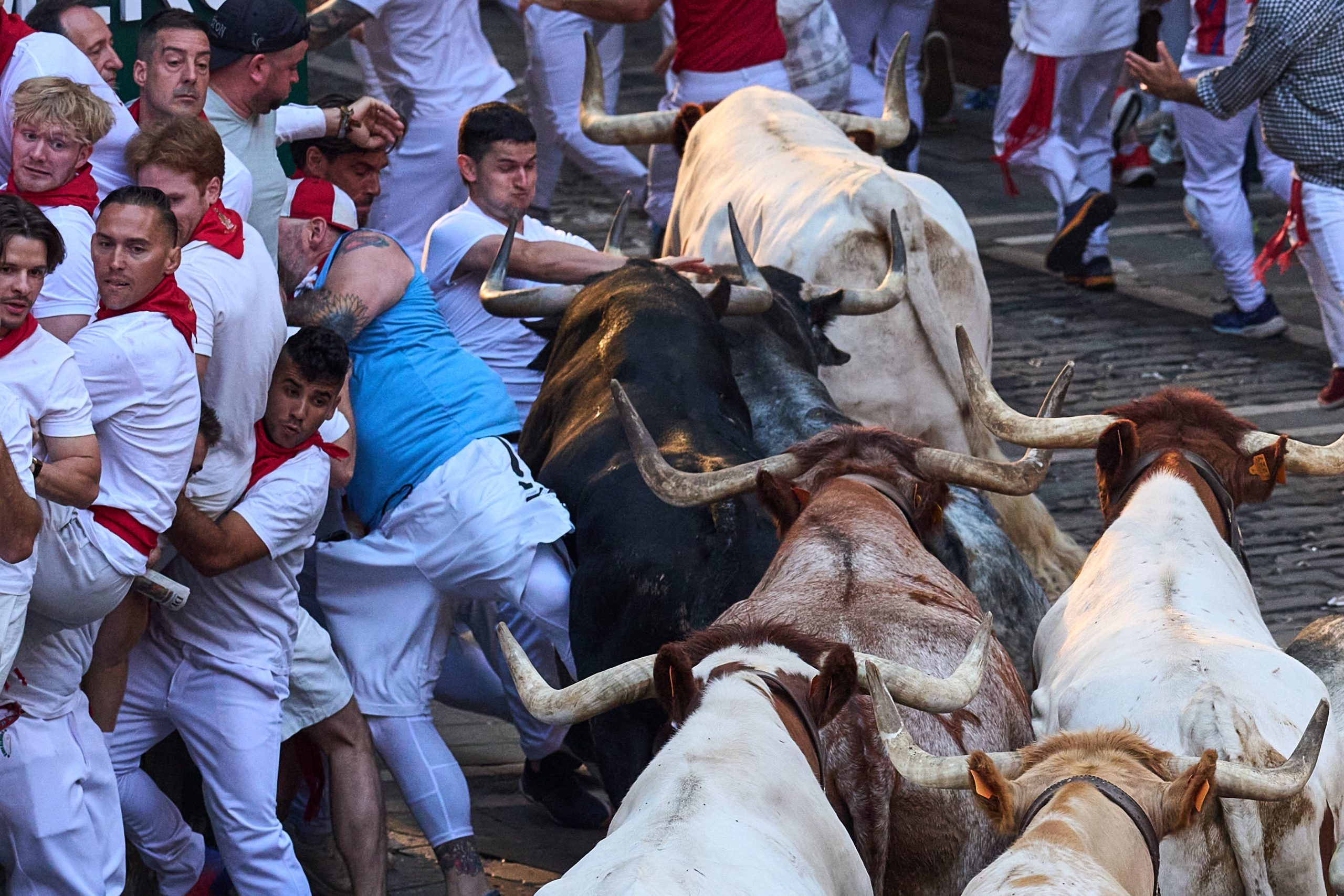
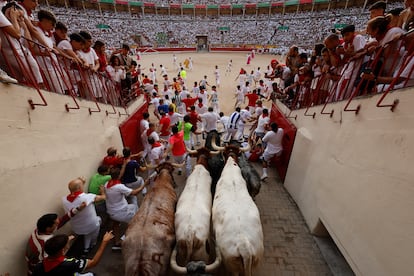
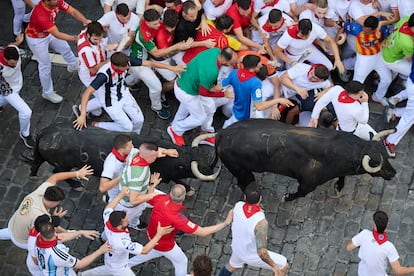
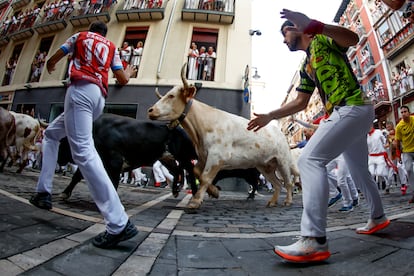
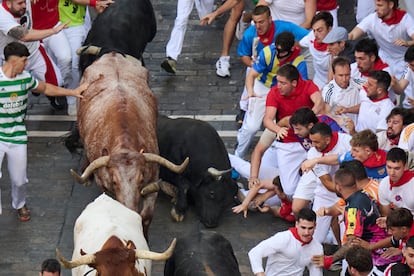
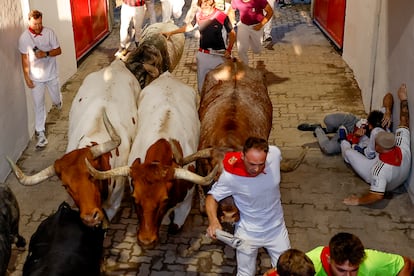
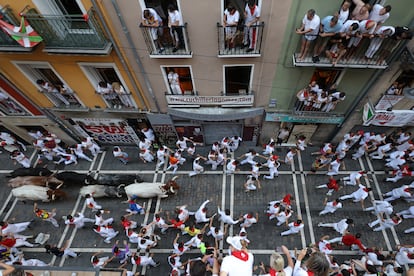
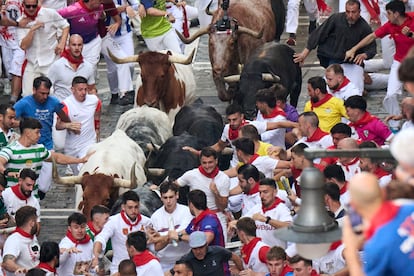
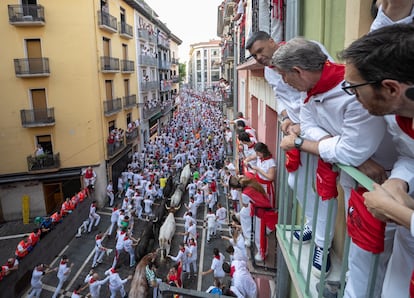
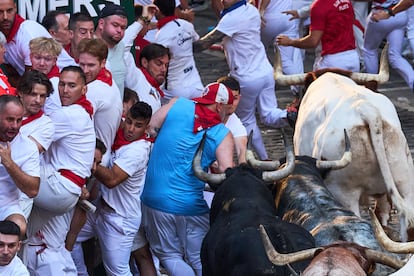
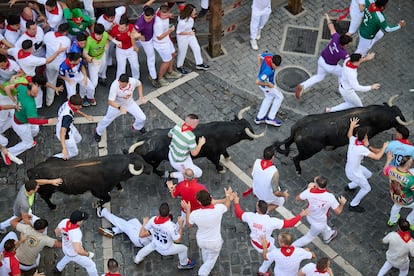
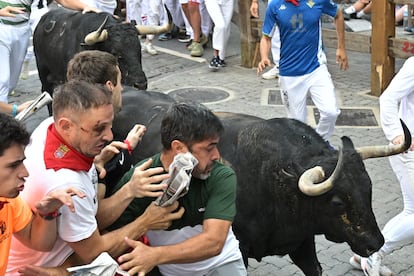
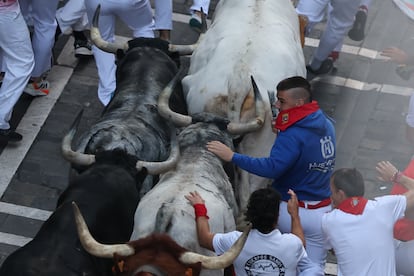
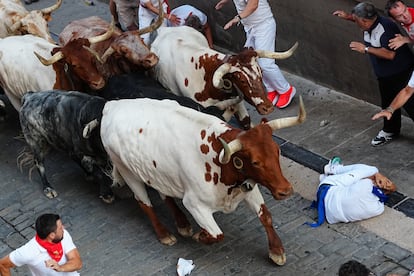
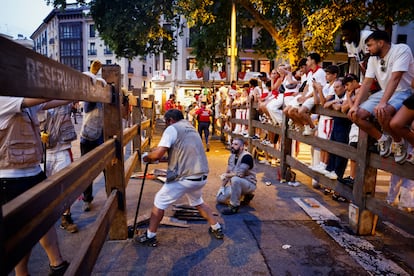
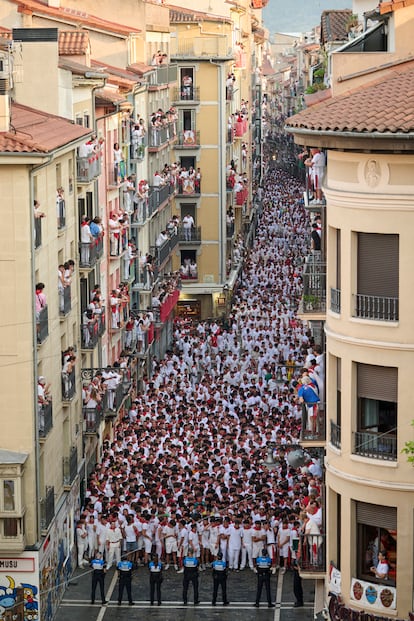
The northern city of Pamplona is into its second day of ‘encierros,’ the dangerous races that were made globally famous by the writer Ernest Hemingway and which continue to attract visitors from all over the world


ElPais
Marisol Donis, Criminologist: ‘Asylums Were Tools For The Confinement And Social Control Of Women’

bilbao
Robbie Williams: ‘I Am Who I Am Because I Drank And Did Drugs. I Don’t Know, If I Had A Time Machine, That I Would Change Anything’

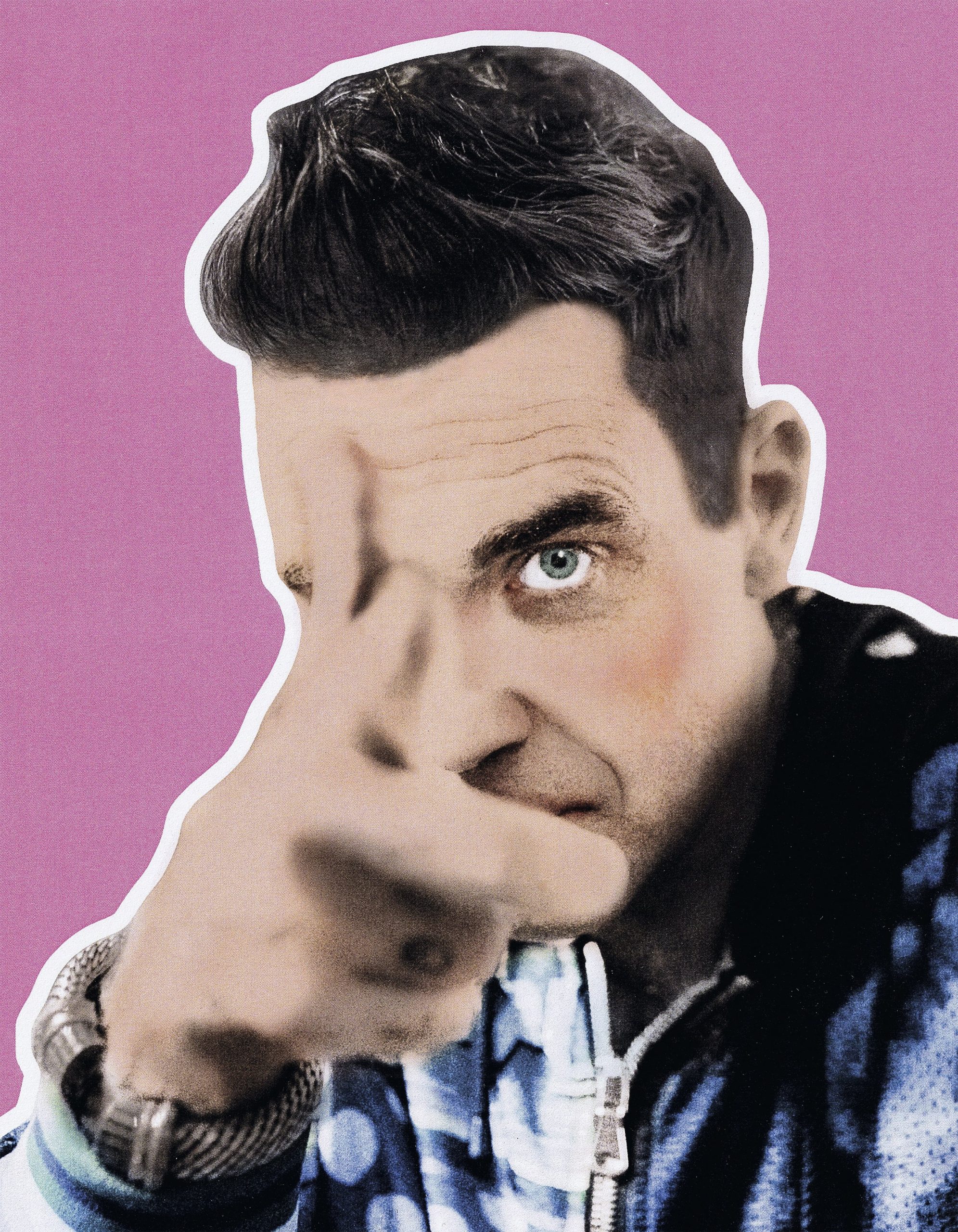
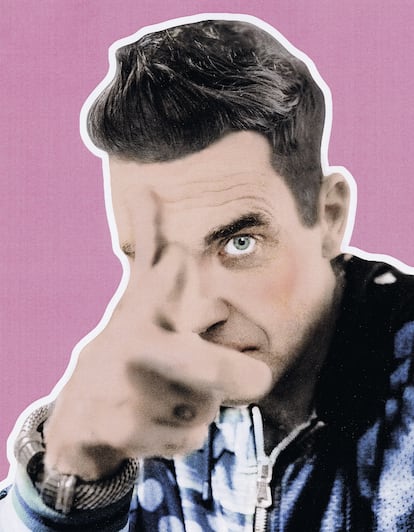
For Generation Z, Robbie Williams, 50, will always be the man who tears off his skin and muscles in the controversial video for Rock DJ, a song released three years after Angels, the single that cemented his solo career. For millennials, Williams will always be the Take That member who quit one of the most popular boy bands in history at its peak. He says he was “asked” to leave. In any case, his rock-and-roll energy and his addiction to drugs and alcohol did not sit well with a band that succeeded on sugary songs, tender looks and a choreography designed to make fans swoon.
“I was ingesting everything I could get my hands on -ecstasy, cocaine, drinking. I’m literally drinking like a bottle of vodka a night before going into rehearsals, so that’s happening every night,’ he says in the Netflix docuseries Robbie Williams, where he admits he began dating Geri Halliwell, the redhead from the Spice Girls, while he was attending Alcoholics Anonymous. “They told me not to date anyone in the first year, and rightly so. If I couldn’t look after a cactus, imagine a person,” he says in the documentary, which reached number one on Netflix in 22 countries and had 5.5 million views just one month after its premiere. Currently on the Britpop Live 2026 tour, he will perform on July 10 at the Bilbao BBK Live festival in the northern Spanish city. Does he have any surprises planned? “The surprise is that I keep showing up and emitting light. I’m a frequency and some people like to tune into it. The surprise is that I still exist on that frequency,” he says, speaking with EL PAÍS.
At the start of the trailer for his biopic, Better man, he is heard saying “I’m Robbie Williams, one of the biggest pop stars in the world.” In the same way that the musician and designer Pharrell Williams changed the rules of the genre by telling his story with Lego bricks in Piece by Piece (2024), Williams is portrayed by a computer-generated monkey. “I’m an unusual person who likes unusual things. When director Michael Gracey told me the idea, before he finished the sentence I’d already said yes,” he explains.
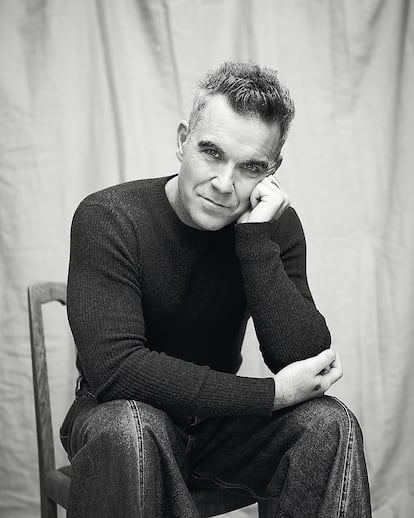
Is he exaggerating when he claims to be one of pop’s greats? The numbers back him up. He has sold more than 80 million albums worldwide and has 18 Brit Awards. But fame and success brought shadows. At age 20 he experienced his first depressive episode and, after more than a decade symptom-free, he admitted in early 2025 that he had started the year with a relapse. It’s no surprise that his songs, except for “the silly danceable ones,” deal with an ongoing mental struggle now also reflected in his painting. Two years ago he opened his solo art exhibition, Confessions of a Crowded Mind, at Moco Museum Barcelona after debuting it in Amsterdam.
Williams is music, art and… football. Last year the Briton premiered, together with Laura Pausini, Desire, the new official FIFA anthem. “ I wanted to create something that captures all of it – the passion, the nerves, the pride and the majesty of that feeling just before kick-off. Football and music have always meant the world to me and bringing them together on this kind of stage gives me goosebumps,” he stated after being named FIFA Music Ambassador. And if there’s one thing he’s an expert at, it’s giving his millions of fans goosebumps with his songs.
You behave as you were raised. Sometimes, if those behaviors are toxic, you learn they are and do the exact opposite. For now everything is fine. My children are kind, compassionate, sensitive and affectionate”
Did you know I spent part of my teenage years sleeping with you? Although my favorite member of Take That was Howard Donald, my mother made a mistake and bought me a pillow with your face on it. That was the universe messing around, saying: ‘It’s this one, darling: you should be in love with him!’
You like covering Living La Vida Loca, by Ricky Martin. Why don’t you pivot and become a Latin-inflected Williams who does twerking? I don’t know if I’d do twerking, but I would definitely make Latin music. I have a banger on my computer called Te Quiero, but there was a copyright issue because it sounded like another song. If I manage to release it I’ll be moving my hips a lot on stage, though I don’t think I’ll be twerking. My hamstrings are too tight for that.
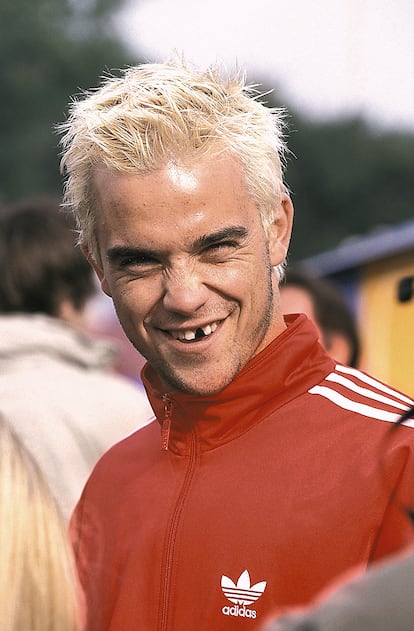
Releasing an album called Britpop when that musical genre seems like a thing of the past is bold. Was it a conscious decision, a joke or a fit of nostalgia? There are two reasons. The first is very simple: I’m British and I make pop. And the other is that I do a lot of things that are a kind of quiet trolling. I wasn’t part of the britpop movement! In fact, I was excluded. This is a way to wind up the right people. And, looking at the comments, I’ve achieved my aim.
You always seem to feel the need to explain yourself. Do you feel misunderstood? I recently read a quote from Marcus Aurelius about stoicism and the freedom you get when you stop feeling the need to explain yourself. But if I had that freedom, I wouldn’t have an act. Explaining myself is part of who I am. I feel like a journalist with a single subject: myself. And I’m reporting live from inside my brain at all moments.
I do a lot of things that are a kind of quiet trolling. I wasn’t part of the britpop movement! In fact, I was excluded. This is a way to wind up the right people. And, looking at the comments, I’ve achieved my aim”
You are the artist with the most number-one albums in the U.K., but you want more. Does ambition ever end? I have experienced what it feels like to have no purpose. There were moments in my career when I decided I didn’t want to do this anymore. And it’s not good: it’s a kind of death. I love having a mission, providing for my family and looking after myself. I’m incredibly grateful to be able to be creative and tell people: “I’ve done these things and this is why I did these things. And I’d like you to enjoy them.” Everything revolves around purpose.
What is that purpose? The main thing is to provide for my family, make sure they are financially sound and that my grandchildren are too. I think the only thing you can offer as a parent is safety, and teaching them how to behave is safety too. But today it seems the only thing that really protects people is money, unfortunately. So my North Star is that, and then underneath that there’s all of the narcissistic stuff where there is need and wants and attention and to be told that I’m a good and clever boy…
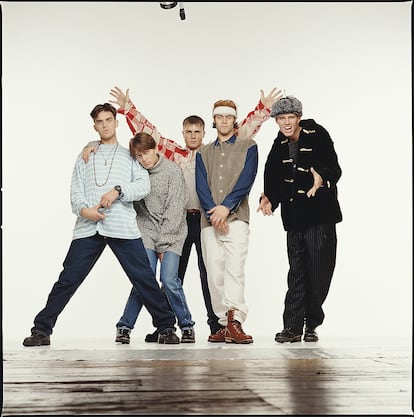
Miley Cyrus said she didn’t want to tour because it could affect her sobriety. Is that hard for you? I haven’t drunk in 25 years. That part isn’t difficult for me. The difficult part is dealing with life as it is. But now I trust myself. I don’t think that because I have a day of anxiety I’ll go out and do cocaine and relapse. I’ll simply sit with it and live with it. I know myself and trust myself more than before.
What would you have done differently from your time in Take That? I probably wouldn’t have started drinking or done drugs. But then again, I’m all of these things because I did. I don’t know, if I had a time machine, that I would change anything. I just wouldn’t be as affected by mentally ill grown ups.
At that time it was hard for someone coming from a boy band to be taken seriously. Would you say you paved the way so people like Harry Styles could run? I don’t think I changed anything for anybody. Maybe if the people that come next see how I go about things or see how I went about things and take a little bit from me, like I did with the people that came before me, I think that’s more apt. But it is very interesting how the zeitgeist changes when it comes to what’s cool. They used to tell me I was embarrassing, that I shouldn’t exist. I remember a time when the idea of Robbie Williams playing Glastonbury seemed so wrong, and how dare you? Now it feels like Harry’s allowed to be cool. And I can’t help thinking: ‘How is he allowed a free ride?’. They can criticize us for being on stage saying: “I’m a bit gay, but without sucking cocks.” I guess I’m a bit gay! You conform to me because I’m not pandering to you.
In many families in the north of England there is difficulty talking about emotions. As a father, what do you do at home to change that fear of verbalizing feelings? You behave as you were raised. Sometimes, if those behaviors are toxic, you learn they are and do the exact opposite. For now everything is fine. My children are kind, compassionate, sensitive and affectionate.
You said the nineties weren’t a bad time to be going through a rough patch. How do you think living through that in the era of social media would have affected you? I wonder that sometimes. I had the freedom to go out and do what I wanted because there were no mobile phones or social media, but I abused that freedom. On the one hand, it would have been a nightmare for different reasons but, on the other, maybe I wouldn’t have thrown pills and potions into my system so liberally in front of people.
Bad Bunny invites celebrities to La Casita. Who would you invite? Michael Bublé, Hugh Jackman, Ryan Reynolds, Gary Barlow, Donald MacLeod… I’d love to invite Jason Orange [from Take That] but we haven’t been able to find him…
Really? That’s what you hear.
When are you going to stop entertaining us? It must be exhausting to be constantly entertaining. I don’t know. It’s a symbiotic relationship. I want them and I need them. Some people enjoy what I need and some seem to need what I have to offer. I doubt that will ever end. I just hope I’m healthy enough to carry on. I’ll tell Howard I spoke to you.
If you invite Howard to La Casita, can I go? I’ll try.
Sign up for our weekly newsletter to get more English-language news coverage from EL PAÍS USA Edition
Jeanette Serritzlev, Military Analyst: ‘Crises Are Already Here; It’s Not About Being Afraid, But About Being Prepared’

Los Atléticos Toros Gaditanos De Álvaro Núñez Protagonizan Un Emocionante Cuarto Encierro De San Fermín Con Nueve Contusionados

La Emiratí E& Venderá Su 16% En El Capital De Vodafone Al Empresario Francés Xavier Niel Por 5.200 Millones

F1 Qualifying Results: 2026 Austrian Grand Prix times and grid positions
Spain’s traffic warning for summer 2026: These are the weekends the DGT says you should avoid
Mallorca solar eclipse 2026: Best viewing areas and what to know


-
 Uncategorized2 weeks ago
F1 Qualifying Results: 2026 Austrian Grand Prix times and grid positions
-
DGT2 weeks ago
Spain’s traffic warning for summer 2026: These are the weekends the DGT says you should avoid
-
best places to view the solar eclipse in mallorca2 weeks ago
Mallorca solar eclipse 2026: Best viewing areas and what to know
-

 %2 weeks ago
Terminal Patients In Poland Ask For The Right To Say Goodbye To Their Pets
-

 %2 weeks ago
Spain’s Heat Reaches Highest Level In 76 Years
-

 America2 weeks ago
Última Hora Del Terremoto En Venezuela, En Directo | Exteriores Eleva A 9 La Cifra De Españoles Fallecidos En El Doble Terremoto De Venezuela
-
Latest2 weeks ago
EU Worries Jet Fuel Supply Situation To Worsen
-

 America2 weeks ago
DHS Inspector General To Investigate The Rise In Deaths And The Use Of Force At ICE Detention Centers