
ElPais
Marisol Donis, Criminologist: ‘Asylums Were Tools For The Confinement And Social Control Of Women’


17 fotos
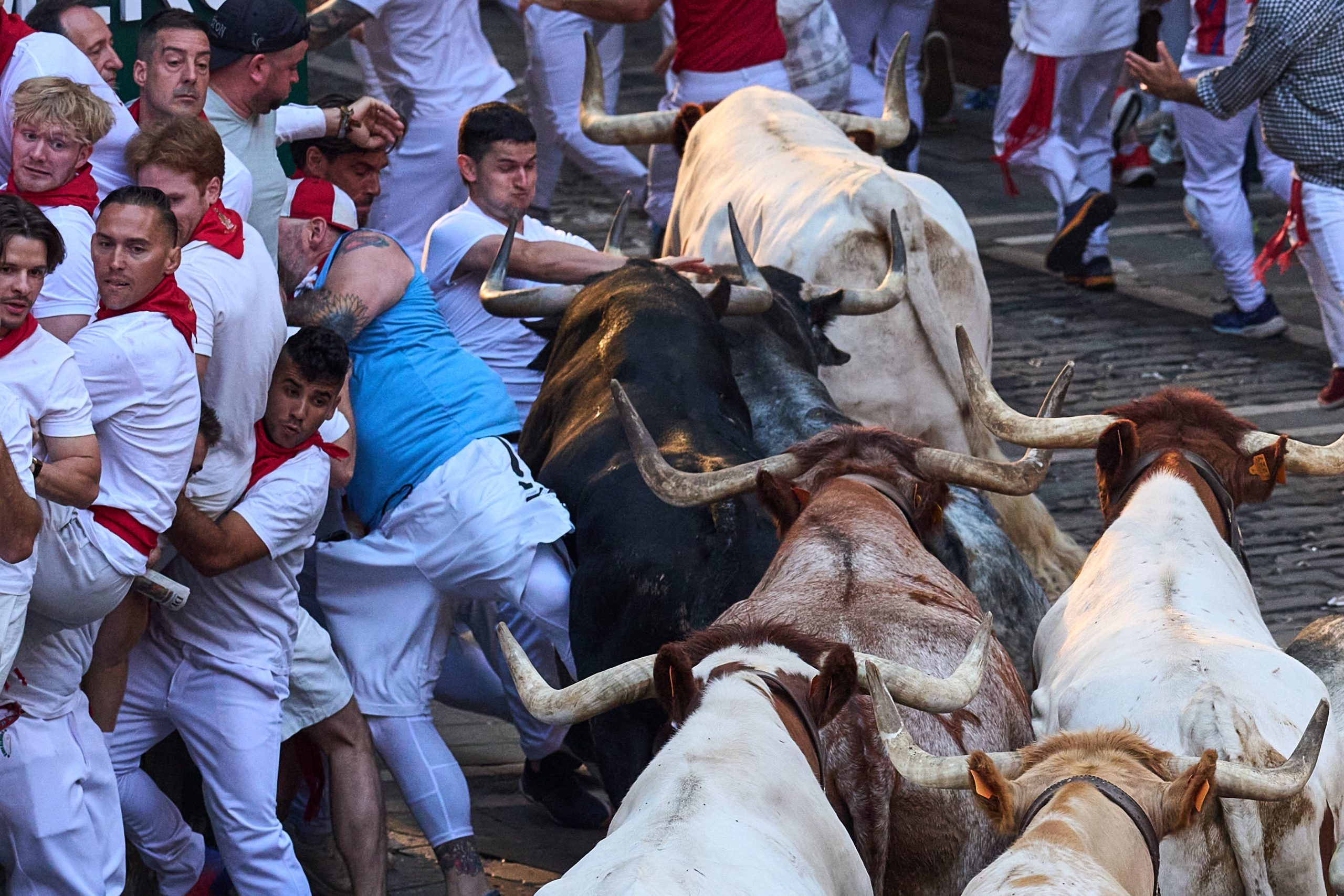
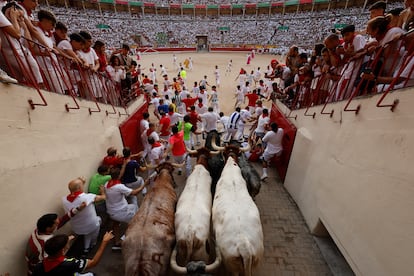
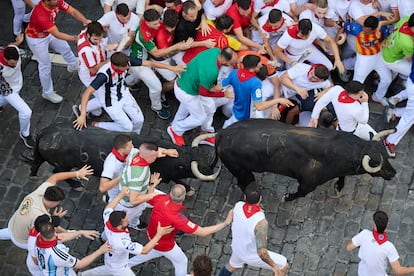
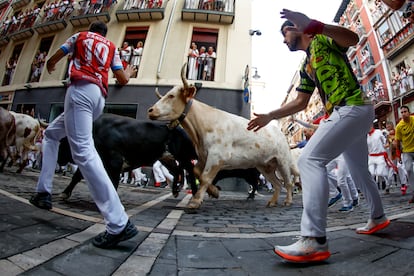
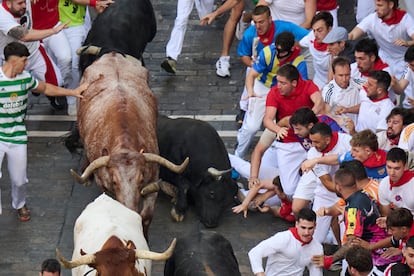
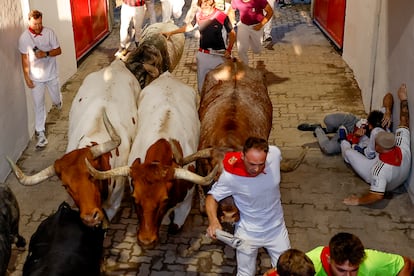
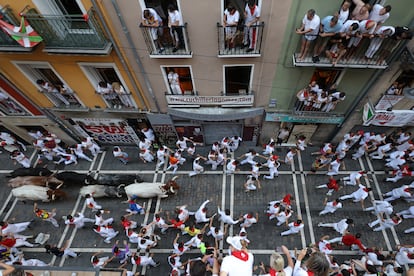
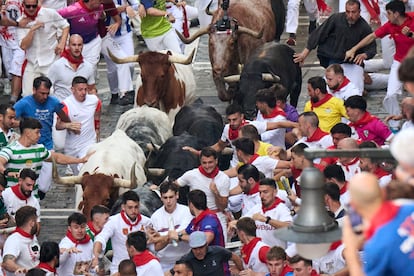
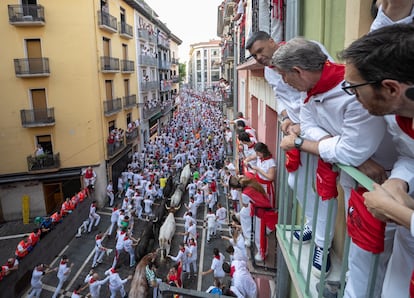
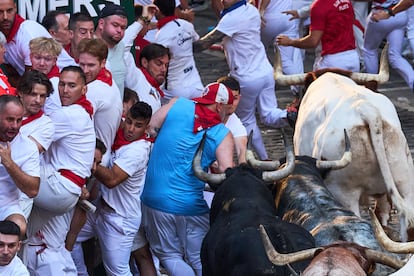
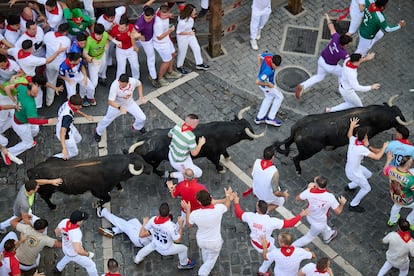
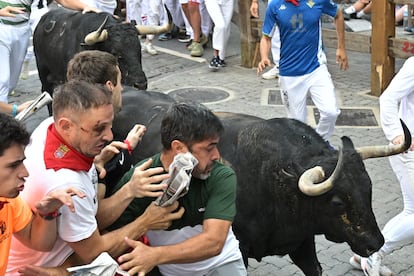
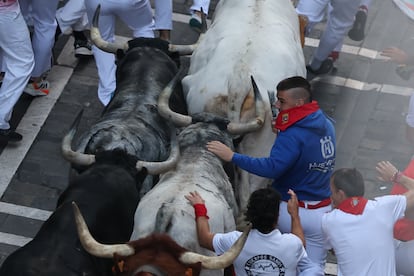
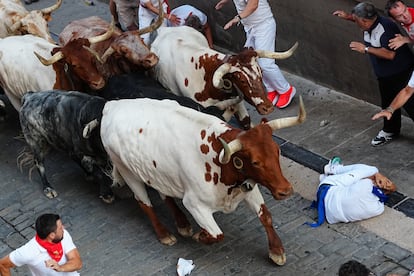
The northern city of Pamplona is into its second day of ‘encierros,’ the dangerous races that were made globally famous by the writer Ernest Hemingway and which continue to attract visitors from all over the world






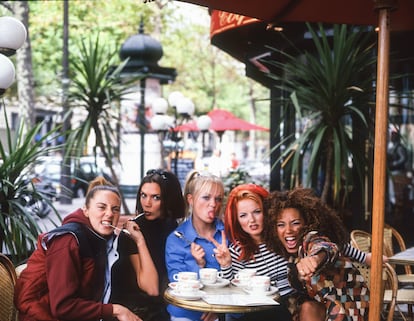
Thirty years ago, a summer saw an unknown song begin to play in a handful of British nightclubs. No one could have imagined that, just a few weeks later, it would become pop music history — a song elevated to anthem status, capable of moving the masses from the United Kingdom to Japan, from Australia to Belgium, from Finland to Spain.
The song was called Wannabe, the debut single from Spice, the first album by the Spice Girls, a group made up of five women — Victoria, Emma, Melanie C, Melanie B, and Geri — who joined forces after responding to a newspaper advertisement seeking performers to form a girl band. On July 8, 1996, after making the rounds of a few clubs and smaller radio stations, Wannabe was officially released. Within just days, it had climbed to the top of the U.K. music charts.
The song dominated the charts throughout the summer — remaining at number one for seven weeks — and sold four million copies during that period. The Spice Girls reached number one in more than 30 countries and achieved the milestone of becoming the best-selling female group in history, with a total of 31 million records sold worldwide.
The impact of this hit on pop music cannot be measured in numbers alone. The song represented much more, both because of its message — an ode to female friendship — and because of the women singing it: five completely unknown young women in their twenties who bore little resemblance to the commercially successful artists of the time, whose music was more closely associated with R&B.
“Wannabe established a new canon in the music industry. It was a girl band song that didn’t sing about a boy but about sisterhood,” says Alberto Palao, music journalist at Los 40 and a social media content creator. “It put the emphasis on friendships rather than romantic love, with a cheeky, youthful attitude, moving away from the stern diva stereotype we saw everywhere in the 1990s, like Céline Dion or Whitney Houston.”
At the height of the romantic comedy boom, the Spice Girls developed their own narrative around romantic relationships and championed girl power at a time when the concept was still novel — if not entirely unfamiliar to most people — and far less overused than it is today. Even so, the group was not spared criticism from those who argued that they were commercially exploiting a political movement whose meaning extended far beyond a catchy chorus.
Leyre Marinas, a pop-culture journalist and author of the essay Fucked Feminist Fans, which examines the origins of #MeToo in musical pop culture, takes this view: “They appropriated and transformed a concept born from the Riot Grrrls’ punk feminism into a pop slogan backed by a very powerful marketing strategy.”
However, she also qualifies this criticism, noting that “reducing their impact to a commercial operation is to oversimplify what it meant in the mid-1990s for the Spice Girls to release a song like Wannabe, which managed to bring messages of empowerment, friendship and self-esteem to women of all ages around the world.”
There is no doubt that the Spice Girls made a great deal of money from their girl power message, but they also offered younger generations of women an alternative to the dominant model within entertainment culture, which was largely monopolized — across music, film, and television — by the male gaze.
“While some of the political substance of girl power was lost, the popularization of the term opened a new stage in which feminism began to occupy more media space; we could even say it became fashionable,” reflects musicologist Sara Armada Díaz.
The music video: Another success story
Two months before the song’s release, filming began on the music video, directed by Johan Camitz, a Swedish filmmaker whose background was more rooted in advertising than in the music industry. Originally, the video was supposed to be shot in Barcelona, but after issues arose with filming permits, the location was changed at the last minute to London’s Midland Grand Hotel, a Victorian neo-Gothic building. It was from its grand central staircase that the Spice Girls declared to the world that if anyone wanted to be their lover, they first had to get along with their friends.
On the night of April 19, 1996, Victoria, Emma, Mel B, Mel C, and Geri filmed what would later be named Best Video of the Year at the 1997 MTV Video Music Awards.
“I think that, although the music industry at first didn’t take them seriously [as happens with all girl bands and, to a lesser extent, with boy bands], the fact they were a group of girls helped fill a gap in the market, something young women in the 1990s needed,” Palao says. “In addition, each member had a distinct profile, making it easy to identify with one of them. I believe that’s what appealed so much commercially and, above all, to the public.”
The video was their most ambitious calling card, and was packed with symbolism and references to their own story. In the interviews they gave while promoting their debut album, the group made it clear that they had worked tirelessly to find a record label that matched their vision. They initially worked with Bob and Chris Herbert but soon moved on to Simon Fuller, and as they explained, they had no qualms about showing up unannounced at management offices and radio stations to make themselves known.
The video sought to capture that determination — the attitude of people willing to do whatever it takes to achieve their goals. From the very beginning, the Spice Girls are portrayed as five young women who play by their own rules: they burst into a hotel, dance unapologetically under the astonished gaze of its guests, and unleash chaos before vanishing aboard a bus.
As Geri Halliwell recounted in her memoir If Only: “The idea of the video was to recreate the same energy and dynamism we showed when we stormed record companies and carried out that aggressive, frenetic selling.”
Although the public already knew them to some extent thanks to the success of their first television performances of Wannabe, the debut video introduced the five distinct personalities of the singers, each championing a role that — in the case of Victoria Beckham (then Adams), Posh Spice — has followed her for life.
Today it would be almost unthinkable, but the group did not even use a stylist for the video. The clothes they wore — outfits that helped define each member’s image — were chosen and purchased by the women themselves. That sense of authenticity and accessibility worked strongly in their favor.
“Their looks and personalities were like those of your friends and neighbors. Their outfits could be copied with clothes bought from the shop around the corner. That helped fans relate to them,” says Palao.
Marinas agrees: “In the video, each Spice Girl represents a different woman within a group of friends, and each has her own aesthetic and attitude, so any viewer can identify with her favorite. I think that audiovisual combination is one of the reasons the video remains so iconic and so 1990s.”
The song 30 years later
The video’s impact ultimately propelled the Spice Girls to global fame. But, as often happens when something becomes a cultural phenomenon, criticism quickly followed. In some countries, the video was even censored because its wardrobe was deemed inappropriate, specifically because Mel B’s nipples were visible through her top.
Over the years, Wannabe has ceased to be merely a pop song and has become a timeless, cross-generational hit — one capable of outlasting changing trends and maintaining an influence that endures to this day. In 2016, for example, the NGO The Global Goals released a reinterpretation of the song as part of a campaign supporting women’s rights. The Spice Girls publicly backed the initiative through their X accounts.
Yet is it really a feminist anthem, as it has so often been described, or is that an exaggeration?
“Personally, I don’t consider it a feminist anthem in a political sense; rather, Wannabe was a musical success that represented a particular kind of female empowerment within pop,” says Marinas. “The song doesn’t present explicit feminist demands, but it does place certain codes borrowed from the feminisms of the time — such as friendship among women, autonomy and the ability to decide about relationships — at the center of its message for a global audience.”
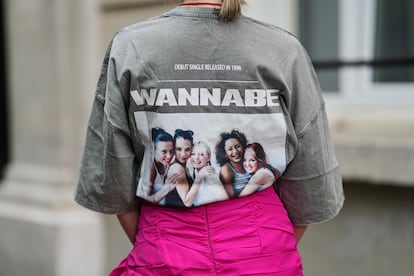
Three decades later, the girl power message of Wannabe and the Spice Girls remains evident in the careers of many artists who have spoken about how the British group sparked their interest in music and showed them what women could achieve. With the exception of K-pop phenomena such as Blackpink, no other female group has achieved such global impact.
Armada points to Little Mix, formed through the British edition of The X Factor: “They were also the first female group to win a Brit Award in 2021. During their acceptance speech, they themselves paid tribute to earlier girl groups such as Sugababes, Girls Aloud, and, of course, the Spice Girls.”
Billie Eilish, Dua Lipa, and Taylor Swift — who once met Emma Bunton (Baby Spice) at an event and told her that she had owned a doll with Bunton’s face on it as a child — are just some of the artists who have spoken about how the music of the Spice Girls has been a part of their lives.
Sign up for our weekly newsletter to get more English-language news coverage from EL PAÍS USA Edition

Sesión Negra Al Anunciar Trump El Final Del Alto El Fuego: El Petróleo Se Dispara A 80 Dólares Y El Ibex Vive Su Peor Sesión Desde Marzo

Bélgica Calienta Motores (Y Aviones) Ante Su Duelo Contra España

Spain’s 2026 Running Of The Bulls, In Pictures

F1 Qualifying Results: 2026 Austrian Grand Prix times and grid positions
Spain’s traffic warning for summer 2026: These are the weekends the DGT says you should avoid
Mallorca solar eclipse 2026: Best viewing areas and what to know


-
 Uncategorized2 weeks ago
F1 Qualifying Results: 2026 Austrian Grand Prix times and grid positions
-
DGT2 weeks ago
Spain’s traffic warning for summer 2026: These are the weekends the DGT says you should avoid
-
best places to view the solar eclipse in mallorca2 weeks ago
Mallorca solar eclipse 2026: Best viewing areas and what to know
-
 %2 weeks ago
Spain’s Heat Reaches Highest Level In 76 Years
-
Latest2 weeks ago
Spain’s Former PM Requests His Corruption Probe Be Nullified
-

 %2 weeks ago
Terminal Patients In Poland Ask For The Right To Say Goodbye To Their Pets
-
Latest2 weeks ago
EU Worries Jet Fuel Supply Situation To Worsen
-
America2 weeks ago
El Terremoto En Venezuela, En Vivo | Dos Potentes Terremotos Sacuden El País Dejando Al Menos 164 Muertos Y Un Millar De Heridos